





At what point does the expansion of a museum become “inevitable?” For a 222-year-old American history museum like the New-York Historical Society, now rebranded as the New York Historical (NYH), change and expansion have always been constants. In its first 100 years, it moved location seven times. In 1908, the museum shifted into its now-permanent home on Manhattan’s Upper West Side: a gray Roman Eclectic style building that was designed by York and Sawyer. A subsequent expansion handled by the firm Walker & Gillette three decades later, saw the addition of wings at the north and south, along with a library stack tower.
Although the museum has stayed put on West 76th Street opposite Central Park since then, the specter of expansion has continued to hover over it. The lot to its west remained empty for a long time, and several proposals for new building projects failed to get off the ground as the institution faced financial struggles and public opposition to certain expansion plans.
On June 18, the institution’s first major expansion of its premises in almost nine decades opened to the public. The new Tang Wing for American Democracy—named in honor of philanthropists Oscar Tang and Agnes Hsu-Tang whose gifts helped fund the $175 million wing—is a 71,000-square-foot, 4-story structure that abuts the museum’s existing premises.
“This very institution for 222 years has safeguarded the evidence of our history through times of wars and of peace, recording documents and witnessing our idealistic visions, but also our complicated imperfections,” said Agnes Hsu-Tang, at the press preview before the public opening.
Continuing Context
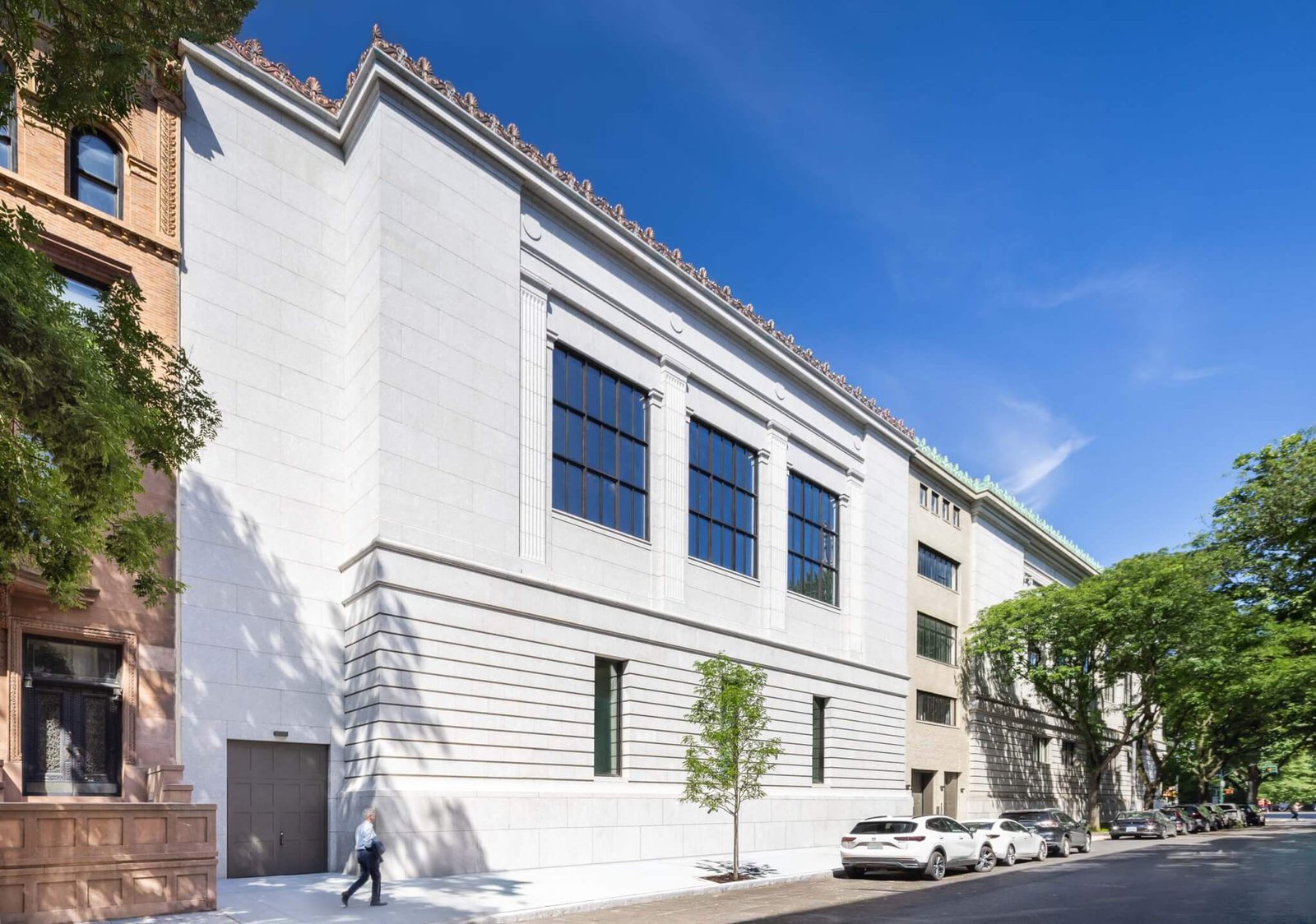
Designed by Robert A. M. Stern Architects (RAMSA) with landscape by RKLA Studio and Nelson Byrd Woltz, the Tang Wing’s edifice is clad in Sherwood pink granite (the same variety as the original building), sourced from Deer Isle in Maine, and finished with a computer-controlled milling process to replicate the texture of the original building’s exterior. “We looked very carefully at the classical orders that were used and interpreted them in a way which we hope people who are deeply knowledgeable will find at once scholarly and maybe a little amusing,” said Graham Wyatt, a partner at RAMSA. He described the new wing’s design as “inevitable,” an almost invisible extension of what was already there.
Looking at the fine-grain corduroy texture of the granite, and the way the light hits the windows and pilasters in the warm summer sun, it is hard to disagree. The Tang Wing slots between a 5-story brownstone and the buff brick interlude of the museum’s service bay and library stack tower. Its surfaces gleam in the light, outshining the time-worn face of the existing building on West 76th Street, which, like modern conceptions of liberal democracy, has lost its luster but retained much of its charm.
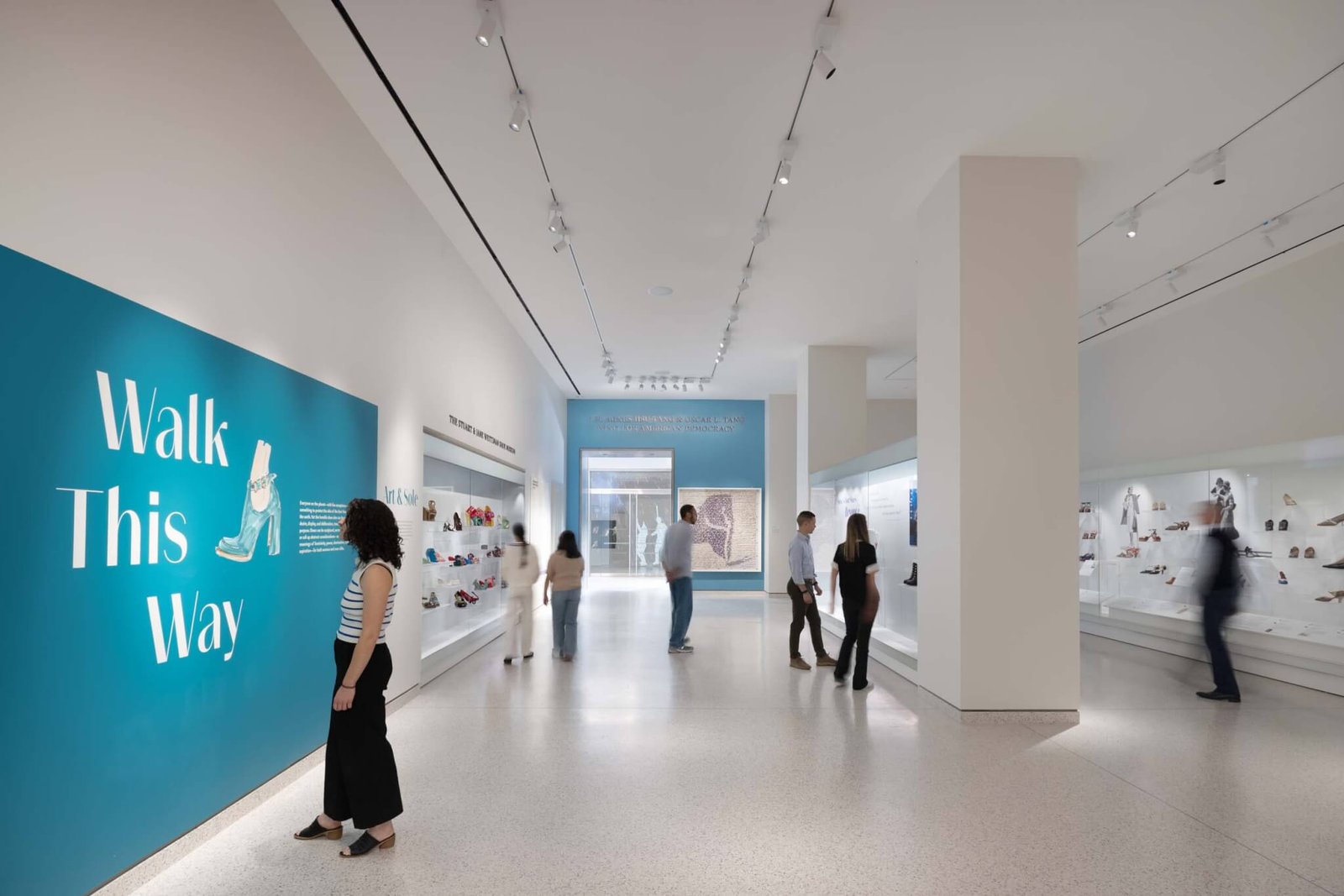
At the rear of the museum’s lobby, a tall arcade leads into a series of corridors preceding the Tang Wing. In one of these corridors is a gallery housing the Weitzman Shoe Museum (one of two “museums” within the museum), which features an exhibition on the history of footwear from the 19th century to the present.
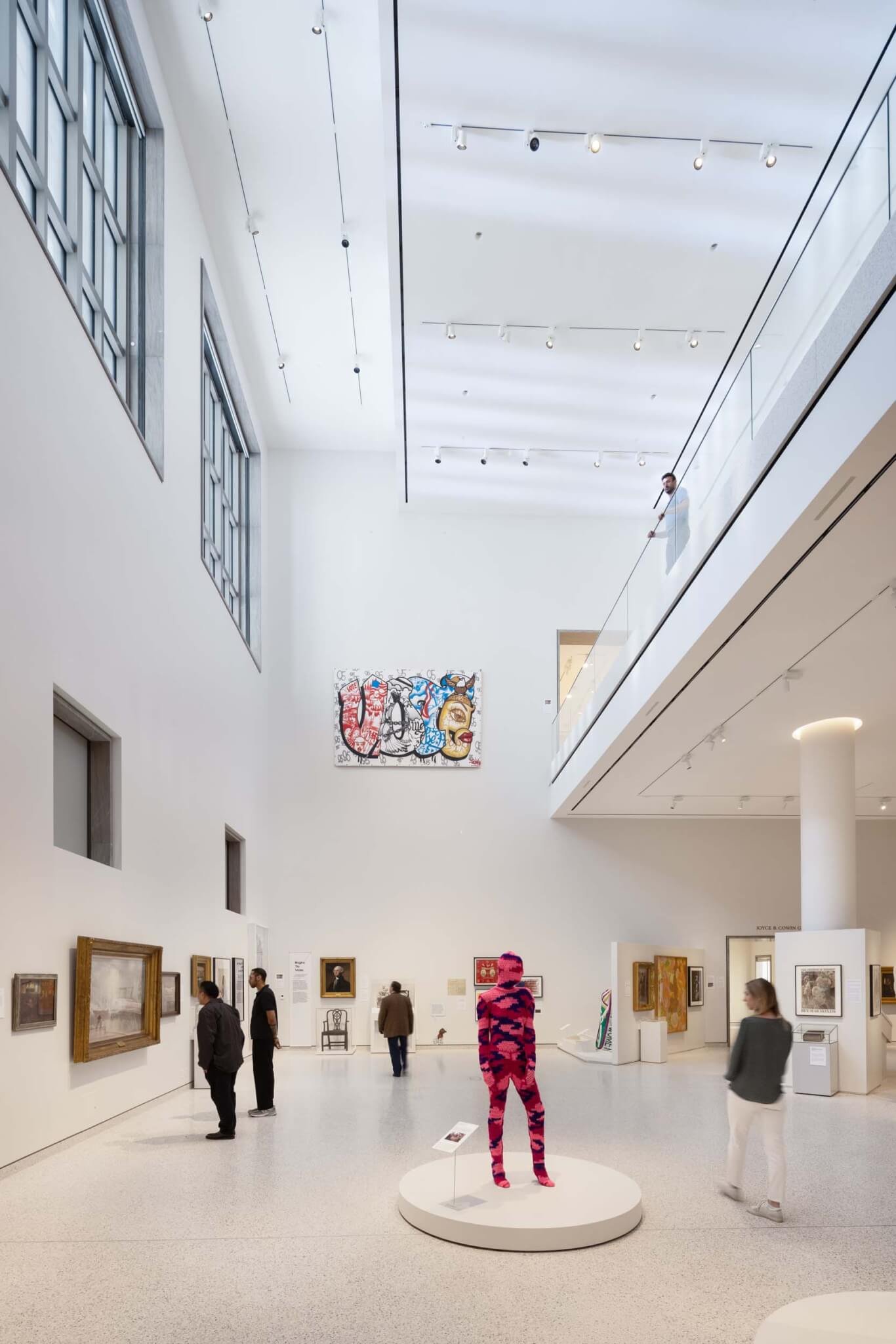
Beyond this lies the vast triple-height expanse of the new Klingenstein Family Gallery. Near the high ceiling, a set of windows with thin, almost-invisible aluminium slats filter light entering the space. To the other side, the ceiling drops to form a mezzanine walkway on the second floor, hoisted on round columns topped with halos of light. Even as the wing’s exterior skews traditional, its interior feels contemporary in every respect.
Paying Tribute
The wing’s inaugural exhibition, titled Democracy Matters, currently occupies the Klingenstein Gallery, tracing the evolution of democracy and democratic process across U.S. history through art, documents, and artifacts from NYH’s vast collection. The exhibition is one of several shows on view for the U.S. semiquincentennial celebrations. Standing at the gallery’s center is the controversial plaster cast statue of Thomas Jefferson, which was removed from New York City Hall in 2021. On the walls and across the gallery’s terrazzo floors, artwork and artifacts document turning points in American democracy, ranging from the modest mahogany chair George Washington sat in for his inauguration, to a reproduction of Lady Pink’s mural Vote and photographs of the Stonewall Uprising.
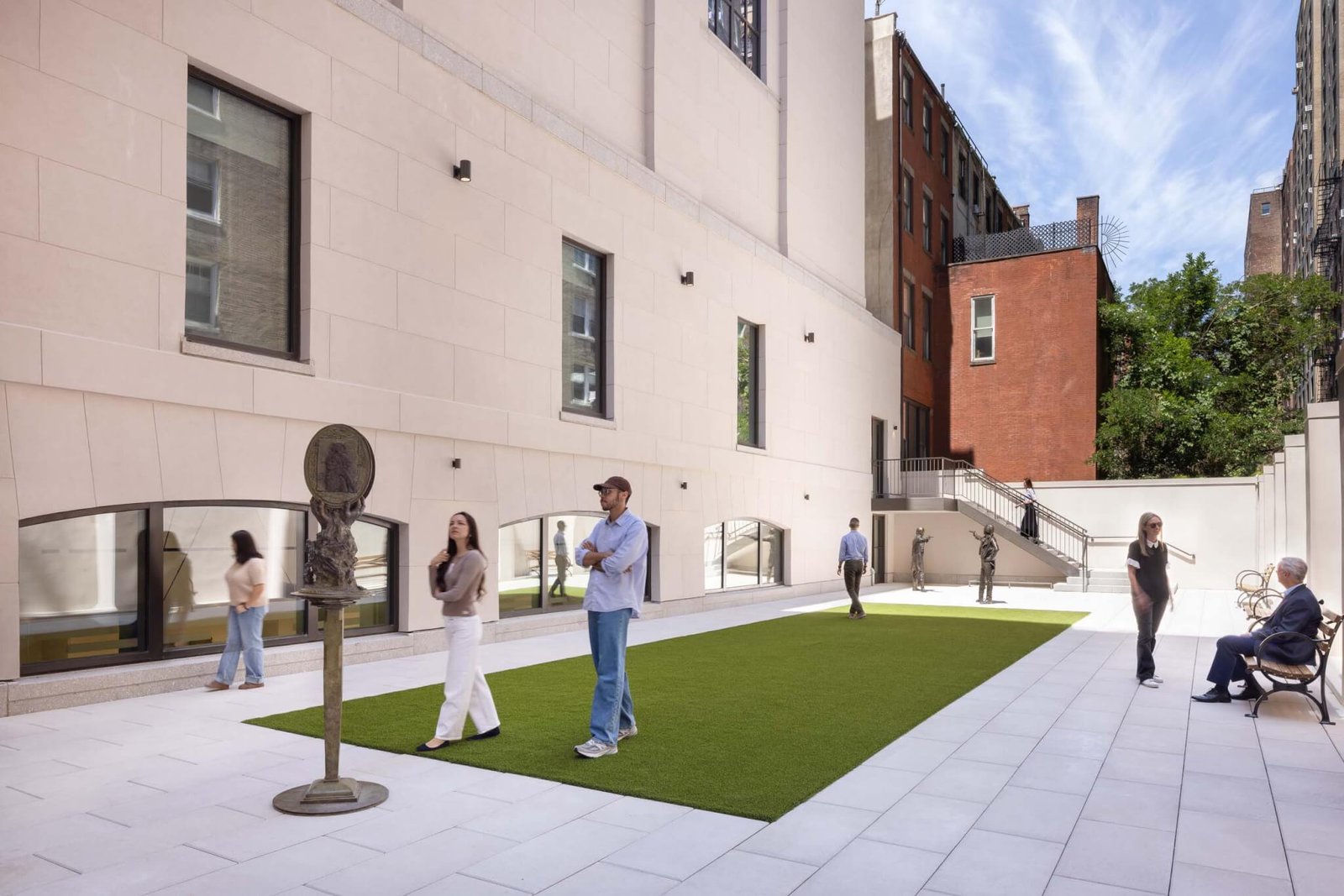
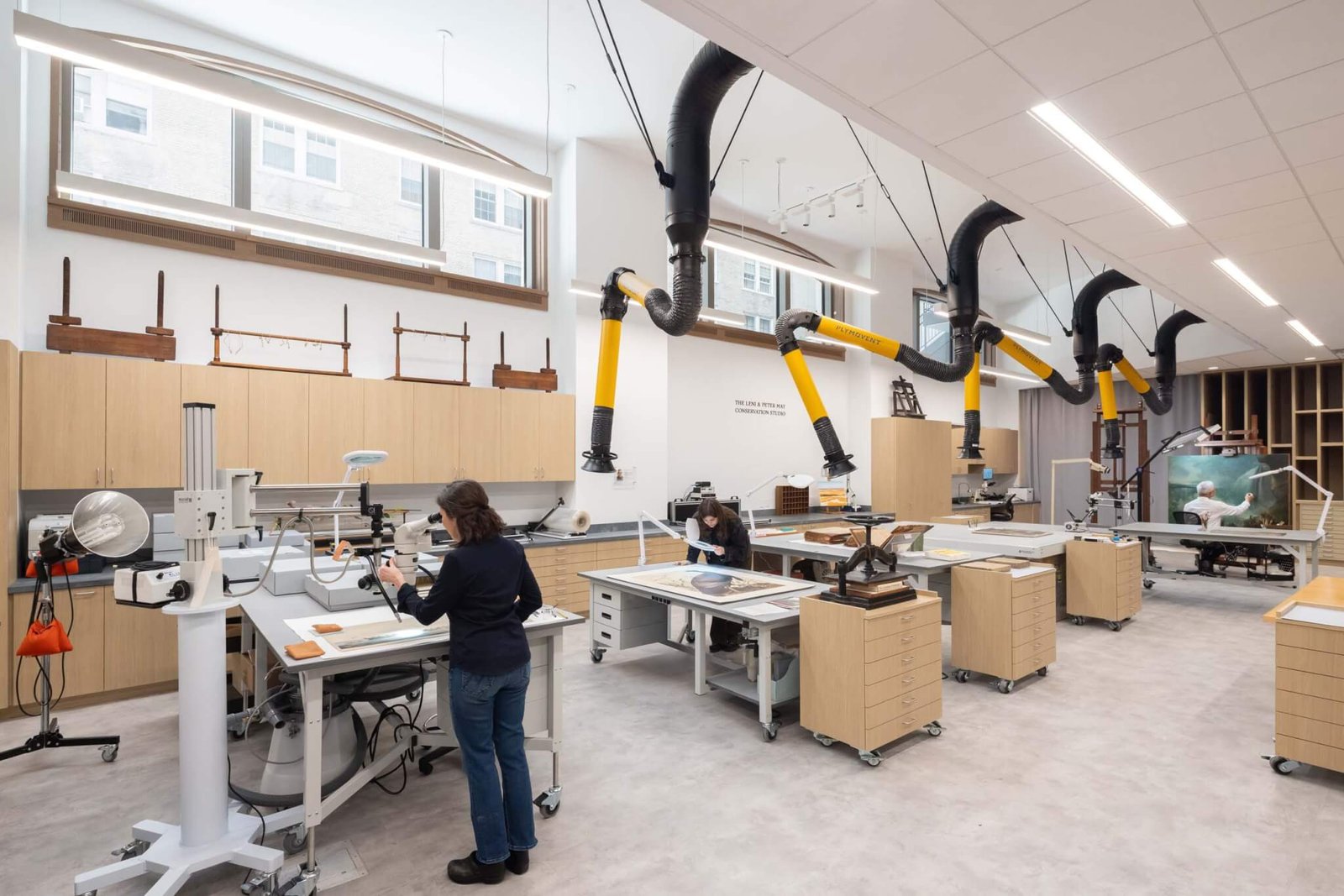
The first floor connects to an outdoor sculpture garden behind the new building, featuring sculptures of Alexander Hamilton and Aaron Burr’s famous duel. Here, a series of arched windows running along the bottom of the Tang Wing, offer a view of the museum’s conservation studio: a 2,500-square-foot, high-ceilinged space on the lower level. The new wing also hosts a new 200-square-foot reading room on its second floor, and two large classrooms for NYH’s Academy for American Democracy, which is expected to host 30,000 students each year for its education programs.
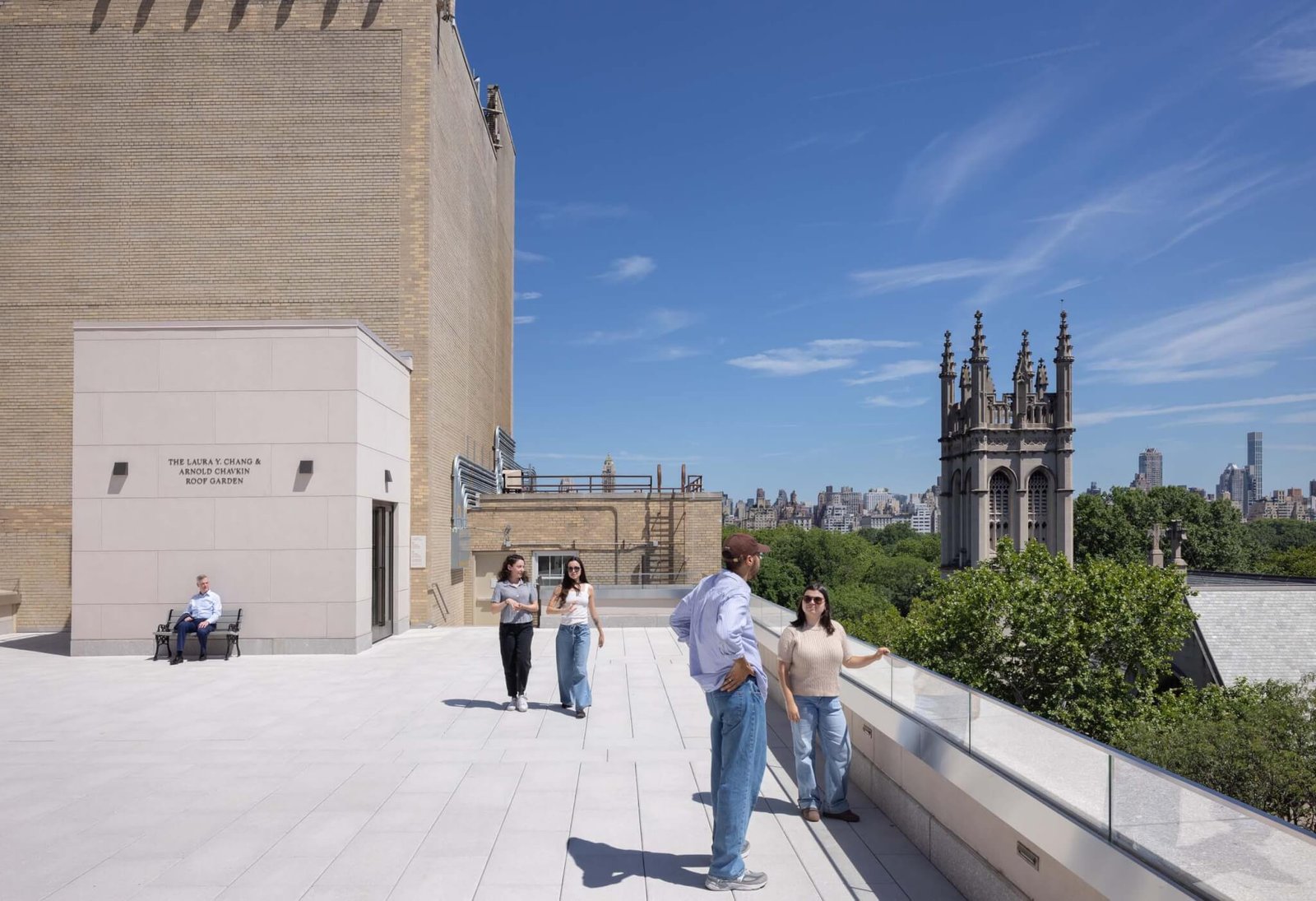
While the seam between the old and new structures is evident on the outside, internally, it is near-invisible. Preston Gumberich, also a partner at RAMSA, said that this was a challenging endeavor, especially since they made considerable modifications to the library stack tower. “We wound up structurally changing the lower five floors of those stacks,” said Gumberich. This provided the seamlessness required between the two wings and also helped resolve one of the most urgent needs for expansion—a large portion of the museum’s library had been stored off-site, resulting in annual costs of $1.5 million. The fourth floor of the Tang Wing will host a 4,500-square-foot space for the American LGBTQ+ Museum (the second “museum” within the museum), expected to open in 2028. There are also plans for a roof garden atop the wing, to provide outdoor space for small gatherings.
RAMSA’s “mission-first” proposal was a departure from earlier, more ambitious plans, like the 2006 proposal for a 23-story apartment tower designed by now-controversial architect Richard Meier: a project that was dropped in favor of a $55 million renovation after it faced public opposition. An earlier plan by Hardy Holzman Pfeiffer Associates, which also proposed a tower, was shot down by the Landmarks Preservation Commission (LPC) in 1984.
The Tang Wing was realized with the help of a $75 million partnership between city, state, and federal sources alongside $100 million in private donations. Although local community groups had initially expressed concerns about the wing’s conservative design, NYH and RAMSA won praise for the wing’s coherence with its surroundings and their community outreach efforts. Louise Mirrer, NYH’s president and CEO, noted that maintaining transparency was key to garnering public support for the proposal. “I think in all respects, we gained the trust of the neighbors in an environment that made them distrustful, for various reasons, and proved to them that we were, in fact, doing exactly as they always wished we would do, which is to create a building that would serve our mission,” said Mirrer.
This approach helped them navigate the challenge of altering a landmarked building situated at the intersection of the Central Park West and West 76th Street landmarked districts. Sean Khorsandi, executive director of Landmark West! (an Upper West Side architecture, arts, and culture nonprofit), said NYH and RAMSA consulted the LPC, Community Board 7, and residents of neighboring buildings while developing the Tang Wing’s design. “Upper West Siders are very particular. It’s much easier to work with people than work against them,” said Khorsandi.
Unveiled in the lead up to the 250th anniversary of the birth of the United States, the New York Historical has positioned the Tang Wing as a “beacon for democracy education, a powerhouse of inclusive history, and a home for history enthusiasts of all backgrounds and perspectives.” The opening comes at a time when American democracy is backsliding at a dangerous pace under the second Trump administration, which issued an executive order last year to fundamentally alter prevailing perspectives on key issues across American history. Mirrer believes this is precisely why an institution like the New York Historical is more relevant than ever today. “If you don’t show people and educate people around those documents, the art and the artifacts that speak to that past, they will have nothing but fake news,” she said. “I think it’s extremely important in the kind of environment we live in today, to be a place where the truth really resides and continues to reside.”
Jerry Elengical is a journalist who has covered art, design, real estate, and politics for The Architect’s Newspaper, The New York Times, STIRworld, The Intercept, and City Limits.