

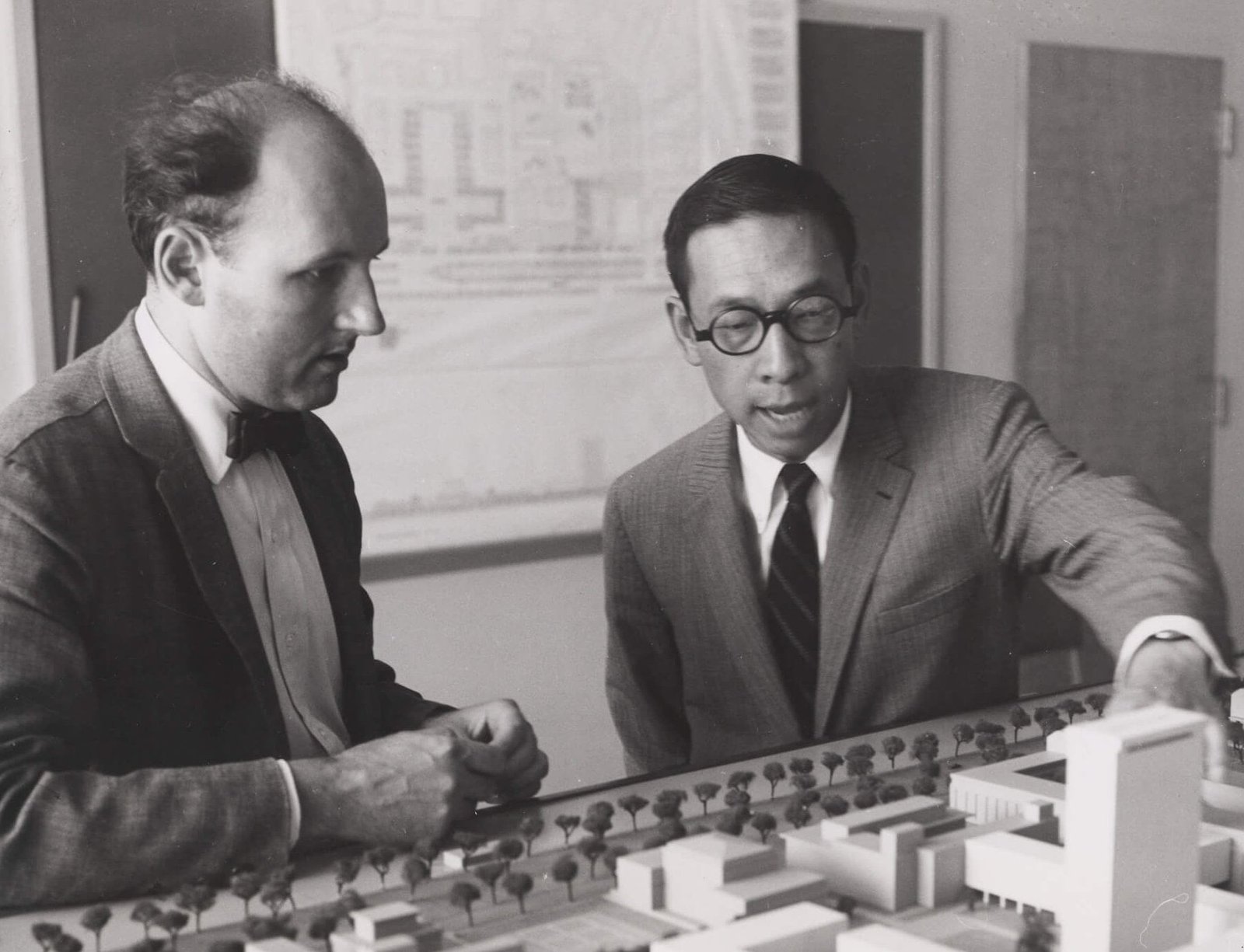


The MIT Museum announced this week it has acquired the archive of I. M. Pei, an MIT alum, class of 1940. The archive contains ephemera from the Pritzker Prize–winning architect’s 64-year career.
“This landmark donation marks the homecoming of I. M. Pei to MIT,” said Michael John Gorman, MIT Museum director. “We are deeply grateful to Pei Cobb Freed & Partners for entrusting the Pei archive to MIT, bringing Pei’s archive ‘home’ to MIT.”
The Pei archive has over 1,500 rolls of architectural drawings, 50 architectural models, and 1,000 linear feet of manuscripts documenting exchanges between Pei and his contemporaries.
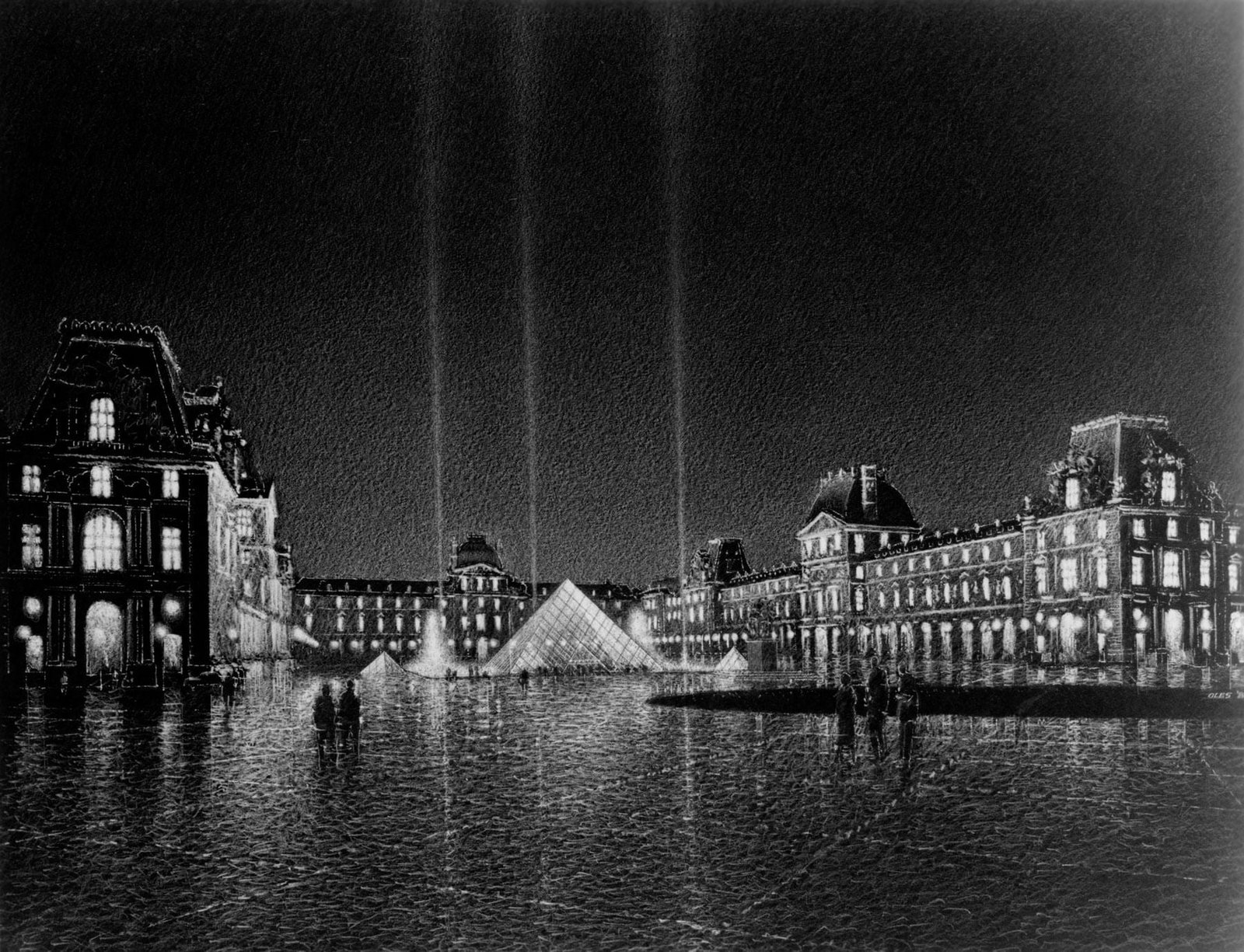
Drawings that will be available to the public for the first time thanks to the archival acquisition are of the Louvre’s modernization in Paris, four significant MIT buildings, the John F. Kennedy Presidential Library, the Rock and Roll Hall of Fame, and more.

The acquisition will help advance the MIT Museum’s Architecture Collection’s mission of conveying the evolution of architectural education since its founding in the 1860s.
Hashim Sarkis, MIT School of Architecture & Planning dean, said MIT is a fitting home for the treasure trove.
“Pei’s partner, the late architect Henry Cobb, once spoke to me about how important MIT was in I. M. Pei’s life and career,” Sarkis said in a statement. “Pei came to the United States from China to study architecture and found at MIT a place where he could belong. It was also at MIT that he received one of his first major nonresidential commissions—the Cecil and Ida Green Building for Earth Sciences (1962)—beginning a long relationship with the Institute and its campus.”
Sarkis continued:
“There is something deeply meaningful about seeing this archive come to MIT, where so much of that journey began,” Sarkis added. “It will become a living resource for our students, offering direct access to the drawings, models, and ideas of an architect whose work continues to shape the way we think about cities, institutions, and the public realm.”
The drawings and archives are expected to be processed and catalogued by fall 2028.