
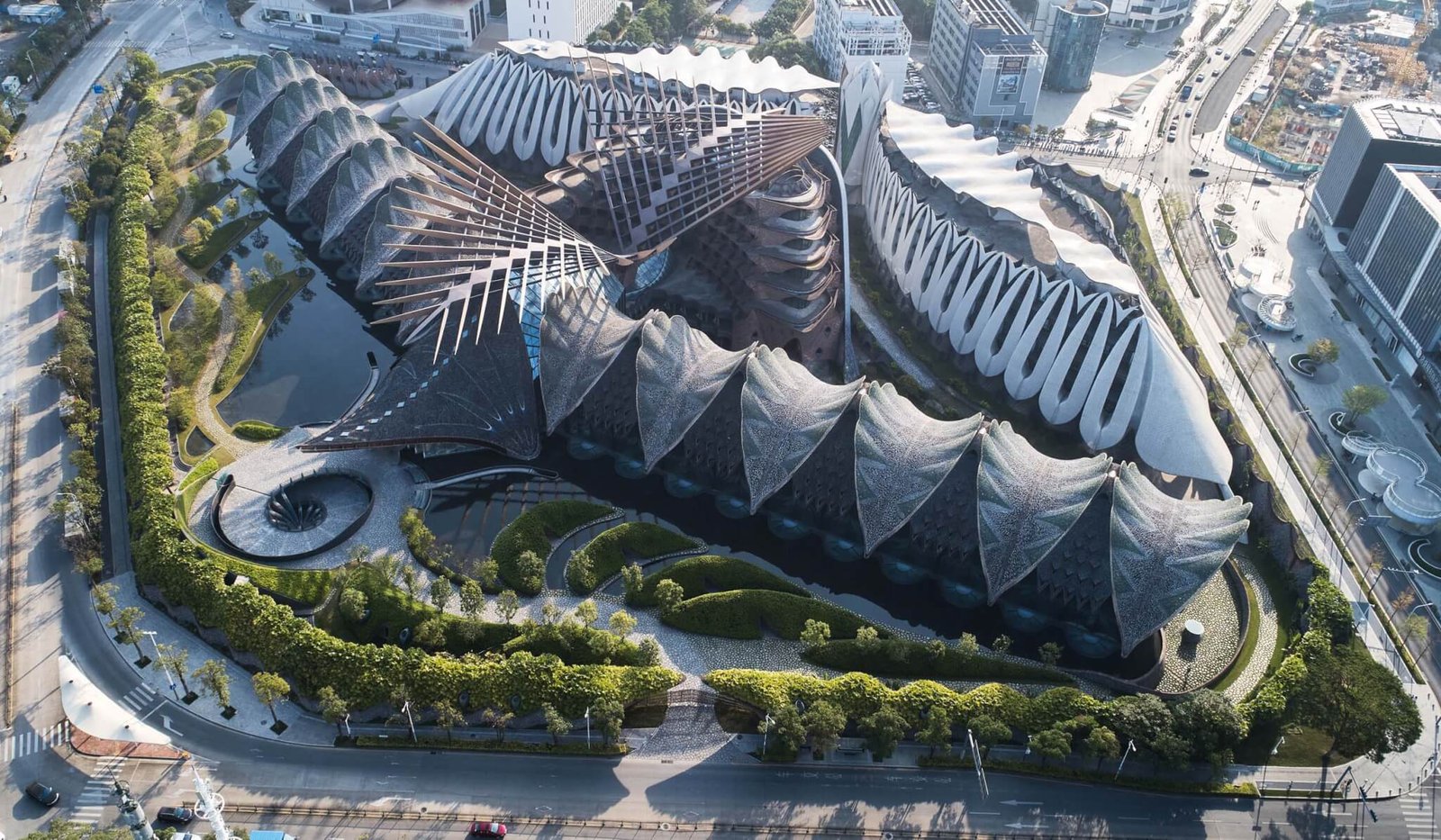

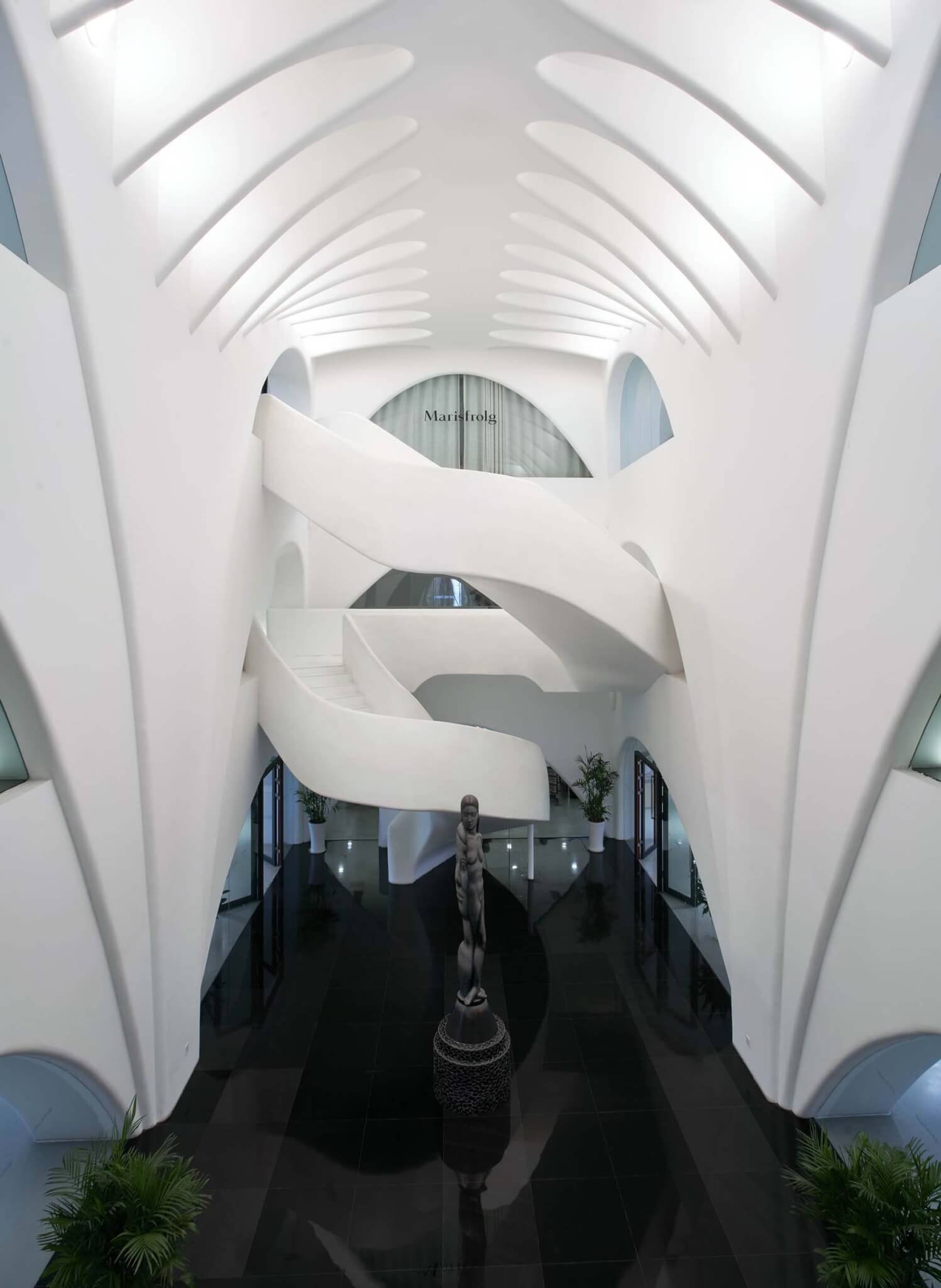
In Shenzhen’s Longhua District, the Marisfrolg garden campus arrives like an ecological island—gated, cultivated, a world entirely of its own. Covering nearly 12.35 acres of land, the Comprehensive Creative Complex is the headquarters of the Chinese fashion group Marisfrolg. Founder Zhu Chongyun commissioned the New Zealand–based firm Architecture van Brandenburg nearly two decades ago to create a campus for her brand that reflects the laws of ecology and nature. Here, nestled in greenery, the distance between the phases of design, production, and display are collapsed: Studios, factories, warehouses, showrooms, event spaces, restaurants, and soon-to-be museum spaces, along with a boutique hotel, are interwoven with gardens, ponds, and flora. Employees and visitors coalesce into a shared cycle of creativity. From lavish underground car parks to fluid interiors, minimal signage encourages one to wander. The campus is designed to delight.
To move through it is to think about regeneration—not as defined by the design industry’s shorthand for sustainable practices but in its older, more primal comprehension: the 18th-century biological concept of regrowth; damaged cells, tissues, and organs in renewal. Regeneration, in this sense, stems from a degraded nature and prioritizes healing through resilient systems. It imagines and creates pathways despite paralysis. The precondition is in flux and in progress. Here, regeneration becomes the most useful lens for understanding what Marisfrolg has built.
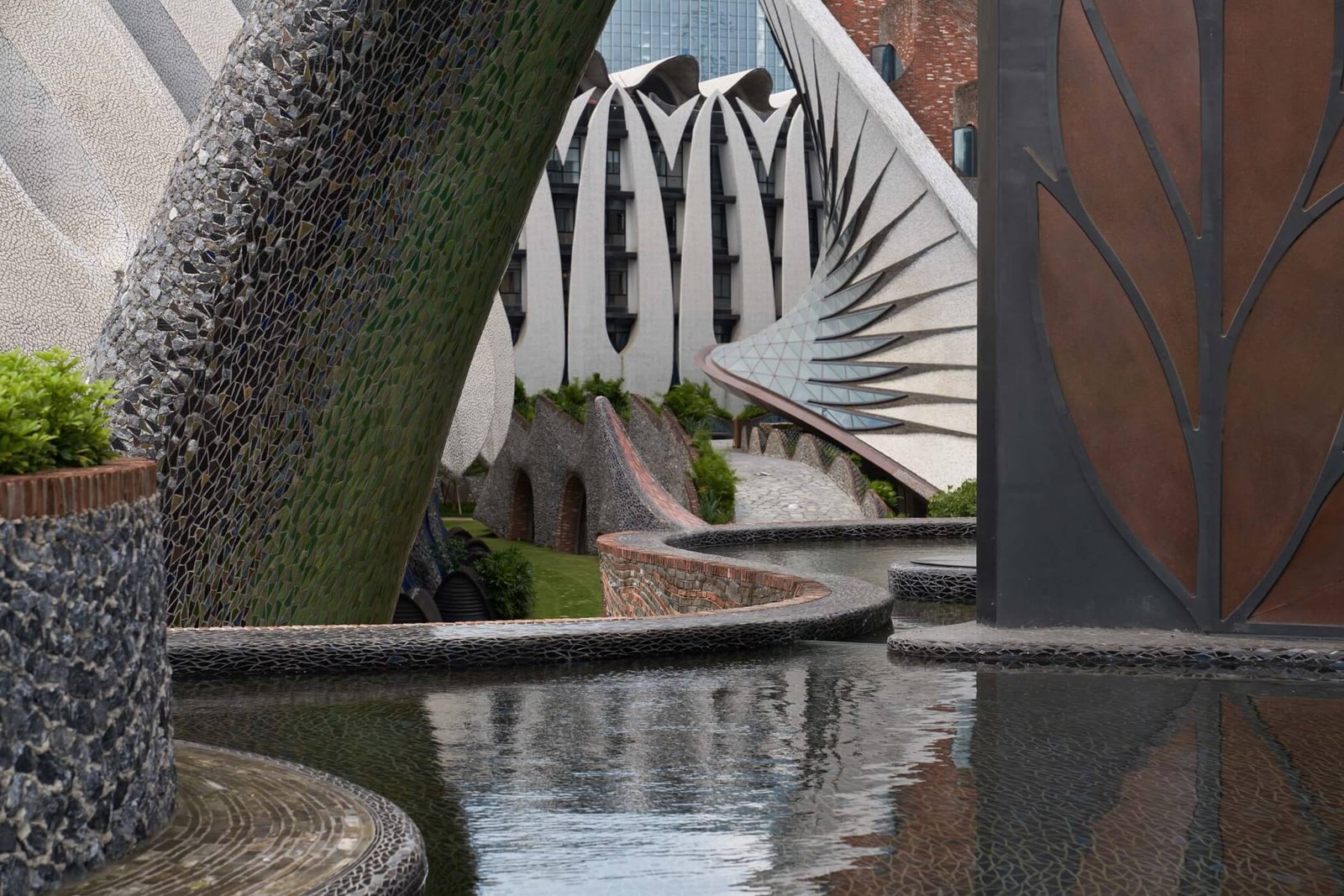
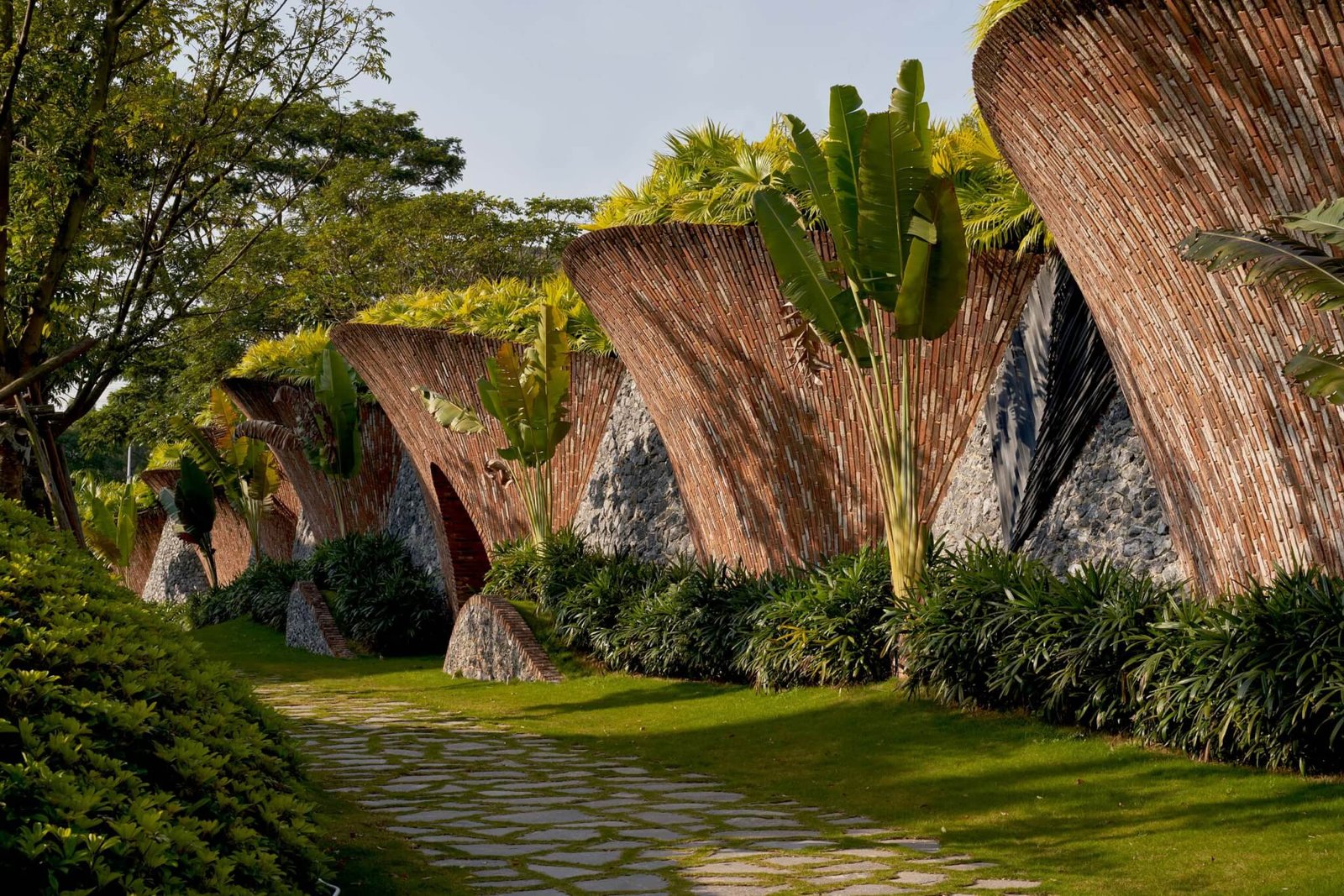
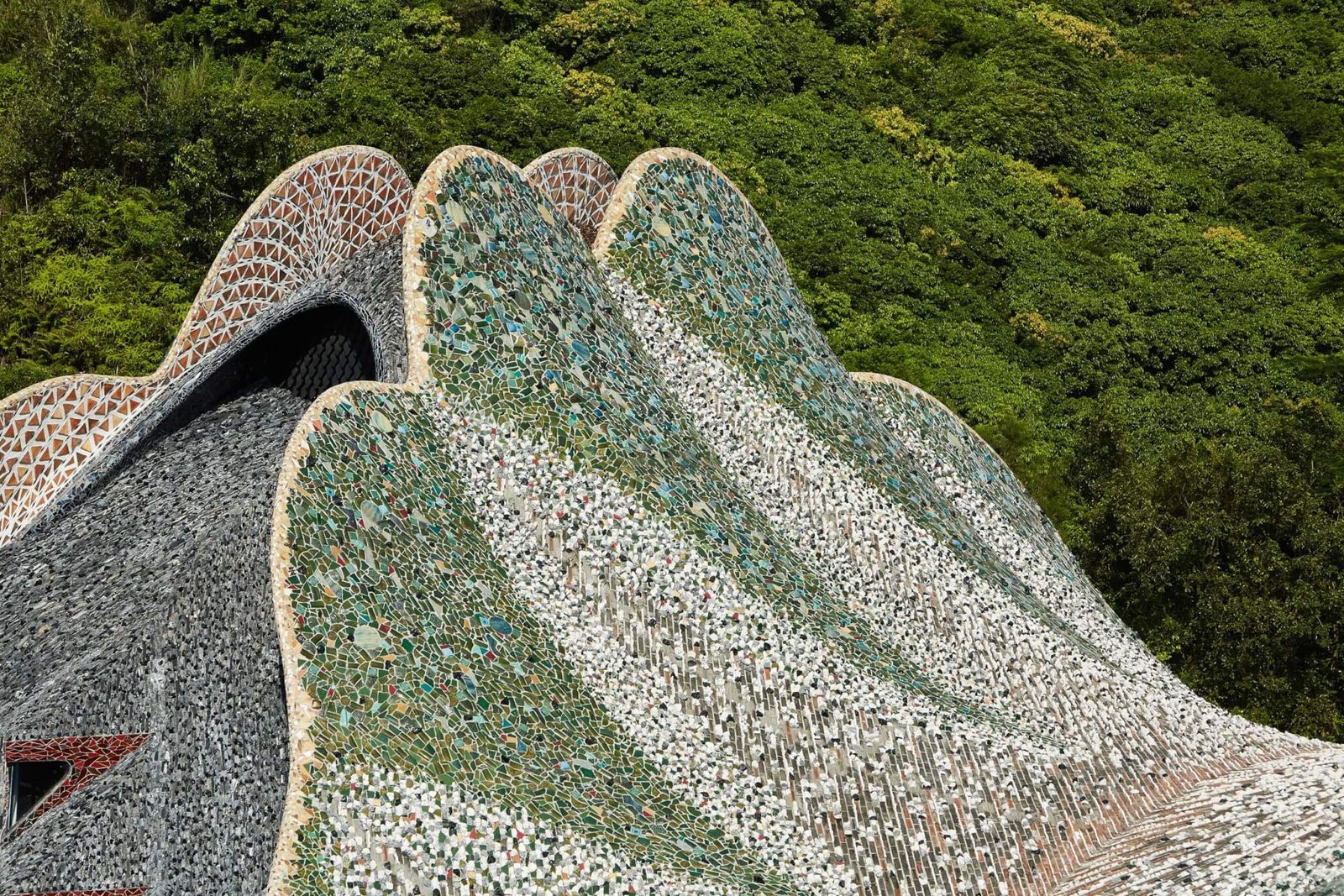
The architects attribute formal inspiration to a seabird in flight that appeared in a 2006 Marisfrolg show, a symbol of motion and prosperity. Yet the assemblage of structures, with its biomimetic forms and hyperbolic arches, constructed by well-known Chinese design and engineering institutes, reads more like a Frankenstein of several creatures, evoking fish, bird, dragon, reptile, or butterfly. Each part of the whole takes on a program that, together with all its parts, forms an integrated, mixed-use complex. Diverse in color and form, a spectacular tiling approach unifies the exterior cladding. Here, locally discarded materials like ceramics fragments, marble offcuts, recycled brick, and glass shards are reused as tiles. No two pieces are the same.
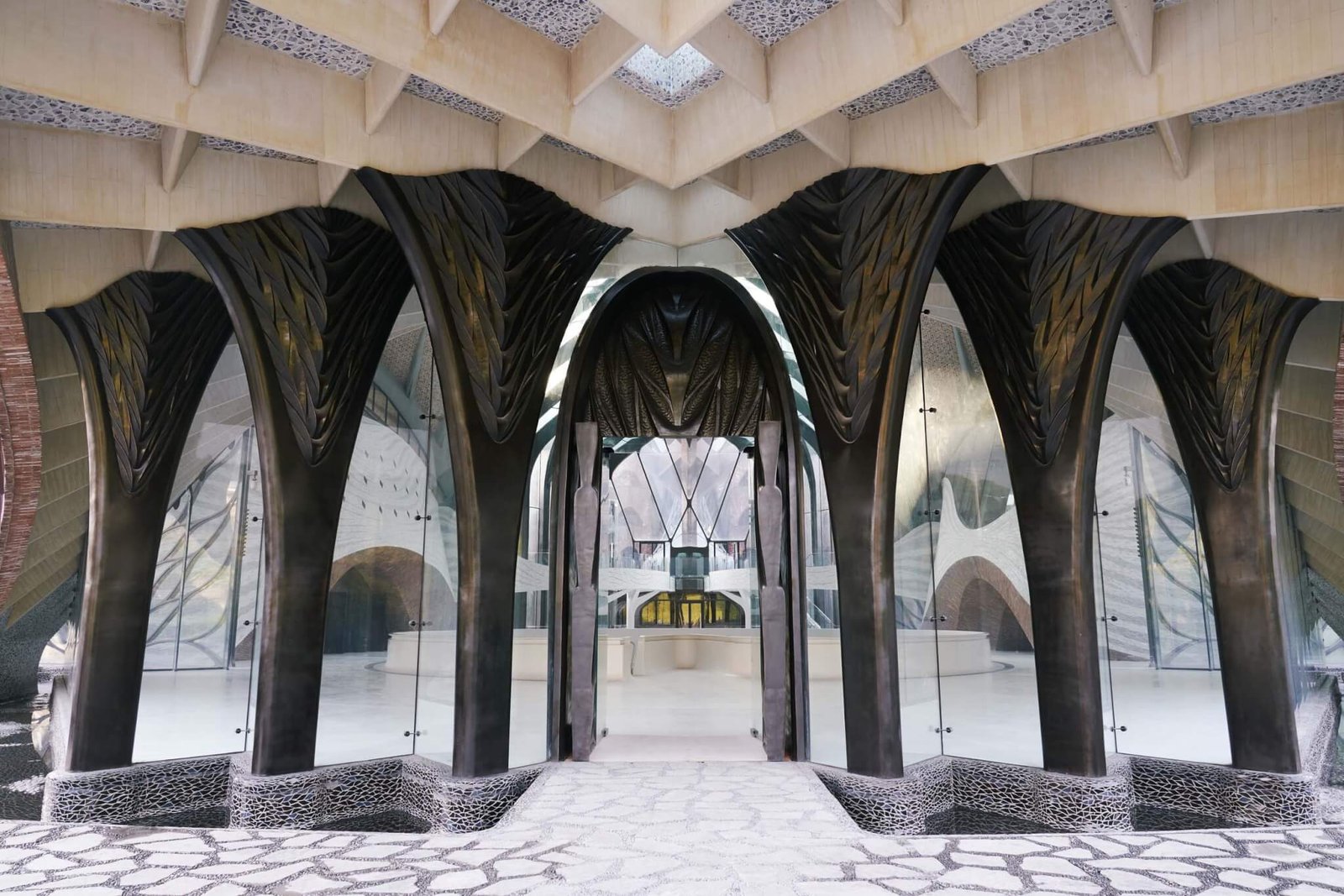
The complex and its grounds were officially completed in 2023. During my visit in December 2025, many local craftsmen were spotted meticulously tiling and repairing various parts of the cladding. The impetus for tiling with recycled materials was the Spanish master Antoni Gaudí. Inside the Zaha Hadid–designed showroom, the majority of floors and furniture, too, are feats of material innovation, all made from recycled aggregates. Even the undulating partition walls cast in glass-reinforced gypsum were fabricated from recycled wax molds, creating space to showcase the many brands that live under the Marisfrolg Group. This ubiquitous use of recycled materials aligns with the brand’s mission to revive local craftsmanship and protect the environment.
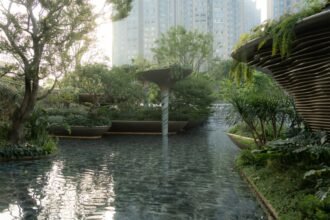
Weaving in and out of the buildings, I was in awe of the details; bespoke fixtures, from butterfly-shaped door handles to custom lotus flower lights, glowing as if alive. Exposed ribbed structures and generous ramps spiraled upward in a large atrium, anticipating the spectacle of fashion shows to come. Outside, a colonnade drew me in. Upon closer look, I realized more clearly that they were clad in reclaimed tiles, laid in a twisted pattern to create a seamless ground-to-column transition; solid tornadoes-as-planters for the verdant green roofs above. Further ahead, a concave awning tiled in a size-and-color gradient of repurposed blue-and-white porcelain fragments created a moment for respite. But perhaps most spectacular are the delightful leaf-shaped drain grates dotted throughout, signaling the ever-present water infrastructure. More than a picturesque feature, the surrounding ponds draw in prevailing winds and capture rainwater runoff, serving as a passive cooling system for the entire campus. The structures reflect in the rippling waters and appear to merge. Beyond biomimicry, this campus is the union of the human hand and the ever-changing forces of climate.
Despite the project’s material, formal, and programmatic merits, the campus is gated. Marisfrolg operates 400-plus stores in China at a luxury price point; its clientele is largely wealthy, upper-middle class. The recycled tiles and craft labor are genuine commitments and not decorative, but they exist within an enclosed system. Regeneration, as a biological concept, implies a body healing itself from within while remaining dependent on external inputs. This walled campus, for all its ecological intelligence, is a reminder of the fundamental conditions for regenerative systems: continual and collective care. Who tends it, and for whom, are questions the architecture places on display as much as the exquisite clothes.
Marisfrolg, founded in 1993, remains little known to the West—a strange fact for a brand that has built something this ambitious. A Chinese brand, memorialized in form via Spain, New Zealand, Iraq, and London, crafted in Shenzhen. Rather than shying away, this place holds all of the complexities of regenerative design: a campus in bloom, a specimen of more symbiotic systems to come.
CoCo C. Tin 田智婷 is a Hong Kong–born designer, researcher, and writer specializing in cross-cultural investigations and alternative ecologies. She is trained as an architect and works with global collaborators to bring complex worlds to life. Her interdisciplinary practice spans design, strategy, and editorial. She currently lives in New York and is a senior strategist at 2×4.