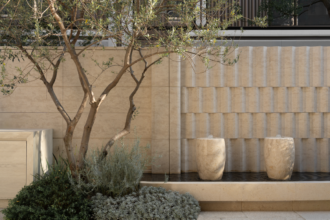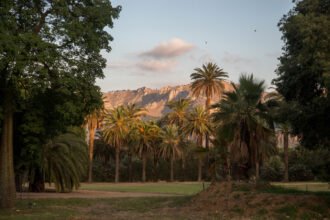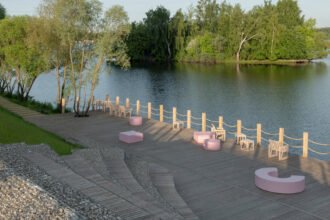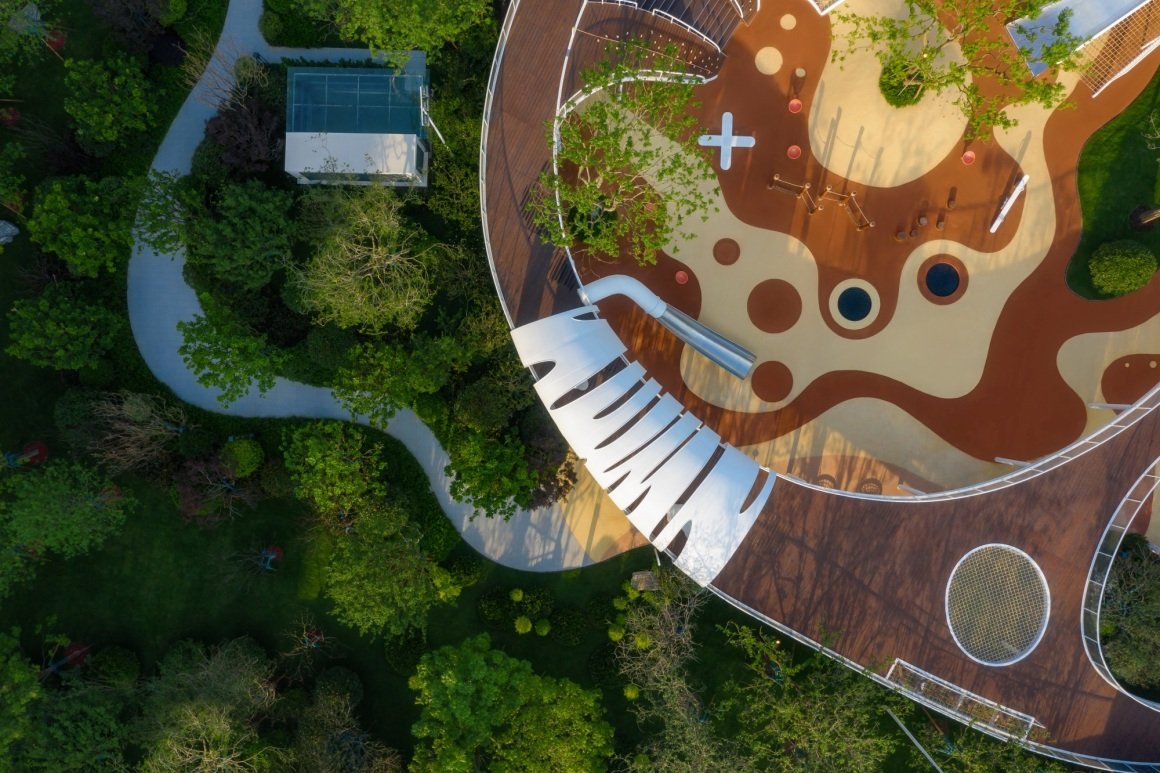

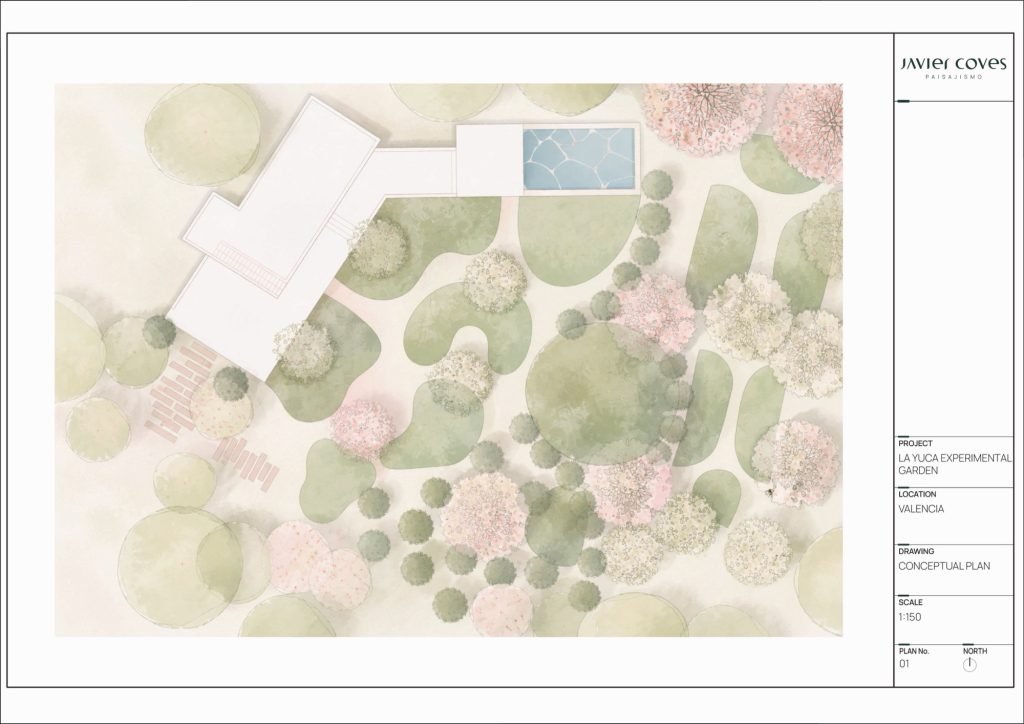

Located in Valencia, at the intersection of design research and ecological practice, this naturalistic Mediterranean garden represents a rigorous investigation into how landscape can be both scientifically purposeful and spatially compelling. Conceived by landscape designer Javier Coves, it brings together over 200 plant species within an architectural environment of measured restraint, a setting where observation, experimentation and aesthetic intention coexist in deliberate equilibrium.
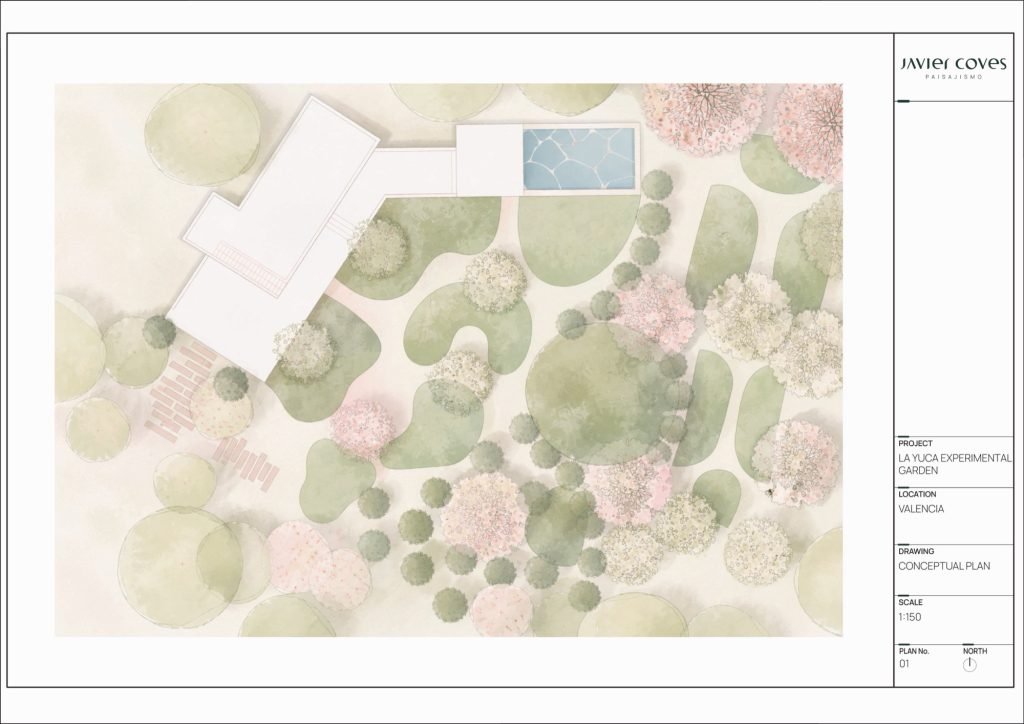
The garden operates as a living laboratory in the fullest sense, a field site where plant combinations are tested against real conditions, where growth dynamics unfold across seasons and where sustainable strategies are evaluated with the discipline of applied research. Every spatial decision, from the arrangement of species groupings to the transitions between planted zones, is informed by a dual commitment to scientific inquiry and experiential quality. This is not a display garden, nor a decorative exercise. It is a working instrument for understanding how Mediterranean flora performs, adapts and endures.
The architectural environment that frames this inquiry is itself a considered act of design. Organic forms and softly curving structures dissolve the boundary between built and planted, while a neutral palette of natural materials and earthy tones grounds the space in the tonal vocabulary of the Mediterranean basin. There is no competition between architecture and landscape here, only reciprocity. The structures recede where the planting demands attention and anchor and orient where the spatial sequence requires it. The result is an atmosphere of concentrated calm, light filled, unhurried and attuned to the character of the place.
The research agenda embedded within this garden addresses some of the most pressing challenges facing contemporary landscape practice. Climate adaptability is tested through the careful selection and monitoring of species native to or adapted to the Mediterranean climate, forming an evolving catalogue of resilience. Efficient water management is treated not as a technical constraint but as a design discipline, shaping planting density, soil strategy and spatial organisation from the outset. The privileging of native flora reflects a commitment to ecological coherence over horticultural novelty, while the development of low maintenance systems speaks to a pragmatic vision of landscape that can be replicated and scaled across larger projects and diverse contexts.
Taken together, these investigations position the garden as a prototype, a resolved, beautiful and intellectually rigorous proposition for what Mediterranean landscape design can be in an era defined by climatic uncertainty and resource consciousness. It unites design sensibility with sustainability principles and the patient rigour of long term observation, offering the jury not simply a garden to admire, but a model to consider.