

On a March afternoon in New York’s Hudson Valley, you might find yourself in a treacherous, liminal moment of thaw. The snowdrifts, long piled up over the winter, are finally beginning to recede. Grass is starting to poke its fingers through the slush. Things are muddy, slippery, and still very, very cold. But at one residence in Accord, New York, the thaw takes on the feel of a zen retreat—the melt drips from galvanized gutters down rain chains, which in this context appear more like Brutalist sculpture than a functional piece of hardware.
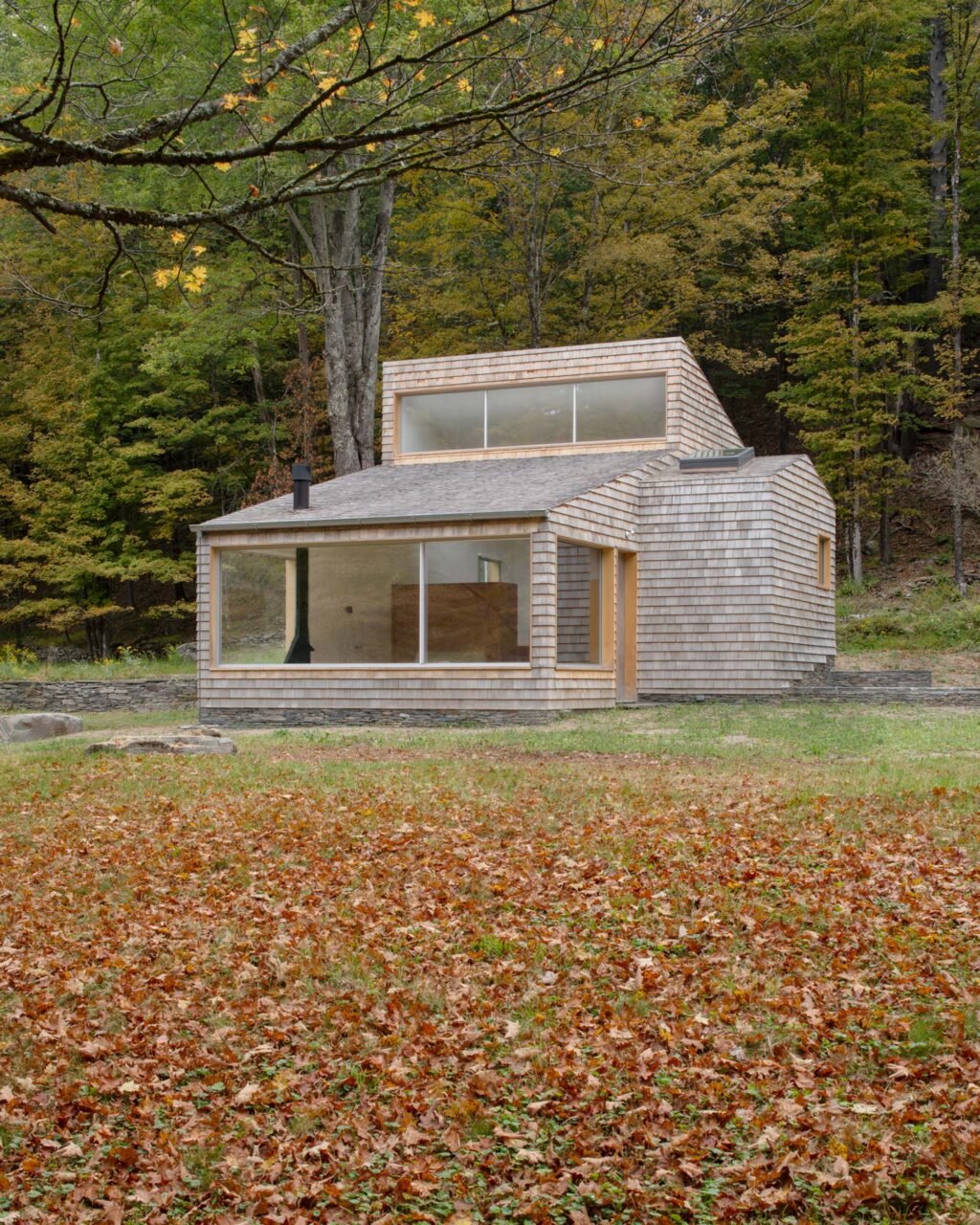
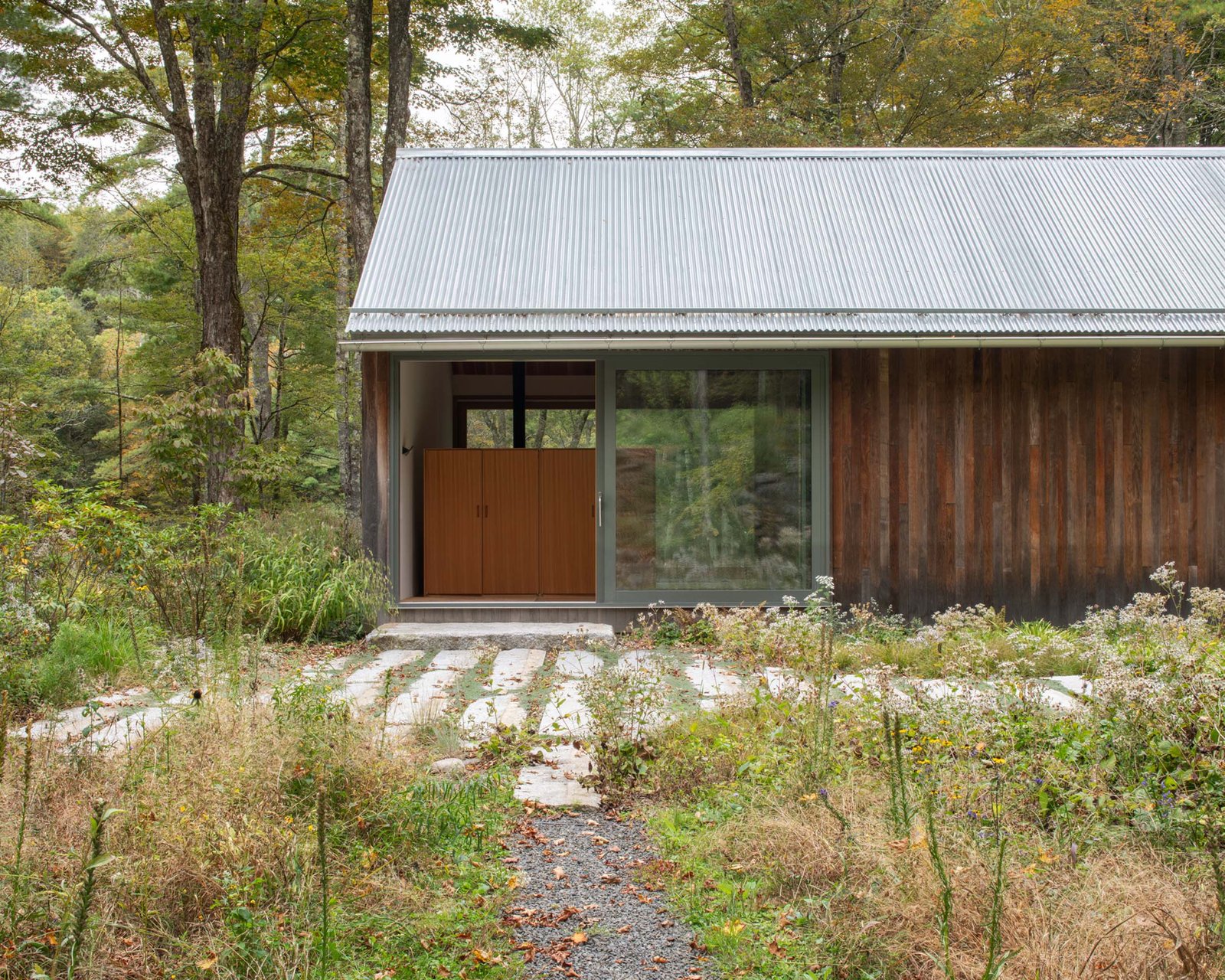
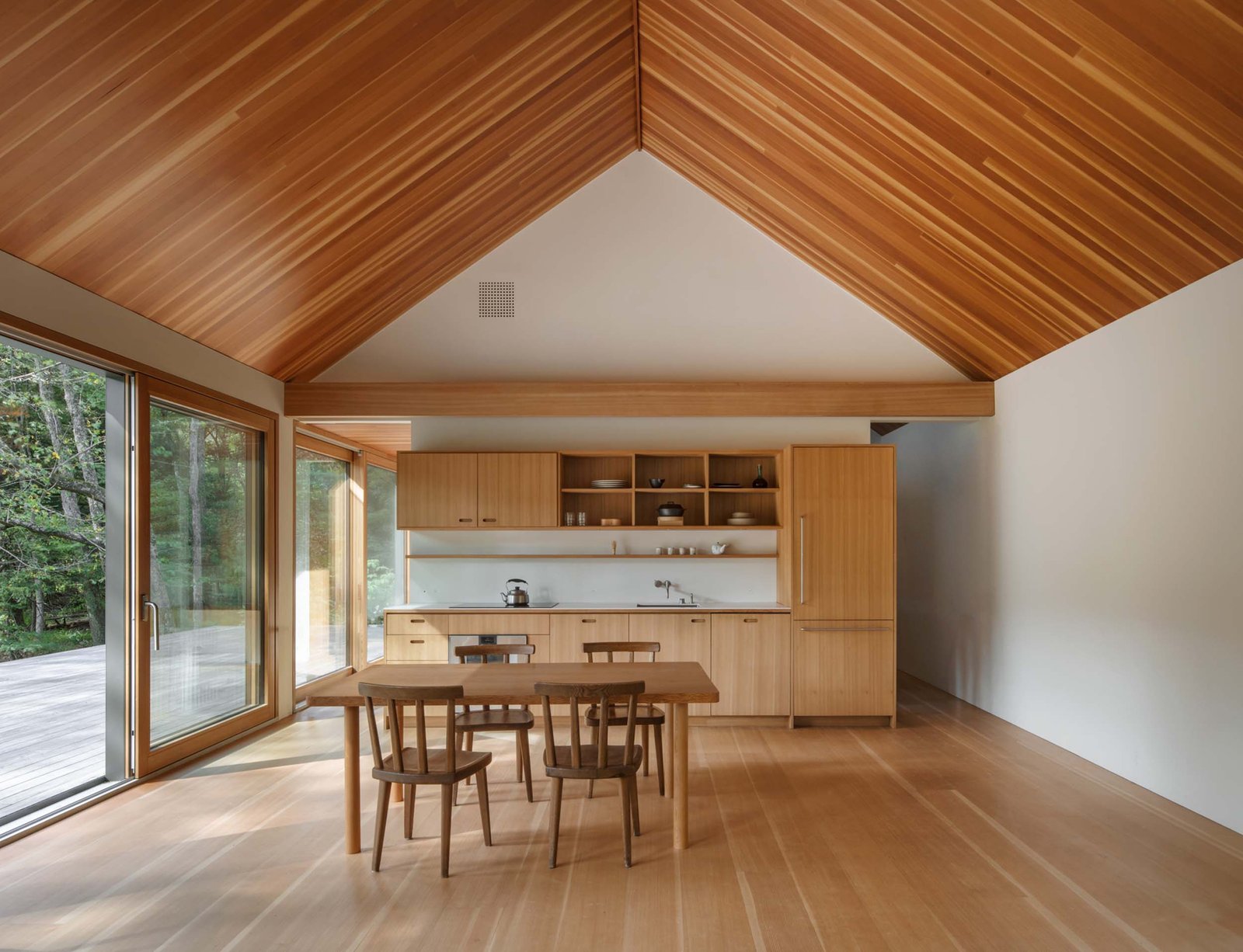
New York City–based architect Neil Logan is the visionary behind this monastic property. During the pandemic, he was approached by an existing client to create a small campus of residential structures on a newly acquired property in Accord, New York. The site already had two buildings, which would serve as the footprints for a rebuilt guesthouse and studio. And eventually, the site will feature a third house as well—envisioned as a more robust residence that would accommodate the homeowners and their family in the long term, as they spend weekends and summers there. “He liked the idea of spreading out buildings on the site,” said Logan, who is now designing the third building for the family. (He also picked up the project’s neighbor as another client during the process.) The two structures that have already been constructed—a 1,000-square-foot, one-bedroom guesthouse with a kitchen, living room, full bath, and office, and an 860-square-foot studio for piano practice and writing—divide uses across separate, purpose-built spaces, like a summer camp. The guesthouse is spartan but warm; the studio—a 30-second walk away, even in the slush—co-locates nonessential amenities.
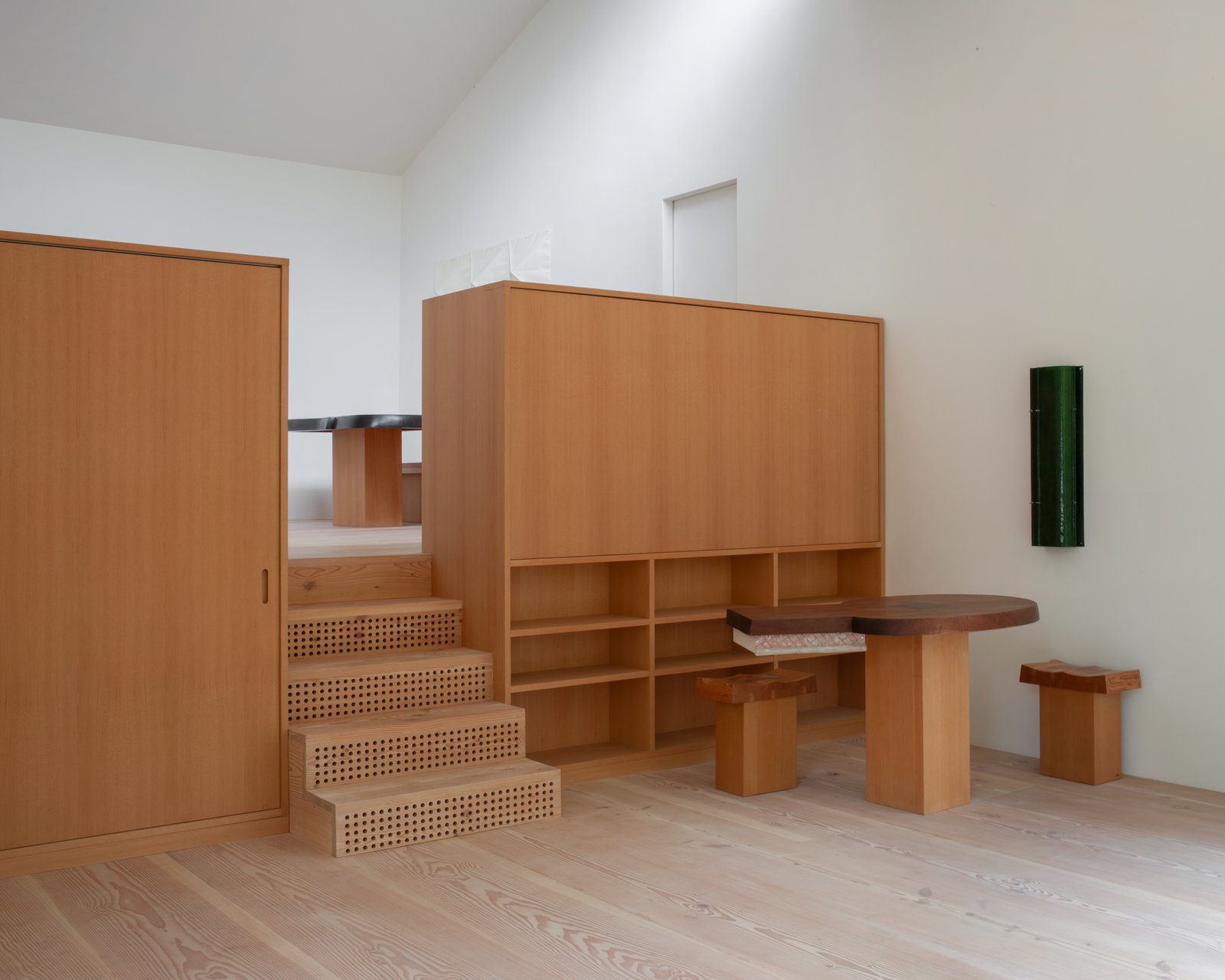
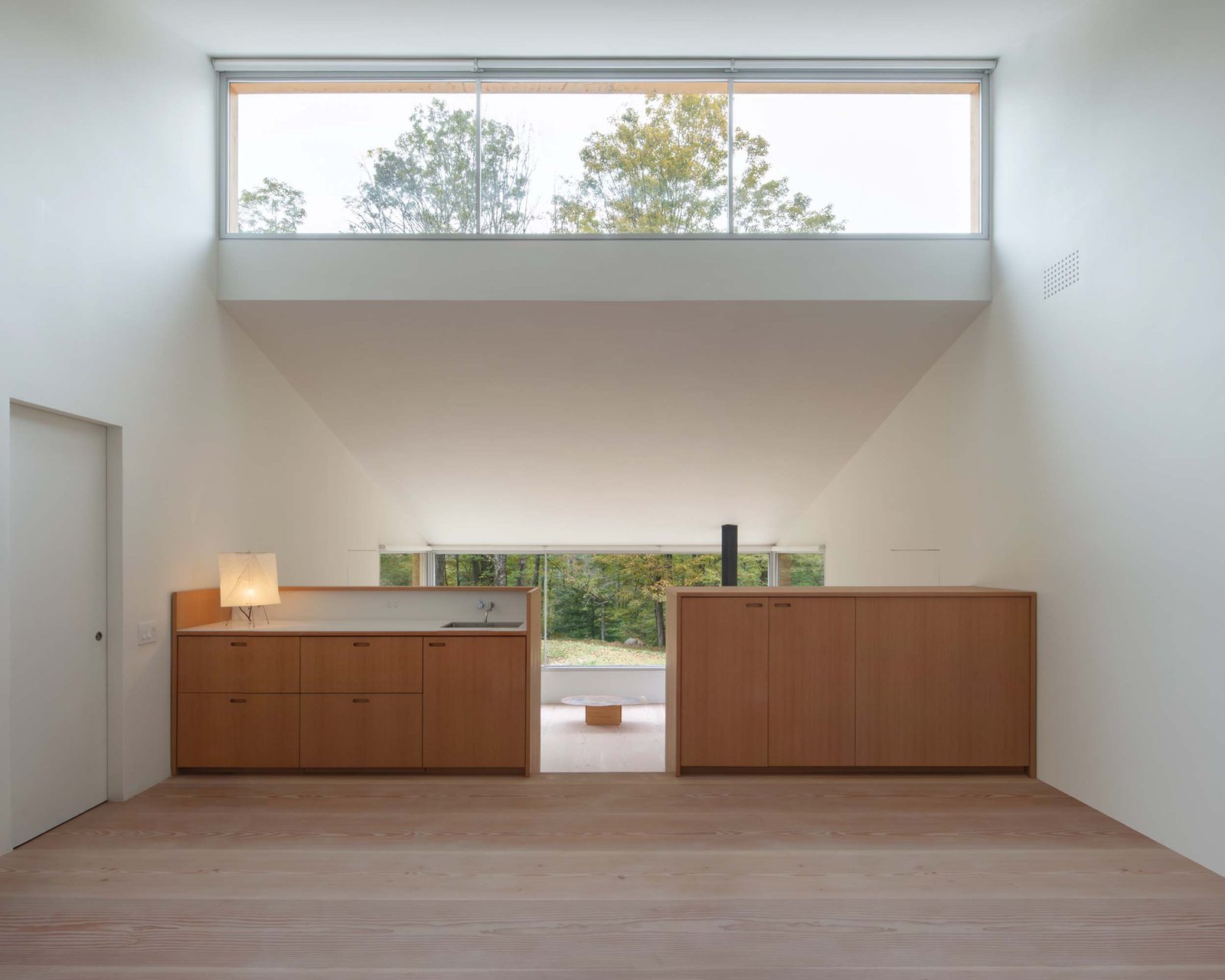
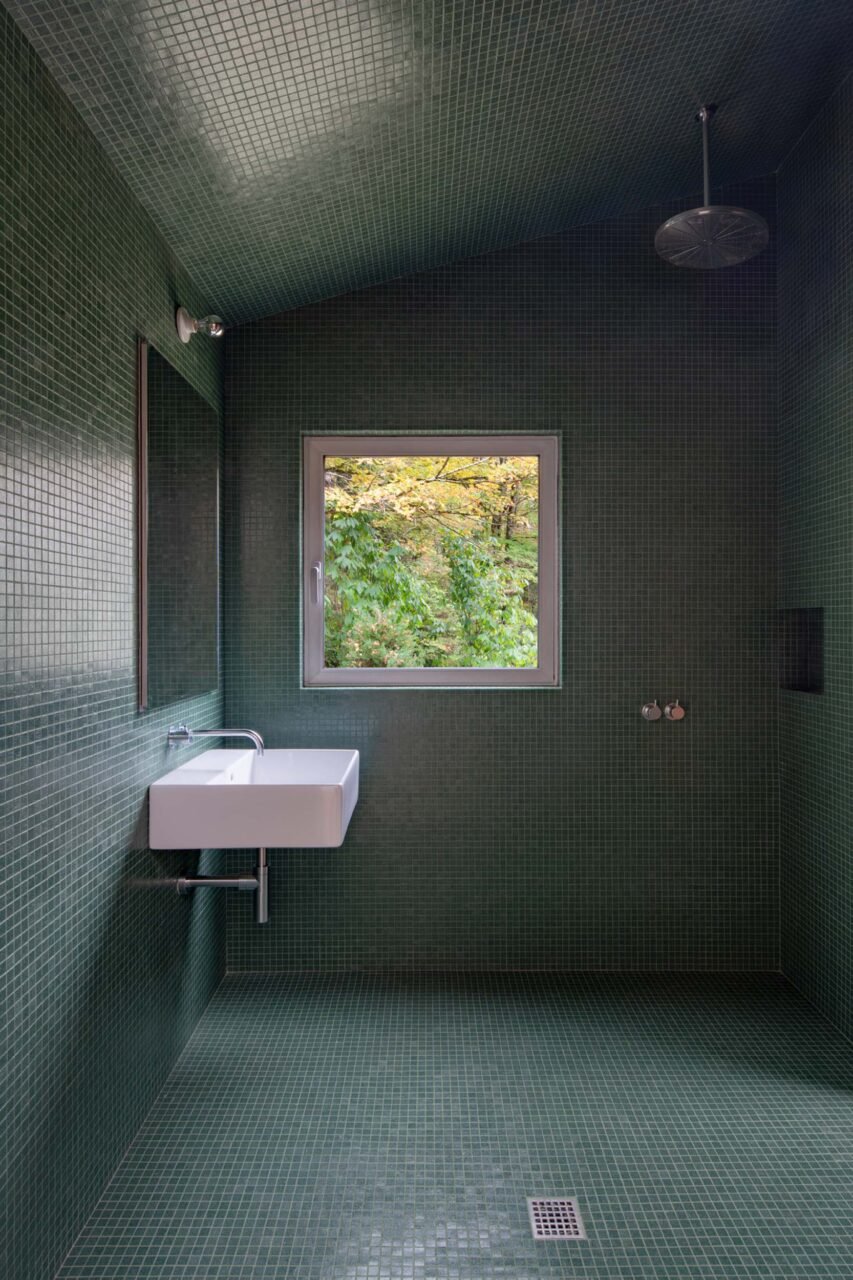
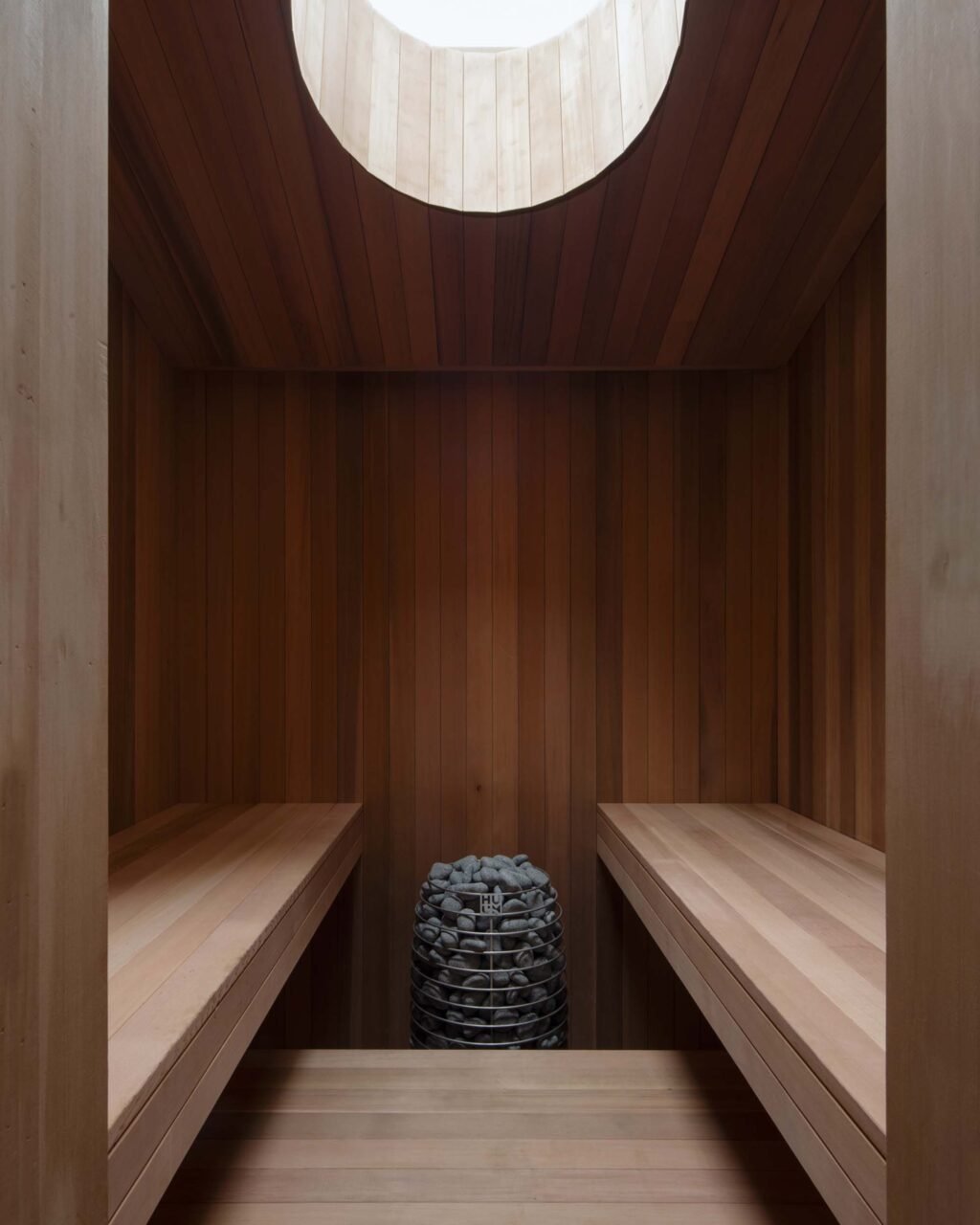
Sited on a hill near the road, the studio required a full spatial reconfiguration. Logan removed all of the interior partitions, opening the structure into a unified, light-filled volume. “The one feature of the existing house that was nice was that it had two levels that were defined by the grade change,” said Logan. He retained that element for the new design but moved the entrance to the side of the building, where it accesses a stone path to the guesthouse. Logan transformed the former entrance into a wet-room-style bath enveloped in green Bisazza glass tile, which adjoins a sauna with a round, operable skylight. On an upper mezzanine, the husband can practice on his restored 1930 Steinway Model B surrounded by patchwork textiles custom-made for the space by textile artist Adam Pogue through Commune. Stair risers between the levels feature a Swiss-cheese puncture detail—a trademark of Logan’s—that also crops up on the floor and wall in place of a standard metal vent cover.
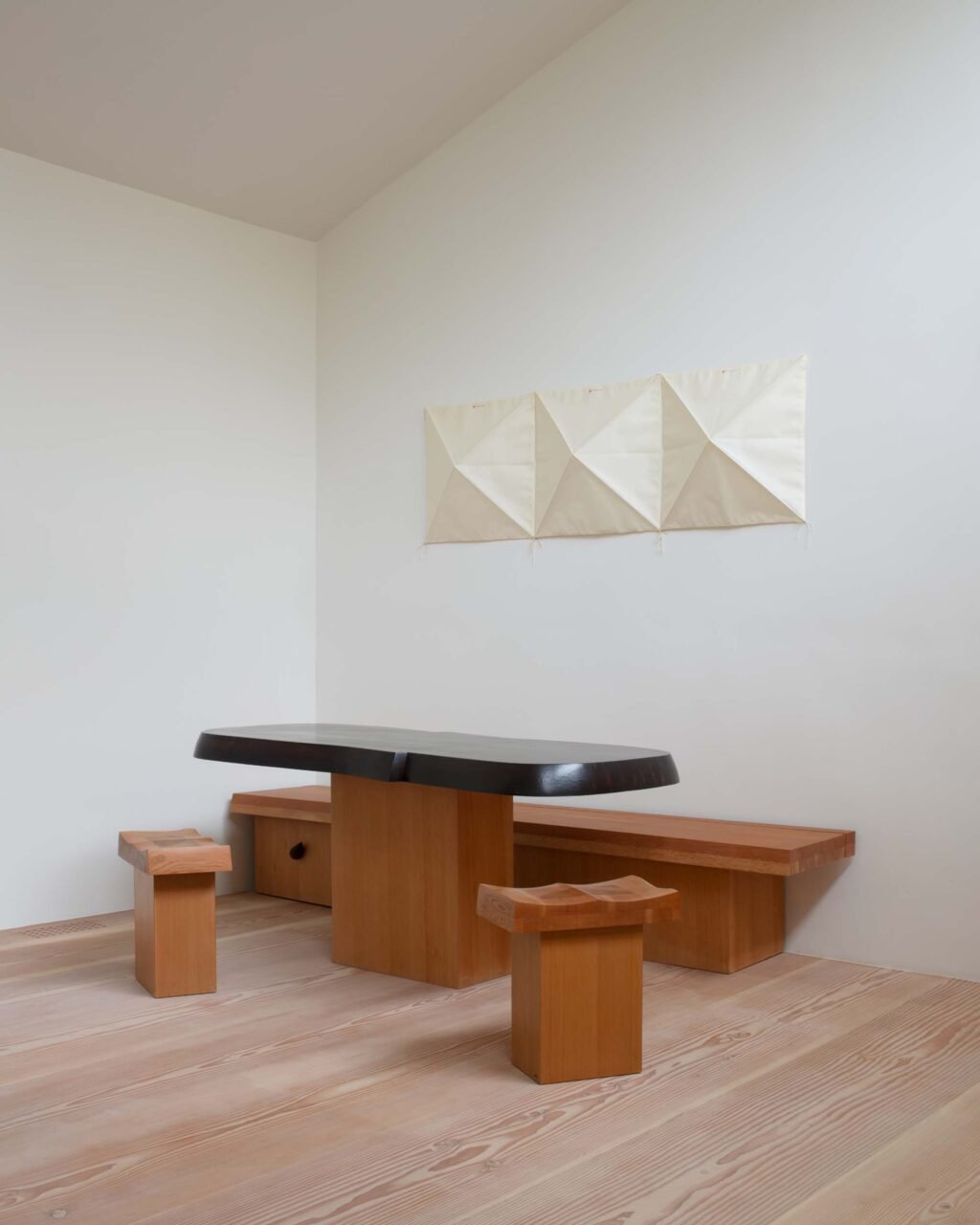
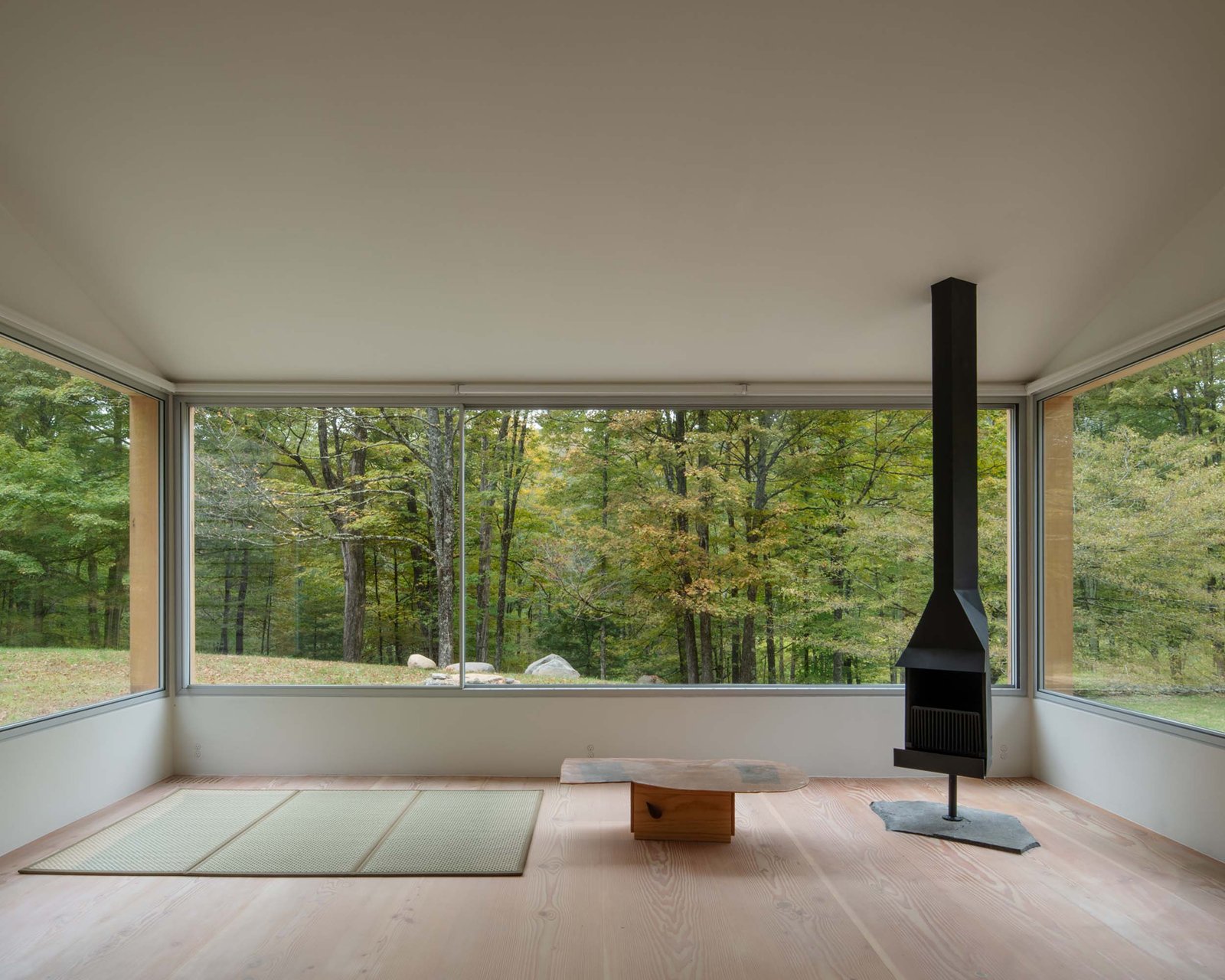
The husband, a former curator, was active in furnishing the project. “I have the good fortune of having clients that are quite educated about design,” noted Logan. In addition to commissioning the Pogue curtains, the homeowner hired New York artist Minjae Kim to create a chess table for the studio, along with a bench, stools, coffee table, and a small desk for his wife, a writer. Sculptural lighting by Florence Louisy from Aequo Gallery accents the wall nearest the desk. From the Nakashima love seat, a visitor can take in views through sizable aluminum-framed windows, which look onto the yard and forest.
Not far away, a petite wood-burning stove cuts an unusual, triangular profile: Initially spotted by Logan in a book, it’s a Spanish model designed by the architect José Antonio Coderch y de Sentmenat in the 1950s and now reissued by DAE. Rather than a traditional hearth, it sits atop a stone sourced from the property, which has been inlaid flush with the Dinesen Douglas fir floors. But not all of the furniture was sourced from galleries and collectors—Logan, too, played a role, designing a bed, desk, and dining table for the guesthouse.
Logan shared that for both buildings, a priority was opening the interior to the landscape while maintaining privacy from the road. “There’s no fence or much planting, so you can see into them,” he said, so the street-facing sides of both structures are shingled and monolithic, with limited views into the interiors, while the sides facing nature have generous glazing.
The property will reach its fullest expression in a few months, when the grounds—rewilded, with help from LWLA—grow lush with native mountain laurel, rhododendrons, and aster. Until then, the thaw will have to do.