

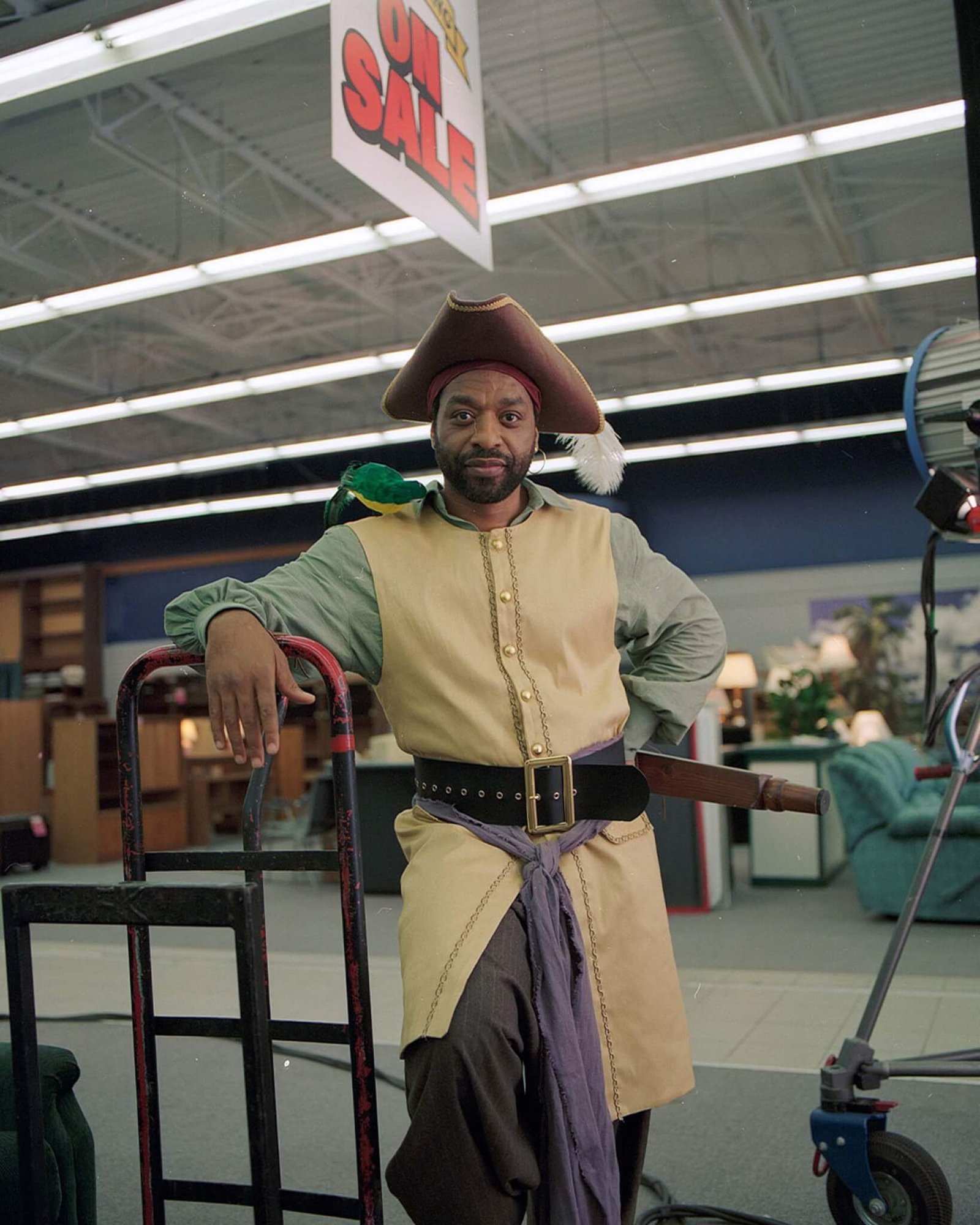
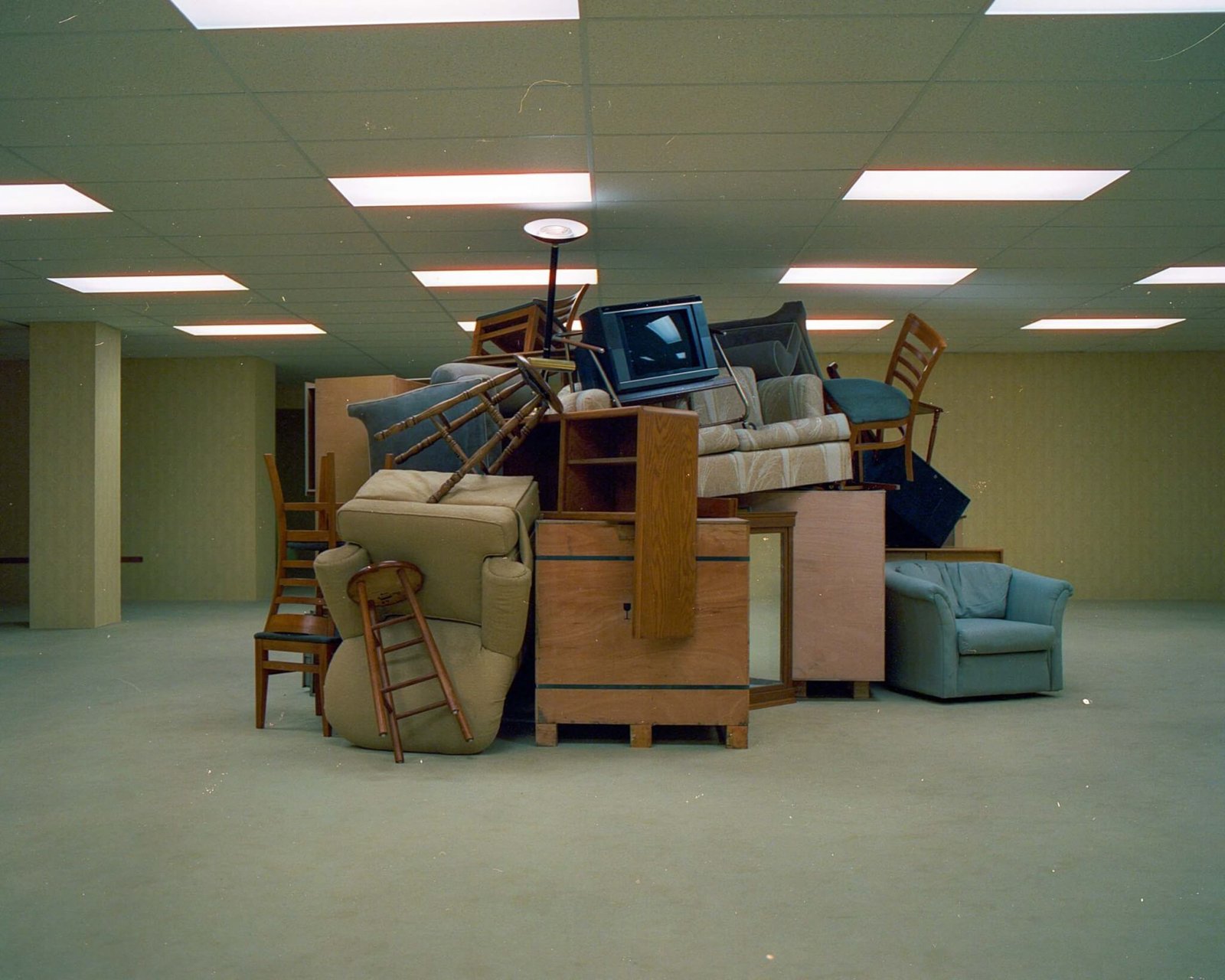
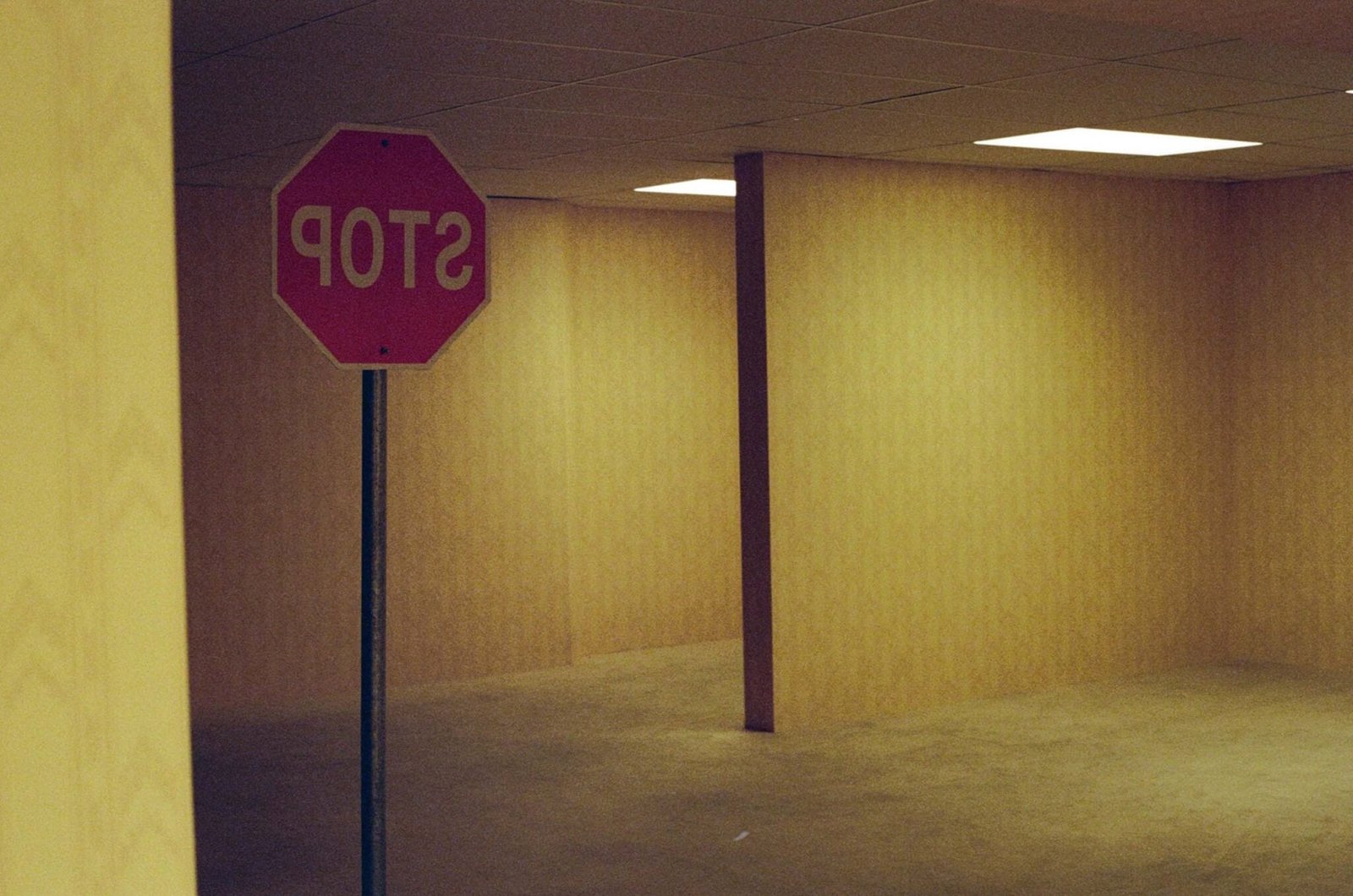
In Backrooms, Clark (played by Chiwetel Ejiofor) is a wannabe architect stuck in the life of a suburban furniture salesman. He feigns a warm personality in the commercials he stars in to lure customers to his sparsely decorated store, playing the role of a pirate with an unconvincing peg leg. He lives alone in his showroom, placing his bed in the center of the oversized commercial space in an oversized shopping complex. He assures his therapist that he is not “lonely.”
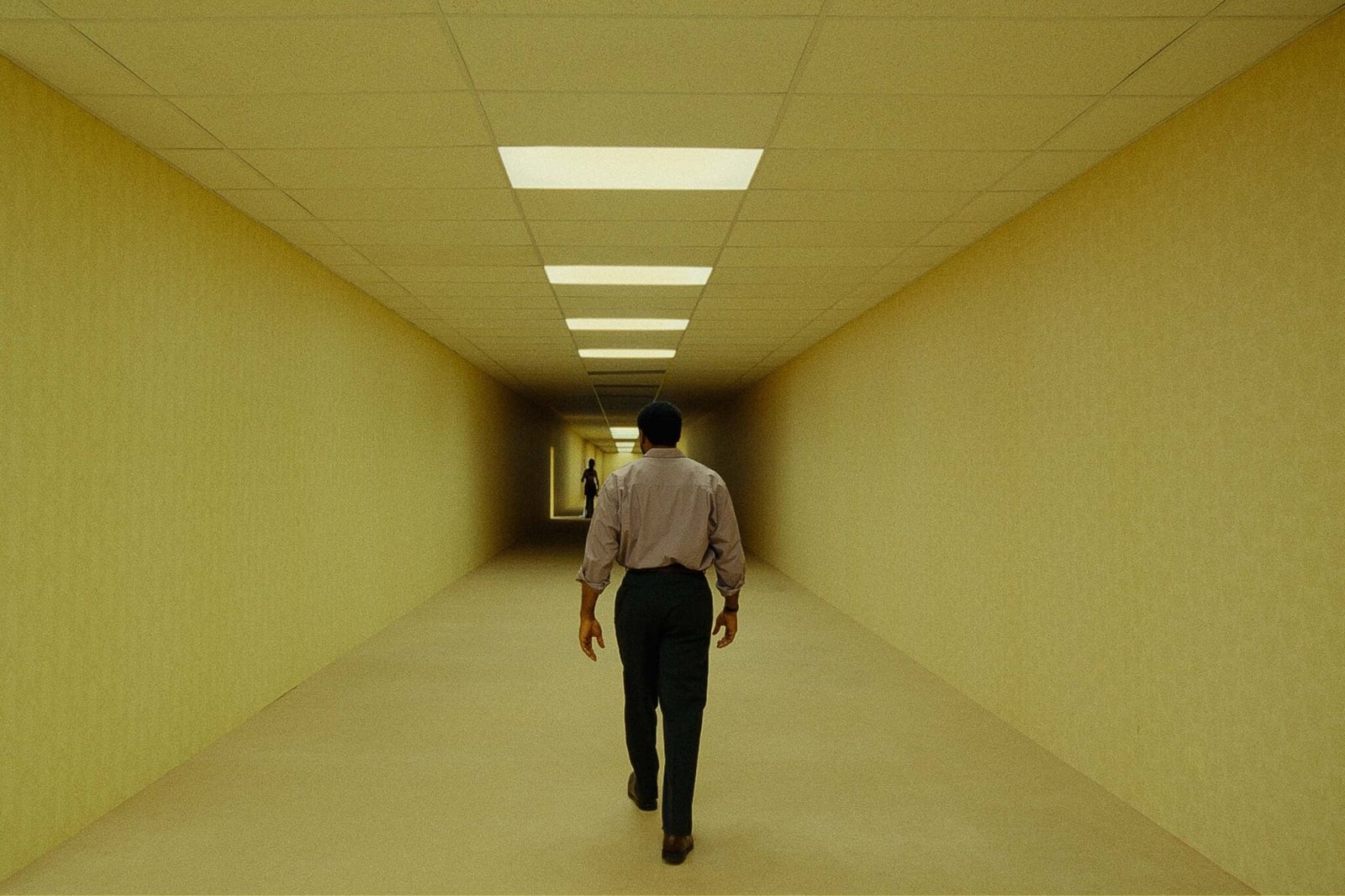
One night, Clark is lured into the showroom basement by flickering lights. These lead him to walk through a wall into an endless series of windowless rooms: the “backrooms.” Nonsensical details and all-yellow finishes stretch in every direction. Throughout, they generate the artifacts of vague memories. Here, the built environment, seeming to have a mind of its own, reflects our hopes and fears back to us. He later tells his therapist that they looked like they were “created by construction workers on acid.”
The backrooms appear carelessly designed and expediently detailed, a reflection of a built environment that has largely shaped been by financial abstractions. They are monstrously over-scaled and underused, reflective of Rem Koolhaas’s “junkspace,” a term he uses to describe the spaces produced in the fallout of modernization—“the residue mankind leaves on the planet” which spells “the end of Enlightenment, its resurrection as farce, a low-grade purgatory…”.
Clark becomes obsessed with mapping the backrooms, retreating from his own life to explore their intricacies, producing sketches of overlapping floor plans. “Backrooms is coming from a longstanding anxiety we feel as a culture,” said director Kane Parsons in an interview with BBC News. “We didn’t evolve for the circumstances we’re placing upon ourselves as a species.”
Anthony Vidler provides a history for this predicament in The Architectural Uncanny (1994), arguing that architecture has been intimately linked to the notion of the uncanny since the late 18th century, the beginning of the “modern” period. “At one level, the house has provided a site for endless representations of haunting, doubling, dismembering, and other terrors in literature and art. At another level, the labyrinthine spaces of the modern city have been construed as the sources of modern anxiety, from revolution and epidemic to phobia and alienation.” In the present day, the common trade-off for all the modern conveniences afforded by centuries of industrialization is an isolation that perpetually haunts the imagination of anyone who drinks it in.
As the film progresses, it is revealed to the audience (spoiler alert) that the backrooms are echo chambers of Clark’s own subconscious and the collective subconscious of those who came before him. Parsons is far from the first director to use the architectural interior as a metaphor for the mind; what better device is there for visualizing the ambiguity of thought? The cold and maze-like corridors of the mountain resort in The Shining (1980) use spatial incoherence to amplify protagonist Jack Torrance’s descent into madness. The low ceiling of floor 7 ½ in Being John Malkovich (1999), translates the claustrophobic corporate inadequacy felt by protagonist Craig Schwartz before discovering a literal portal that places him in the shoes of a respected actor.
Yet Backrooms combines the unsettling aesthetics of abandoned 19th-century mansions and monotonous 20th-century corporate spaces with that of the 21st-century Internet, an infinitely depthless and frequently glitchy “place” with which the Gen Z director is most familiar. Parsons references draw less from films than they do from puzzle-platform video games like Portal and creepypasta videos like Don’t Hug Me I’m Scared, which drew viewers into alternate realities that were limited only by RAM storage and the human imagination.
At the age of 16, Parsons began Backrooms as a web series inspired by an anonymous 4Chan post from 2019, which featured a photograph of a painfully mundane store interior (which was later discovered to be a former furniture store in Oshkosh, Wisconsin). It included an ominous warning: “if you’re not careful and you noclip out of reality in the wrong areas, you’ll end up in the Backrooms, where it’s nothing but the stink of old moist carpet, the madness of mono-yellow, the endless background noise of fluorescent lights at maximum hum-buzz, and approximately six hundred million square miles of randomly segmented empty rooms to be trapped in.” The post launched an Internet-wide fascination with “liminal space,” the unresolved and “in-between” state of the modern condition—in which we all privately straddle physicality and virtuality, legibility and ambiguity, empathy and apathy—that is given physical form in images of peopleless spaces, such as empty corridors and abandoned department stores.
Parsons brought online liminality to the big screen with the help of production designer Danny Vermette, who translated the director’s digital Blender files into more than 30,000 square feet of off-white finishes and fluorescent lighting across four sound stages. “We didn’t want it to be flat, endless rooms,” Vermette told IndieWire. “We wanted it to be awkward and to throw our actors into a world of discomfort, in a sense, whether it’s crawling through a small space or crawling up a ramp.” The cast and crew frequently became lost during the five-week filming period.
Parsons and Vermette worked together to blur the line between the backrooms and the set of aesthetic standards codified by suburbs that were built en masse in the early 20th century. Take the suburban shopping malls, built in the second half of the 20th century, designed to simulate the public life found in the urban center. These have become largely abandoned as online shopping and social media grew in popularity. Images of the resulting spaces resonated with online communities, who saw them as a spatial reflection of the suburbs’ initial design intention—to create distance between the individual and the masses—and the societal consequences and alienation that has resulted from such spaces of isolation.
Whether in ruins or hanging by a thread, these oversized spaces have taken the Internet by storm as the symbol of inhuman concerns that Western development has wrought, and continues to in a desperate bid to gobble up land and resources. The effect is the spreading of loneliness as an epidemic, along with the creation of deep inner worlds too vast to share with others.
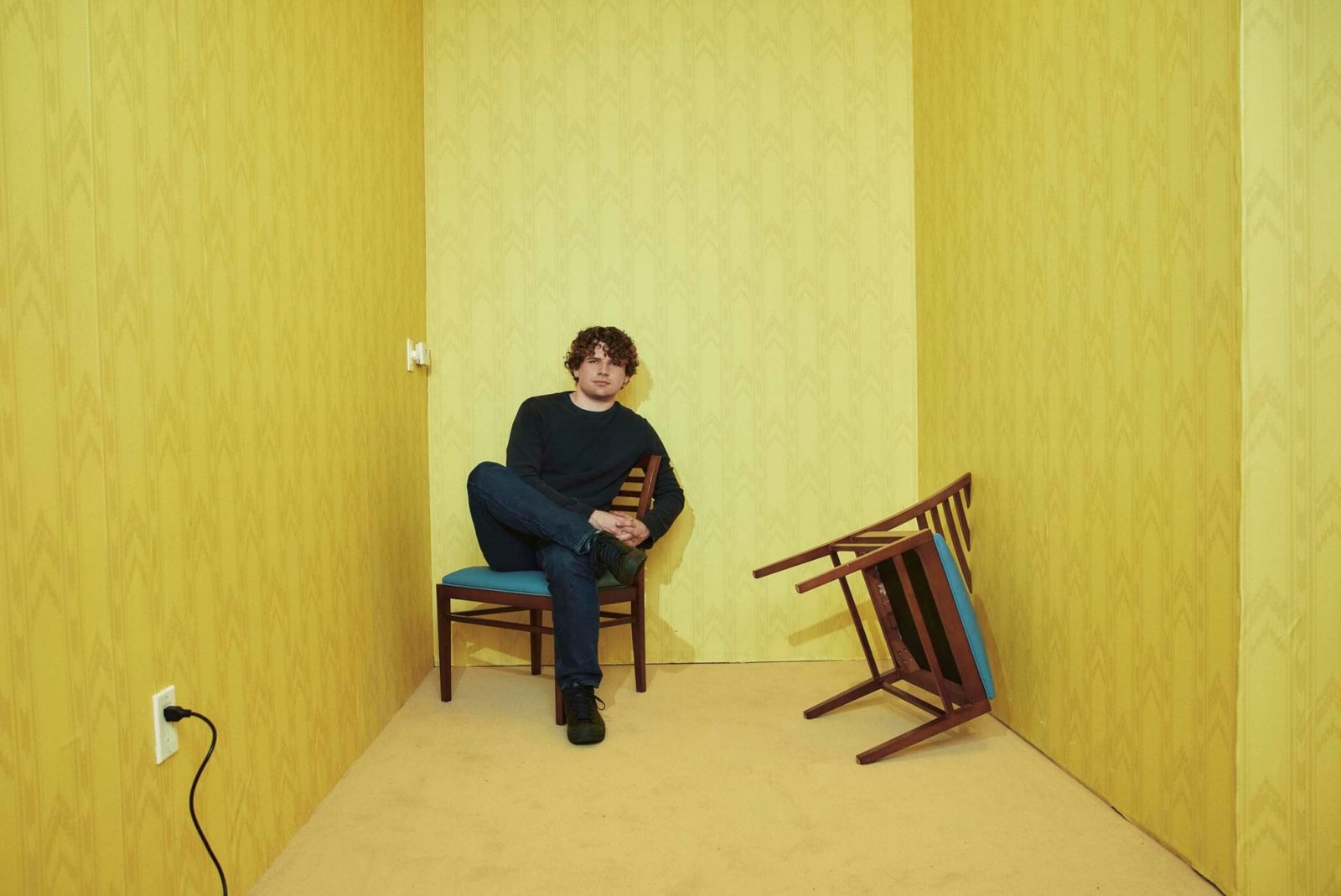
After being dragged into the backrooms without a chance for escape, Clark sets up a makeshift home for himself in a space roughly the size of a dining room. He can finally live within his ruminations rather than hide them away as he navigates the real world. Generic furniture crowds the floor and merges with the walls. Half-remembered people stand around as quiet company. “It’s a real mess,” Clark tells another lost soul, “But it’s also beautiful, in a way.”