

Improvement of access to Benijo beach
Anaga, an island within an island
On the northeastern coast of the island of Tenerife, where the land folds in on itself into a rugged geography of ravines and cliffs, rises the Anaga Massif, one of the oldest territories in the archipelago. This landscape, now protected as Anaga Rural Park, preserves a singular condition within the island: a territory where nature and human presence have woven, over centuries, a fragile and enduring balance.
Among the folds of this geography emerges the hamlet of Benijo, born out of isolation, like many other small settlements in Anaga. Its origin is tied to a territory of difficult access, connected to other population centers through paths and trails that traversed the mountains.
This isolation shaped a way of inhabiting deeply rooted in place and a distinct identity linked to the territory. The slopes were transformed into agricultural terraces, the trails connected the different hamlets of Anaga, and the architecture adapted to the topography as small, scattered traces across the landscape. The result is a deeply anthropized landscape where the natural and artificial become blurred.
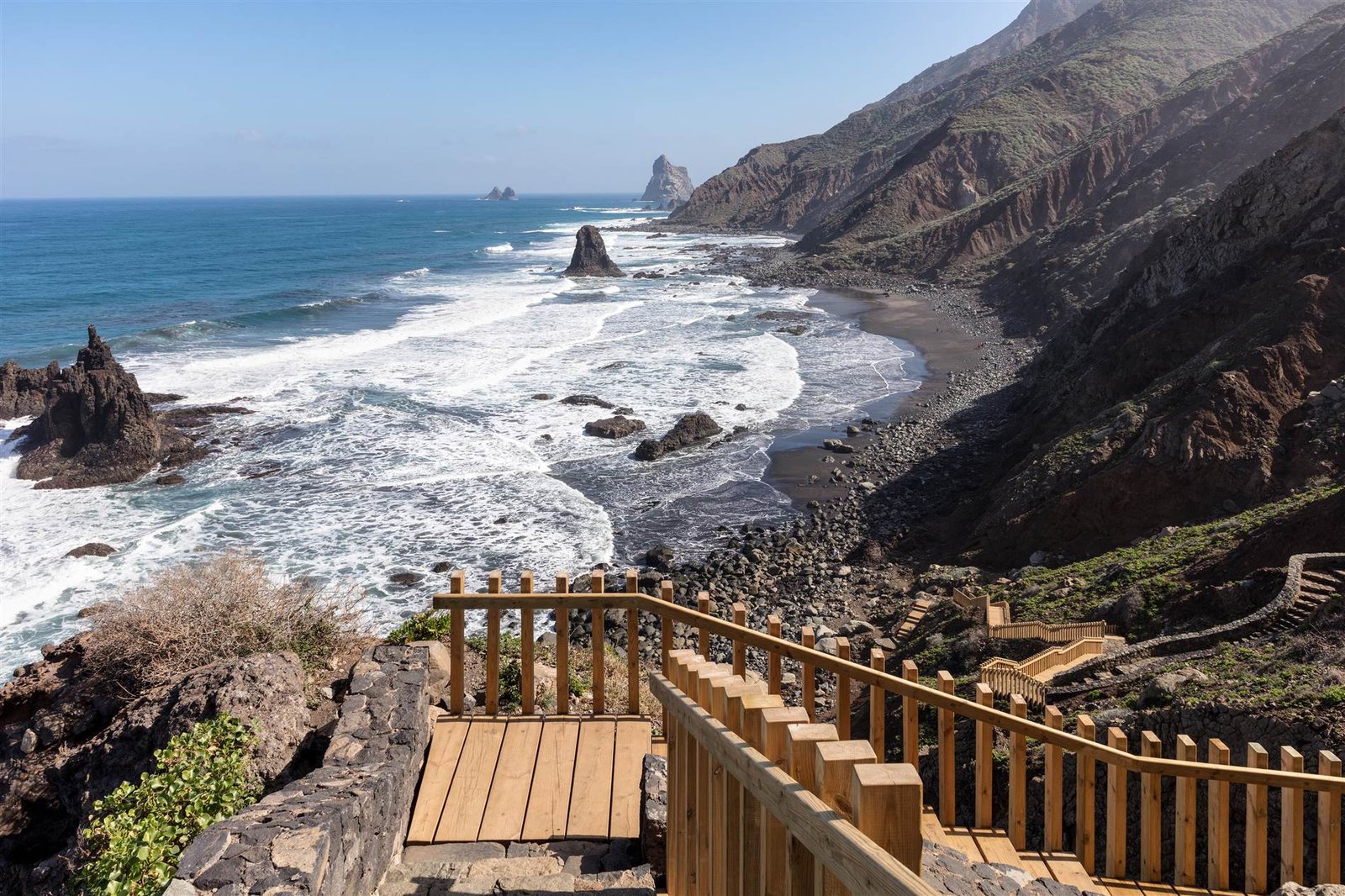
This peripheral and isolated character has long fueled the idea of Anaga as an island within another island. In this context, Benijo appears as an inhabited boundary where space and time seem to pause: an open window to the Atlantic where historic paths, agricultural terraces, and the vastness of the ocean shape one of the most valuable cultural landscapes of the archipelago.
The blurred trace
In a territory such as Anaga Rural Park, where mobility for centuries depended exclusively on paths and trails, these routes constituted the true historical infrastructure of the landscape and its connectivity. They were the threads that interconnected the hamlets and linked them to agricultural spaces and the sea. In this context, the path connecting the village of Benijo to the coastline was essential in its daily relationship with the sea and fishing.
Over time, its route became blurred due to vegetation, erosion, and natural processes of the terrain, progressively diluting its presence. However, the path remained inscribed in the mountain, tangible in stone elements – walls, supports, or steps – determined to remain standing.
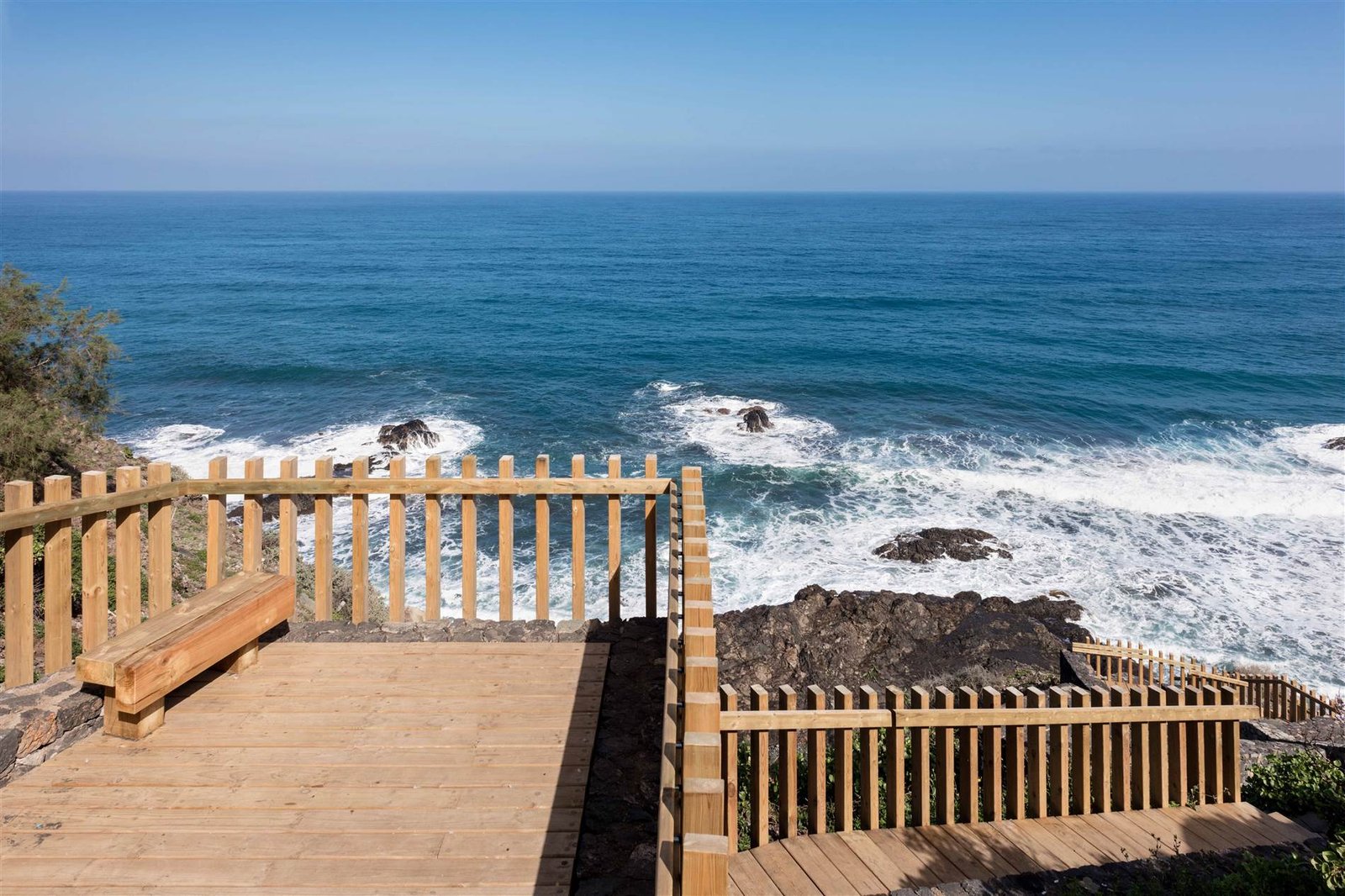
The intervention, therefore, begins by making the invisible visible, recovering the original trace and its territorial logic, respecting its bends, slopes, and the points where the route projects toward the sea. The aim is to make this trace legible once again, integrating it into the landscape as another edge of the mountain, in dialogue with the natural lines of the terrain and the geological strata that characterize Anaga.
Traces revealed
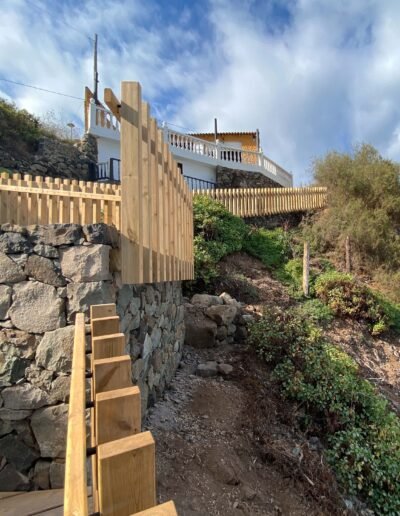
Along the route, stone construction elements still endured, speaking of the harshness of past times and the local building tradition. Masonry walls, steps, or stone pavements set by hand and built with materials available in the immediate surroundings recalled the isolation in which its inhabitants built and lived in this territory. Fragments that remained as material traces of the collective memory of the place.
Their recovery is based on recognizing, consolidating, and enhancing these pre-existing elements, incorporating them into the path as an essential part of the project. Their preservation reinforces the continuity between landscape, path, and tradition.
Stitching the path
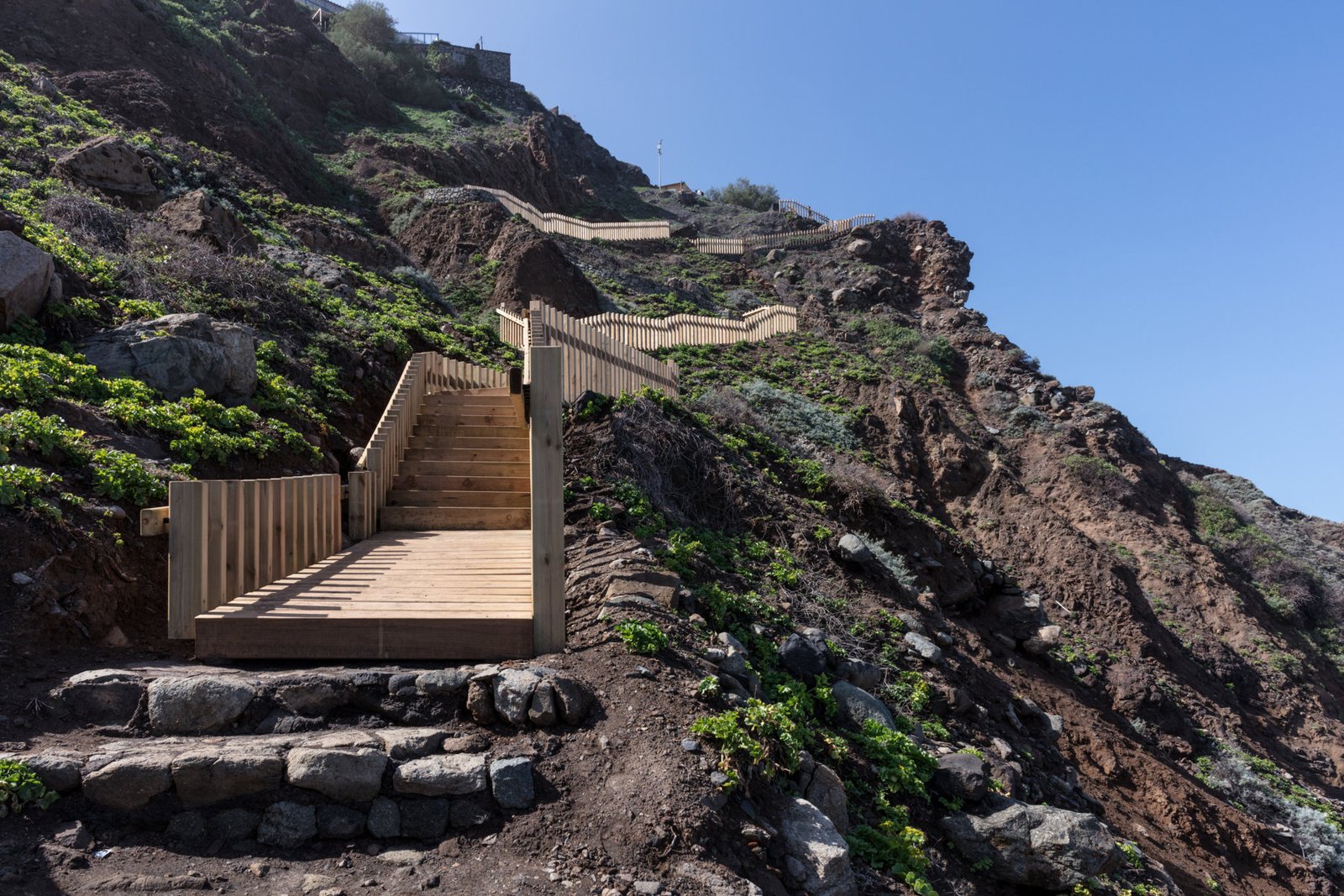
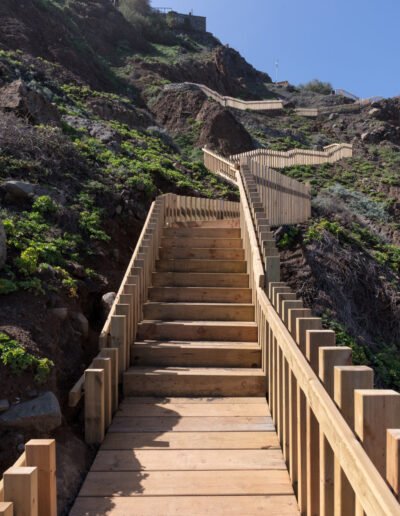
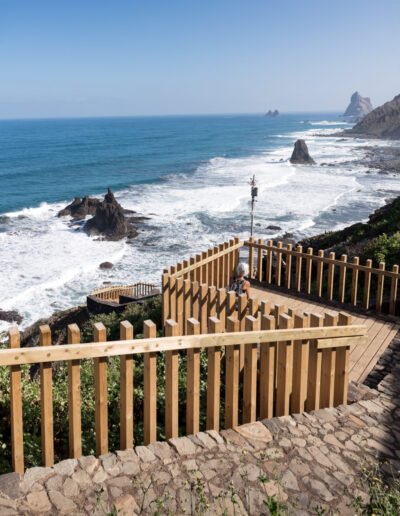
In those empty sections where the trace of the path had vanished, as a result of natural erosion and lack of maintenance, the project introduces a precise and restrained gesture capable of completing these absences without resorting to a literal reconstruction of the path. A light structure stitches these missing spaces through a contemporary approach, restoring continuity without altering the logic of the landscape.
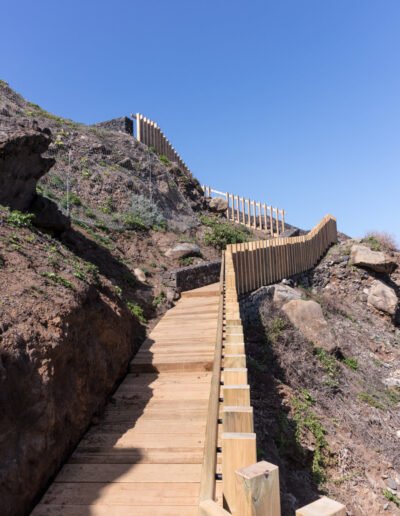
To achieve this, a single constructive system is introduced, based on the rhythmic repetition of recycled wooden sleepers. Their arrangement organizes movement and articulates the route, naturally adapting to the variations of the slope. The choice of wood also reinforces the reversible character of the intervention, allowing for a light and respectful approach to the environment.
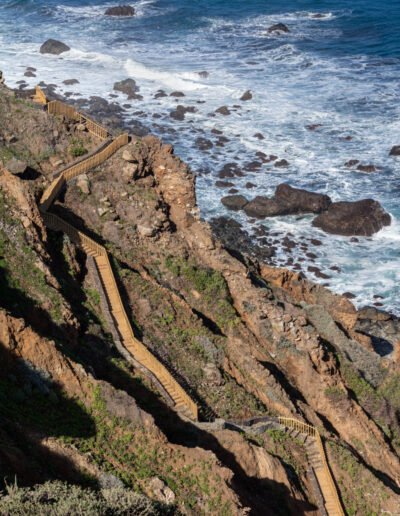
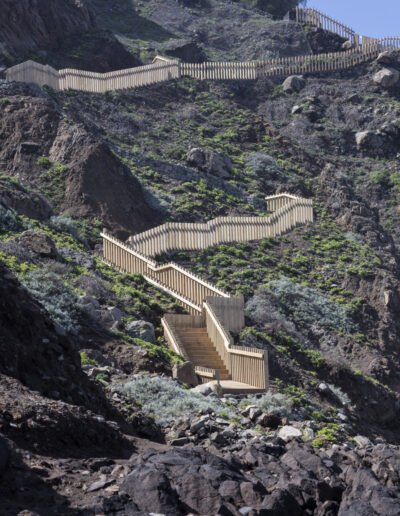
The repetition of this system reconstructs the lost sections and makes the path legible again, drawing a recognizable line along the hillside. A discreet stitch that restores continuity and returns the path to its condition as a trace, asserting itself as another edge of the mountain.
Sequences of the landscape
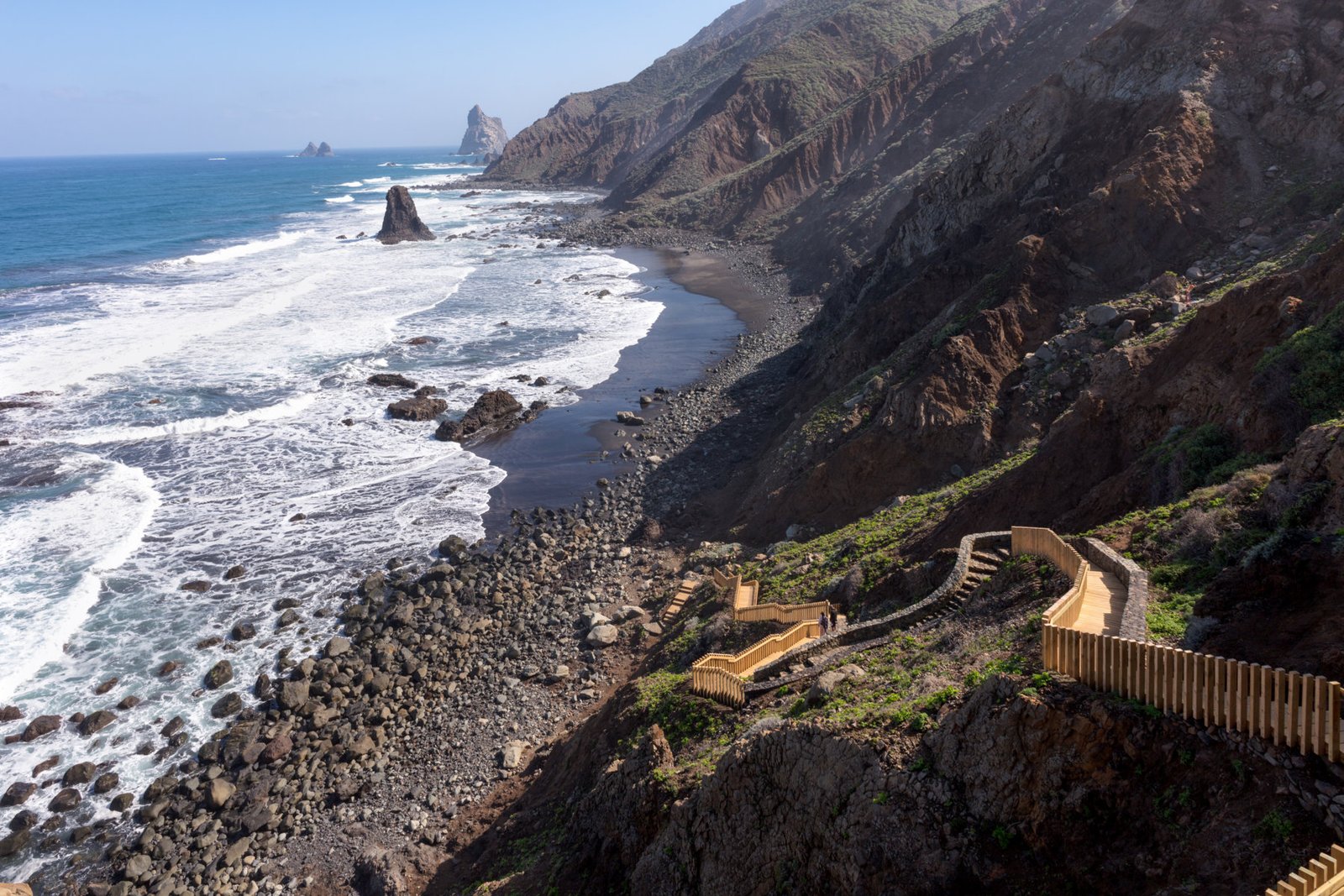
The restored path thus becomes a descending experience where landscape, memory, and movement intertwine. As one descends along the trail, the wooden sleepers mark the rhythm of walking and accompany the journey in a sequence of steps, pauses, and glances that merge with the landscape and cascade toward the sea.
The route is transformed into a sensory experience where time and space are perceived through the body. The sound of the wind, the scent of vegetation, the humidity of the air, and the increasingly close presence of the sea envelop the descent. In this succession of sequences and rhythms, the path recovers its condition as territorial infrastructure, reaffirming itself as an itinerary that reconnects Benijo with its coastline.
www.landscapefirst.com