
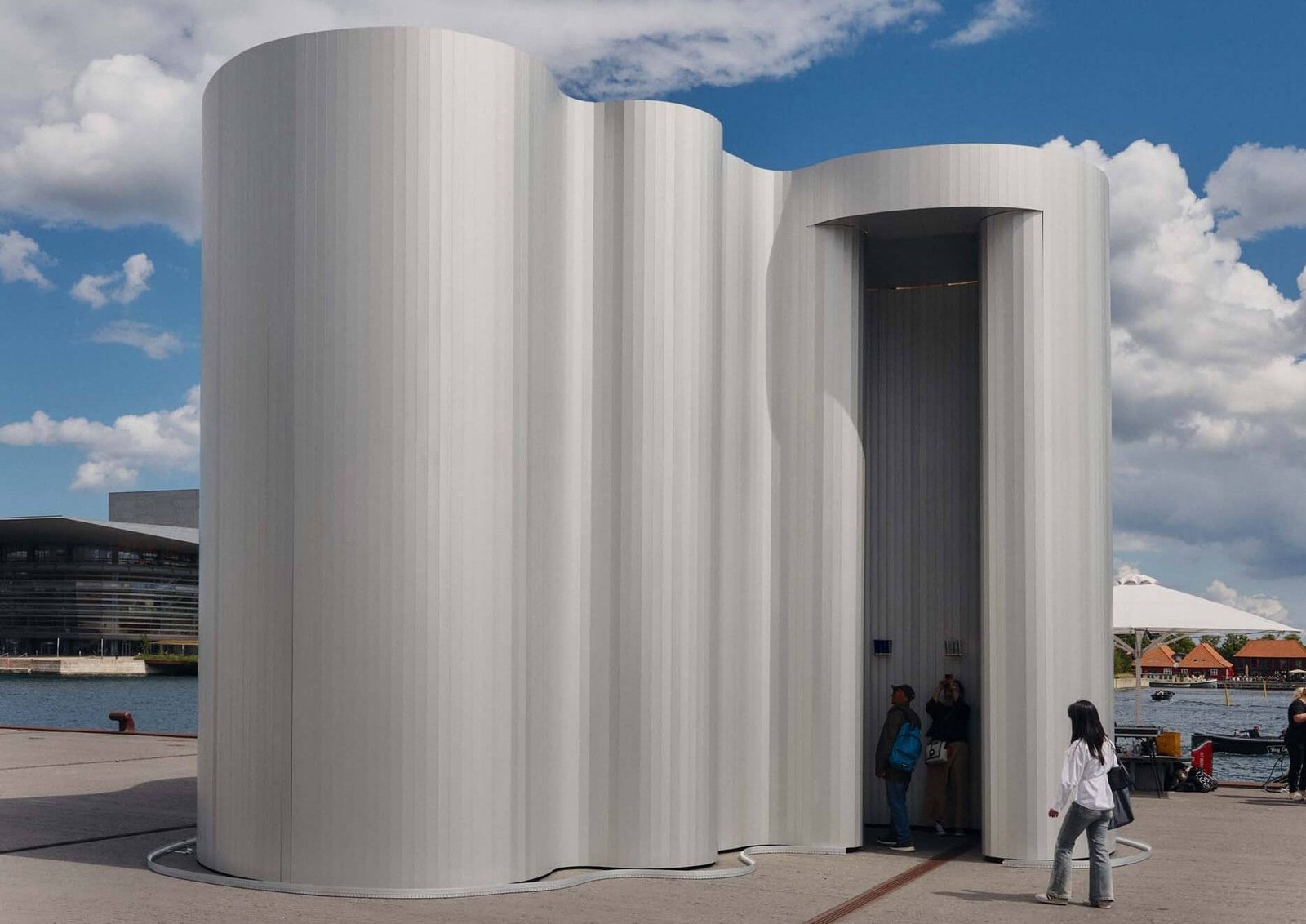

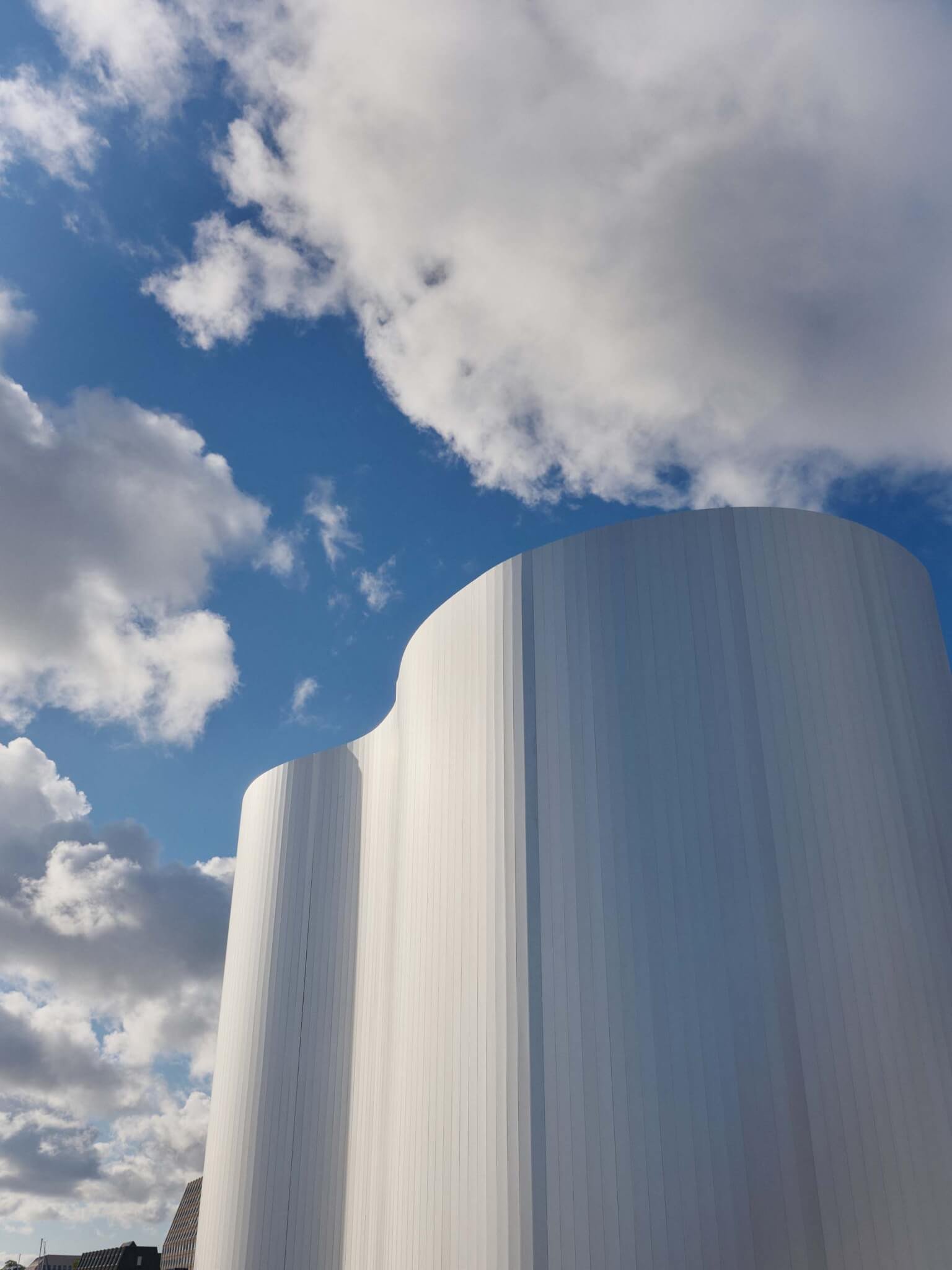
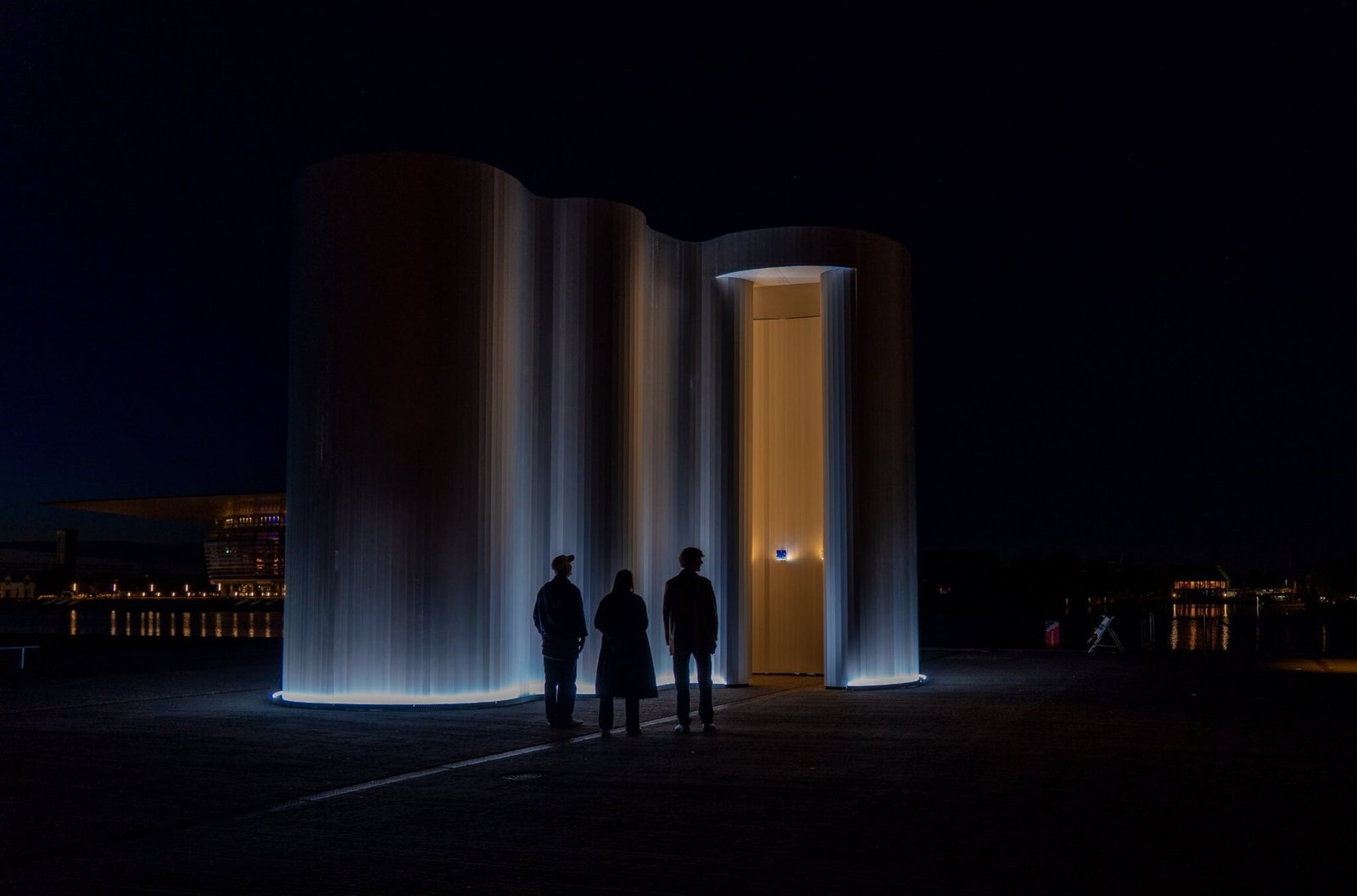
For three days in June, a pale, rippling wall stood on Copenhagen’s harborfront at Ofelia Plads, about 23 feet tall (7 meters), roughly the height of a 2-story house. From across the water it read as one soft, wavering curve. Up close, a seam in the curve opened into a doorway, and the doorway led inside one of the most recognizable shapes in Nordic design: the Aalto vase. The small glass vessel designed by Alvar Aalto and Aino Aalto in 1936 was scaled up until a person could stand within it.
The Aalto 90 Pavilion’s debut coincides with the vase’s 90th anniversary. It was exhibited at the annual design festival 3daysofdesign from June 10 to 12. Iittala, the Finnish glassmaker that has produced the vase from the start, commissioned it. The Copenhagen studio Tableau CPH designed it. Hydro, a Norwegian aluminum company, supplied the low-carbon metal and the engineering needed to hold a 23-foot wave upright. It uses Hydro REDUXA, a low-carbon aluminum produced using 100 percent renewable energy with a maximum footprint of 4.0 CO2 per kg aluminum, less than one third of the global average. The whole structure is built to come apart and travel, so after Copenhagen it can be reassembled for another city.
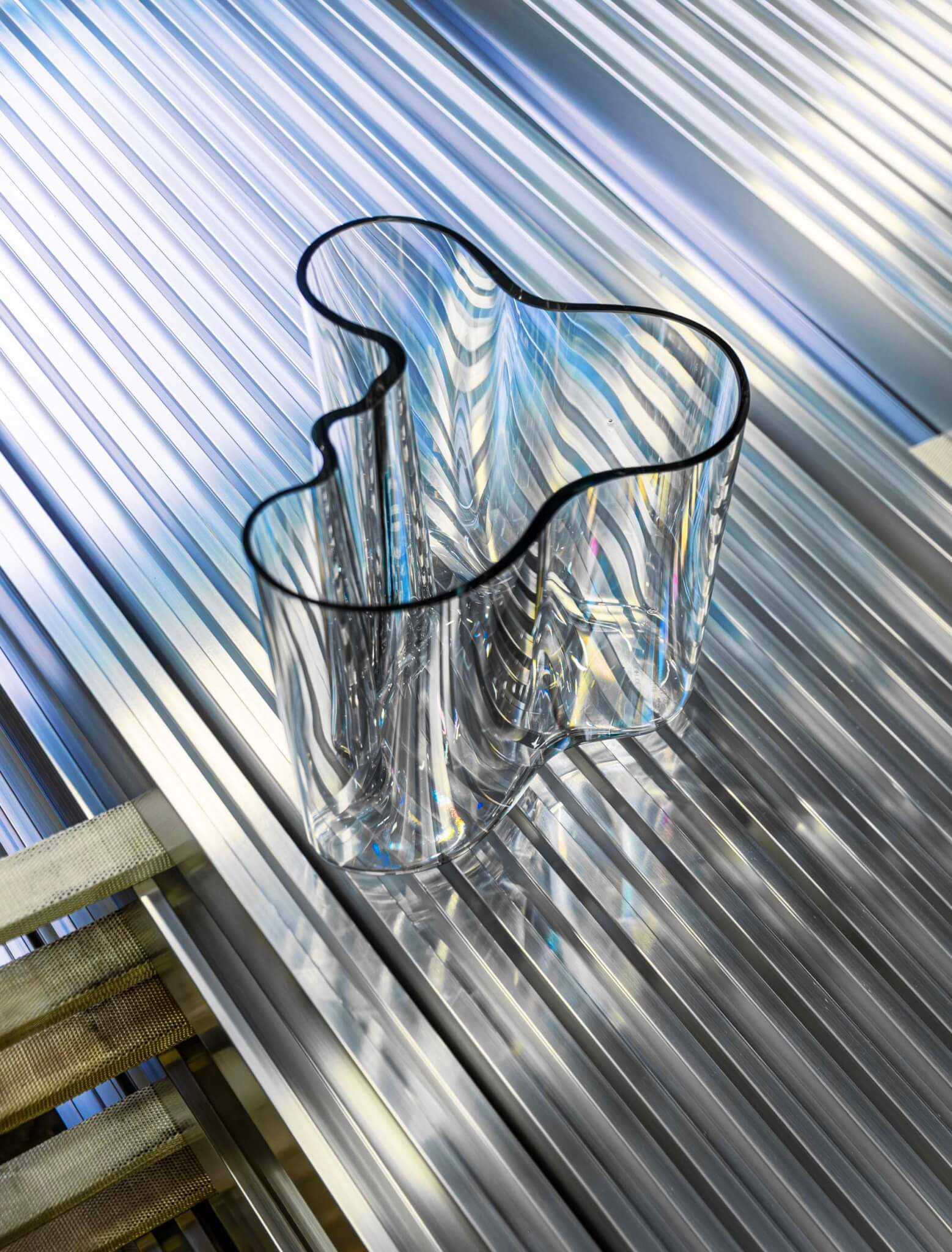
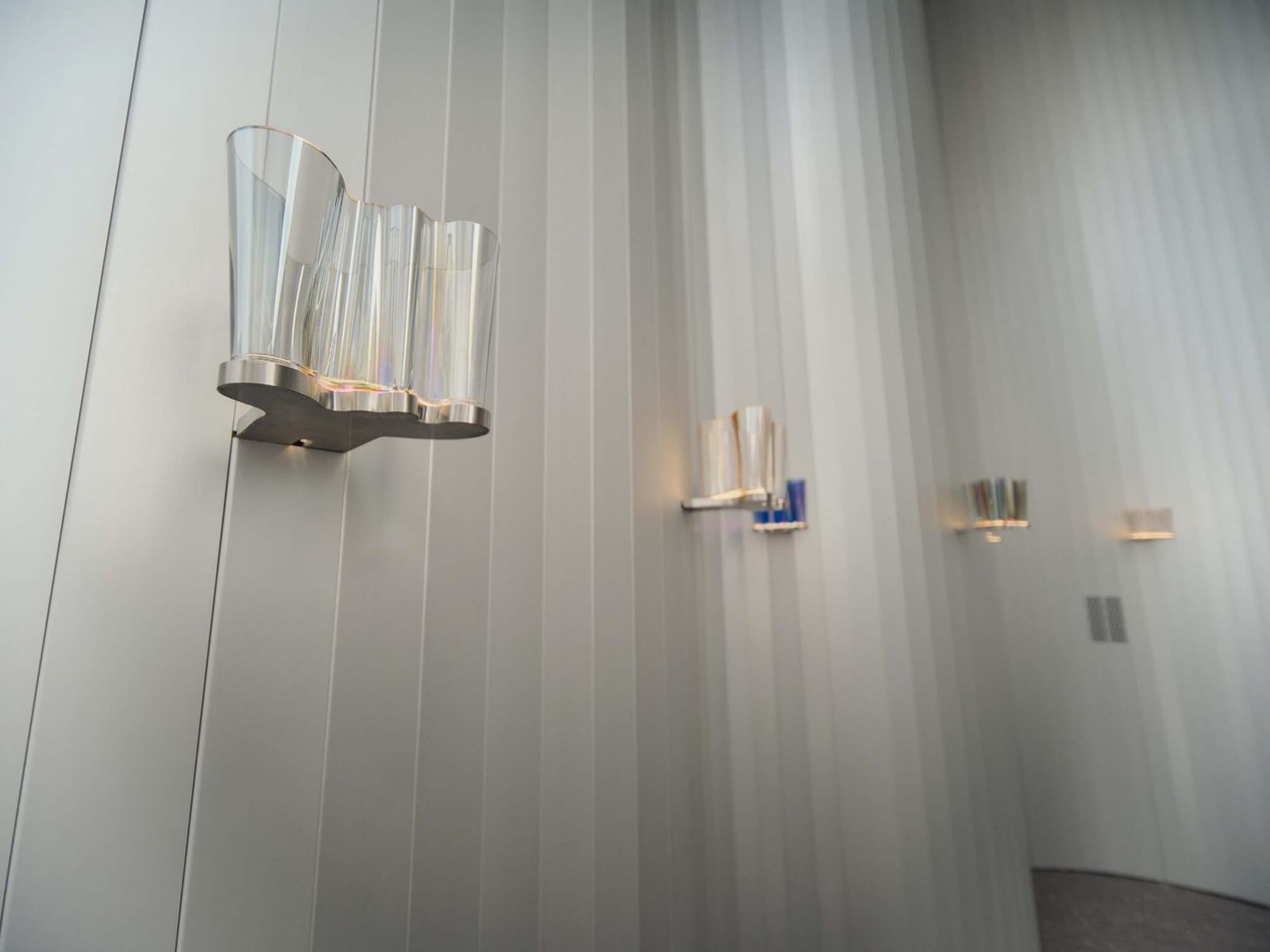
A vase belongs to the order of objects: held, turned, set down, possessed at arm’s length. Crossing the threshold into a seven-meter version reverses that order. The form offers no elevation to read from a distance, only an interior to occupy. It is understood in movement, partially and from within, and the object that once sat in the hand becomes the room that contains the body. The pavilion completed that inversion at its center, where a new anniversary set of Aalto City Vases, six colors named for Helsinki, Tokyo, Amsterdam, Copenhagen, New York, and Berlin, stood on display inside the giant version of themselves. The handheld object was set within the room it had become.
What let the form enclose so completely was the absence of any seam to break it. Hydro shaped its low-carbon aluminum in sections and clamped them edge to edge, leaving one continuous surface unbroken by any joint. The metal was chosen so that the vase’s organic line could reach architectural scale without looking heavy. The result was an enclosure with no corners and no joints, a wall that wrapped rather than met at right angles.
While the original vase lives by light passing through it, the pavilion worked the opposite way. Its opaque aluminum was lit from the floor and along its folds, so the light raked across the surface instead of moving through it. The undulations came forward and the dips fell into shadow. In that opacity, the waves read harder than they do in clear glass. Aalto, whose surname means “wave” in Finnish, spent his career softening modernism’s hard lines into organic, human forms.
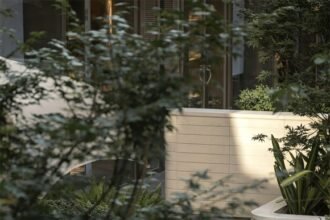
Within, the design favored atmosphere over display. A skylight drew daylight down the curved walls and let it shift through the day, an effect the team treated as central to the interior rather than incidental to it, and a soundscape carried through the volume. For Janni Vepsäläinen, Iittala’s creative director, the vase was never fixed in time: Aalto’s form was intuitive and human, and the pavilion was a way to translate that spirit into space, letting people step inside its contours and feel its movement.