



The most inviting bathrooms seem to beckon you in, so consider your eyeline view as you enter. Seeing a toilet first is a major pet peeve for Maria Lindgren and Adele Lonergan of Covet Noir, whereas a clear view of a beautiful vanity or bath tub offers far greater visual impact. ‘An ideal bathroom also benefits from good natural light – windows wherever possible – an intuitive floor plan and seamless privacy in all the right places,’ adds Kelsey Coppetti of Studio Marrant. If you’re starting at the renovation stage, these fundamentals are worth prioritising before any more aesthetic decisions come into play.
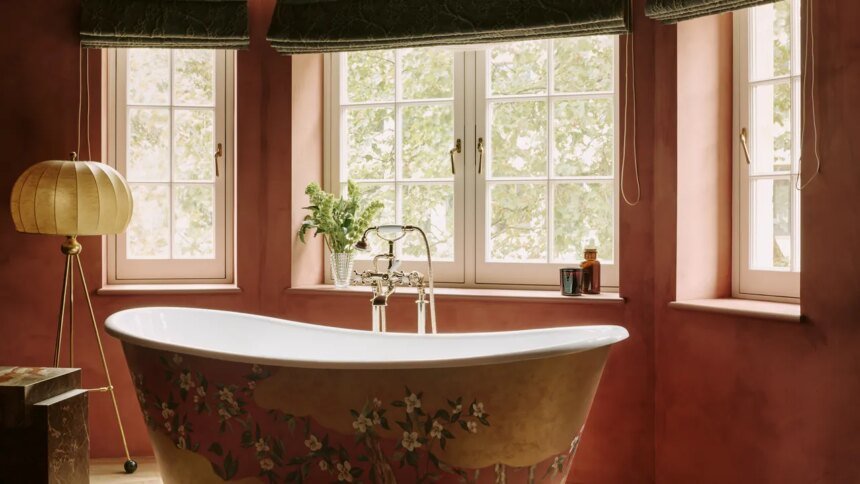
Then: let there be light. Some bathrooms are blessed with floor-to-ceiling windows and an abundance of natural light – but let’s face it, those are few and far between. In my own bathroom, we replaced clouded glass with clear in our not-insignificant single window, adding a sheer linen blind (made from East London Cloth’s Alvington) for privacy when needed. While my builder thought I was crazy, it transformed the way light diffuses through the space, and is a change I recommend highly.
Electrical lighting is absolutely crucial, especially if you’ll be spending any time looking in the mirror: ‘The secret to bathroom lighting that feels calm, flattering and practical is layering,’ says Mary Graham of Salvesen Graham. She recommends placing wall lights on either side of the mirror to create a soft, balanced glow; by contrast, harsh downlights directly overhead cast the kind of shadows that make eye bags look heavier and fine lines appear where they weren’t before.
It doesn’t matter whether it’s a tub of Sudocrem or pot of La Mer, even minimalists end up with an array of lotions and potions in the bathroom. Everything needs a home, and some products look better on display than others, which is why storage is paramount. ‘Well-incorporated storage is where the magic happens,’ says Kelsey. ‘Some should feel intentional and design forward – like vanities (best keeping everyday products close at hand) and linen cupboards – while others should be less obtrusive or even hidden, such as wall niches for a select few eye-worthy objects or built-in cupboards painted to match the walls (a brilliant spot to store medicines, children’s toys or infrequently used products).’
The stealthy storage in Kilroy’s own Islington bathroom is a perfect case in point. She maximised a partially opened chimney breast by building storage directly into the wall then concealing it behind a framed print. ‘It’s now where we keep all the things that have to live in the bathroom, like toilet paper, toothbrushes, vitamins and face wash,’ she says. She also incorporated a niche in the shower for shampoos and body wash.
SourcE: www.houseandgarden.co.uk