




















grateful Muttan Arts MTA (Contact email: 21348370@qq.com) Share the following content with gooood. For more information about them, please go to:MUTART on gooood
Appreciation towards MUTART (mail:21348370@qq.com) for providing the following description:
The project is located in the Chenghua Hechuang Industrial Heritage Area in Chengdu, covering the “101” plot of “Perfect World”. As the iconic theme sculpture series of Hongcang Cultural and Creative Park, the entire set of works draws on the narrative logic of the theme scene to systematically arrange it, unify the core visual symbols, implement original IP, and establish strong visual identity. From 2017 to 2026, Hongcang continued to promote artistic renewal, and the industrial imprint deposited in the old factory intertwined literary and artistic life with the digital future; the artistic creation during this period aimed to activate the historical narrative of the site and let the industrial relics tell their own stories to the public.
Situated in Chengdu’s Hechuang Industrial Heritage Zone across the “Perfect World” and “101” plots, this sculptural series is Hongcang Creative Park’s flagship landmark. Using scenic narrative structuring and consistent visuals, it introduces the site-specific IP Hongxiaopang for distinct visual identity. Hongcang has undergone continuous artistic regeneration from 2017 to 2026, merging old industrial traces with cultural life and digital futures to reveal the site’s layered history.
▼Project video, Project video © Mutan Art MTA, Videography/Videography: Lai Yunpeng

narrative
Narrative
Based on the cultural characteristics of the site, the creation refines the three-layered design action of “continuation, link, and update”. Different from the traditional static display of public art, this series of installations hopes to form a dynamic art system that is perceptible, interactive, and grows with the site.
Rooted in the site’s inherent cultural character, the design establishes three core design strategies: continuity, connection and renewal. Moving beyond conventional static public displays, this series of installations builds a perceptible, interactive artistic system that grows alongside the site.
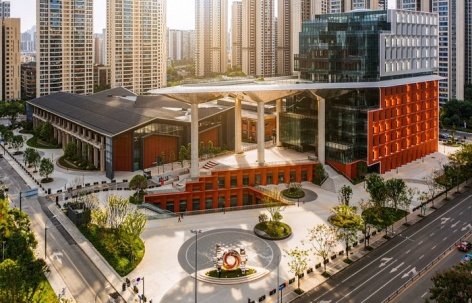
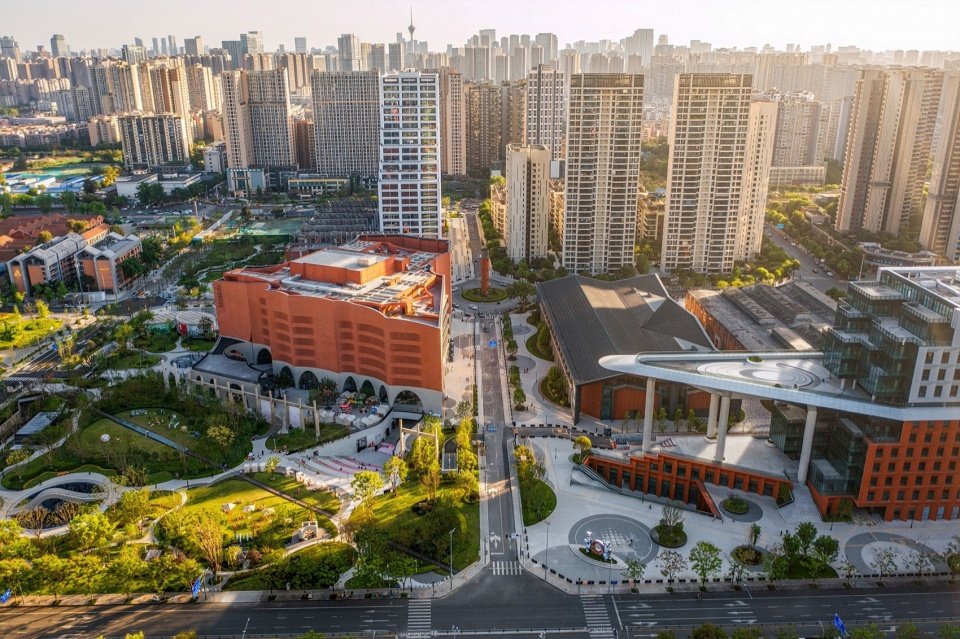
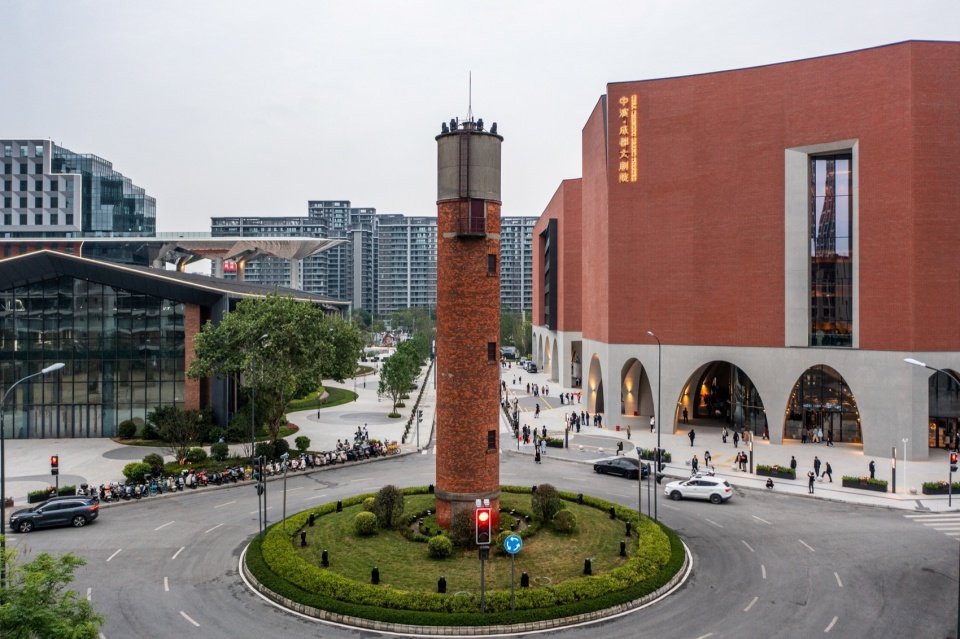
▼Aerial view of Hongcang © Lai Yunpeng
Among them, the industrial heaviness that carries steel and time deposits is continued, serving as the narrative foundation and era memory of the entire site; links are built to create emotional channels, so that the literary and artistic activities and public social events that take place here can find spiritual belonging; the update relies on the original spatial skeleton of the old factory building, with the blessing of digital media, to continue to grow, iterate, and convey upward vitality.
Continuity preserves steel-and-time industrial weight as the site’s narrative bedrock and collective memory. Connection forges emotional channels, rooting cultural events and public assembly in shared belonging. Renewal emerges from the old workshop fabric, evolving iteratively via digital media to carry uplifting vitality.
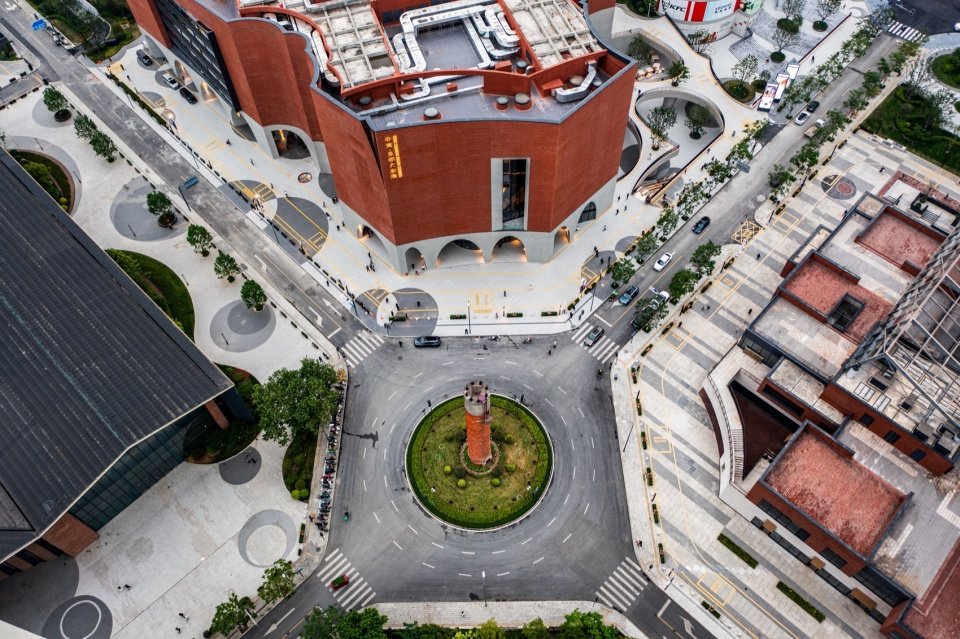
▼Aerial view of Hongcang © Lai Yunpeng
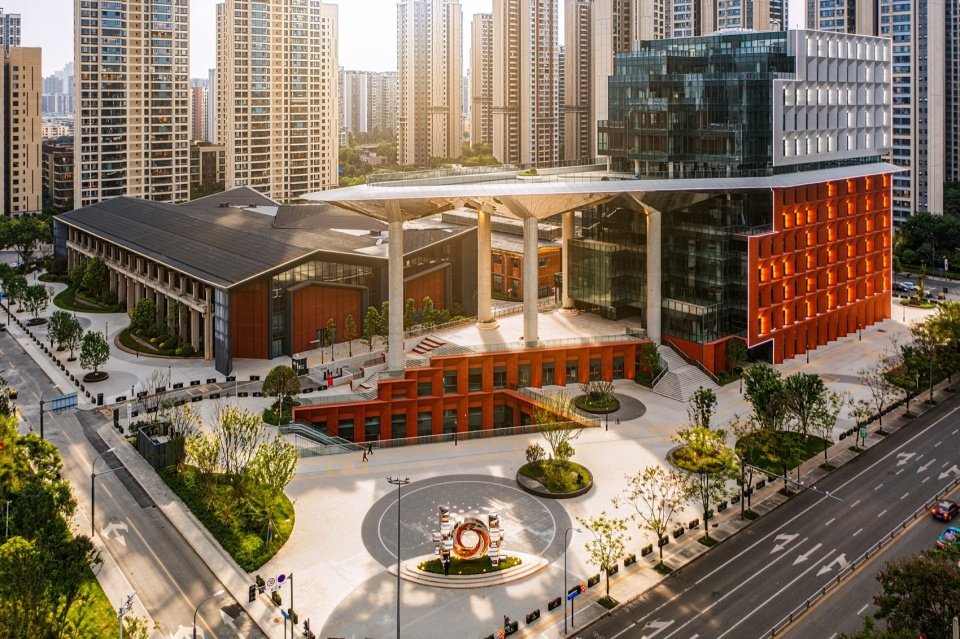
▼Aerial view of Hongcang © Lai Yunpeng
Continue memory
Continuity | Memory
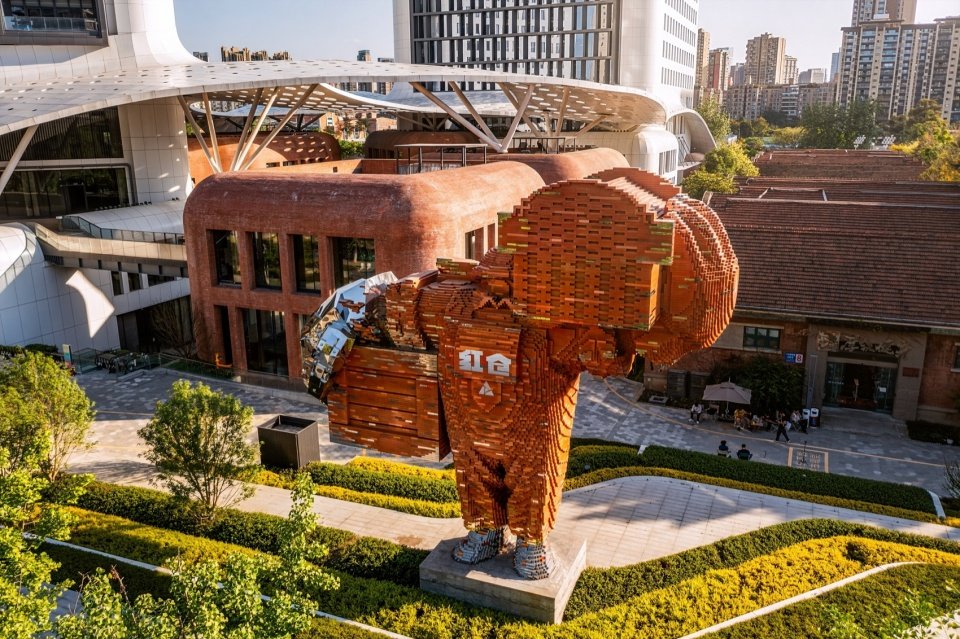
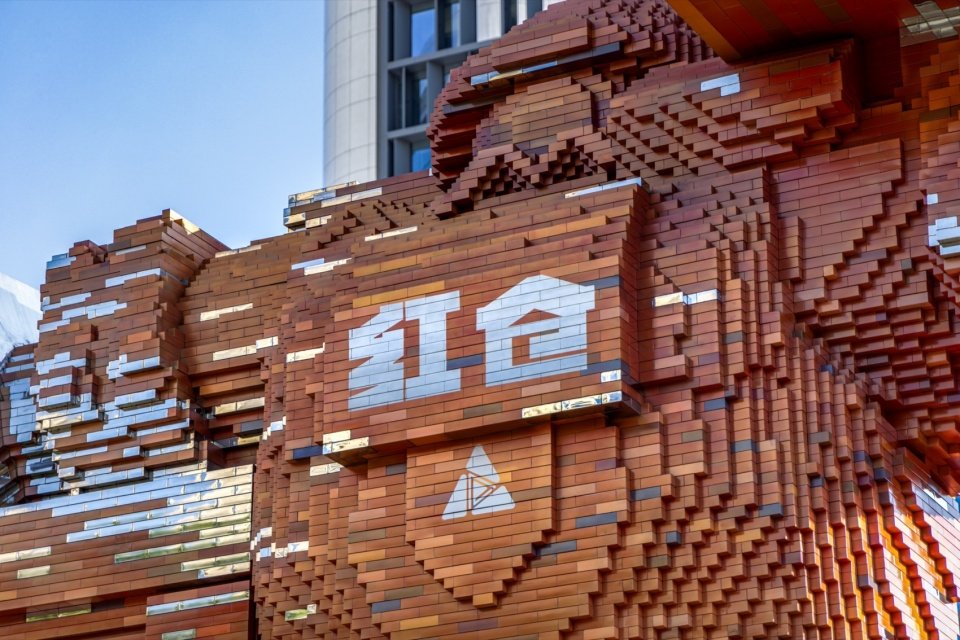
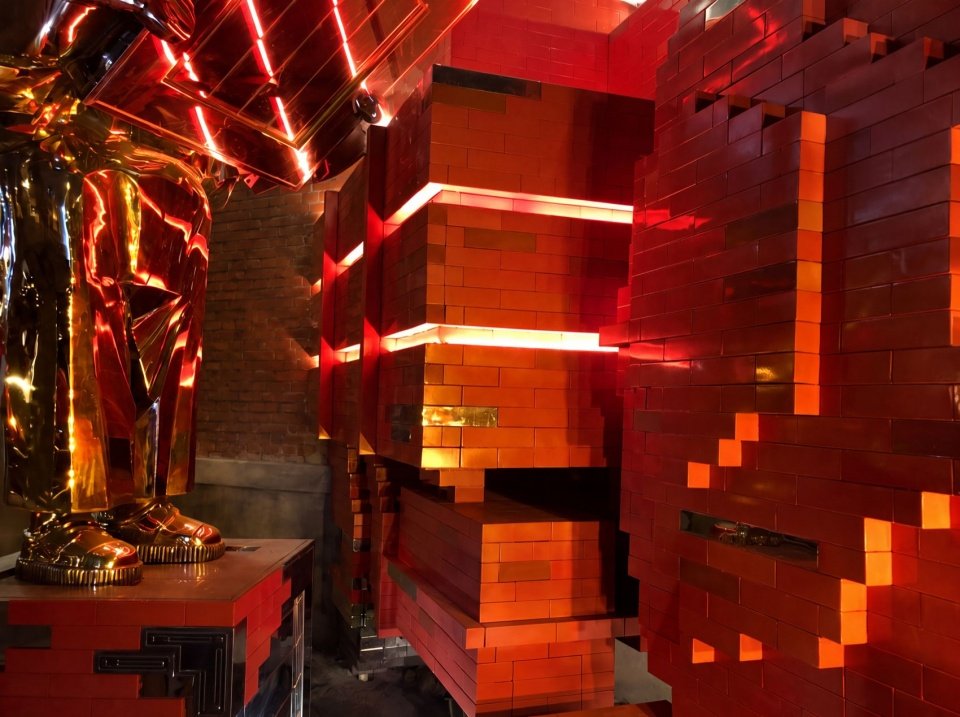
The sculpture “RED MAN (Little Fatty in Red Warehouse)” is based on “Chenghua Red” and red brick pixels, extracting the image of warehouse workers in the 1950s and 1960s, and transforming it into this IP image. White gloves, hard hats, and work clothes are the workers who accompany the red brick factory buildings in their memories; therefore, the RED MAN that was born is like the admirable hard-core power character in games and animations, carrying the simple and heavy sense of power of the builders.
Sculpture RED MAN (Hongxiaopang) draws on “Chenghua Red” and red brick pixel language, reinterpreting 1950s–60s warehouse workers into the IP. Clad in white gloves, safety helmet and overalls, the figure echoes admired tough powerhouse characters from games and animations, embodying builders’ grounded strength.
▼RED MAN, front view © Lai Yunpeng
▼RED MAN, side view © Lai Yunpeng
The sculpture stands in a working posture. The main body is constructed of classic red brick pixel modules, with parts transitioning to mirrored stainless steel materials that represent rebirth. The box held up by the left hand echoes the old warehouses and carries the industrial memory of the site. The box held high by the right hand symbolizes the creative aggregation and innovative growth of the new era, metaphorizing the evolution of the site from historical years to the present future.
Standing in a working pose, it is formed of red brick pixel blocks, transitioning to mirror-finish stainless steel for renewal. The left cube preserves old industrial memory; the raised right cube symbolizes creative convergence and growth, alluding to the site’s evolution from history to the present and future.
▼Part of RED MAN, detail view © Lai Yunpeng
Red warehouse memory NO.1
RED BARN MEMORY NO.1
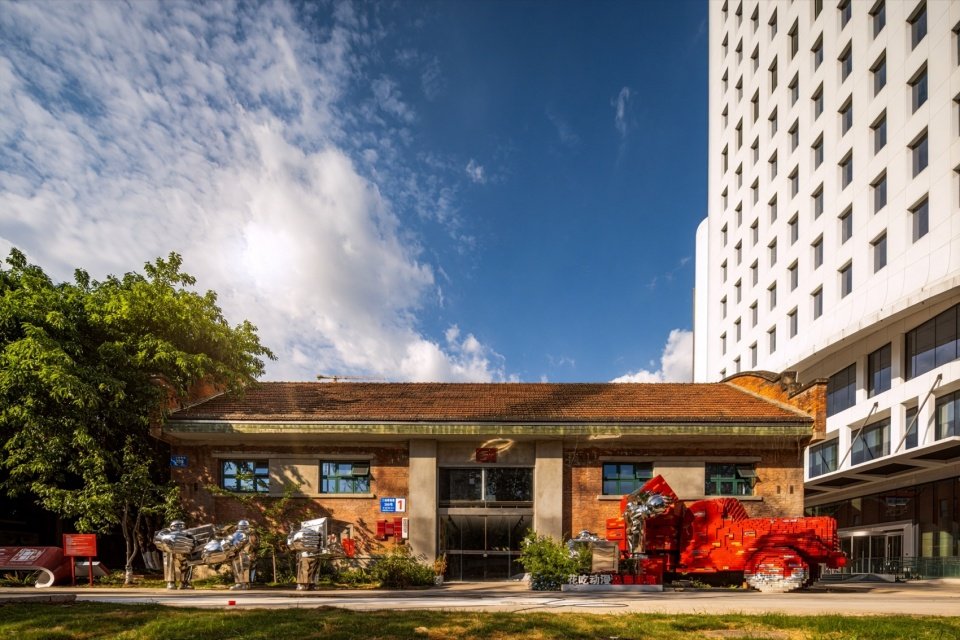
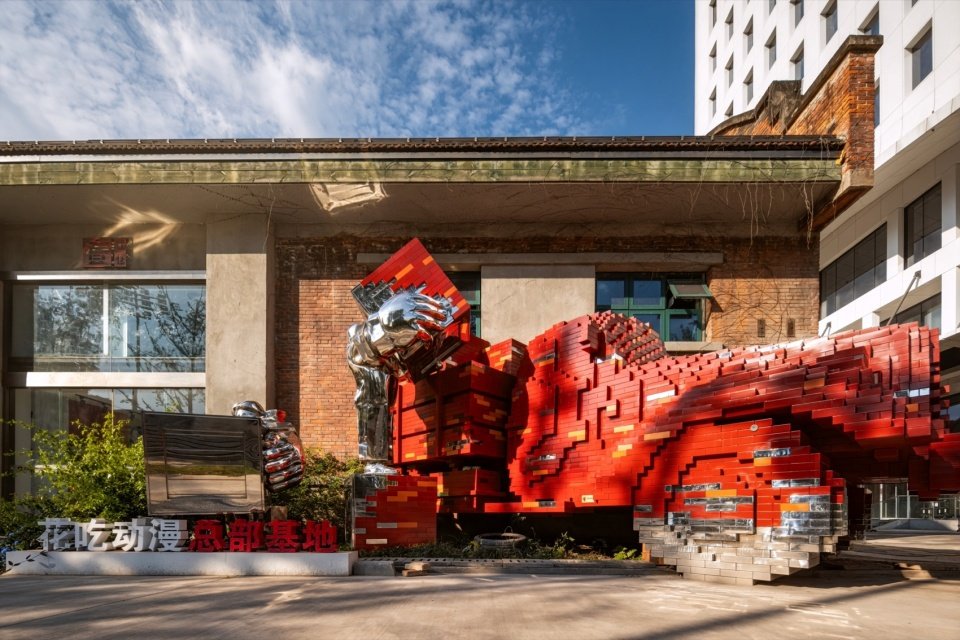
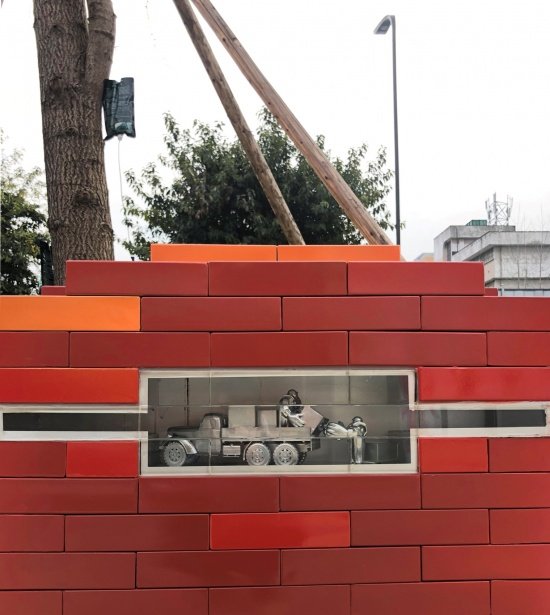
The work uses the old Jiefang truck as the prototype to reproduce the old freight scene in the warehouse. The red bricks are turned into pixel units to form the shape of the truck. The shape extends from the building volume and cleverly echoes the memory of the site, allowing the classic industrial symbol of the truck to continue to be present. Then it turns to the image of a fat transporter made of mirror stainless steel to complete the translation from the old to the new.
The piece recreates vintage warehouse freight scenes with a pixelated Jiefang truck extending from the building to echo the site’s memory and keep this classic industrial symbol alive. It then shifts to the reflective stainless steel RED MAN figure, marking the transition from industrial past to the new era.
▼RED BARN MEMORY NO.1, site view, RED BARN MEMORY NO.1, site view © Lai Yunpeng
▼RED BARN MEMORY NO.1, site view, RED BARN MEMORY NO.1, site view © Lai Yunpeng
▼Night digital lighting effect, detail view © Mutan Art MTA
Red warehouse memory NO.2
RED BARN MEMORY NO.2
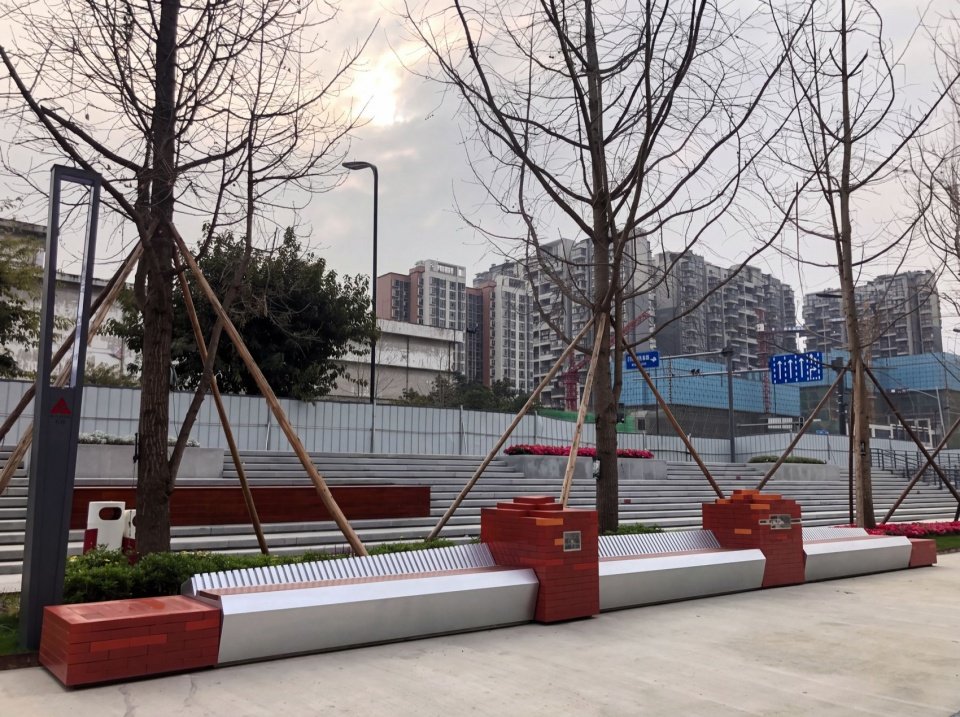
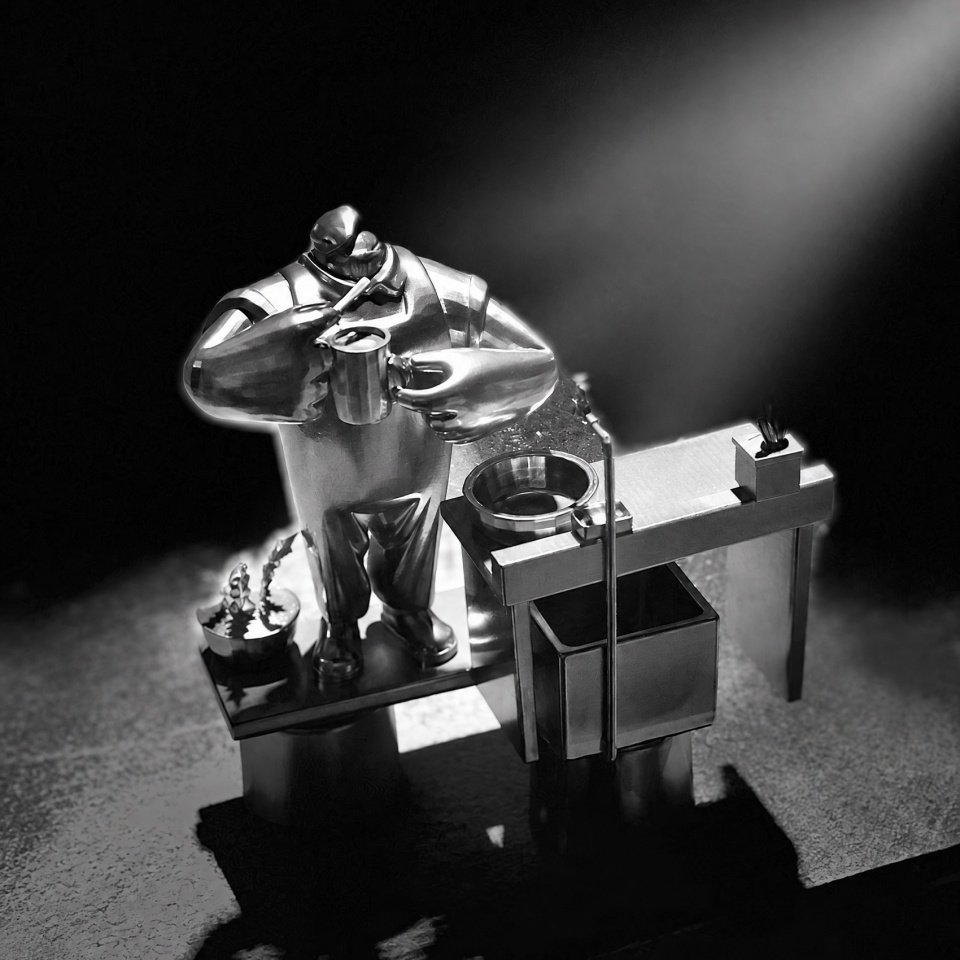
Replicating the daily scenes of warehouse workers in the factory, red little fat men are scattered on the red brick steps, interweaving multiple states of resting and chatting, stopping to wait, and taking a short break, restoring the vivid and real working fragments of the old factory. The work captures the simple pyrotechnic texture of the factory with a life-like narrative narrative, and relies on modern materials and techniques to transform the sealed industrial memory into contemporary art language, completing the contemporary translation of industrial memory and allowing visitors to immerse themselves in the atmosphere of the old factory.
Recreating warehouse workers’ routines, RED MAN figures scatter across red-brick steps. Capturing rest, chat and work pauses, they revive authentic factory moments. Using everyday narrative and modern fabrication, the work translates dormant industrial memories into contemporary art, letting visitors feel the site’s bygone atmosphere.
▼RED BARN MEMORY NO.2, site view © Mutan Art MTA
▼Red warehouse memory NO.2 part,
RED BARN MEMORY NO.2, detail view © Mutan Art MTA
Historical light and shadow
Light History
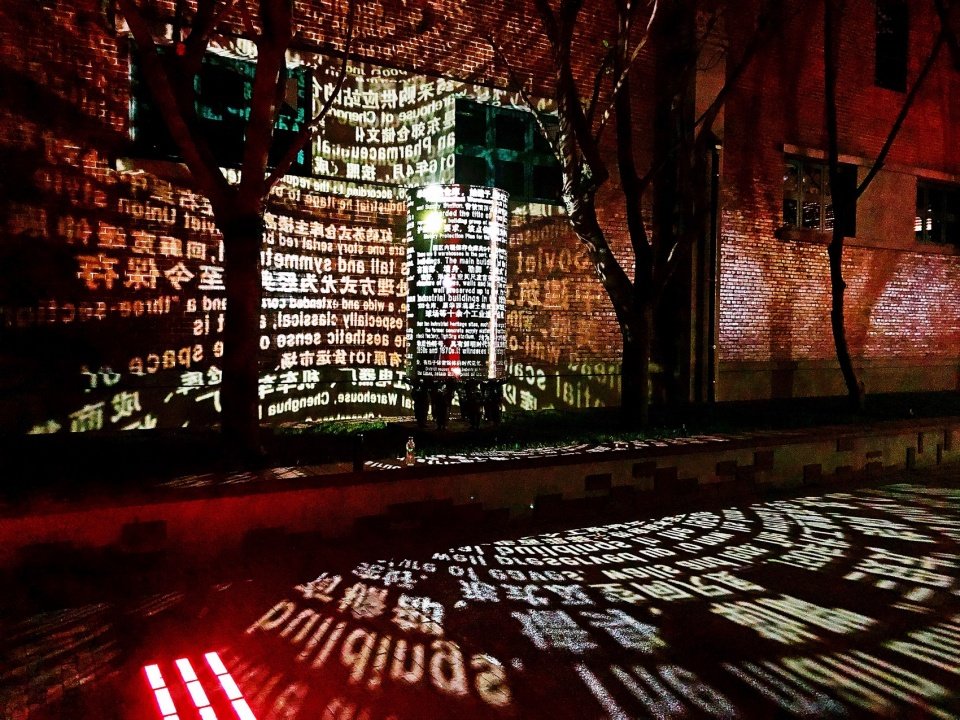
Classic storage components such as wooden boxes and iron barrels are selected and shaped with text hollowing technology to carry the development context of Hechuang Warehouse. A group of red warehouse boys work together to lift the components, symbolizing collective strength; at night, the hollow gaps reveal a faint light, projecting the history of the site on the walls and floors of the passage, using light and shadow art to rejuvenate the heavy industrial memory.
Using vintage drums and crates, the work employs cutout lettering to trace Hechuang Warehouse’s history. RED MAN figures uphold the form to symbolize collective power. At night, light through cutouts projects the site’s story, reviving industrial memories via light art.
▼Night digital lighting effect © Mutan Art MTA
Link time
Connection | Time
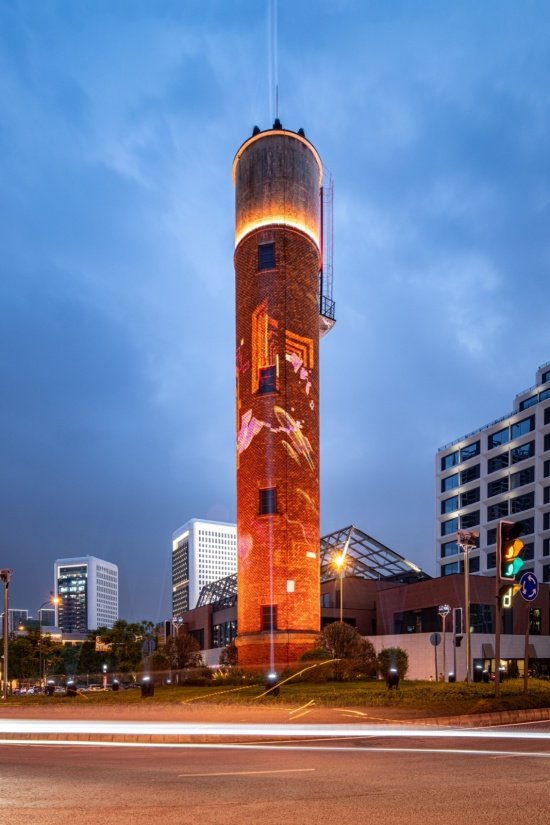
Streamer water tower
Lightflow Water Tower
The design relies on the original water tower structure retained on the site, and is linked with the “Red Little Fatty” IP night projection device to break out of the water tower’s original single water storage function. It was once the carrier of life that nourished the factory area, and now it has become a spiritual node connecting history and the present.
Leveraging the preserved water tower, the design pairs it with RED MAN night projections, moving beyond its storage role. Once vital to the factory, it now serves as a spiritual anchor bridging past and present.
▼Lightflow Water Tower, site view © Lai Yunpeng
▼Night digital lighting effect © Lai Yunpeng
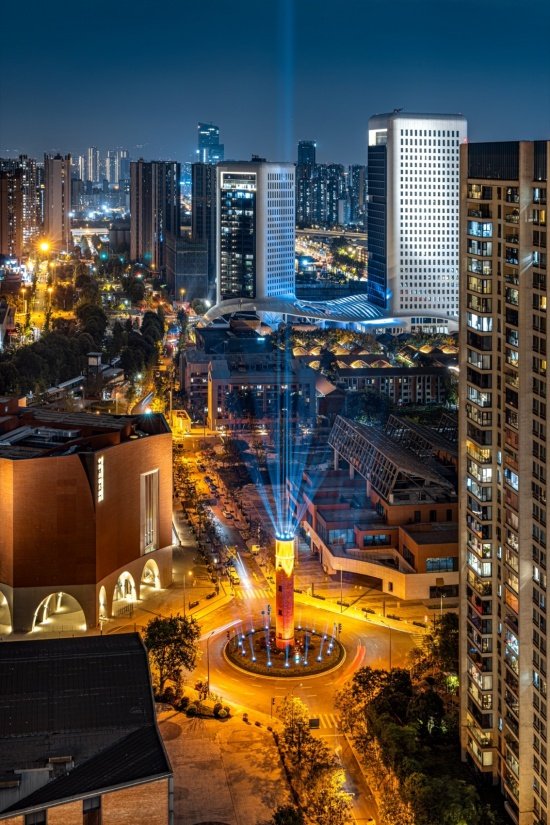
It no longer stores water, but carries digital creativity and the pyrotechnic atmosphere of the site, using light and shadow media to complete a cross-time and space dialogue between old industrial relics and future digital art.
Instead of storing water, it bears digital creativity and the site’s living energy, enabling cross-temporal dialogue between industrial heritage and digital art through light.
▼Night aerial view, digital lighting © Mutan Art MTA
time film
Moments of Time
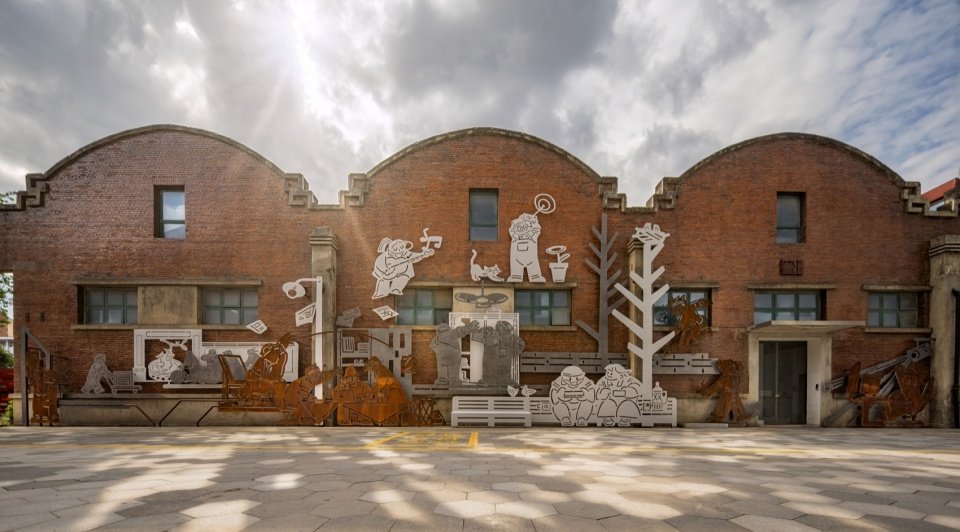
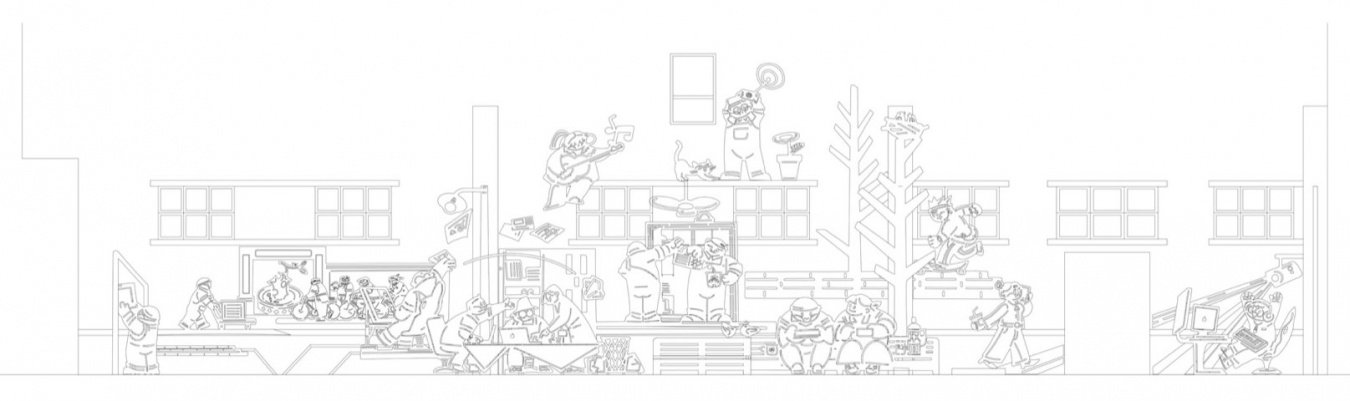
The “Red Fat” IP was extracted from the original image of the old factory building, transforming the original two-dimensional visual symbol into a three-dimensional public art image, and derived a variety of characters with different living conditions.
The RED MAN IP grows from the identity of the original workshops. Reimagined from two-dimensional graphics into sculptural public art, it expands into a cast of figures depicting varied everyday lives.
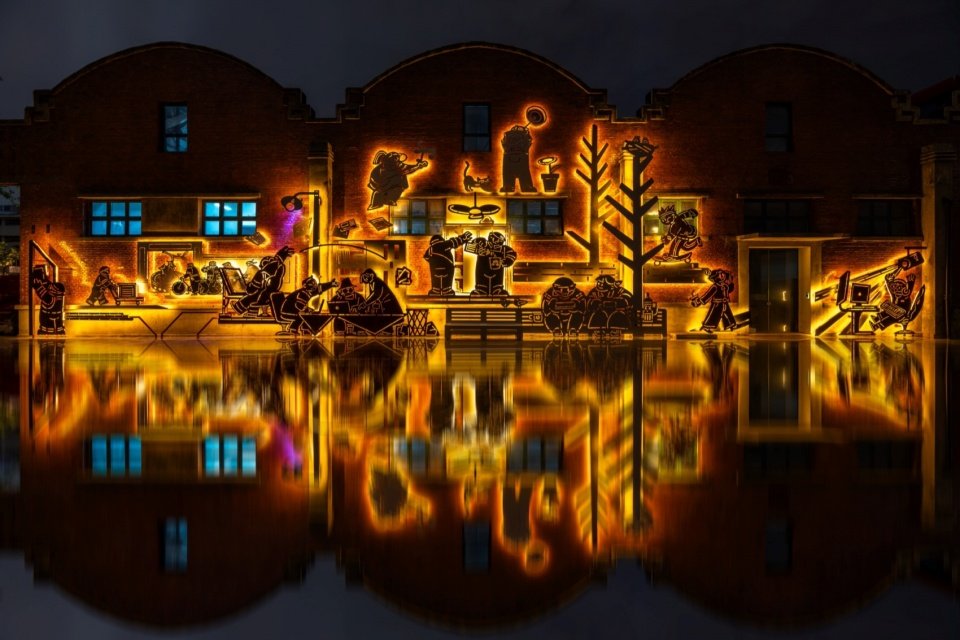
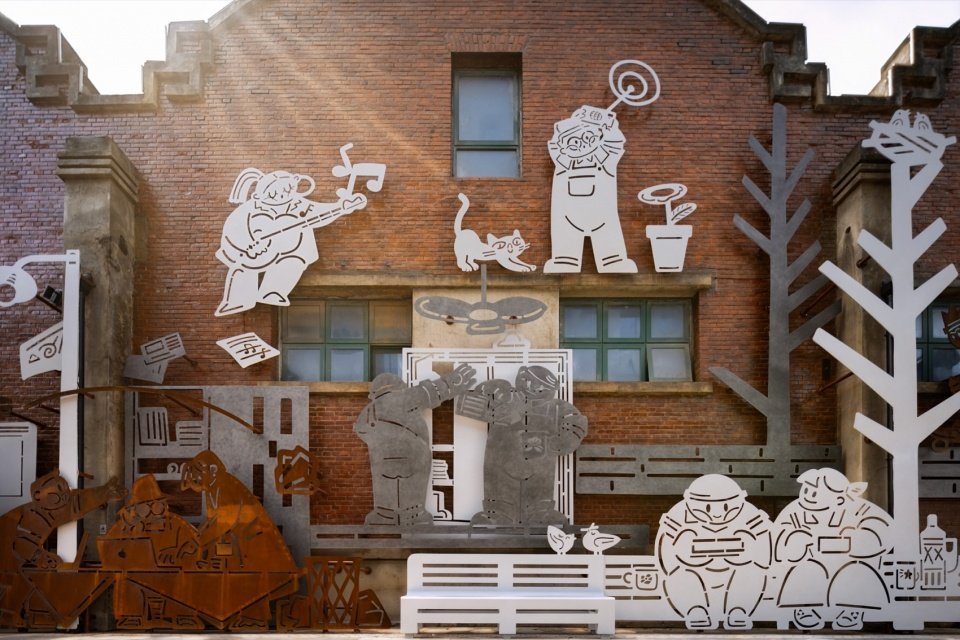
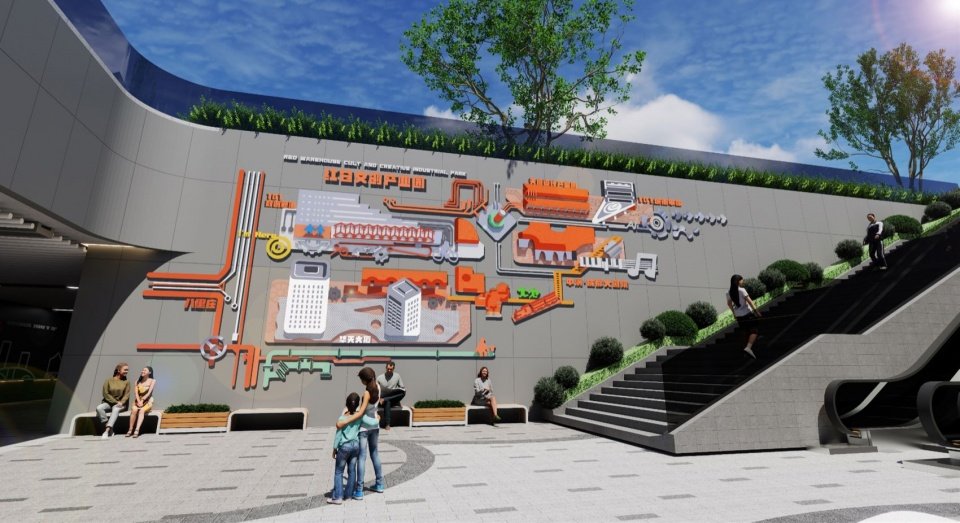
▼Full wall of the park, site view © Lai Yunpeng
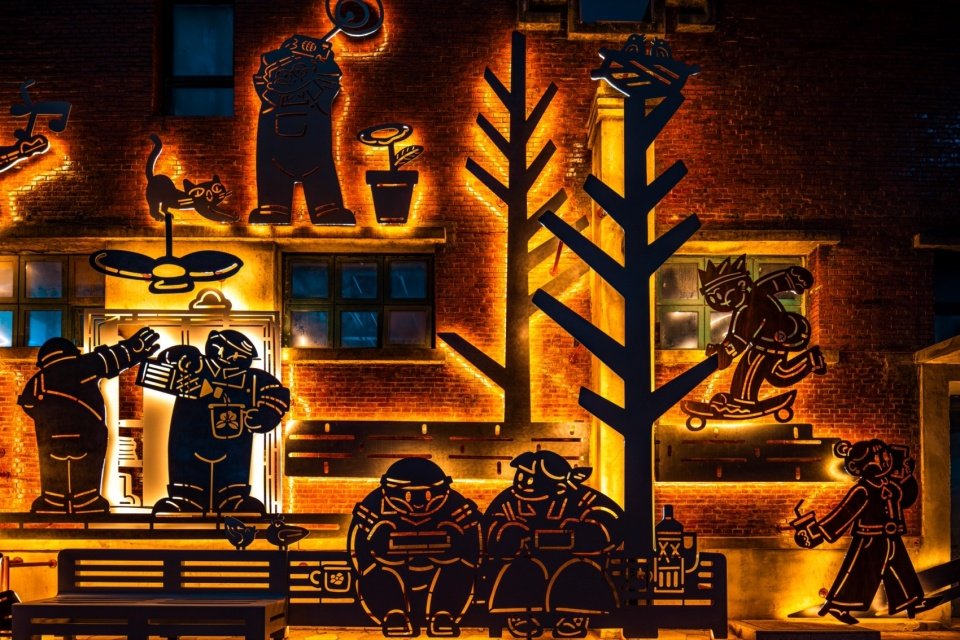
▼Night digital lighting effect © Lai Yunpeng
IP is rooted in the original memory of the factory area and transformed into multiple groups of life-like character facades, bridging the distance between industrial relics and ordinary visitors. Like the blood flowing on the site, it injects a life-like humanistic atmosphere into the park.
Rooted in the site’s heritage, these figures bridge industrial heritage and visitors, imbuing the park with approachable human warmth.
▼Park wall, partial view © Lai Yunpeng
▼Night digital lighting effect © Lai Yunpeng
Connecting channel|To be constructed
Transfer Corridor, Proposed
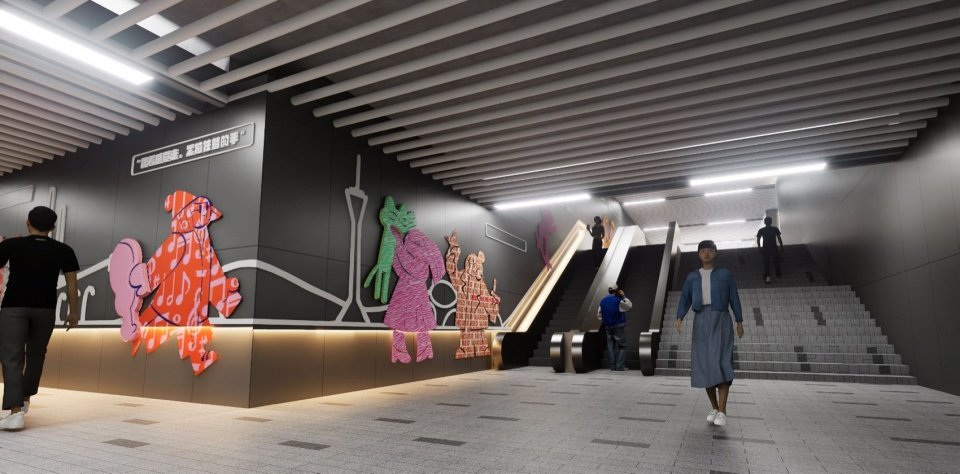
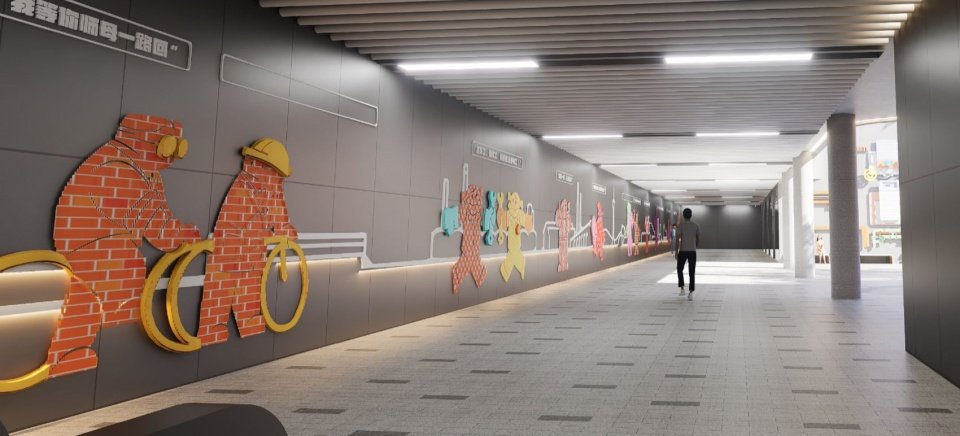
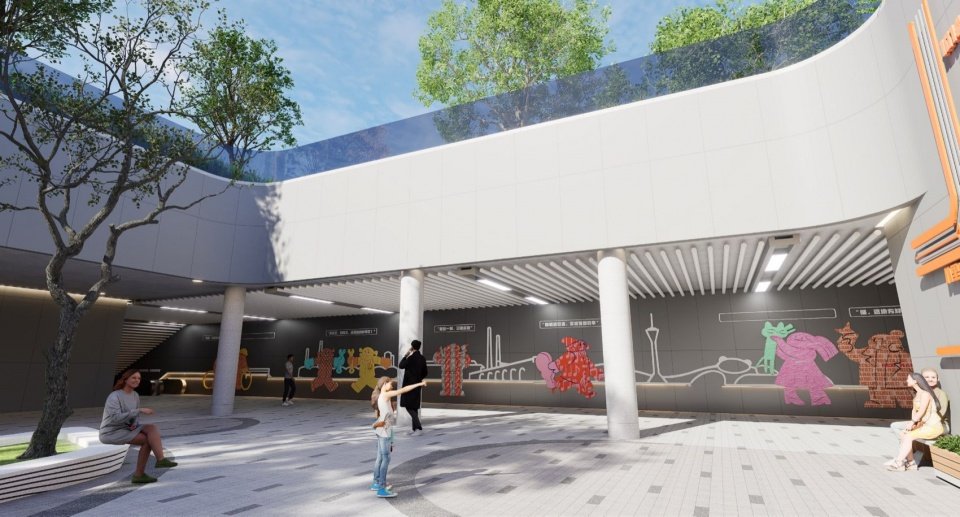
The subway connecting passage uses a long scroll narrative composition to connect the images of people from different eras: from industrial workers in the 1950s and 1960s to current designers, artists, and youth groups. The evolution of the characters visually presents the iteration of the identity of the people in this land and the continuous renewal of urban culture.
The proposed metro transfer passage adopts a panoramic narrative composition linking figures across eras: 1950s–60s industrial workers, alongside today’s designers, artists and youth. This sequence visualizes evolving local identities and ongoing urban cultural regeneration.
▼Metro Transfer Passage, design schematic, proposed © Mutan Art MTA
▼Metro Transfer Passage, design schematic, proposed © Mutan Art MTA
More towards the future
Renewal|Future
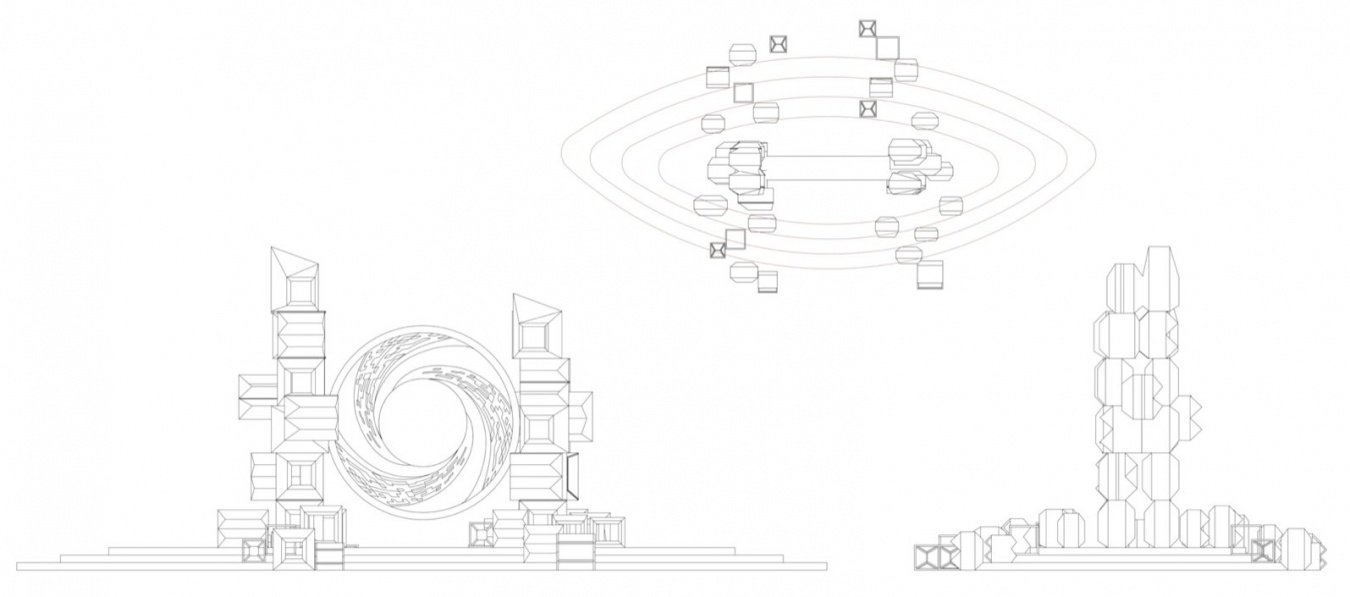
Golden Central
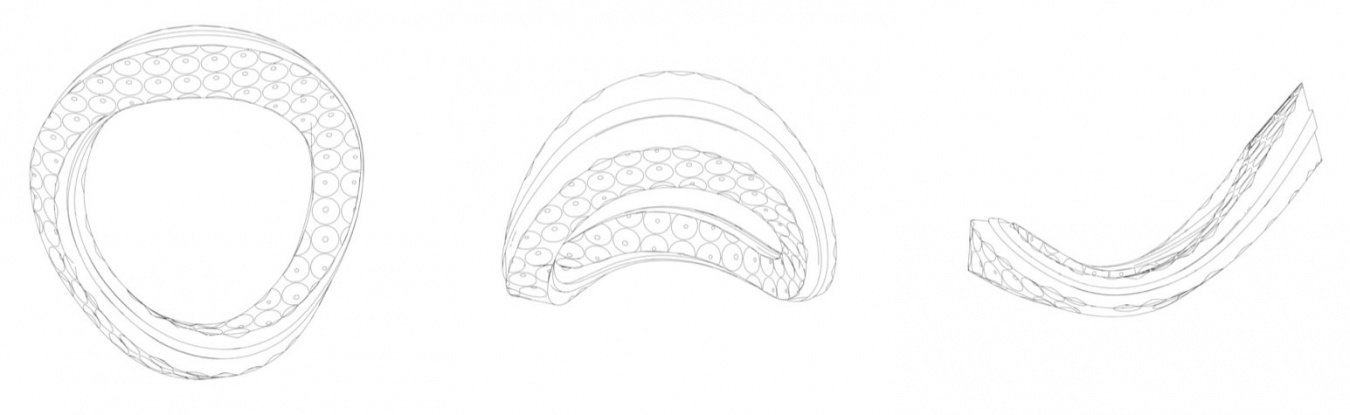
Golden Ring
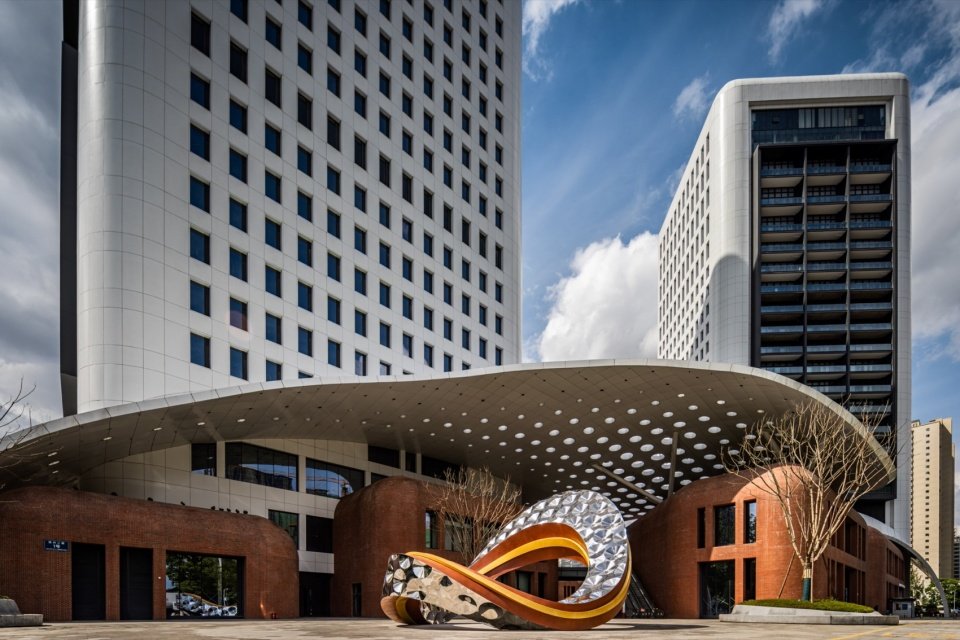
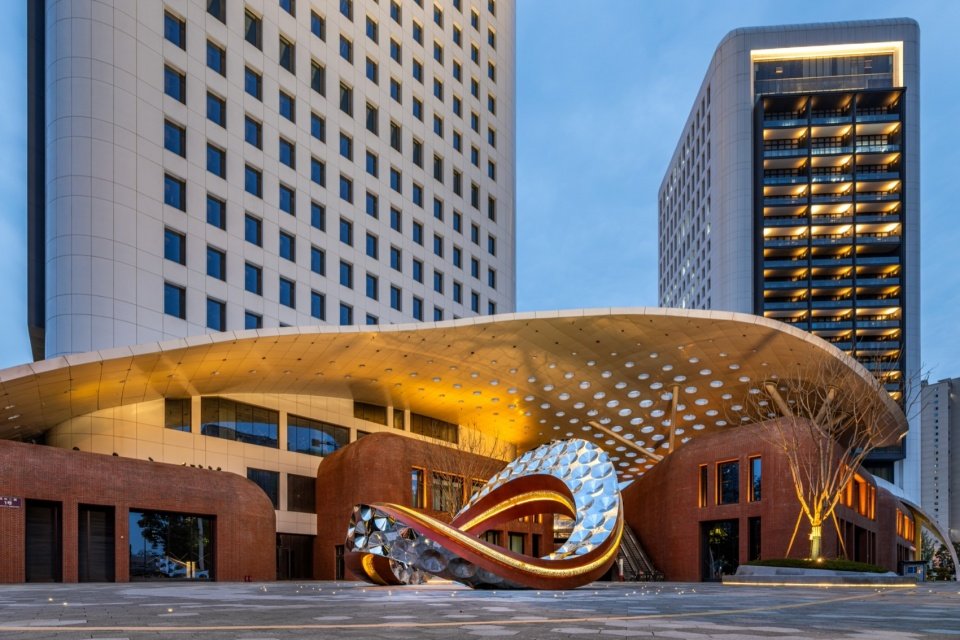
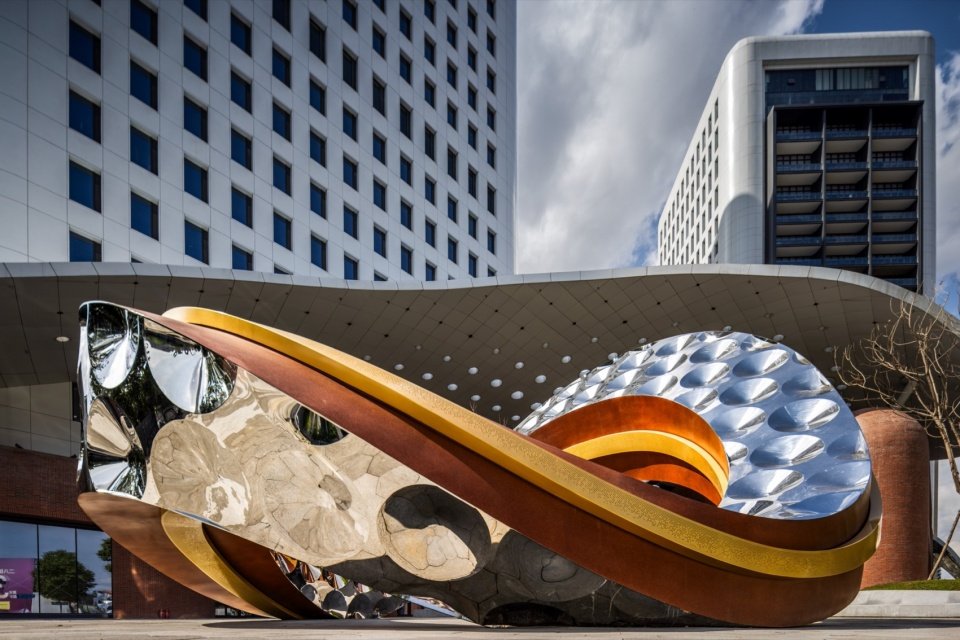
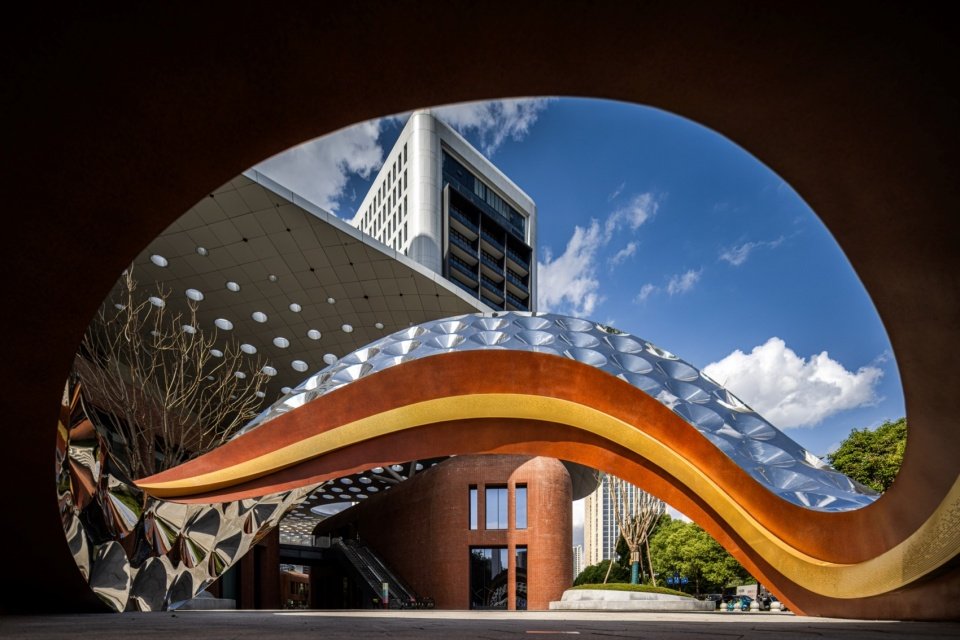
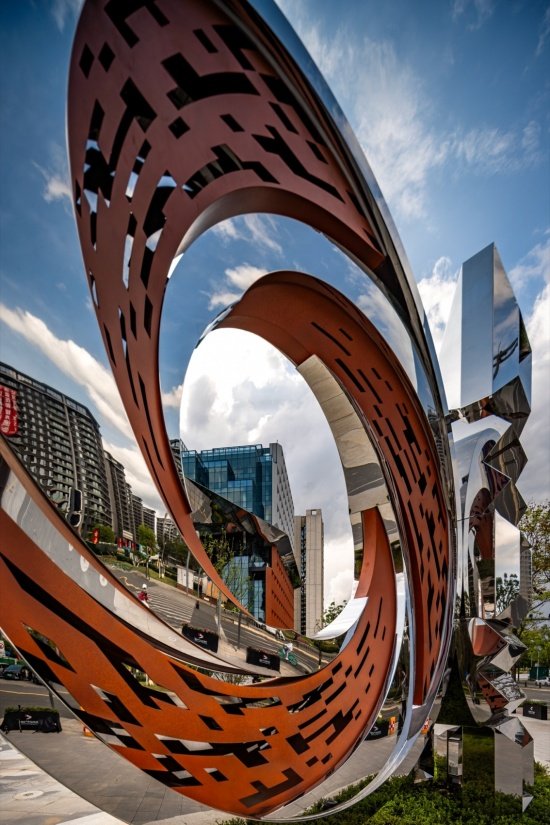
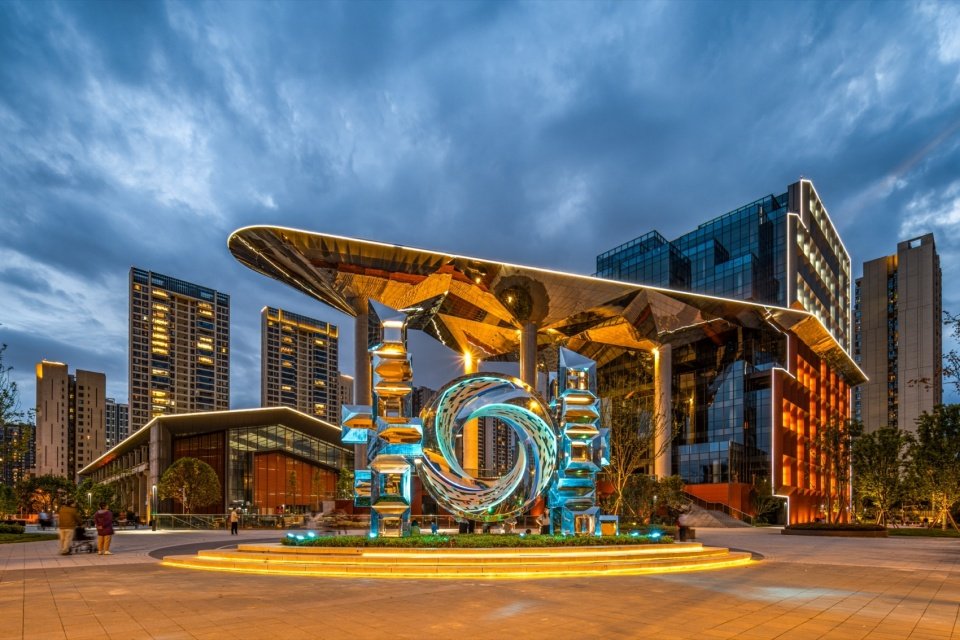
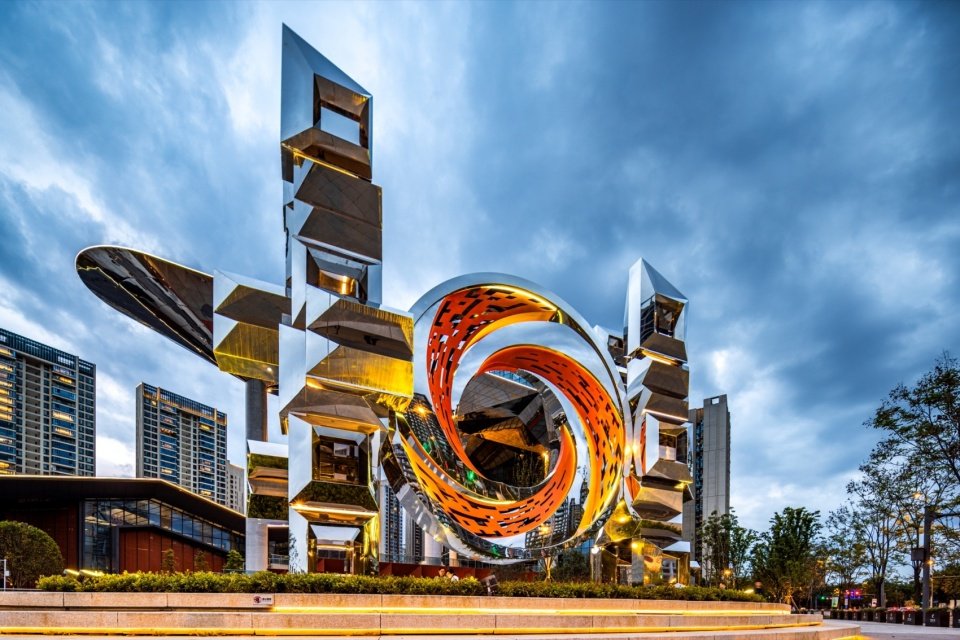
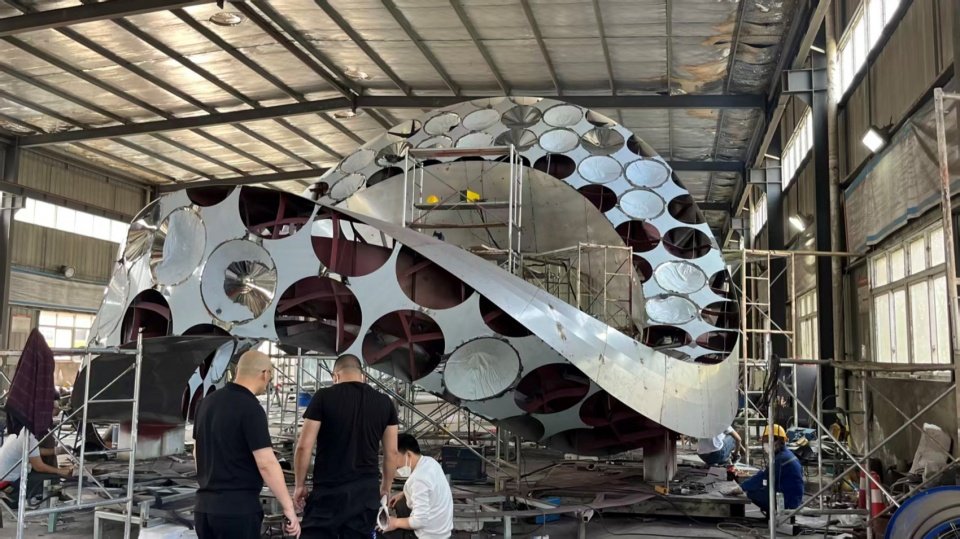
Above the ring-shaped device, the “Golden Middle Ring” echoes the Chenghua area. This highlight is located in an important position between the second and third rings of Chengdu and is a bustling node of the city. The flowing surface carries the narrative of links and updates, eliminating the boundaries between the past, present and future, allowing the heaviness of industrial heritage and the lightness of digital scenes to blend here.
Named Golden Ring, the installation echoes Chenghua’s Golden Central Belt urban initiative, a signature urban corridor between Chengdu’s 2nd and 3rd Ring Roads. It serves as a vibrant urban landmark for the district. Its fluid surface embodies connection and renewal, blurring past, present and future, merging industrial weight with digital lightness.
▼Golden Ring, site view © Lai Yunpeng
▼Night digital lighting effect © Lai Yunpeng
The annular surface forms a continuous flowing visual experience, like a ring of life that continues to grow and can breathe. Through the flow of light and shadow, it intuitively conveys the core narrative of site renewal to visitors.
Its continuous curved surface offers a fluid visual experience, like a living, ever-evolving ring. Through shifting light, it communicates the site’s regeneration narrative to visitors.
▼Golden Ring, site view © Lai Yunpeng
▼Golden Ring, site view © Lai Yunpeng
101—Gateway of Time and Space
101 – Time Gate
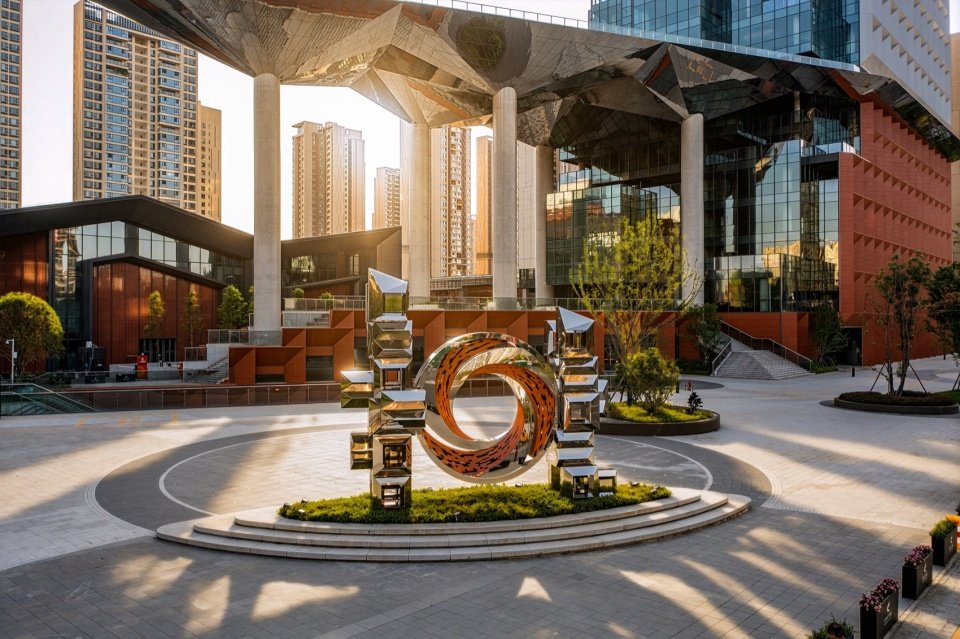
The installation continues the classic brick texture language of old industrial buildings, while extracting the neat section form of the 101 deck building behind it.
The installation carries forward the brick texture language of historic industrial buildings, while adopting crisp planar forms from the rear 101 Deck.
▼101 – Time Gate, site view, 101 – Time Gate, site view © Lai Yunpeng
▼101 – Time Gate, site view, 101 – Time Gate, site view © Lai Yunpeng
It is like a time tunnel, blurring the boundaries of time and space. One end anchors the long-standing industrial memory, and the other end carries the flowing digital scene. On the basis of the old site, it creates an exploration door for the public and leading to future experiences.
Acting as a time tunnel blurring temporal and spatial boundaries, it anchors enduring industrial memory at one end and frames fluid digital scenes at the other, forming a public gateway to future experiences rooted in the site.
▼Night digital lighting effect © Lai Yunpeng
▼Night digital lighting effect © Lai Yunpeng
Traces of architecture
Mapping | Traces
This set of works uses the dual experience of physical installations during the day and digital light and shadow at night to transform the historical clues of industrial remains into experiential public art, providing a cultural interface that carries public memory for urban renewal.
Alternating tangible daytime installations and digital light at night, this suite of public art reframes traces of industrial heritage into experiential public art, forming a cultural interface for collective memory within urban regeneration.
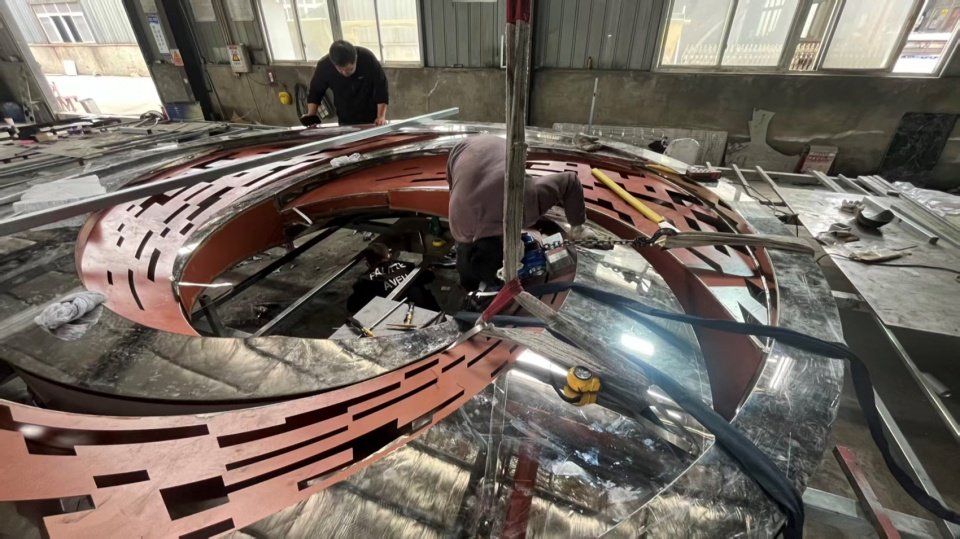
▼Real scene of installation construction, On-site fabrication © Mutan Art MTA
▼RED BARN MEMORY NO.2, sculpture detail © Mutan Art MTA
▼Lightflow Water Tower projection pattern © Mutan Art MTA
▼101 – Time Gate, construction detail © Mutan Art MTA

▼Golden Ring, construction detail © Mutan Art MTA

▼Elevation of the park wall, Elevation of the park wall © Mutan Art MTA

Project Name: Hongcang Cultural and Creative Industrial Park Area Cultural and Art Promotion
Project Type: Art, Design
Design team: Mutan Culture and Art (Chongqing) Co., Ltd.
Design chiefs: Liu Hang, Li Peng, Chen Ji
Participating members: Yang Qi, Wan Junyan, Liao Jing, Yang Qianru
Photography and videography: Lai Yunpeng
Year of completion: 2026
Project address: Next to Balizhuang Metro Station, Chenghua District, Chengdu City (Hongcang Cultural and Creative Industrial Park Area)
Project area: 1400 square meters
Implementing unit: Mutan Culture and Art (Chongqing) Co., Ltd.
Client: Chengdu Chenghua Old City Renovation Investment Co., Ltd.
Materials: weathering steel, stainless steel, aluminum plate, red brick, decorative paint, CNC lighting
Contact email: 21348370@qq.com
Project Name: Cultural & Arts Upgrade of Hongcang Cultural and Creative Park
Project Type: Art, Design
Design Team: MUTART Culture & Art (Chongqing) Co., Ltd.
Lead Designers: Liu Hang, Li Peng, Chen Ji
Team Members: Yang Qi, Wan Junyan, Liao Jing, Yang Xiru
Photography & Videography: Lai Yunpeng
Completion Year: 2026
Site: Beside Balizhuang Metro Station, Chenghua District, Chengdu (Hongcang Cultural and Creative Park District)
Area: 1400㎡
Implementer: MUTART Culture & Art (Chongqing) Co., Ltd.
Client: Chengdu Chenghua Old Urban Reconstruction Investment Co., Ltd.
Materials: Corten steel, stainless steel, aluminum panel, red brick, decorative painted finish, digitally controlled lighting
Email: 21348370@qq.com
More:Muttan Arts MTA
Source: gooood.cn