


In 2021, SO–IL completed a concrete mini-campus in New York’s East Williamsburg, where it went on to become a cradle for contemporary art and inclusivity, replete with free entry and pockets of public space. Now, Amant expands its offerings, taking over a former warehouse nearby. GRT Architects, one of AN Interior’s Top 50 firms in North America in 2025, adapted the building into a new restaurant, Zoli, serving experimental seafood from Chef Ned Baldwin, art, and site specificity.


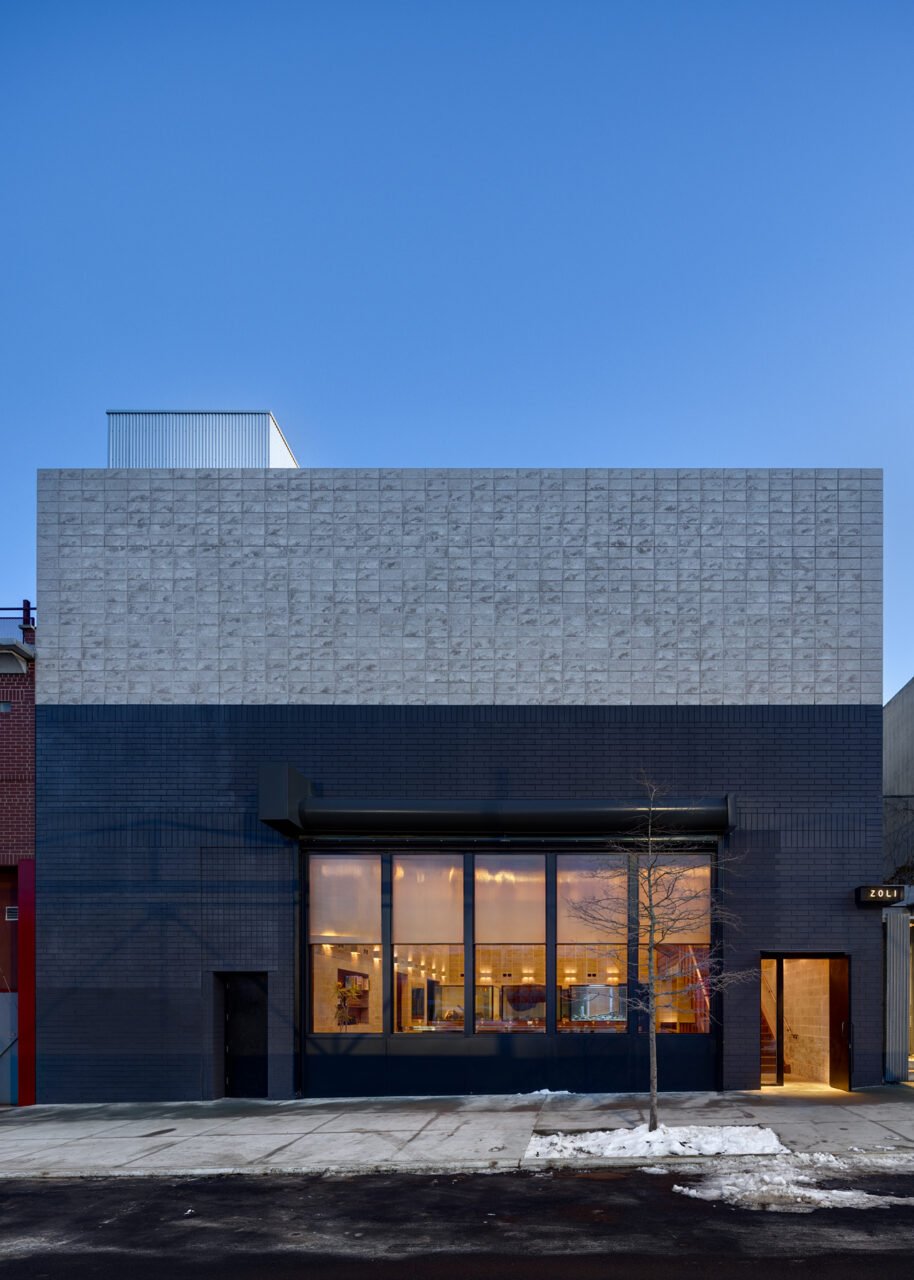
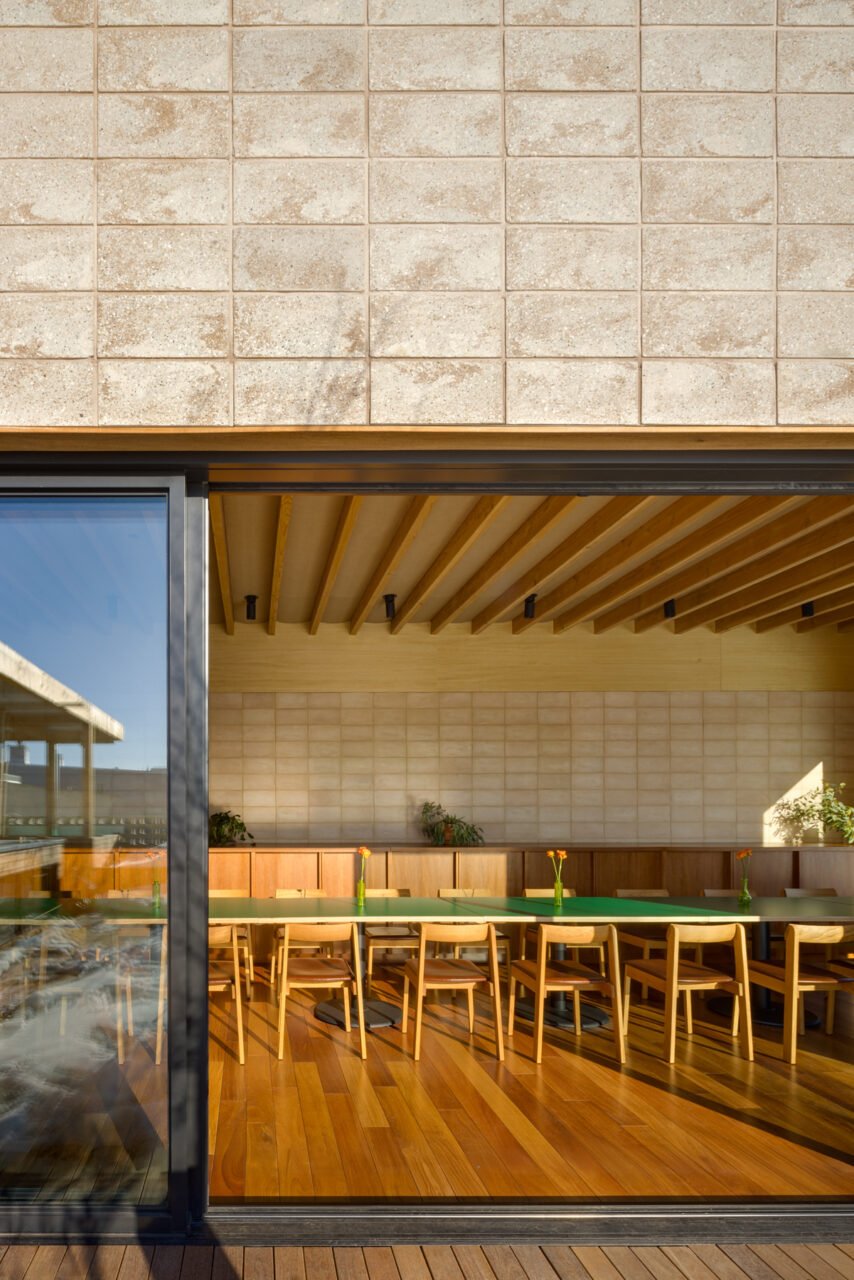
GRT added a second story to the uninsulated 1980s concrete box. The addition is clad in marbled concrete blocks, in line with the campus’s materiality, which demarcates itself from the pre-existing story, clad in brick. “It was important to us that the original volume of the warehouse read as such, so we resisted the simpler approach of inserting a story within the existing volume and built entirely on top,” GRT cofounders Tal Schori and Rustam-Marc Mehta told AN Interior.

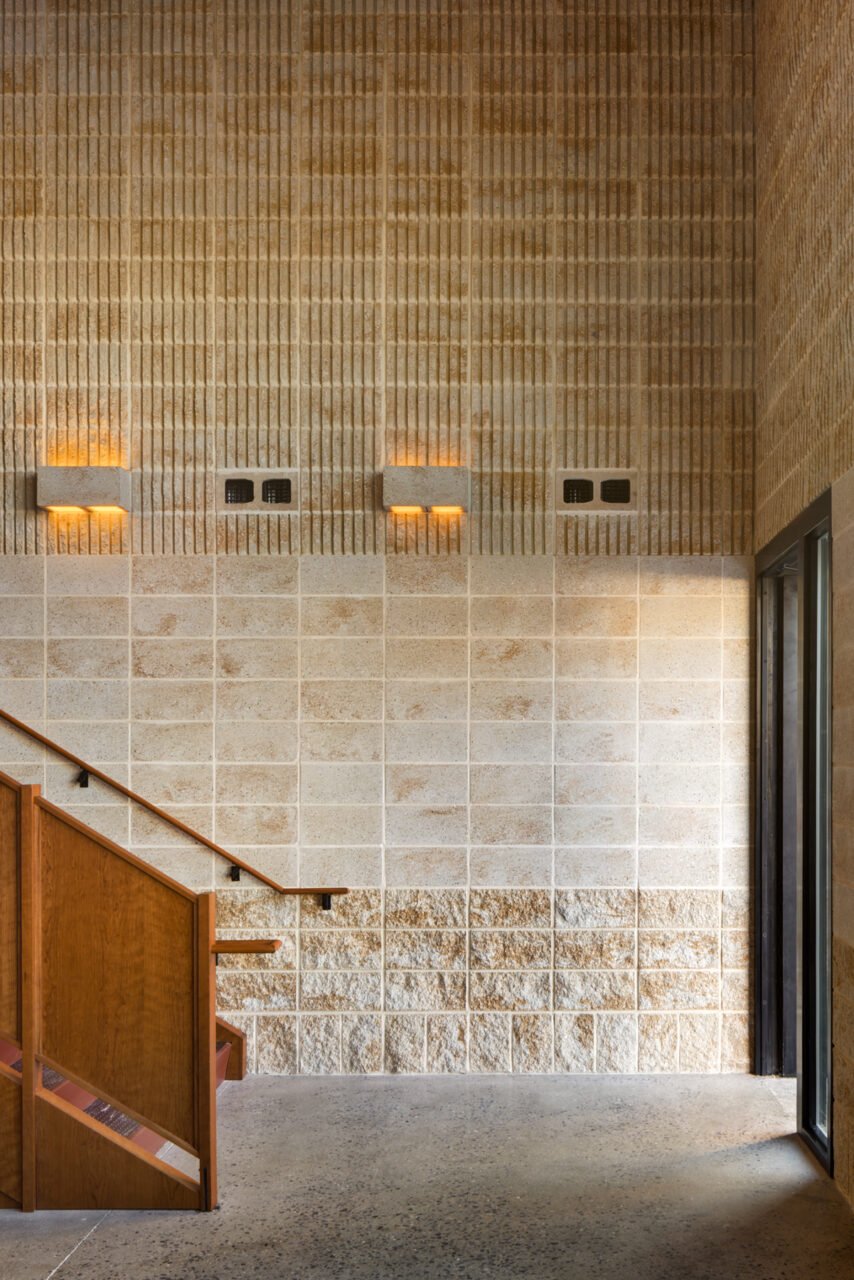
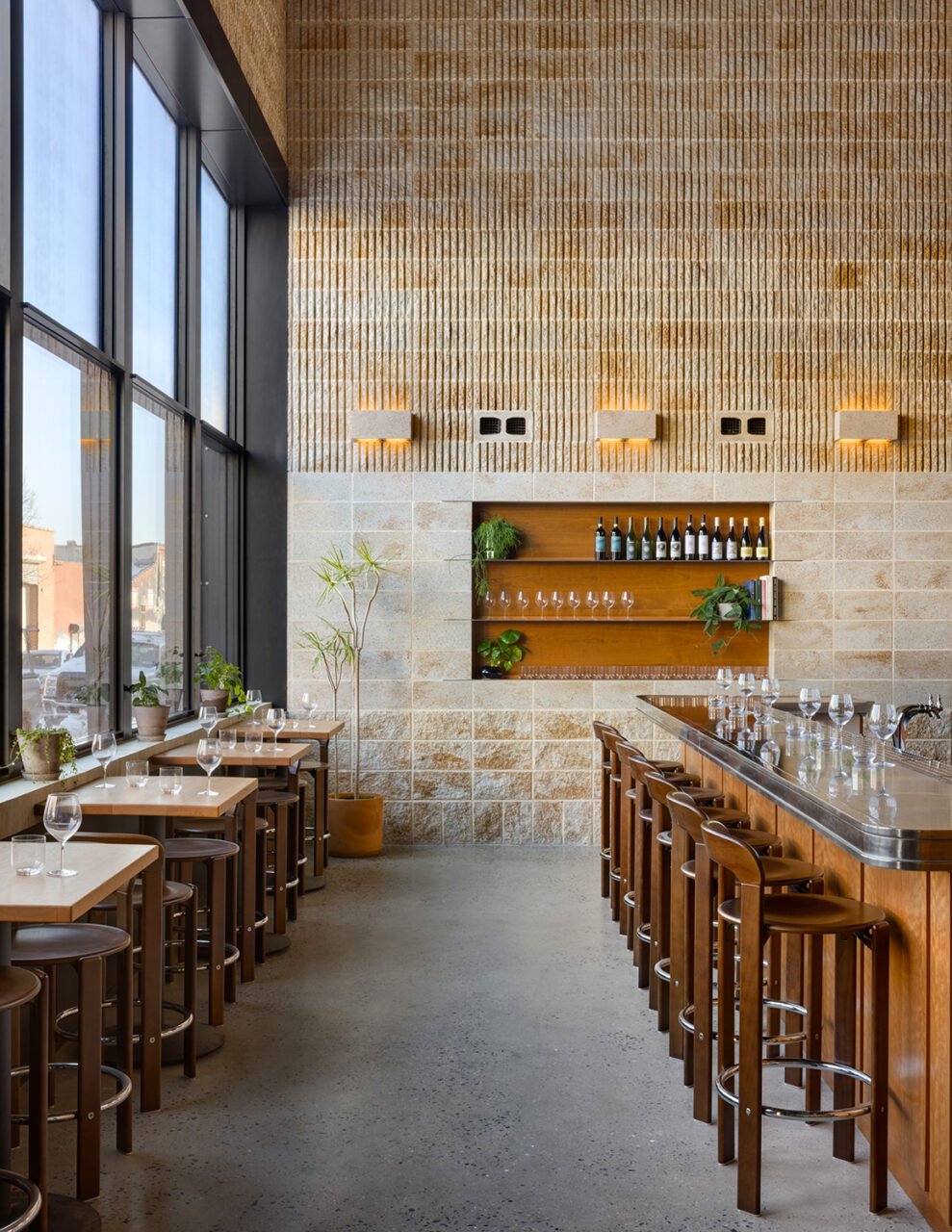
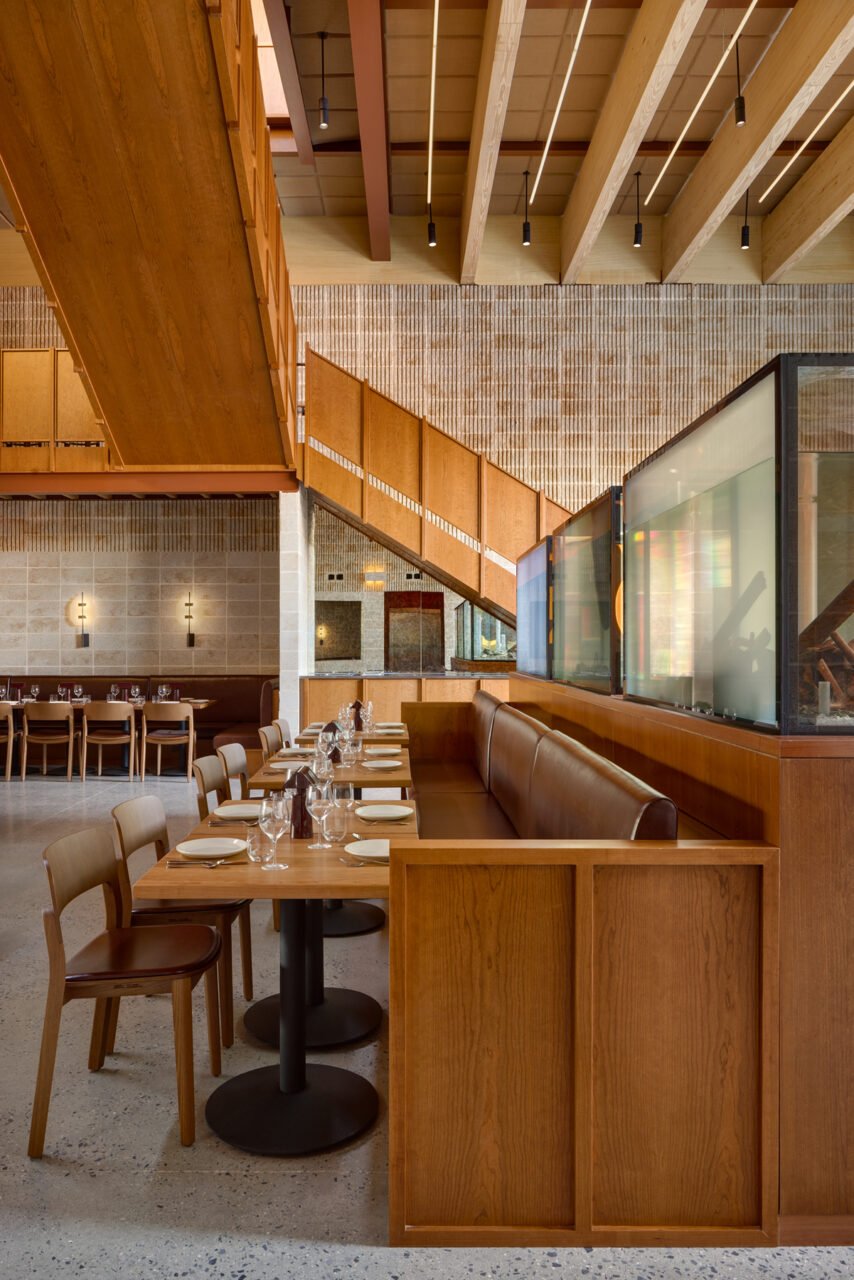
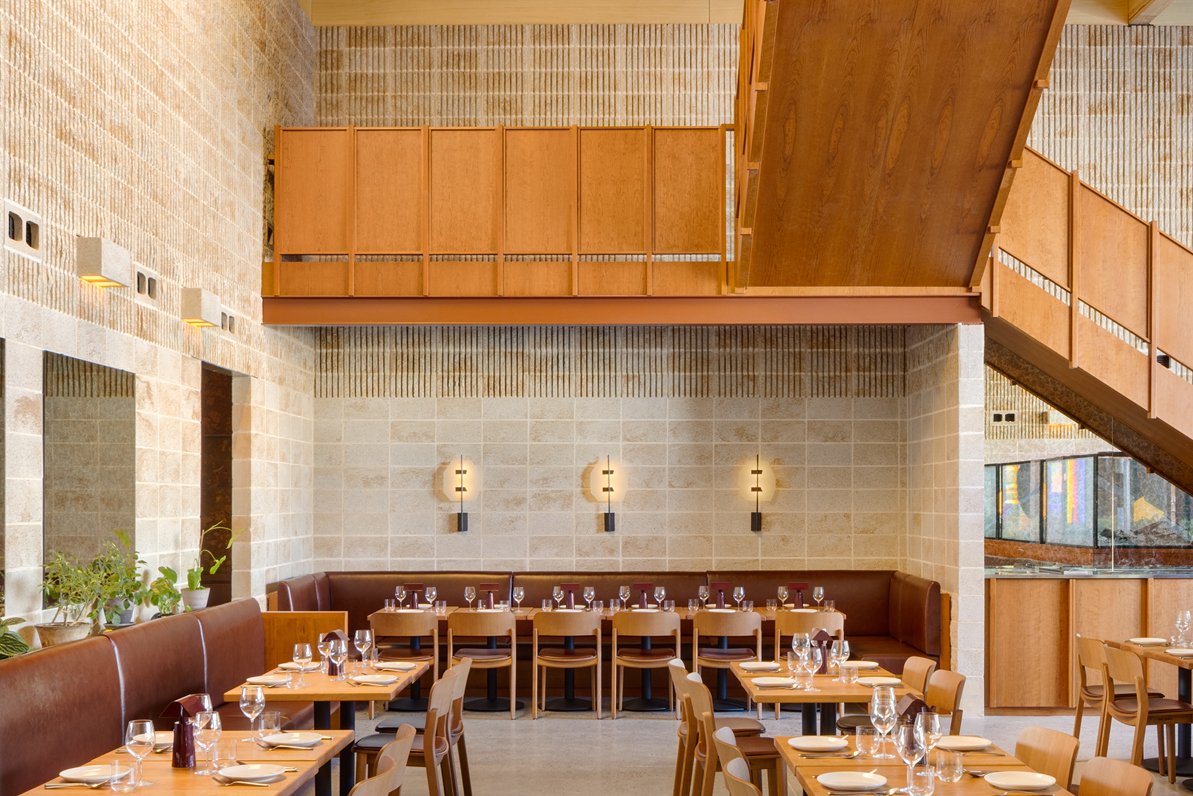
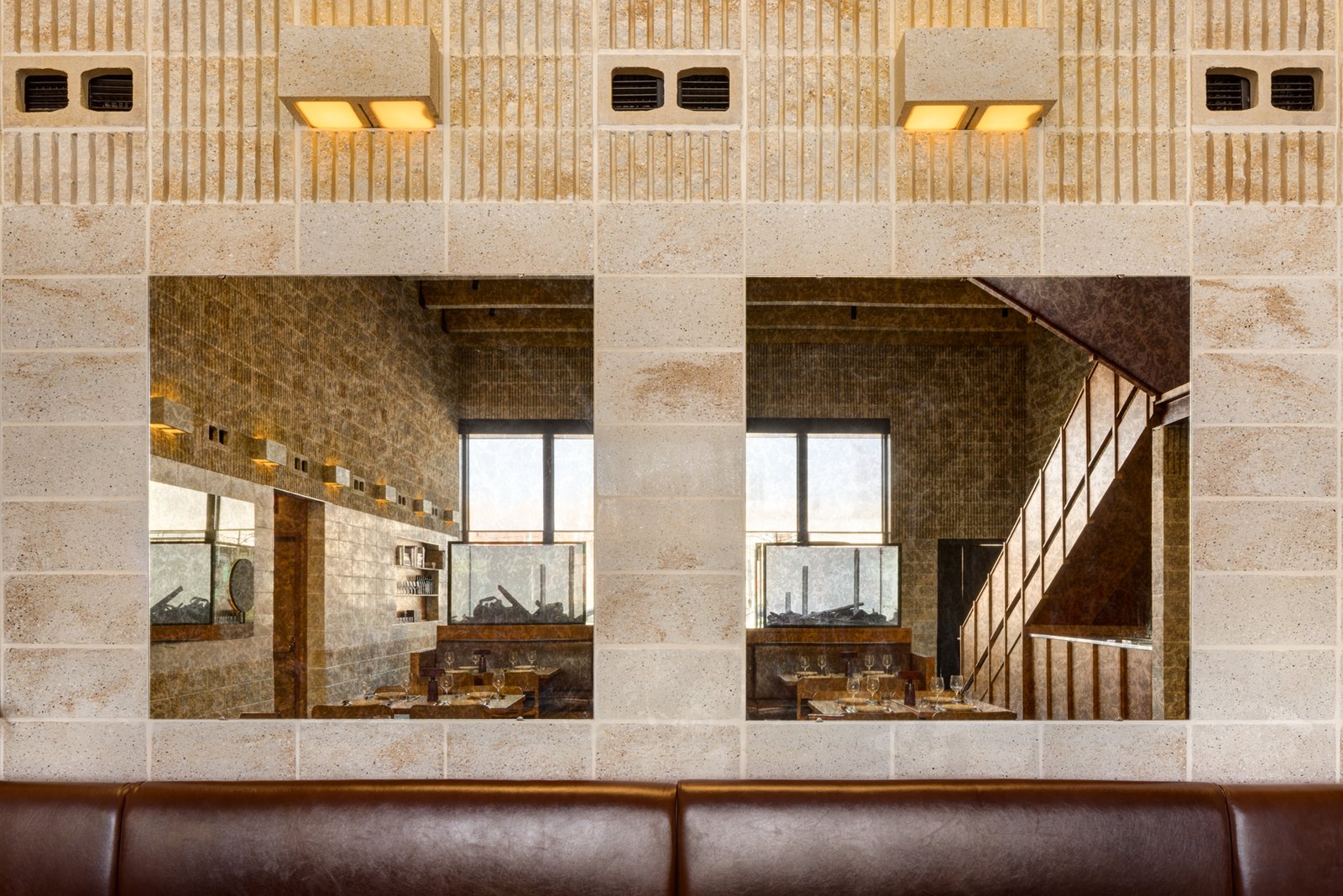
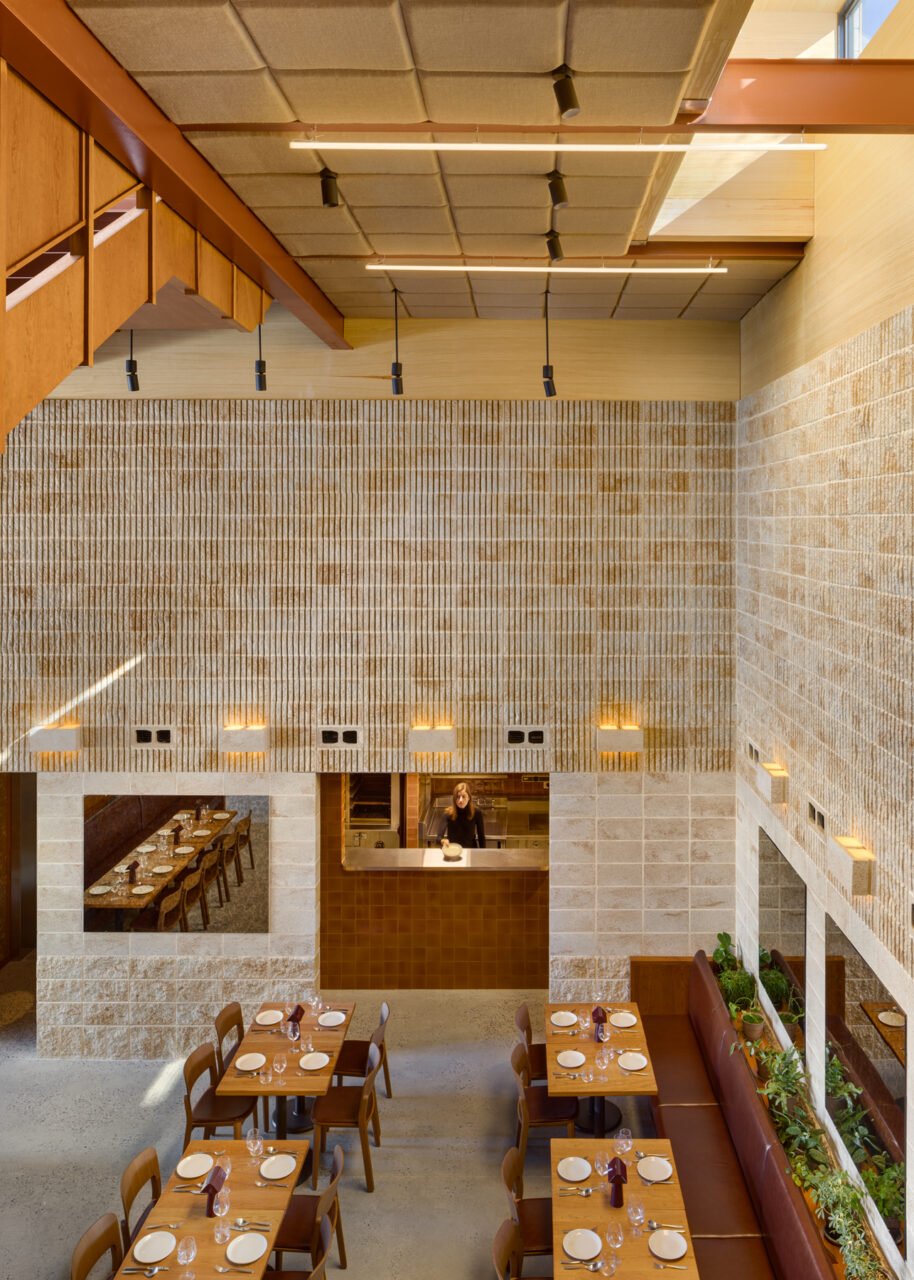
The 10,000-square-foot warehouse houses Zoli across its two floors, with the second sharing space with a new 1,500-square-foot gallery. Concrete block continues into the first-floor dining room. Using two-toned blocks from Westbrook Concrete Block, the architects designed a tripartite wall: a rusticated finish makes up the base of the wall, polished blocks take over at eye-level, and a corduroy texture tops the wall off. Turned and modified blocks act as matching sconces and artful frames for mechanical grilles.

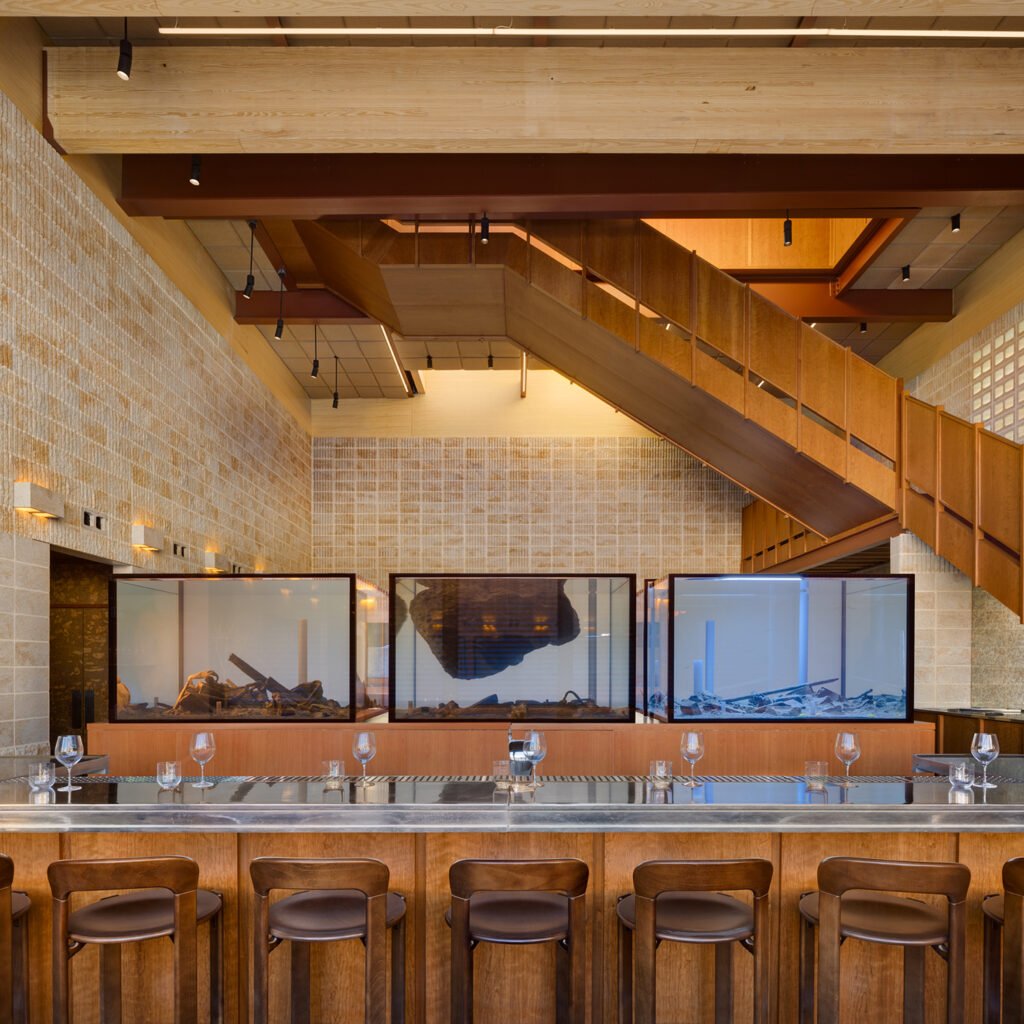
A simple palette of materials, picked to age naturally without applied finishes, adds to the refined industrialism at hand. A natural burlap panels the ceiling, cast pewter envelopes the bar, cork helps finish the walls, and reclaimed fir makes up the tables. The material palette ensures a sense of the campus and neighborhood—while also saving the spotlight for the three-pronged aquarium artwork by Pierre Huyghe which anchors the bar at the heart of the restaurant.

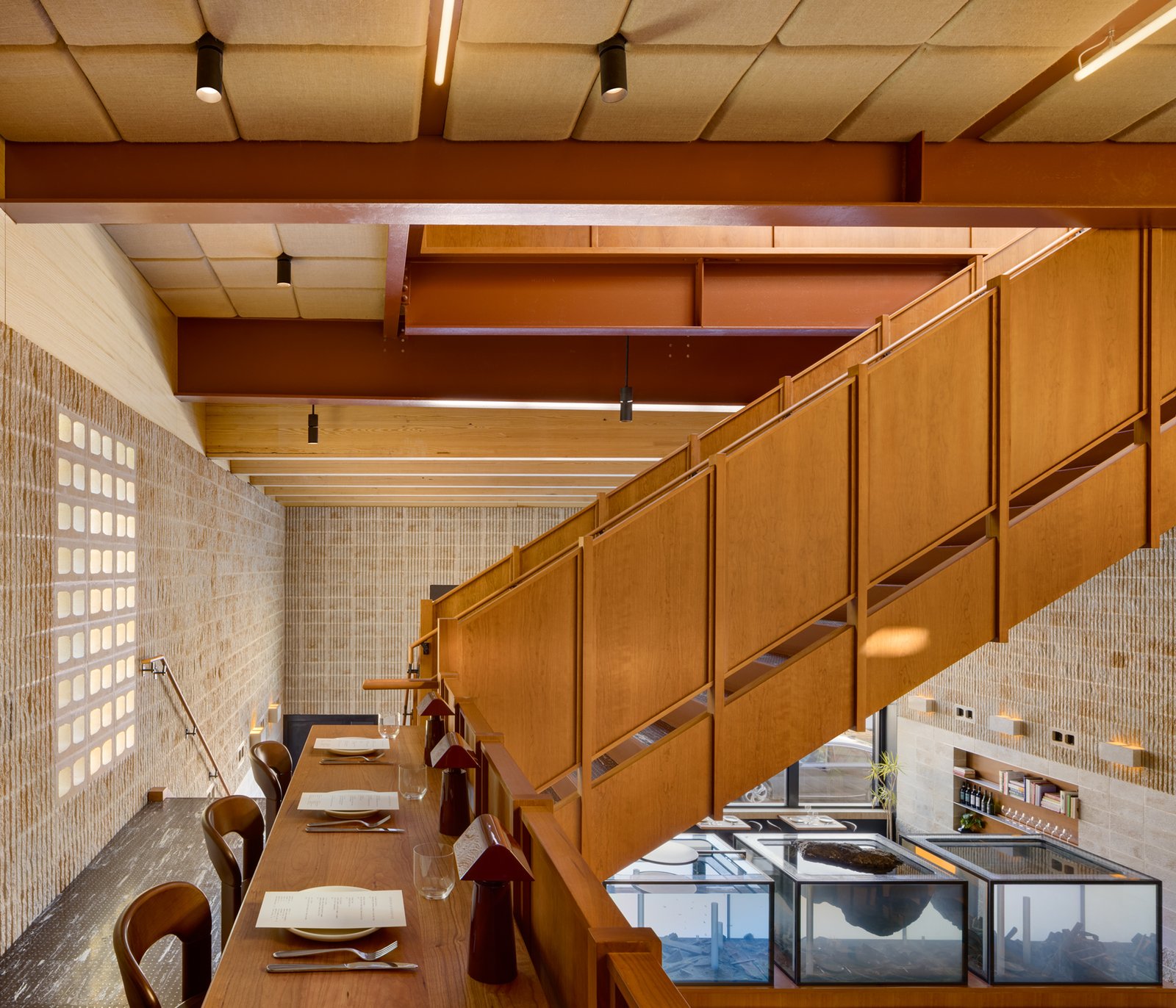
Huyghe’s work, Satellite, features a triptych of aquariums of crab and fish, set to shifting lighting and transparencies. Schori and Mehta, having both worked in the arts before starting GRT, knew the complexities of installing art and, as they shared, “how much of that work involves getting out of the way.” They concealed the technical infrastructure in the bar, where the workflow was organized around the pumps and controllers needed for the art.

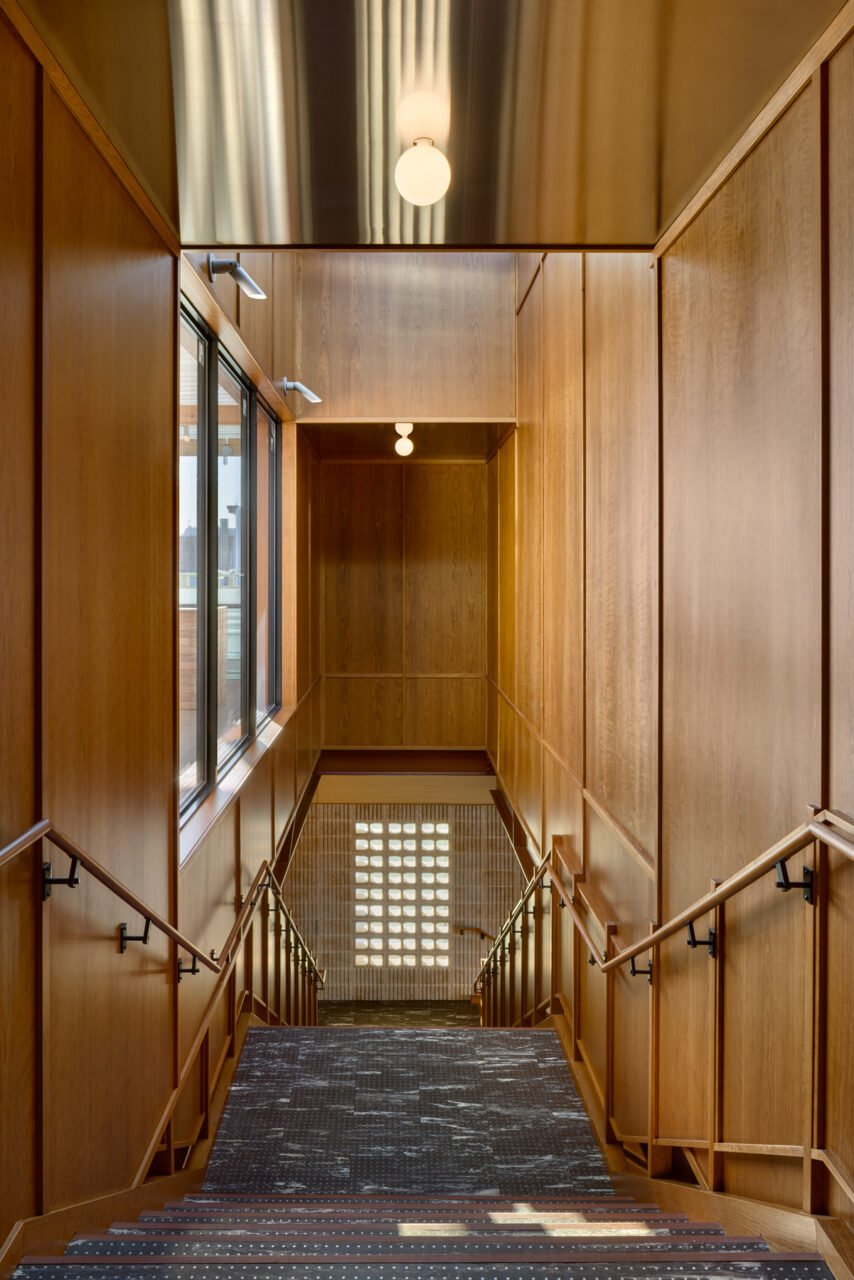
Above, wood-clad stairs thread through the space’s generous height, offering a closer look at the massive timber beams that support the new second story, along with the existing steel structure. The stairs lead first to a mezzanine where tables along the railing offer dinner with a unique view down. Look up and a rooftop light monitor connects the terrace to the dining room.
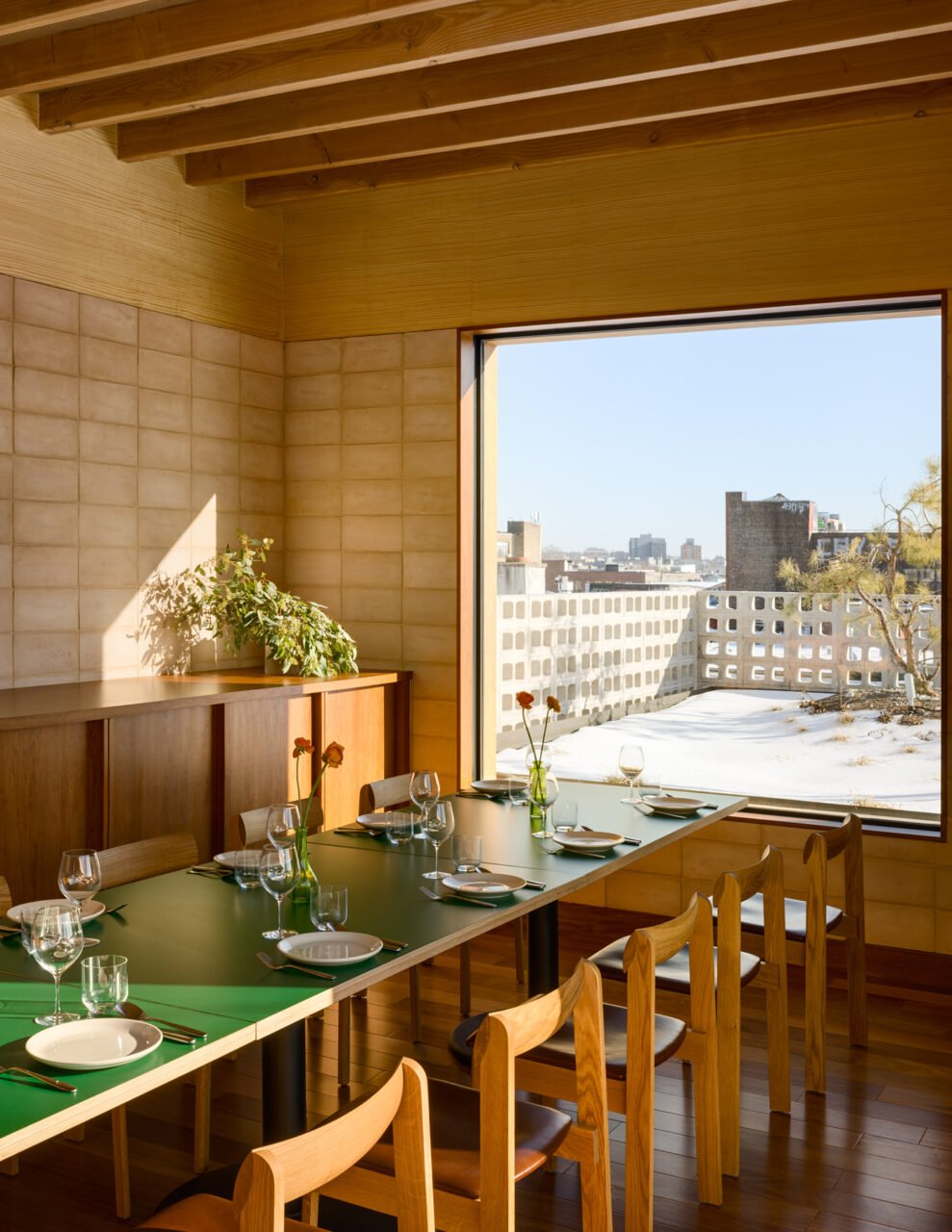
Past the mezzanine, the stairs continue to the second floor where there is a private dining room, gallery, and roof access. The rooftop is planted in collaboration with Verdant.
“The materials, lighting, and volume of Zoli have a meticulous yet simple honesty about them which nonetheless add up to more than the sum of their parts,” said the cofounders, “words we would use to describe the menu.”