


grateful Supervoid Share the following content with gooood. For more information about them, please go to:Supervoid on gooood
Appreciation towards Supervoid for providing the following description:
The “Garage Dallegret” exhibition presents François Dallegret’s visionary imagination across design, fine art, architecture and technology. The drawings, objects and archival materials on display depict a future-oriented imaginative practice that breaks the disciplinary boundaries between the human body and objects, subjectivity and urban context, reality and imagination. This is the first thematic exhibition of the artist and architect in Italy. The exhibition is held at Spazio Punch on the island of Giudecca in Venice. It was conceived by Augusto Maurandi and Alessandra Ponte.
Garage Dallegret hosts François Dallegret’s visionary imagination between design, fine arts, architecture and technology. The drawings, the objects and the ephemera exposed describe an imaginative practice of the futurity that brings down the disciplinary limits between human body and object, subjectivity and urban context, reality and imagination. This is the first Italian monographic exhibition of the artist and architect, which is set up at Spazio Punch (Giudecca Island, Venice) based upon an idea conceived by Augusto Maurandi with Alessandra Ponte.
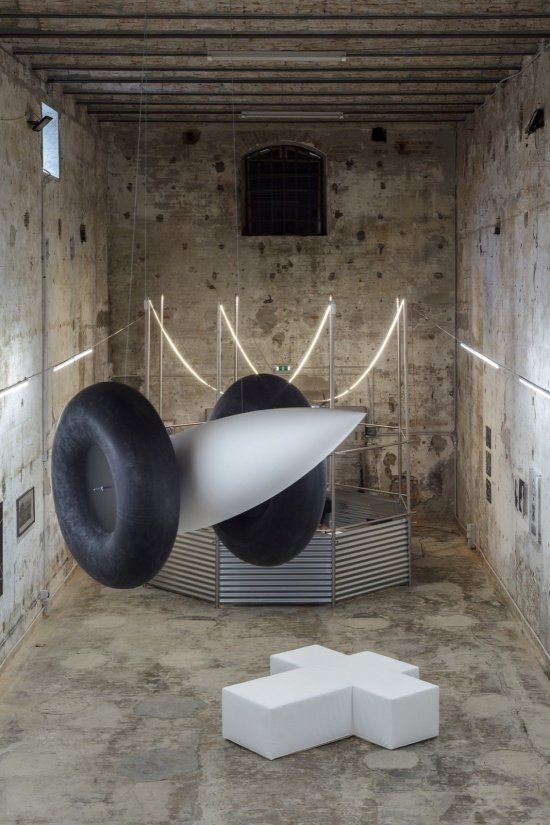
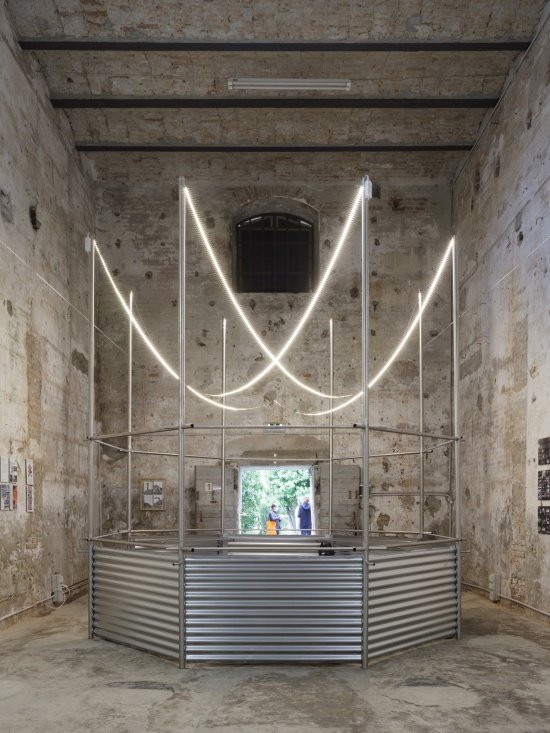
▼Pavilion and the futuristic device, Pavilion and the futuristic device © Supervoid


▼Pavilion close view and detail © Supervoid
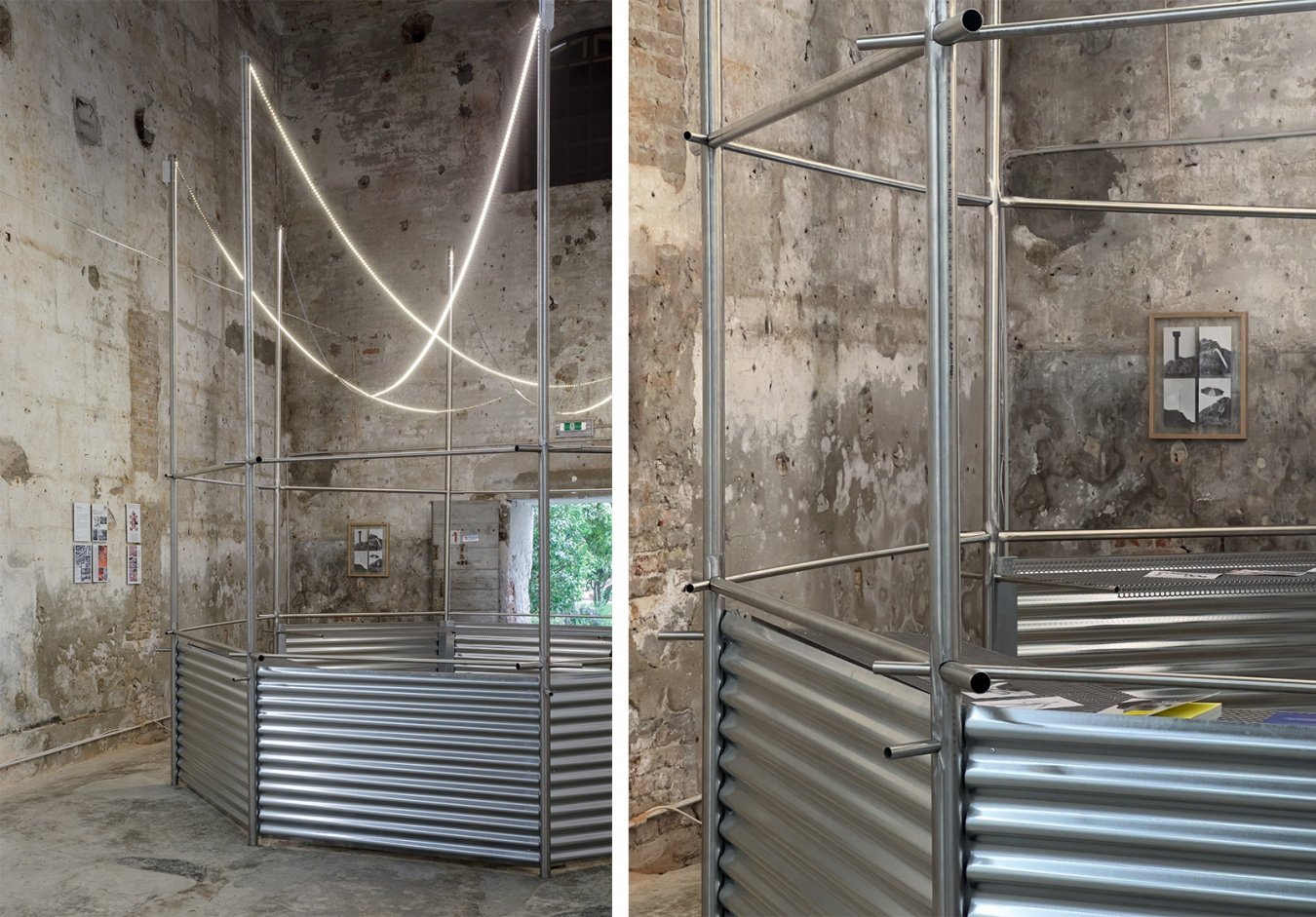

His projects have a radical temperament derived from “radix”, rethinking the relationship between space and objects in a game-like tone, breaking away from the logic of exploitation and production, and forming a unique way of living. Dalgre uses his body to dance with objects and environments, wandering between pages of sketches for the project. This physicality contrasts with the urban gestures of bars and clubs and the techno-future zeal. High-tech cars, space cities sent to Mars, and mechanical objects are all extensions of the body, pointing to something beyond the self and the present. The drawings and works exhibited in the old brewery of Spazio Punch express this expansion of the senses through machines, creating a perceptual space with a retro-futuristic temperament. The exhibition design, conceived by Supervoid (Benjamin Gallegos Gabilondo and Marco Provinciali), fluidly opens up the space to accommodate the diversity of François Dallegre’s experiments and inventions.
The radical character – from radix – of his projects shape a habitus that rethinks the relationship between space and object through a playful tone outside the logics of exploitation and production. Through his body, Dallegret performs with objects and environments, among pages and sketches of the projects. A metropolitan posture, in bars and clubs, and a technological euphoria, that looks to the future, act as counterpoints to this corporeality. The highly-technological automobiles, a space city sent on Mars and the mechanical objects are extensions of the body to reach whatever is beyond itself and beyond the present time. The drawings and works shown in Spazio Punch’s former brewery express this sensory expansion through the machine. A different perceptual space is achieved with a retro futuristic taste. The exhibition’s setting, conceived by Supervoid (Benjamin Gallegos Gabilondo and Marco Provinciali), fluidly opens the space to enable the heterogeneity of François Dallegret’s experiments and inventions.
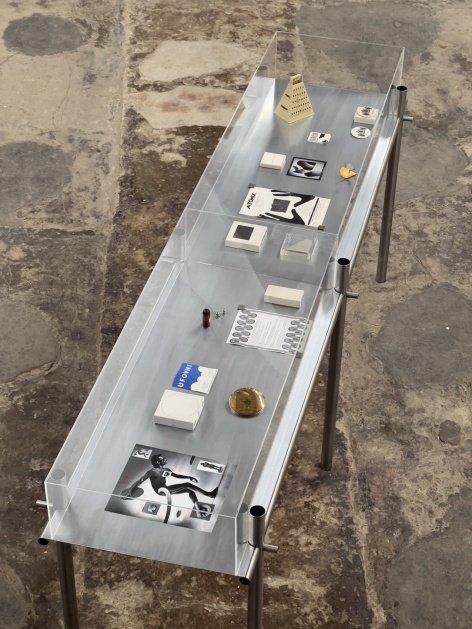
▼Overlooking the showcase, Display vitrines aerial view © Supervoid

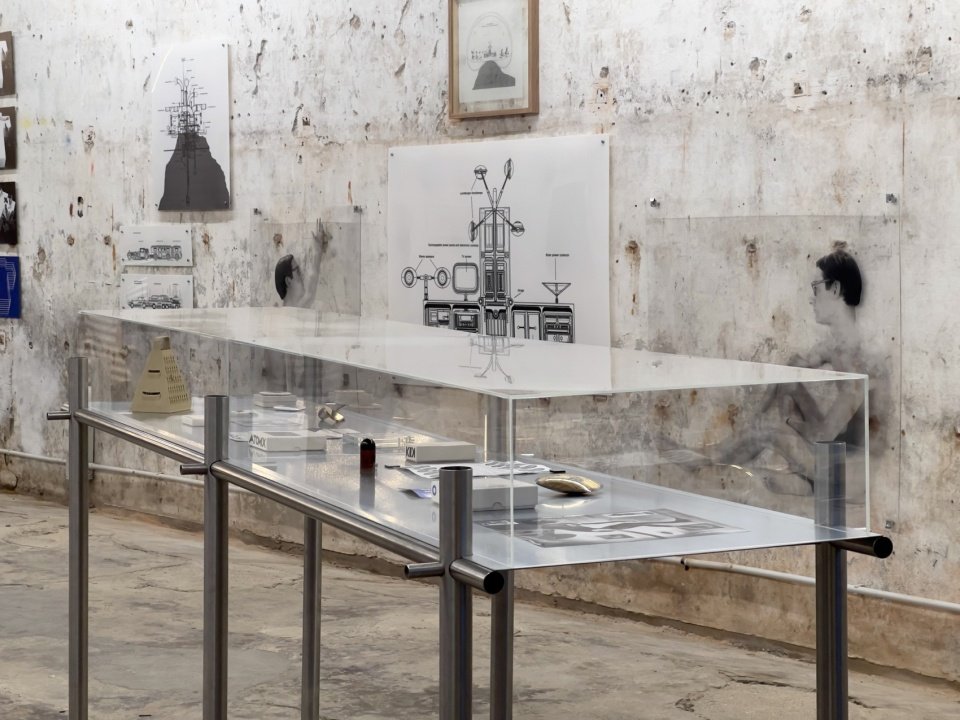
▼Close view of showcase, Play vitrines close view © Supervoid

▼Sketches on the wall © Supervoid

▼The corner of the showcase and wall sketch,
Corner of play vitrines and sketches on the wall close view © Supervoid
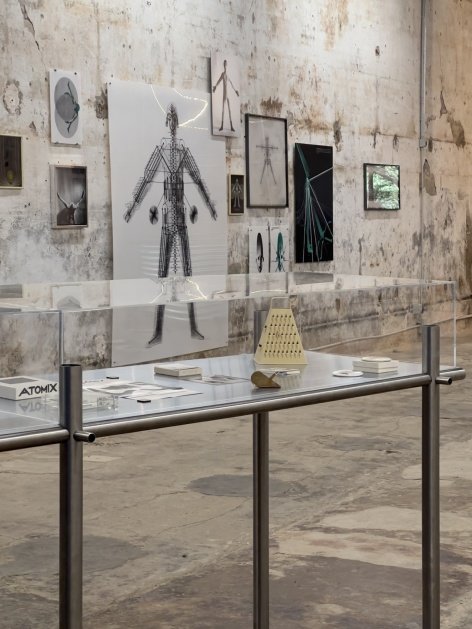
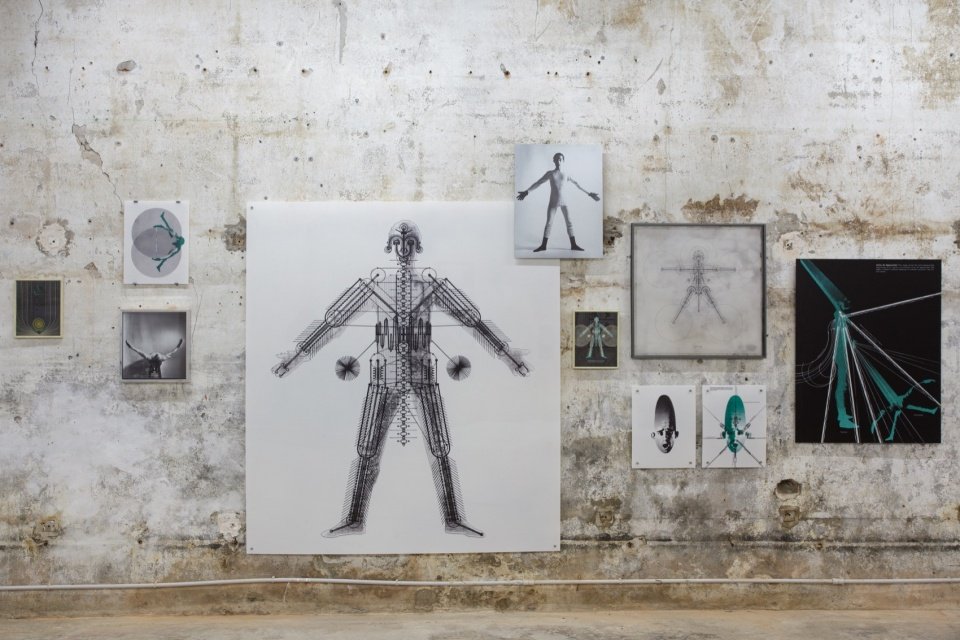
Drawings and limited-edition works created for New York’s MoMA, as well as “dysfunctional” objects such as La chaise enceinte (1965), are scattered throughout the exhibition, appearing randomly and without hierarchy. Materials, substrates and different scales follow a narrative driven by the spirit of the composition, which runs along both sides of the building throughout the site. Atomix (1968)—a teaching model of atomic structure composed of 6,000 free-rolling precision steel balls—forms a dialogue with the six architectural drawings of A Home Is Not a House (1965). The latter is Reyner Banham’s sketch for the Art in America article of the same name, in which critics and artists place architecture at the crossroads of native ecology and hyper-technology. In the same article, the “Un-house-Transportable standard-of-living package” – the Environment-Bubble project – depicts an inflatable bubble that adapts to the environment: naked Dalegre and Banham sit around a “totem robot”. This image contrasts with Anatomy of a Dwelling, which reduces a standardized American house to a network of pipes and cables between heaven and earth.
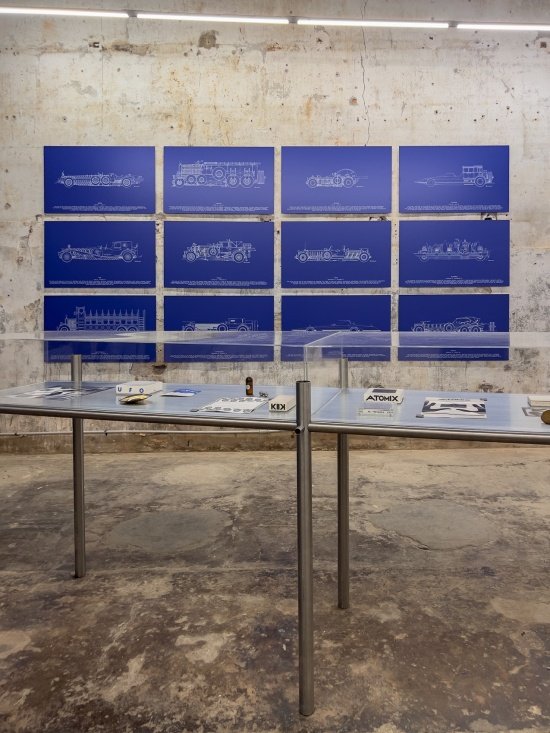
Drawings and multiples made for New York Moma and some dysfunctional objects like La chaise enceinte (1965) inhabit the exhibition, appearing here and there, at random with no hierarchy. The materials, supports and the different scales follow a narrative held by the spirit of the compositions and it runs the whole length of the two sides of the building. Atomix (1968), an educational model of atomic structures – 6000 freely moving precision steel spheres – has a dialogue with the six architectural drawings for A Home Is Not a House (1965). The former ones were sketched for the homonymous article by Reyner Banham in Art in America where the critic and the artist figure out architecture at the crossroads of proto-ecology and ultra-technology. In the same article, Un-house-Transportable standard-of-living package. The Environment-Bubble’s project depicts an inflatable bubble that adapts to the environment: Dallagret and Banham naked are sitting around a “totem robot”. The image serves as a counterpoint to Anatomy of a Dwelling, a standardized American house reduced to a net of pipes and cables between sky and earth.
▼Wall of blueprints and the display table © Supervoid
▼Wall of blueprints and the display table detail © Supervoid
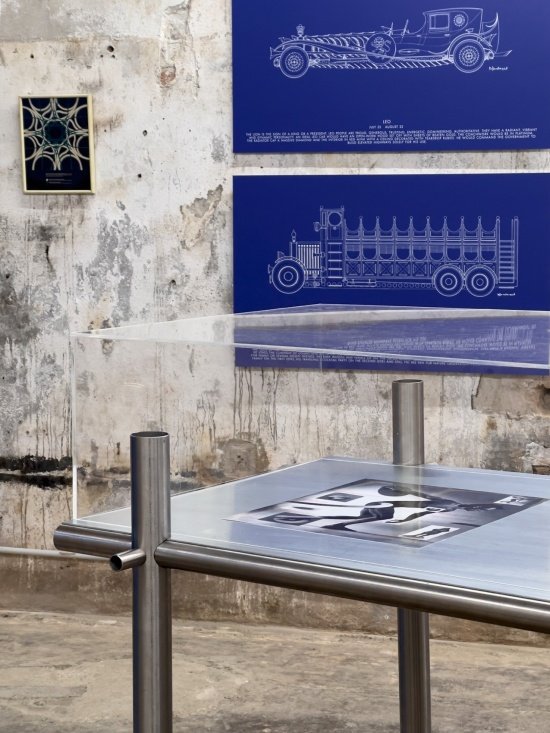
KIIK is a pill-shaped metal object that is intended to relieve physical discomfort and inner obsessions, and even help people quit “bad or good” habits, such as quitting smoking or starting to drink. Among human augmentation devices, the IntroConversoMatic – also known as NNMA (Network Neutrality Measurement Agent) – designed for Bizarre magazine is a wearable machine consisting of a sound system, display, microphone, keyboard and transmitter/receiver/transducer. It protects the user’s mental integrity and is designed to write, listen, watch, and even have an introspective conversation with oneself. Littératuromatic (1963), which far preceded the emergence of artificial intelligence, focused on producing literature on its own. Le Drug is a Montreal “pharmacy disco” with a restaurant in the basement, a fashion boutique and gallery that sells everything from matches to posters. Other recreational venues conceived by D’Alegre include the Montreal-based club New Penelope (1966-1967), the Palais Metro (Montreal, 1967), and the West Village (Kansas City, 1972). Eat & Drink, a fast food, bar and club designed for New York’s World Trade Center in 1972, reshaped the spatial typology that had previously taken shape in New Penelope and remains an exceptionally ambitious project today. This lineage is reproduced in the exhibition with New New Penelope – a space conceived by Supervoid that allows viewers to come together, take a break and share a pleasant and different viewing experience. The new futuristic installation Wheely stands above this constellation of inventions, directing the architectural movement of the exhibition. It is an echo of the 1968 car Tubola, created especially for this Venice show.
KIIK, a metal object shaped like a pill, intends to ease body distresses and mind obsessions. Furthermore, it helps to give up “bad or good” habits such as to quit smoking or to start drinking. Among the human amplification devices, the IntroConversoMatic designed for Bizarre magazine – also known as NNMA (Network Neutrality Measurement Agent) – is a wearable machine made of an audio system, a monitor, a microphone, a keyboard and a transmitter/receiver/transducer. It protects the user’s mental integrity and aims to write, to listen, to see and even to have an introspective conversation with oneself. Well in advance of artificial intelligence, Littératuromatic (1963), on its side, produces literature. Leisure places conceived by Dallegret we find: New Penelope, a club built in Montreal (1966-1967); Palais Metro (Montreal 1967), and West Village (Kansas City 1972). Eat & Drink, a fast-food, bar and club designed in 1972 for the World Trade Center of New York, remodels the type of space previously formalized in New Penelope and remains a particularly ambitious project. This genealogy is reintroduced in the exhibition with New New Penelope, a space conceived by Supervoid in order to gather together the audience, take a rest and share a convivial alternative perception of the show. Standing above the constellation of inventions, Wheely, a new futuristic device, is placed on a higher position since it articulates the exhibition’s architectural trajectories. It is an echo of the automobile Tubola (1968) and it’s been specially created for our Venetian venue.
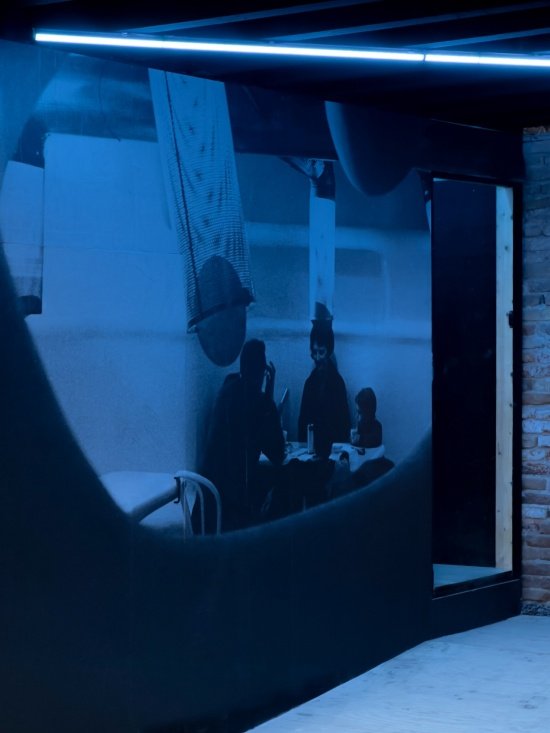
▼New New Penelope, a resting and communication space shrouded in blue lights,
The New New Penelope lounge bathed in blue light © Supervoid
As the artist and architect’s first thematic exhibition in Italy, “Garage Dallegret” is intended to dialogue with the thinking presented by Lesley Lokko, curator of the 18th Venice International Architecture Biennale, in “The Laboratory of the Future”. At the crossroads of “imagination as a planning tool” and “architectural design as a perception of the world,” François Dallegre’s experiment is Spazio Punch’s answer to the question “What narratives are needed for future visions and practices?” The exhibition will also serve as a platform to advance projects with local designers, artists and architects through an open call.
As the first Italian monographic exhibition of the artist and architect, Garage Dallegret means to dialogue with the reflections displayed in The Laboratory of the Future by Lesley Looks, curator of the 18th International Architecture Exhibition of La Biennale di Venezia. At the crossroads between imagination as a planning device and architectural design as a perception of how to be in the world, François Dallegret’s experimentation is the answer that Spazio Punch offers to the need for a narrative concerning visions and practices of the future. The exhibition will also be a platform to develop projects through open calls for local designers, artists and architects.
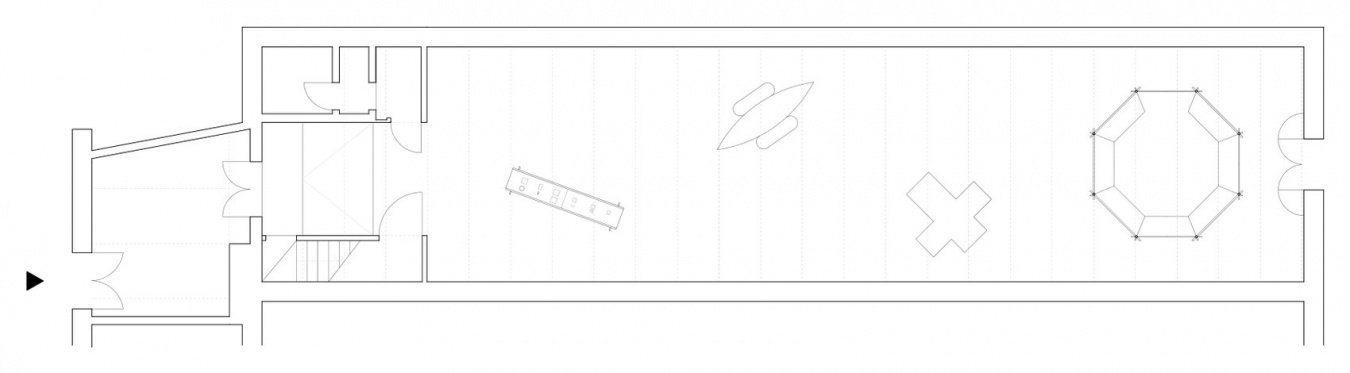
▼Plan © Supervoid

Exhibition name: “Garage Dallegret”
Exhibition location: Spazio Punch, Giudecca Island, Venice, Italy (Giudecca 800/o)
Exhibition period: May 18 to November 26, 2023
Exhibition concept: Augusto Maurandi, Alessandra Ponte
Exhibition design: Supervoid (Benjamin Gallegos Gabilondo, Marco Provinciali)
Graphic design: Alessandro Gori
Editorial Consultant: Alessia Prati
Academic Advisors: Liliana Albertazzi, Mario Lupano
Logistics and production: Marta Girardin, Hstudio
Digital Fabrication: Fablab Venezia
Support: Extreme Printing
Photography: © Supervoid
Exhibition: Garage Dallegret
Venue: Spazio Punch, Giudecca 800/o, Giudecca Island, Venice, Italy
Dates: May 18 – November 26, 2023
Based upon an idea by: Augusto Maurandi with Alessandra Ponte
Exhibition design: Supervoid (Benjamin Gallegos Gabilondo, Marco Provinciali)
Graphic design: Alessandro Gori
Editorial Advisor: Alessia Prati
Scientific Advisory Board: Liliana Albertazzi and Mario Lupano
Logistics & Production: Marta Girardin and Hstudio
Digital Fabrication: Fablab Venezia
With the support of: Extreme Printing
Photography: © Supervoid
More:Supervoid. More about:Supervoid on gooood
Source: gooood.cn