


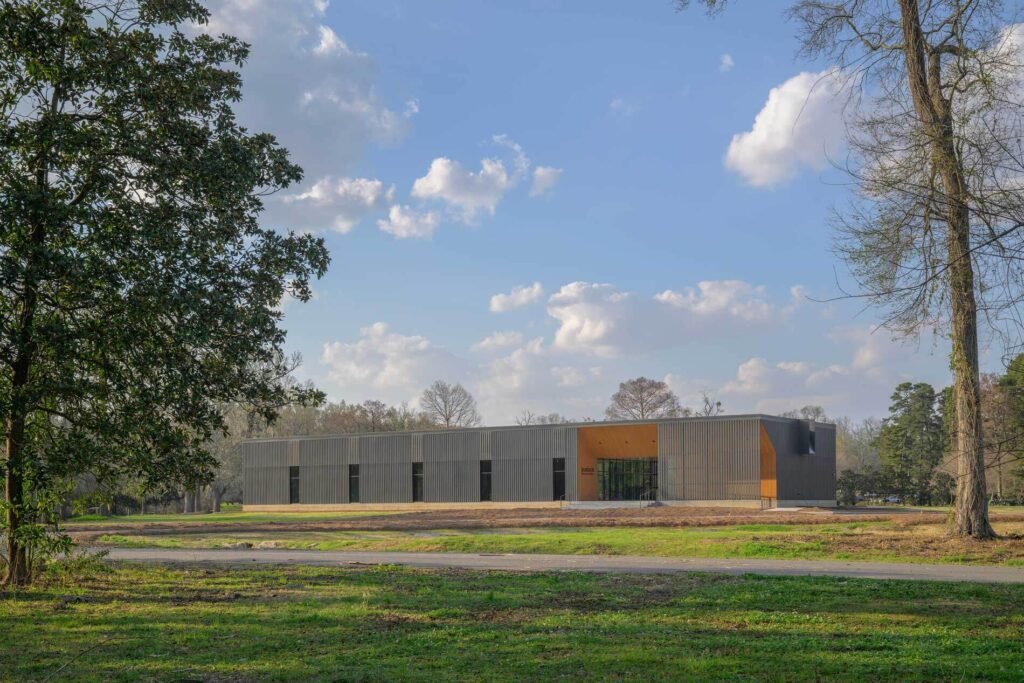
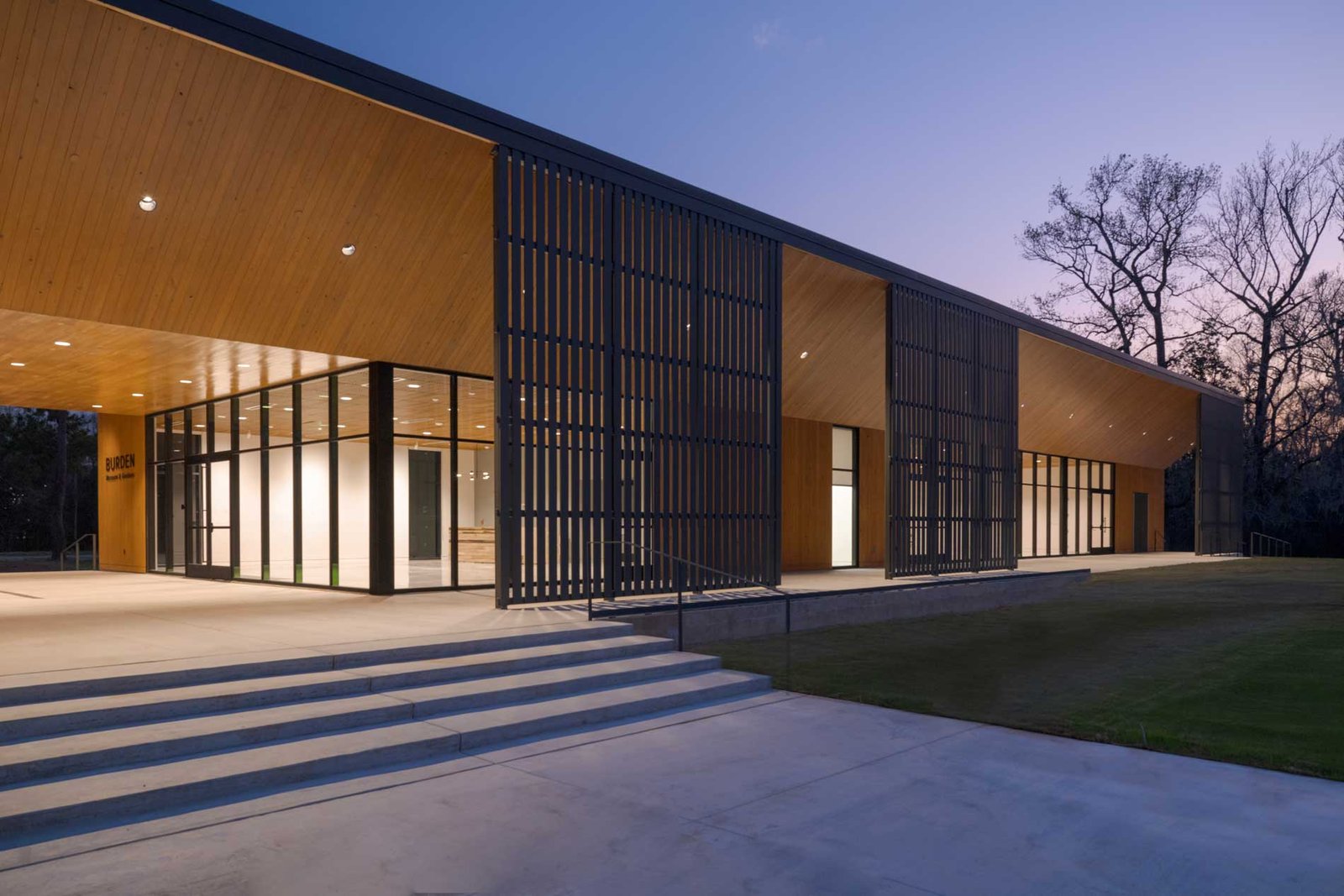


A new 6,500-square-foot building, made primarily of timber, designed by EskewDumezRipple in Baton Rouge, Louisiana, serves as a “civic gateway” to the Burden Museum & Gardens, and the LSU AgCenter Botanic Gardens campus more broadly.
Landscape architecture firm CARBO worked in tandem with Suzanne Turner Associates on the project’s exterior realm.

The building by EskewDumezRipple functions as a flexible community venue and “orientation hub.” The timber structure consists of locally sourced cypress, complemented by polished concrete flooring. Dark corrugated siding wraps the building’s envelope. Lighter wood faces the covered exterior spaces, providing contrast.
Deep overhangs, shaded porches, and breezeways help naturally cool the building at the same time connecting it architecturally with the rural, vernacular “dogtrot buildings” of the Rural Life Museum and Steele Burden Memorial Orangerie.
“We approached this project as more than architecture, it was about creating something deeply connected to the land and its history,” said EskewDumezRipple principal Mark Hash.
The building is organized around a central foyer flanked by a gift shop and flexible event space for lectures, banquets, and events.
The landscape design by CARBO and Suzanne Turner Associates draws from Louisiana’s ecological and cultural systems. Roof runoff water is channeled into rain gardens and visible stormwater features. Permeable gravel parking and native planting further tie the grounds into the regional hydrology.

A sculptural roof scupper, on the east facade, pours rainfall into a teaching pool.
“The project was conceived as a framework for experiencing a place, rooted in context and shaped by sustainability and longevity,” Hash added. “It honors what came before while remaining open to what comes next.”