

Biodiversity School
The project is part of a biodiversity network that operates on multiple territorial scales. At the neighborhood level, the design ensures continuity of green corridors, while also connecting to broader areas of influence, from the urban parks bordering the municipality and nearby river islands to the vast forests of western Paris. Due to its location in a densely built-up area, the landscape space of the school can serve as a valuable biodiversity relay.
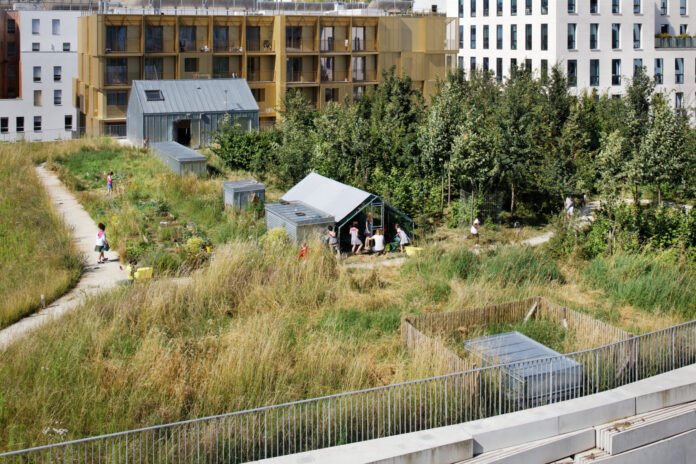
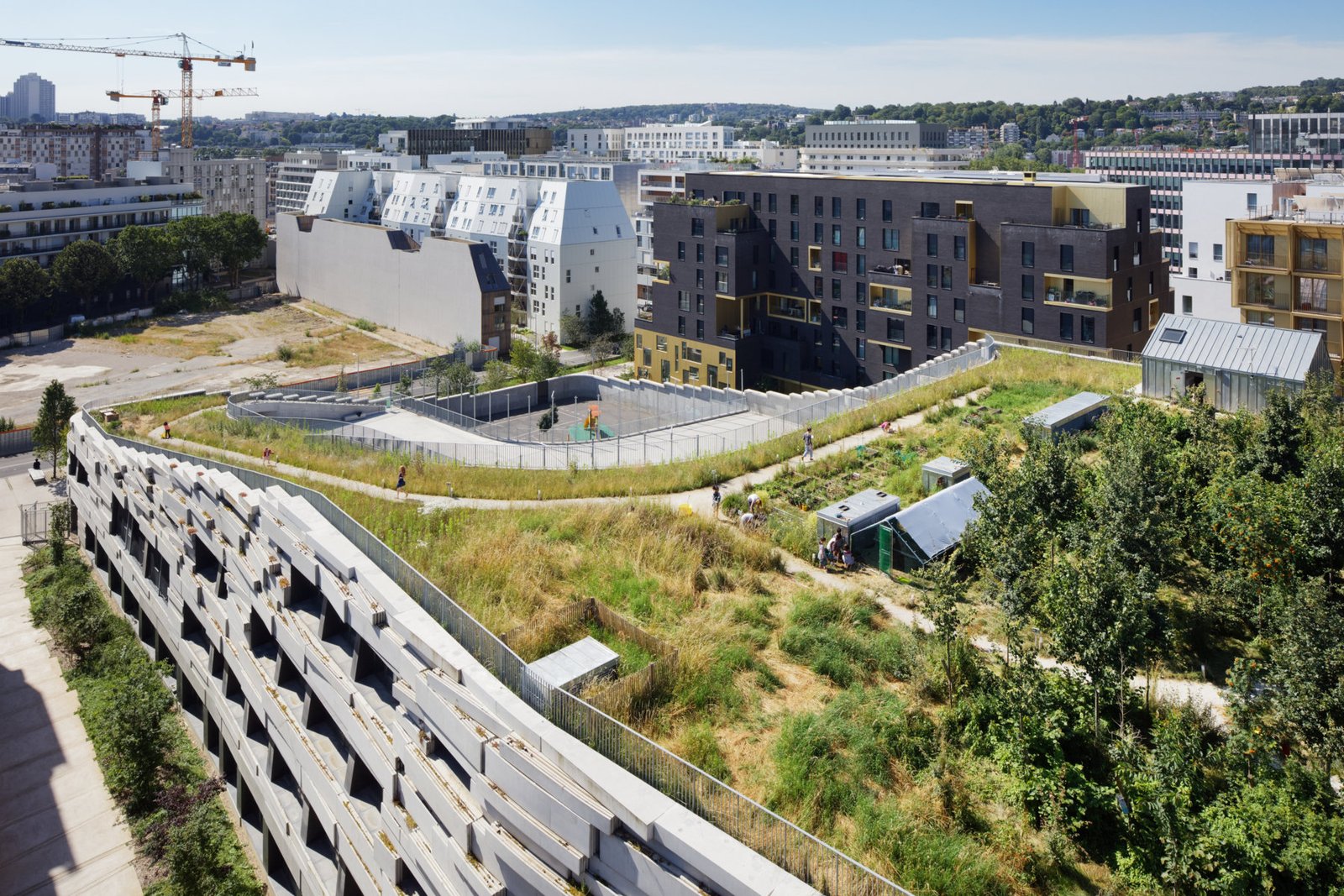
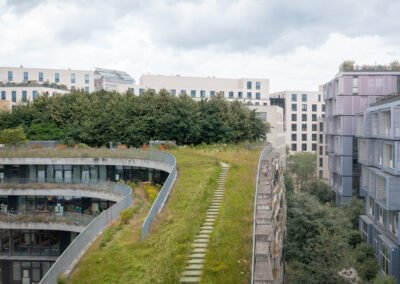
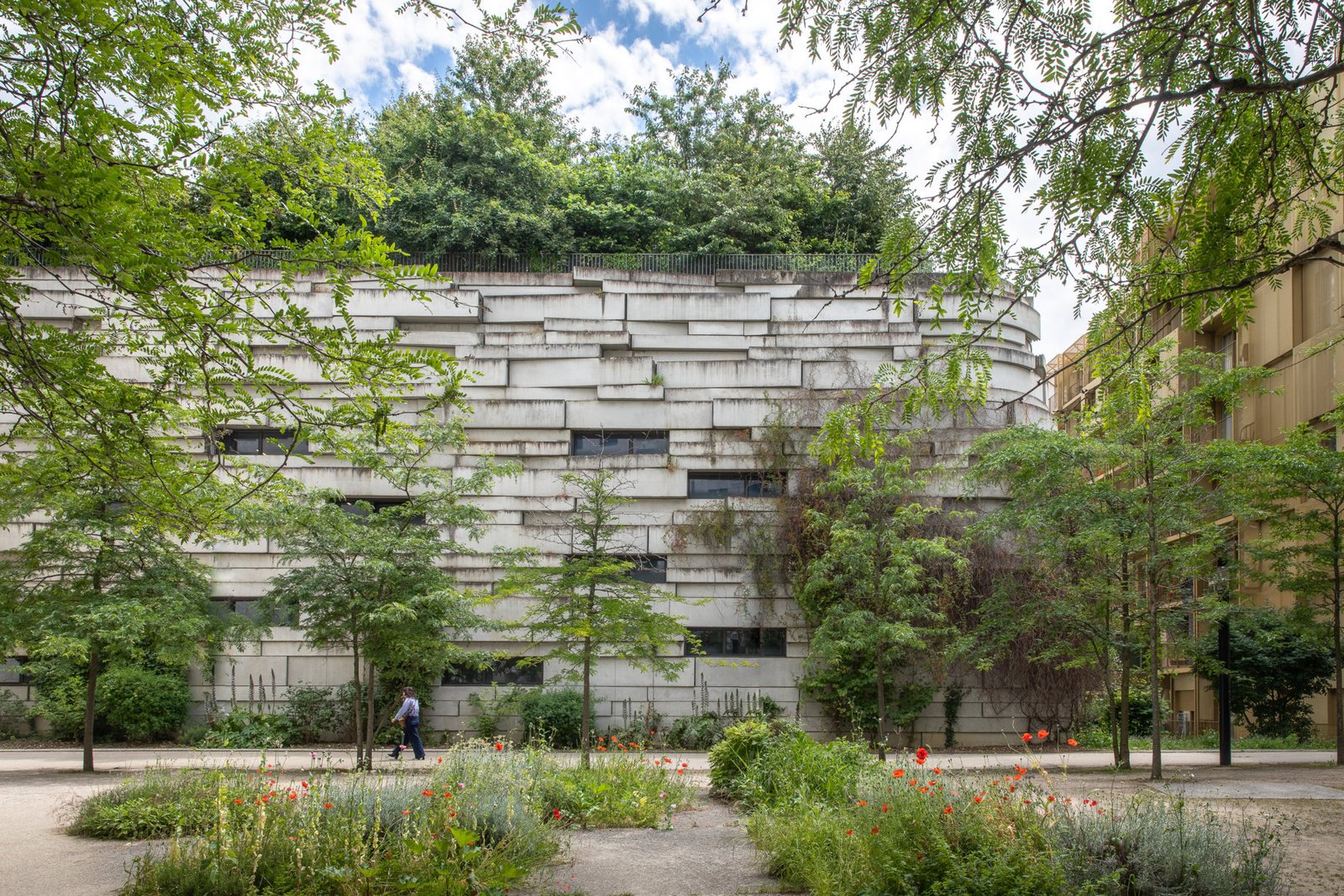
Born from an innovative vision, the challenge is to create a rooftop ecosystem – a primitive natural environment that extends into the texture of an inhabited enclosure wall. The building thus becomes an extruded piece of territory, a vertical landscape where native nature develops freely. This landscape is designed with the intention of welcoming living organisms, both on the roof – designed as a single, fertile 2,500 m2 surface – and on the facades. These front have been carefully designed so that water runoff and surface relief provide a maximum number of habitats for the greatest possible diversity of species. This is an innovative experiment that integrates the question of habitat for non-human species with whom we share our living spaces, including in urban areas.
The landscape project is divided as follows:
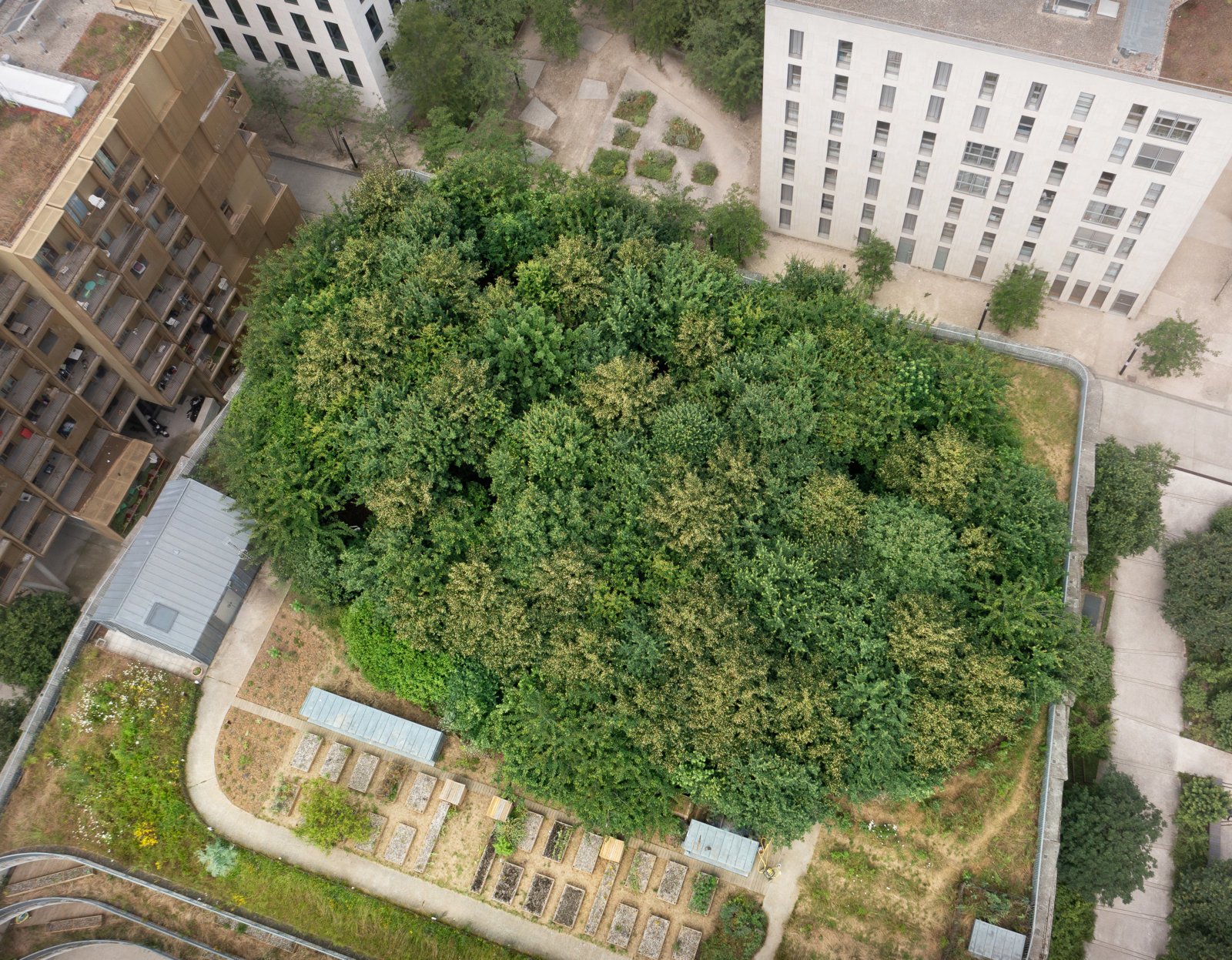
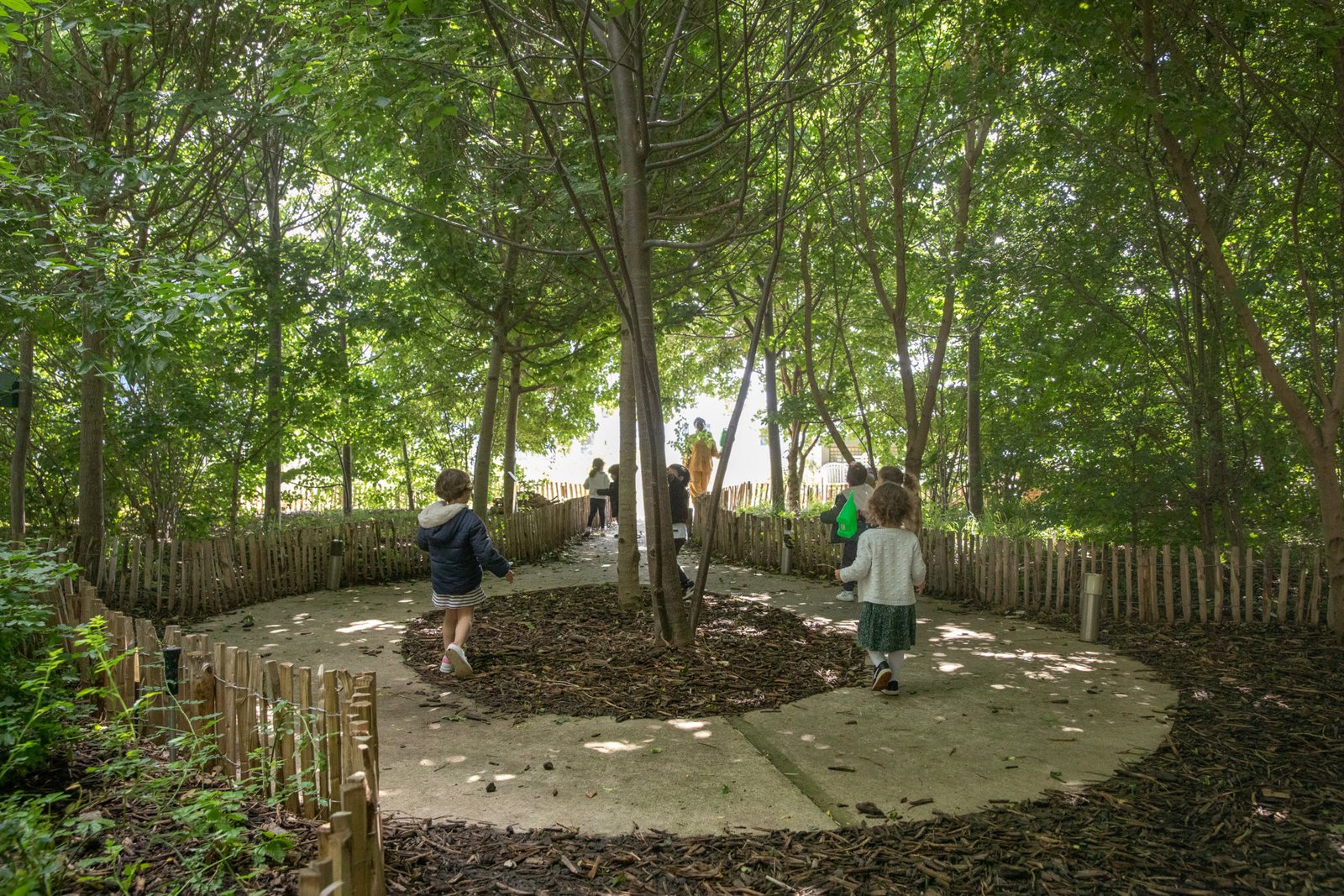
– A forest core. The heart of the planted roof has a one-meter-thick substrate layer and contains 220 trees, now reaching heights of 10 to 15 meters. The high vegetation density offers optimal shelter conditions for many bird species.
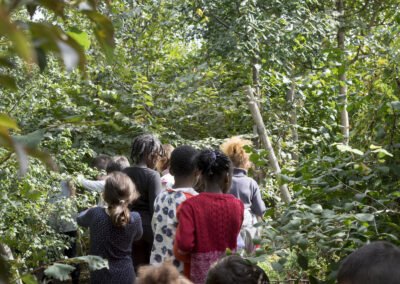
– A fringe of shrubs and undergrowth, acting as a transition between the forest and the meadow. This peripheral area surrounds the central forest. Tree height decreases in proportion to the amount of substrate. This intermediate belt protects the forest core and gradually leads to meadow vegetation. It includes 350 plants from 18 different species, mostly berry-bearing shrubs. For birds, this shrubland provides an abundant food source, and from an educational perspective, students can analyze the landscape’s feeding system.
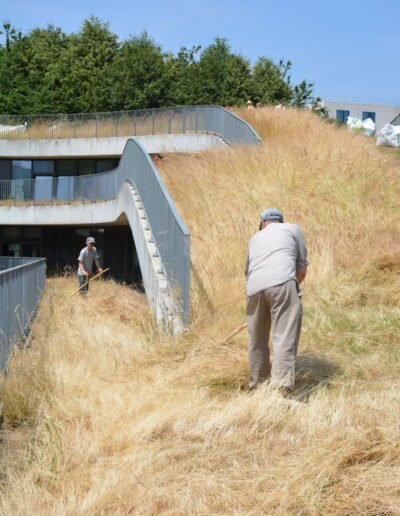
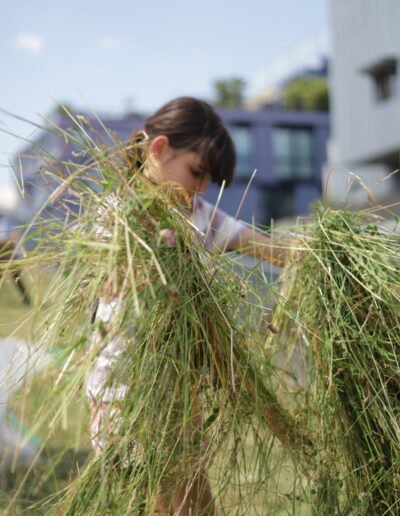
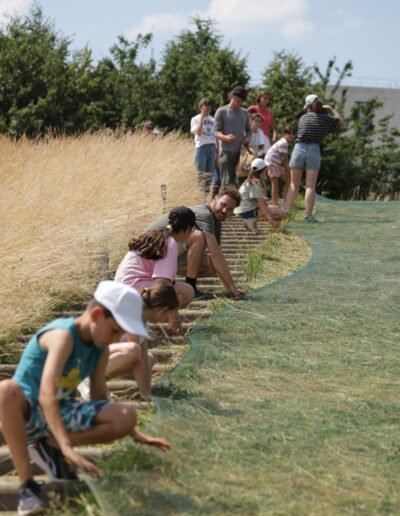
– The mesophilic meadow, which plays a major role in the ecosystem by providing habitat for numerous insects. Since 2020, efforts have been made to enhance its biological potential using ecological engineering techniques. Every two years, habitat enrichment operations (mowing, reseeding, and direct grassing) are carried out with the students.
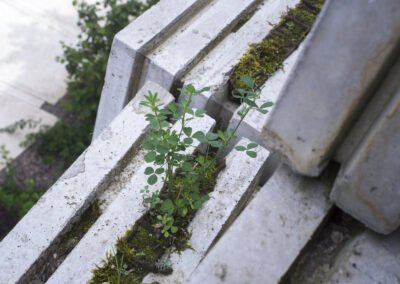
– The enclosure wall and its concrete blocks, forming a living envelope. This prefabricated shell is inspired by old stone walls, which feature numerous crevices, recesses, and cracks. These irregularities provide ideal conditions for the development of many animal and plant species. The criteria for accommodating life directly influence the thickness of the blocks and, consequently, the overall shape of the wall.
The Biodiversity School is a living system within the city, allowing designers to experiment with urban ecological balance. In 2021, a comprehensive assessment conducted by Aurélien Huguet Ecologie and Ecolo GIE recorded over 350 species on the school grounds. This project serves as a pioneering living laboratory and an experiment yielding positive outcomes on human, environmental, and social levels.
www.landscapefirst.com