

The River North (RiNo) District near downtown Denver, Colorado, once a run-down industrial backwater and a haven for artists, has become one of the most vibrant mixed-use neighborhoods in the city. Due to its industrial history, no parks were ever built there, and with the emerging development, the area was in desperate need of green space. Only a few years earlier, the 6.6-acre industrial site housed a vehicle service center and a defunct roadway that obstructed views of the adjacent river. Now, Arkins Park is the only public green space in the district playing a critical role not only in the day-to-day life of the community, but in the long-term trajectory of RiNo’s diverse narrative, local economy, and environmental resilience.
The program for Arkins Park emerged through grassroots public outreach revealing the community’s desire to repurpose the existing buildings on the site—rather than demolish them as originally planned —and set in motion the vision for the future “Art Park.” Artists desired collaborative makerspace, affordable studios, gallery space, and a performance venue, and the city was looking for a place to house a public library for the neighborhood. The RiNo Art District stepped in to oversee the renovation, build-out, fundraising, activation, free programming, and ongoing management of the buildings. Together, these initiatives represent a range of ways for community members to engage, imagine, and create.
The existing building was comprised of an original brick structure with two utilitarian additions that were tacked on over its lifespan—none of which were architecturally significant. The design team proposed reclaiming portions of the building for the new cultural center through a process of “erosion” — stripping away walls, concrete, asphalt, sewer infrastructure, and cladding to make room for vegetation, daylight, and open space. Through partially disassembling and selectively removing the center of the building, leaving the steel k joist framing in-place, the design created two wings flanking a central plaza and marking the north entrance to the park.
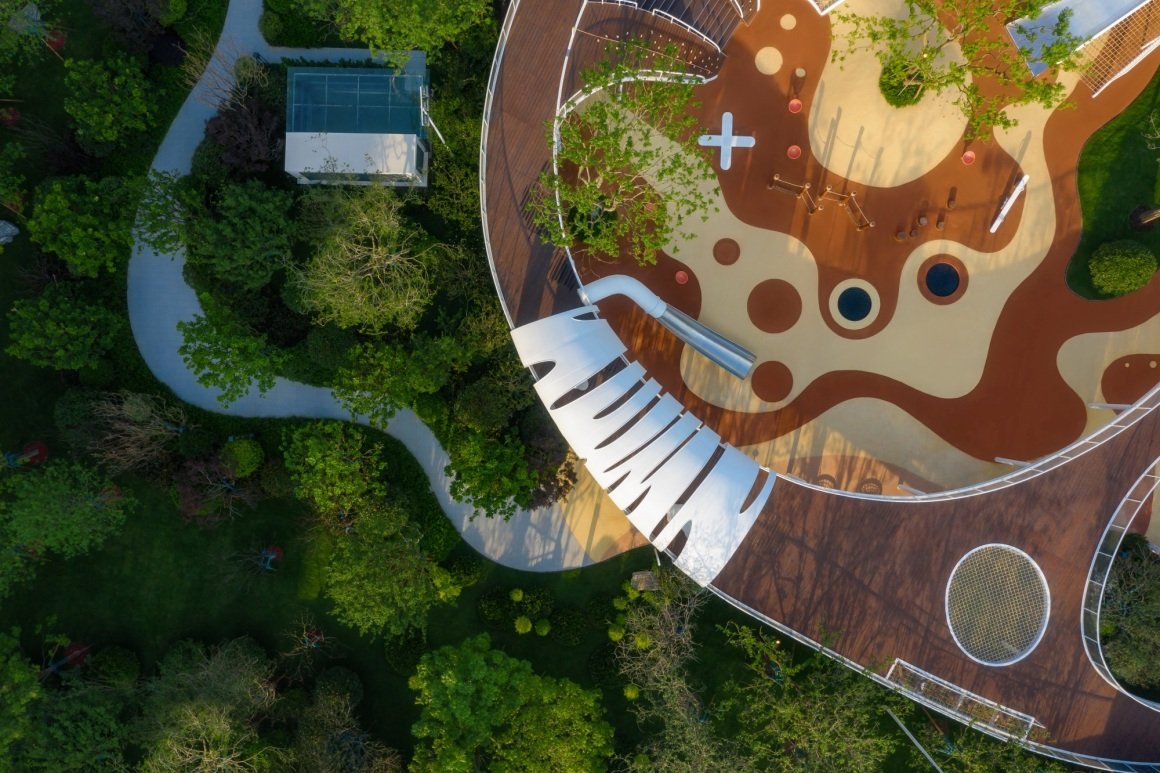
The park surrounding the buildings supports the overflow of programs and activities while offering the neighborhood much-needed space for outdoor use and leisure. The park space is shaped by a wide range of functional demands, from water quality and community green space to safe areas for children, large-scale events, and small-scale programming. A great lawn, an industrial-themed playground, and a series of seating and gathering areas overlook the once-hidden river, while public art made of reclaimed metal hoppers are placed in the landscape and reflect the community’s industrial past.
Arkins Park features a three-block promenade along the South Platte River. The project team worked with city staff to repurpose a little-used street parallel to the river for biking and walking, adding valuable multimodal connections and strengthening the neighborhood’s connectivity to the growing neighborhoods north and south of the site. Remnants of the road remain, with asphalt selectively removed to provide space for water quality, plantings, play, seating, and gathering. An impressive, 400-foot long, ADA accessible, elevated walkway offers views up and down the river corridor from the vantage of the trees. The promenade’s design has been coordinated with existing and proposed adjacent private development to blur the boundary between public and private space, creating a lively corridor for leisure, entertainment, and ground floor commercial uses.
The surrounding neighborhood suffers from inadequate storm infrastructure; in much of the area, there is none, and untreated storm runoff flows directly into the river. The project enhances river health through a series of landscape-based storm water quality gardens that intercept runoff, treating both on-site water and neighborhood runoff entering the park. Throughout Arkins Park and the promenade, stormwater features like runnels, raingardens, and filtration are not hidden, but are conspicuous and decorated. Groves of cottonwoods and riparian meadows integrate with the more traditional park elements connecting them to the natural riparian qualities of the adjacent river.
Arkins Park provides a creative outlet and gathering space for the neighborhood hosting major events and festivals throughout the year. Today, artists can rent studio space for $1 per month to create their works and provide a point of sales. The park building also houses the Comal Heritage Food Incubator, a functioning restaurant that celebrates culinary traditions of immigrants and refugees, while also providing entrepreneurship and food service skills and training. The park transforms a grossly underutilized riverfront site into a space that inspires people and strengthens community.
Client: City and County of Denver, RiNo Art District
Landscape Architect: Wenk Associates
Architect: Tres Birds Workshop
https://maps.app.goo.gl/4P2HAemo3MYQE41b9