

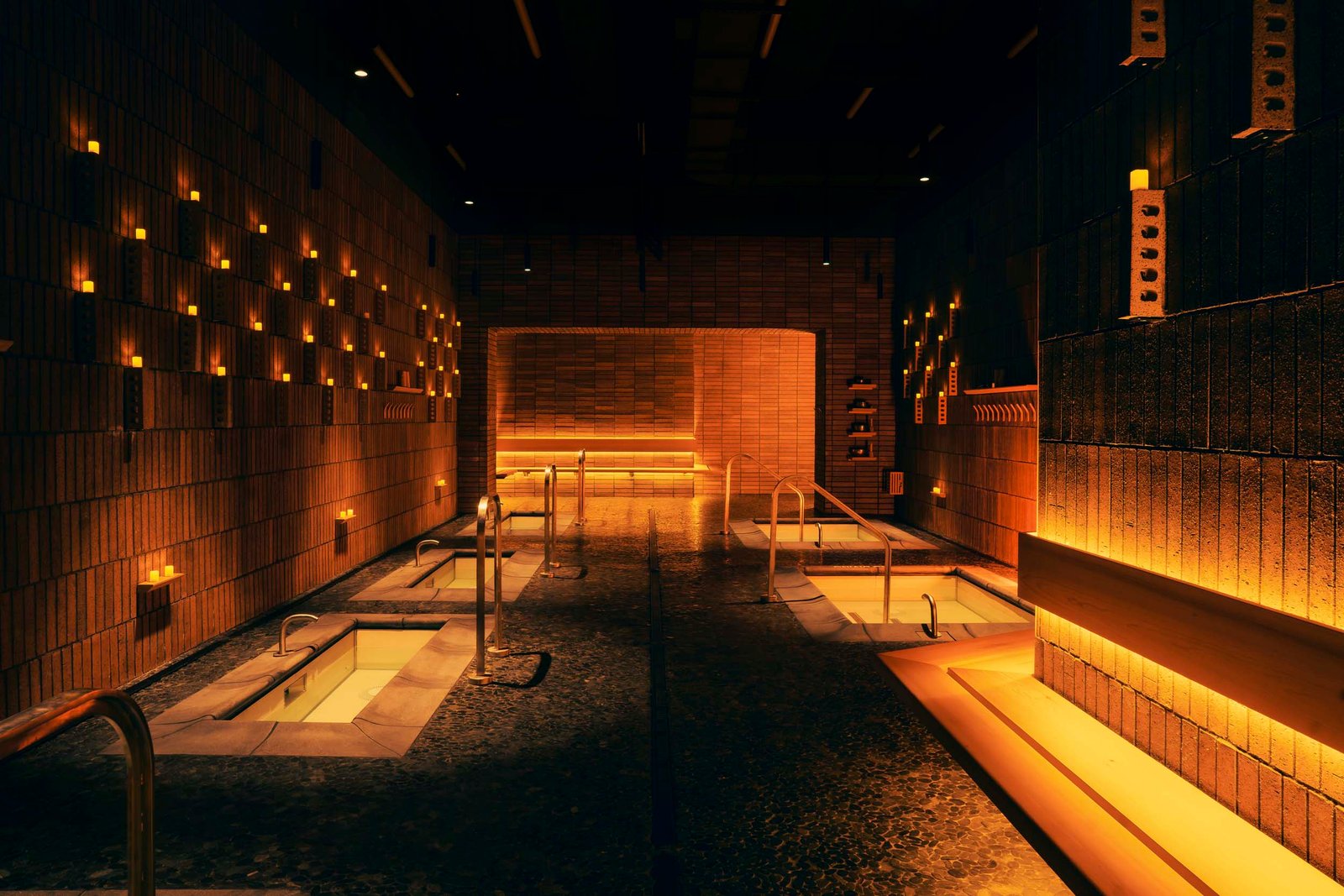
These days, the bathhouse feels like a site of improvisation. It offers a “yes, and…” attitude that pushes the traditional boundaries of the spa and sauna to include activities, performance venue, discotheque, or even a comedy club. This is due, in part, to a new crop of bathhouses, outfitted in moody atmospheric lighting and luxurious finishes amenable to flexible programming.
Behind many of these projects is the Toronto-based firm Futurestudio, helmed by Ali McQuaid Mitchell, which has quietly transformed how we think of collective bathing through its dynamic, nature-inspired designs for the bathhouse chain Othership. As the wellness landscape continues to evolve—Othership and Futurestudio have collaborated on four locations across New York and Toronto, with a fifth on the Upper East Side expected to open in 2027—McQuaid Mitchell has also expanded the firm’s bathhouse portfolio to more international waters. Recently, Futurestudio completed Rē, a social wellness club in Dubai, Umvelt in Montana, and Sant Roch, France’s largest sauna to date.
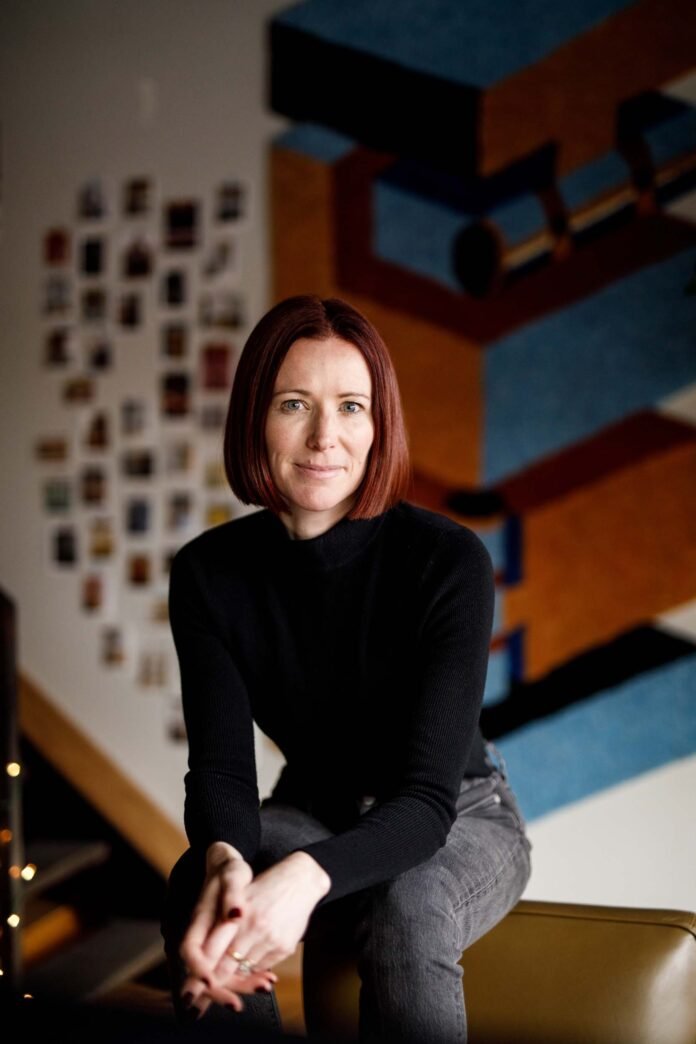
McQuaid Mitchell spoke with AN Interior’s managing editor, Isabel Ling, to reflect on the evolution of social bathing and imagine design’s role in shaping the future of wellness.
Isabel Ling (IL): At this point, you’ve designed and completed eight wellness projects, with more on the way. Tell me a little about your background and how you got started with this design typology.
Ali McQuaid Mitchell (AMM): My background is in restaurant and hotel design. About five years ago, I got an interesting email from the Othership team that said, “Hi, your name was given to us, and we’re planning this really interesting experience with sauna and ice baths.” At the time, they had a small sauna and an ice bath in the backyard of one of the founders, and they invited me to check it out. I had a strong appreciation for spa culture and wellness spaces, but I had never designed one. This was deep in the middle of the pandemic, so I had a Zoom call with the founders, who told me they wanted to create something totally new: to apply the concept of group classes to the context of the spa—essentially to create a more social spa culture. One of the founders, Robbie Bent, explained that when he was recovering from addiction, he visited Russian banyas as a way of having a nightlife-like activity that was alcohol free.
They shared early on that they didn’t want to create something that resembled anything they’d seen before. It was compelling, it created space to explore something entirely new. I visited their backyard and garage, where they walked me through a guided session that they envisioned they would create. I did my first ice bath. The music was great, the atmosphere was great, and it was just a small group at the time, but it clicked for me. I could feel this was something new, an experience people would be drawn to, and that it had the potential to shift the spa industry. That realization was really the starting point for Futurestudio in wellness design.
We learned a lot together. We didn’t look at spas for inspiration. We looked more toward nature, hospitality, and even the cinematic worlds of atmospheric films; we brought in different precedents because Othership wanted something that looked different from what the consumer is used to seeing in the spa and wellness world. It has been an amazing learning experience. Whether it’s fitness or wellness, there are so many innovators and entrepreneurs pushing the boundaries of expectation; it’s an exciting time to be a designer in this space.
IL: With Othership, you’re leading a larger design movement that has shaped other social bathhouse experiences. What sort of guiding design principles did you bring to the project?
AMM: Three things: materiality, lighting, and flow.
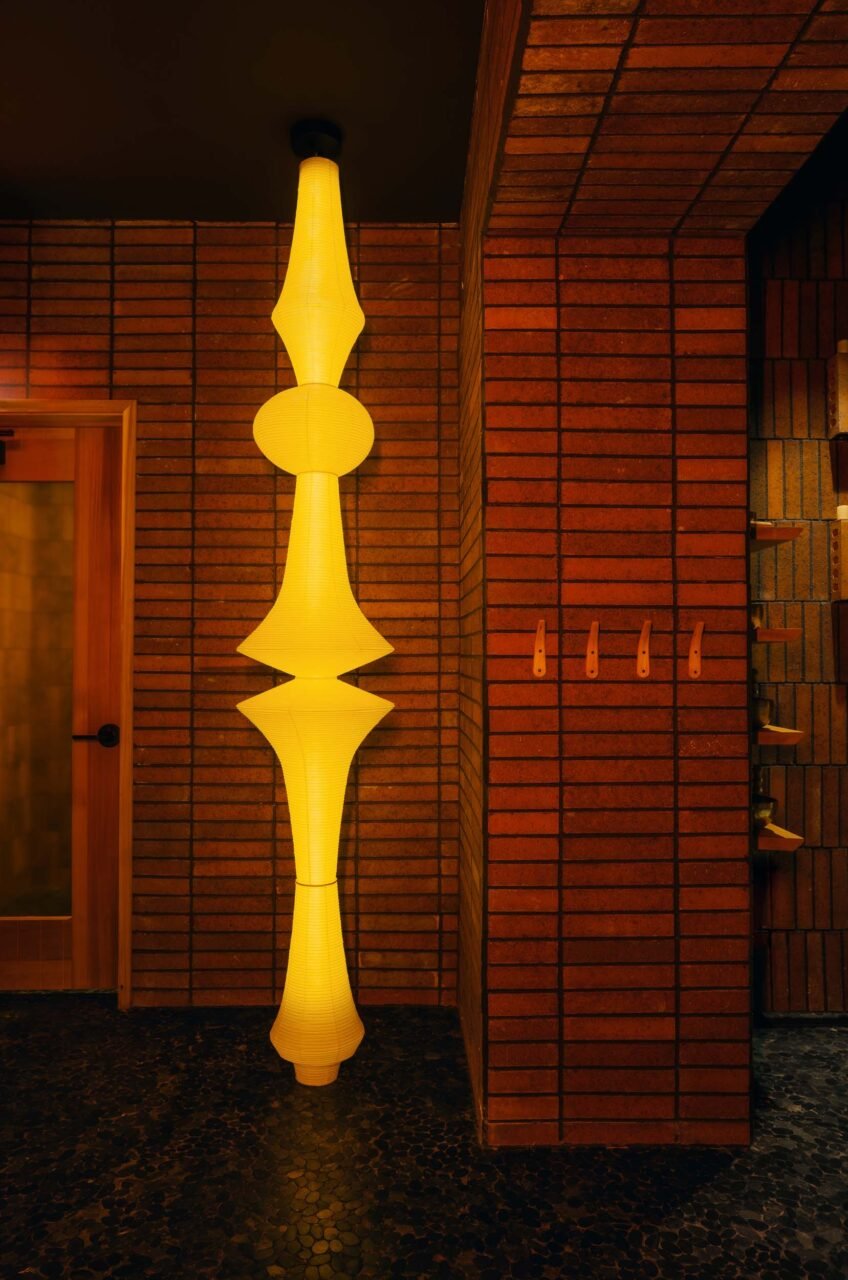
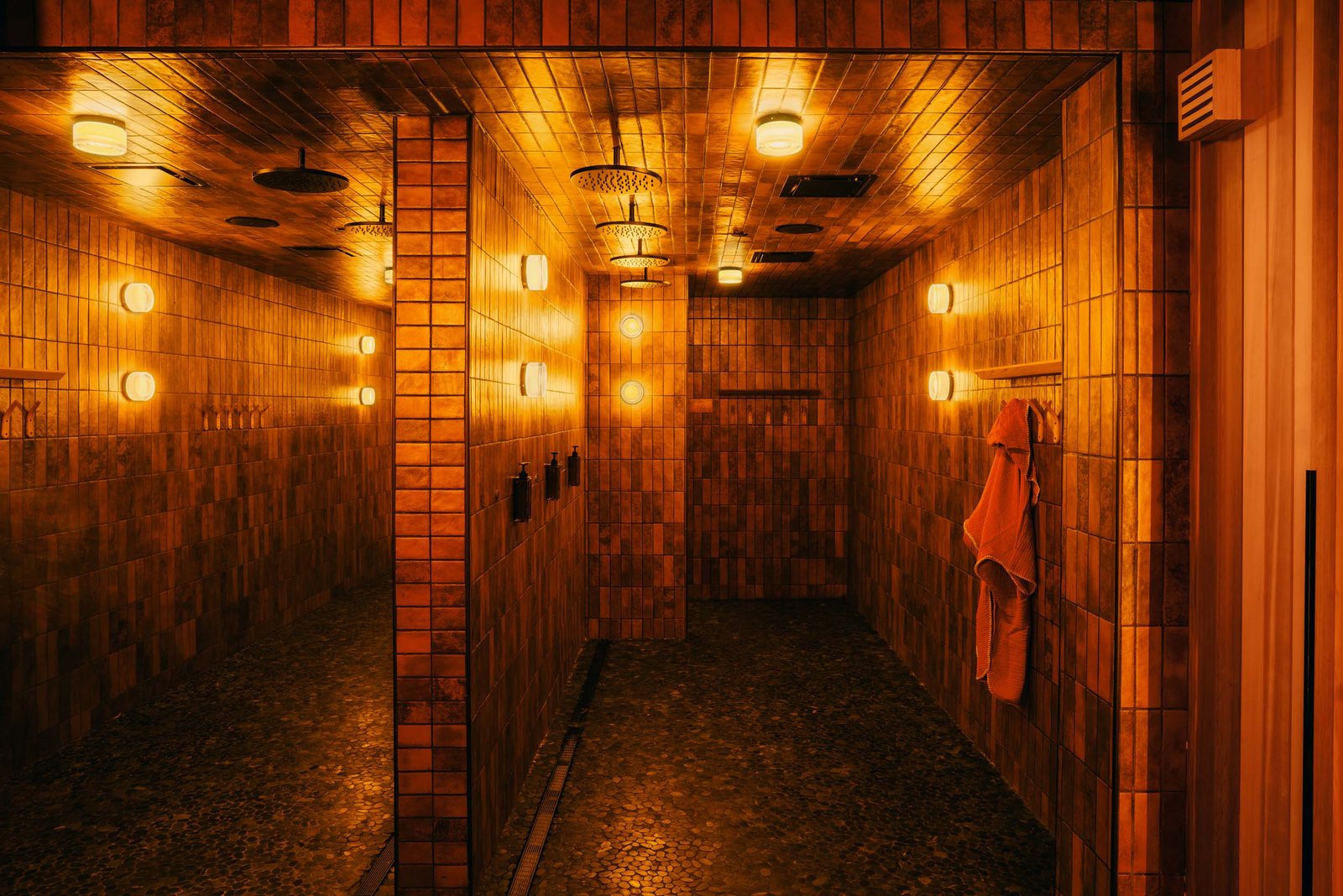
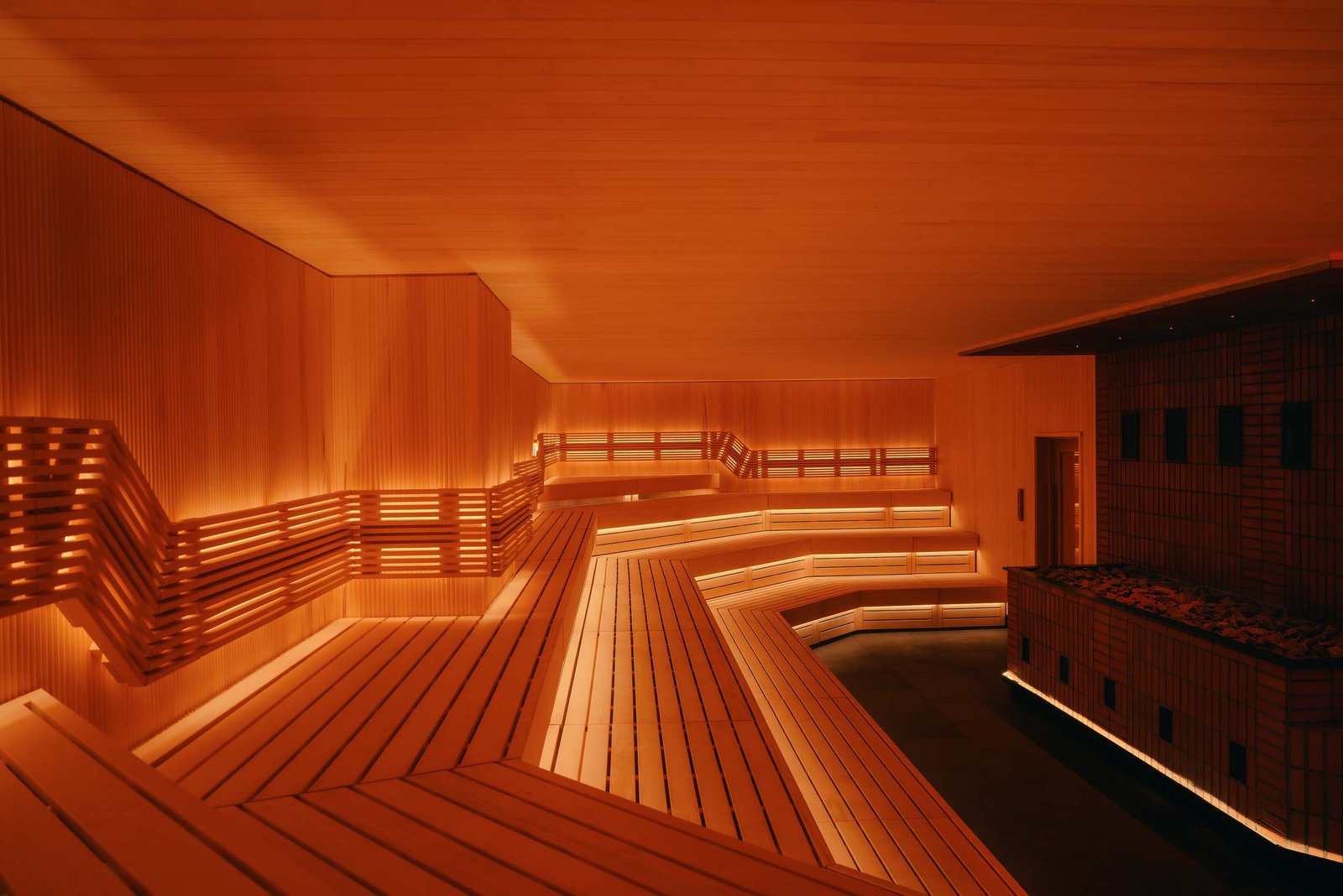
For Othership, we wanted to break away from the use of only cold materials within bathhouses. The challenge is that the spaces are highly used and need to be hard-wearing. They’re cleaned constantly, there’s chemicals, there’s high humidity. Historically, I think that is why a lot of bathhouses have just been completely tiled. However, one of the important things for us was to use as many natural materials as possible. One of our initial material ideas with Othership was to explode the sauna: So, in the first location, we took cedar from inside the sauna and carried it through the entire reception area and most of the dry spaces. We also paid attention to the tactile feeling in your feet and used real river stones for the flooring that were taken out of a river and sliced to create a custom tile for us that is used across all the Othership locations. We wanted these barefoot spaces to feel like you are standing in a natural body of water. It also serves other technical purposes as well: It’s easy to slope, because it’s in a mosaic format, and it’s beautiful and dark, so when it gets wet, it looks even better.
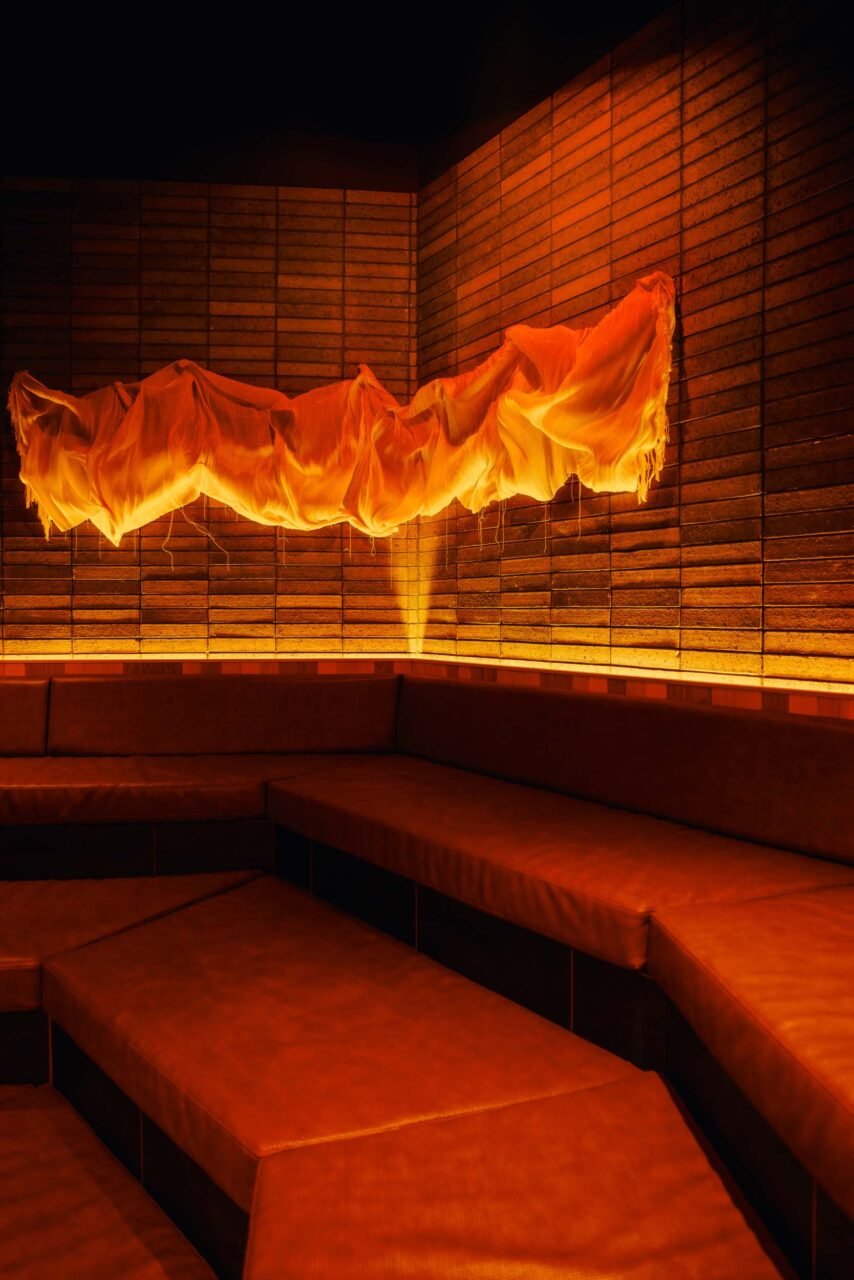
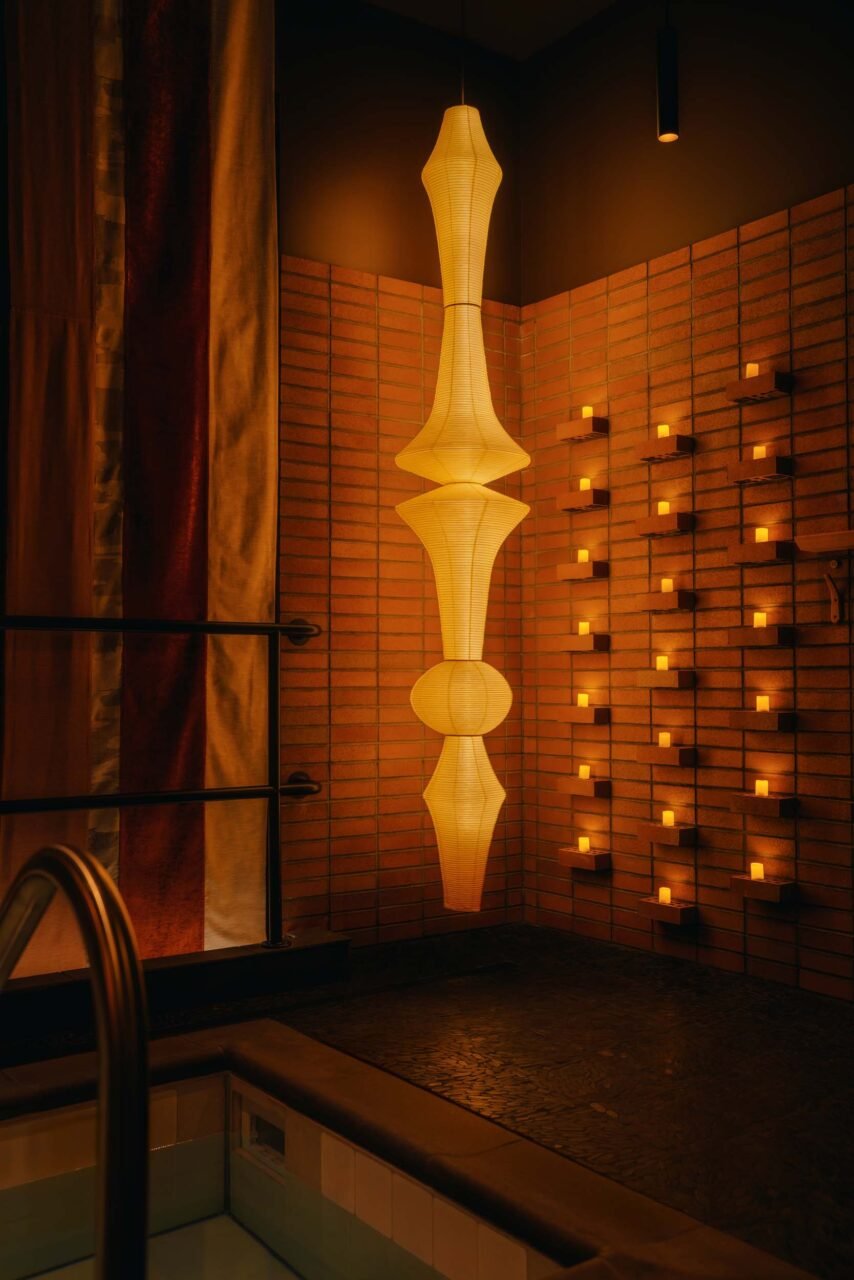
The second thing is the lighting. We try to emulate candlelight or the light of a campfire. We wanted that feeling to carry through the entire space, with lighting that quietly supports people. The lighting is designed to be gentle and flattering, helping people feel at ease, held, and confident. We don’t want your mind to be distracted by feeling insecure due to being overly lit. We don’t light people; we light tasks, we light your way, and we light the flow. Nobody wants to be sitting with a spotlight over their head. To get that perfect light temperature, we are thoughtful in our placement. But we also hand-paint some of the filters that go over the light fixtures, because a lot of the lights don’t come in that low of light temperature, because no one in the market is looking for it.
And then the last thing is the flow. We pay attention to how people circulate through the space, and we understand that your journey starts at the front door. We pay attention to the number of steps we make you take.
IL: You were given the program of this space before you designed it. What is it like to design with a social ritual in mind.
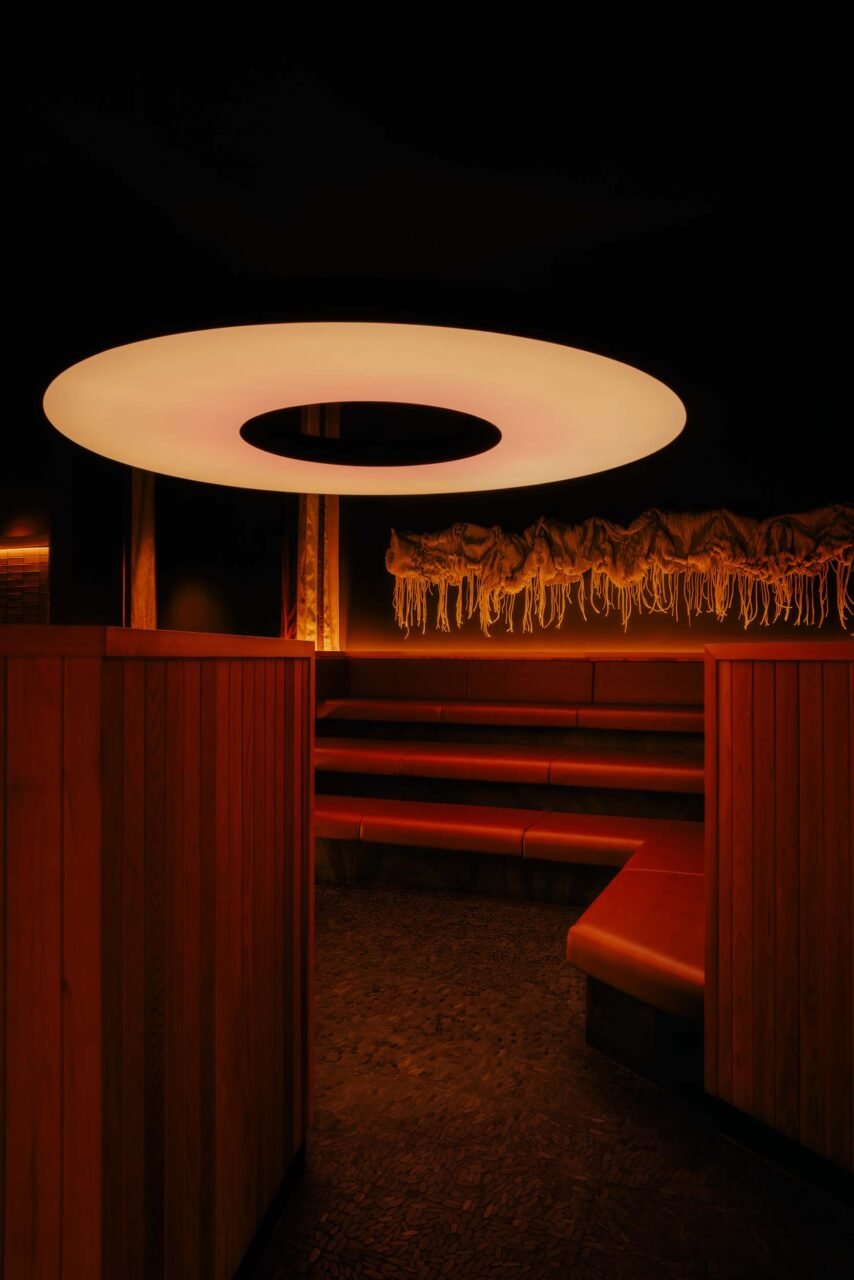
AMM: New rituals are being developed all the time, and they are formed in these types of projects. You have to plan for things that no one has thought of yet. Will there be live music? Will there be dancing? For example, the Othership team continually creates new programs. Now they do stand-up comedy on site and other performances. It’s just amazing that there’s this endless creativity. In many ways, we’re creating performance space as much as we’re creating bathhouse space. We try to think ahead and listen to our clients when they’re telling us about any rituals or performative elements of their concept. Then we try to think about how people would want to encounter these actions: Can we transform the space using lighting or drapery? We’ve learned that you can break the mold of what a spa has been.