

(AB)NORMAL is a multidisciplinary design studio based in Milan that got its start in 2017 not by designing interiors—but by designing a graphic novel. The studio, led by Mattia Inselvini, Davide Masserini, and Luigi Savio, began as an experiment for using outdated 3D objects to create spatial storytelling. It eventually blossomed into spatial design, product design, architecture, and interiors. The firm has gone on to design Versace runways, source and produce custom furniture for New York’s WSA building, outfit the Vogue Italia closet, and organize Gufram’s installation at Salone del Mobile 2024. For its latest project, the studio goes domestic but an element of the abnormal is still apparent.
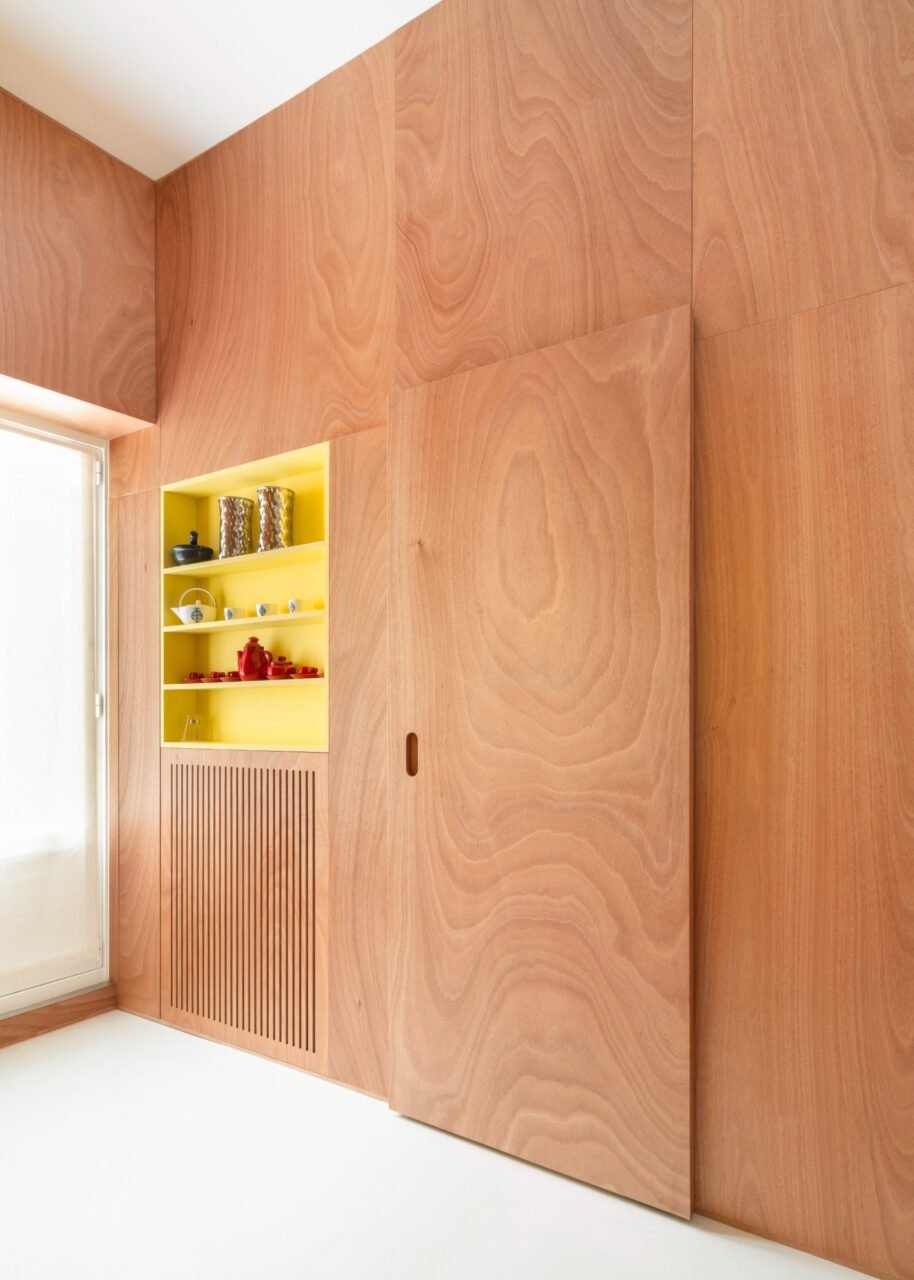
Casa B is a residence located in a town in Northern Italy. The home is compactly organized by a series of boxes, housing the bedroom, kids room, kitchen and bath. (AB)NORMAL loosens up circulation by inserting a continuous skin of Okumè wood that conceals portals and doors to other rooms.
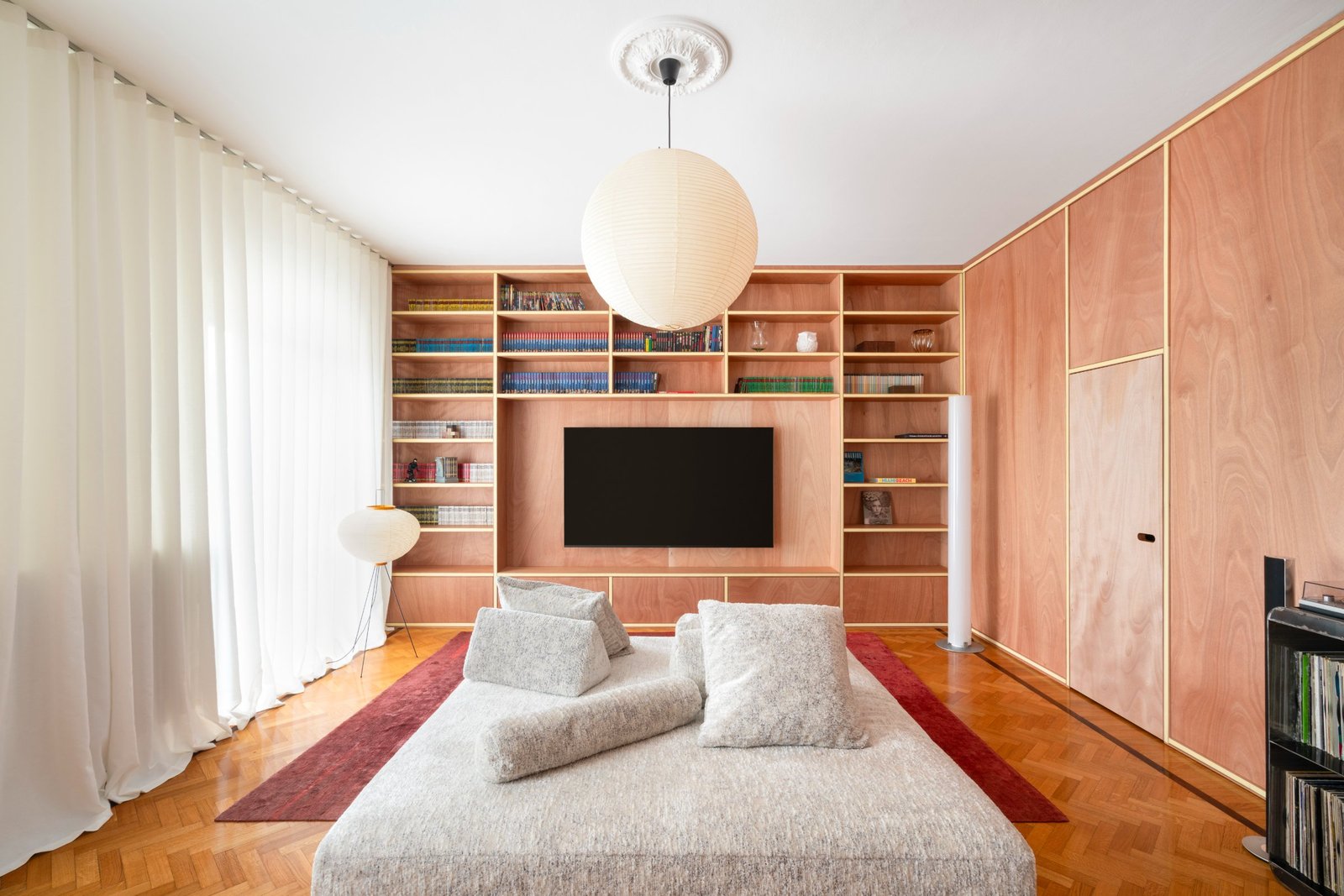
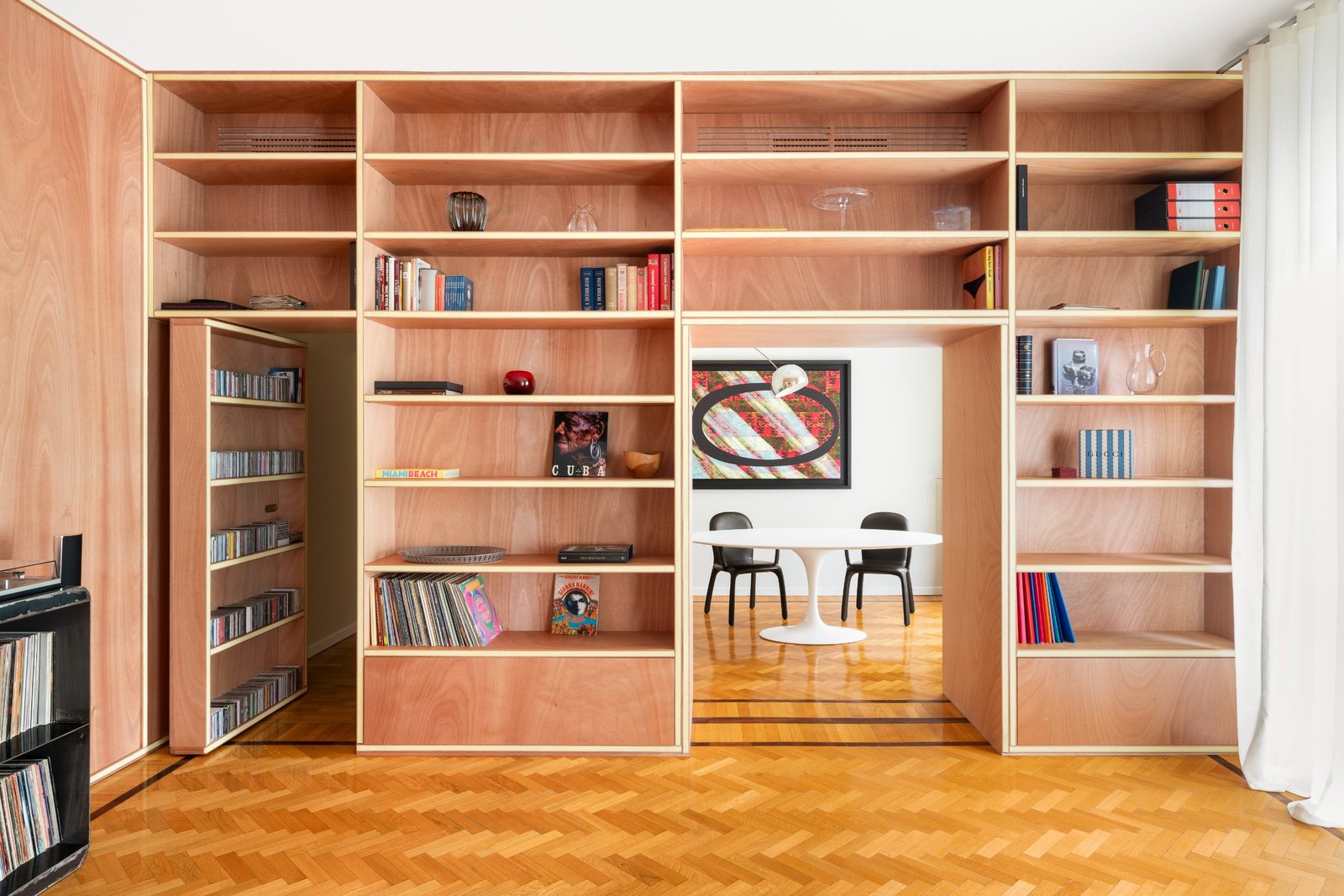
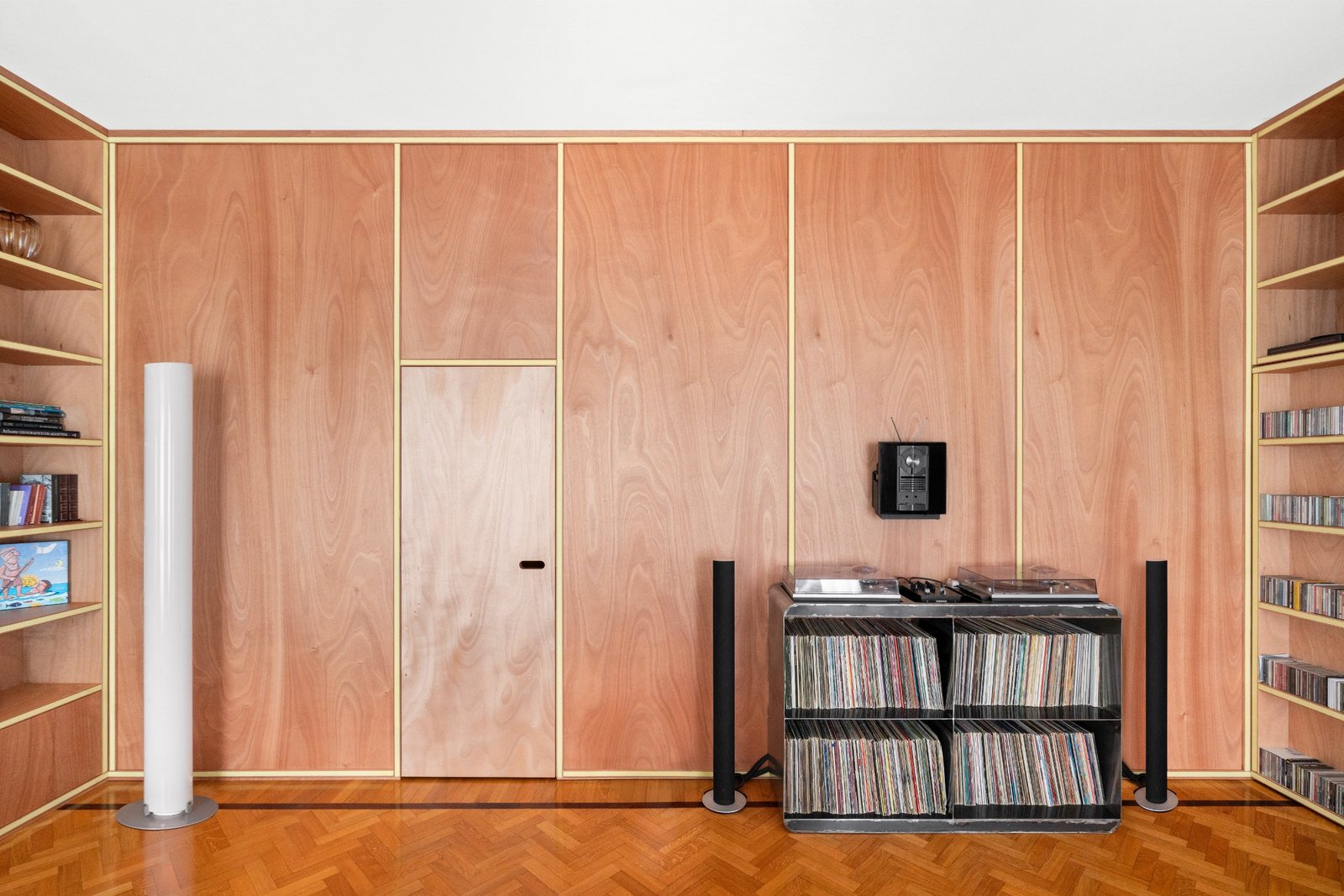
In the living room, the wood completely clads the walls, save for a row of windows. The wood integrates bookshelves and the TV against herringbone floors and a bespoke sofa designed for the project. The door leading into the room is clad in a lighter wood, while egress is accessible via an opening through the bookshelf (to the dining room) and a concealed door hidden within the shelving (to the hallway).
The architects conceive of this transition between spaces as slipping between rooms, creating a surprising and fluid experience. This organization enables an engaged act of transition, enlivened by pops of color.
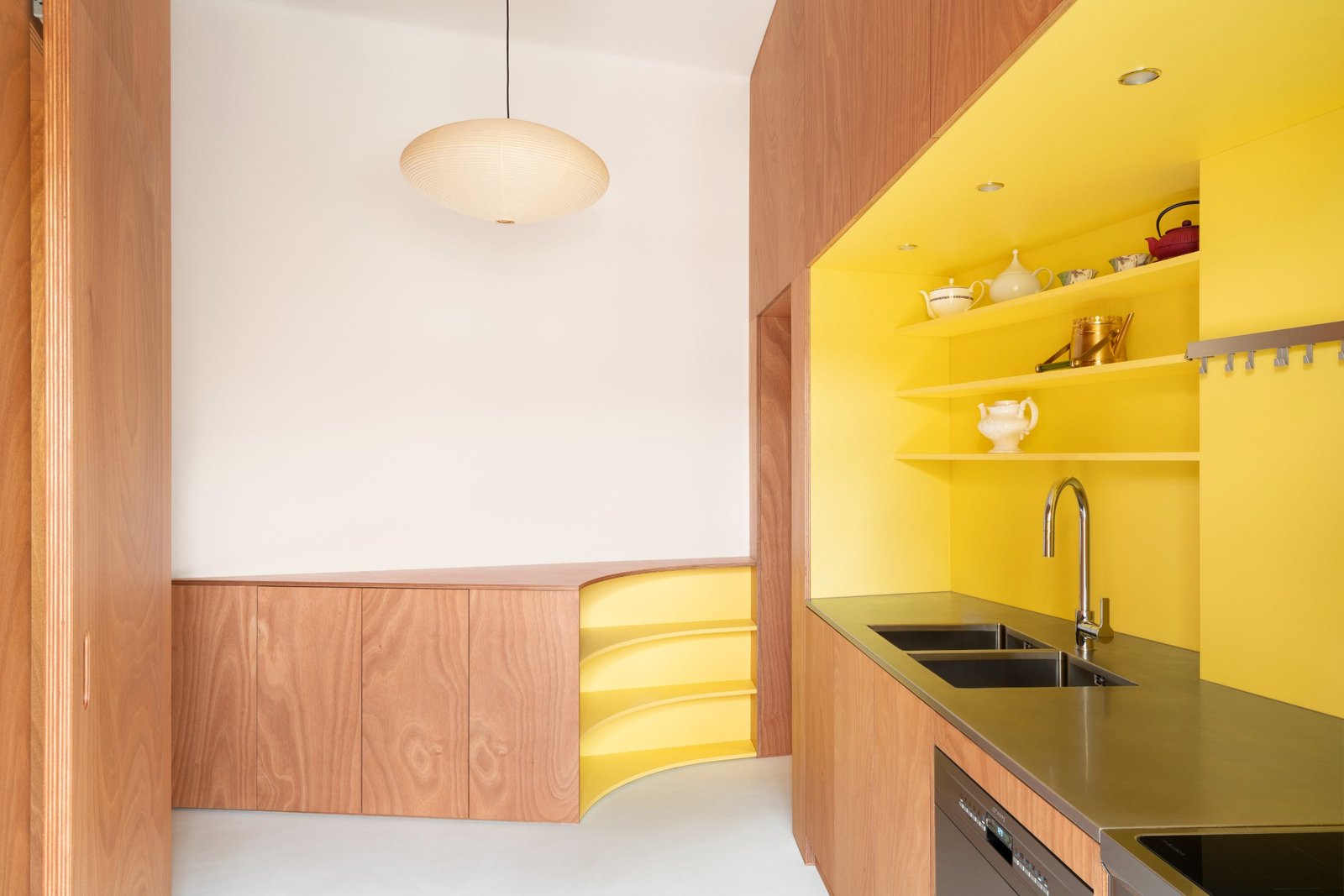
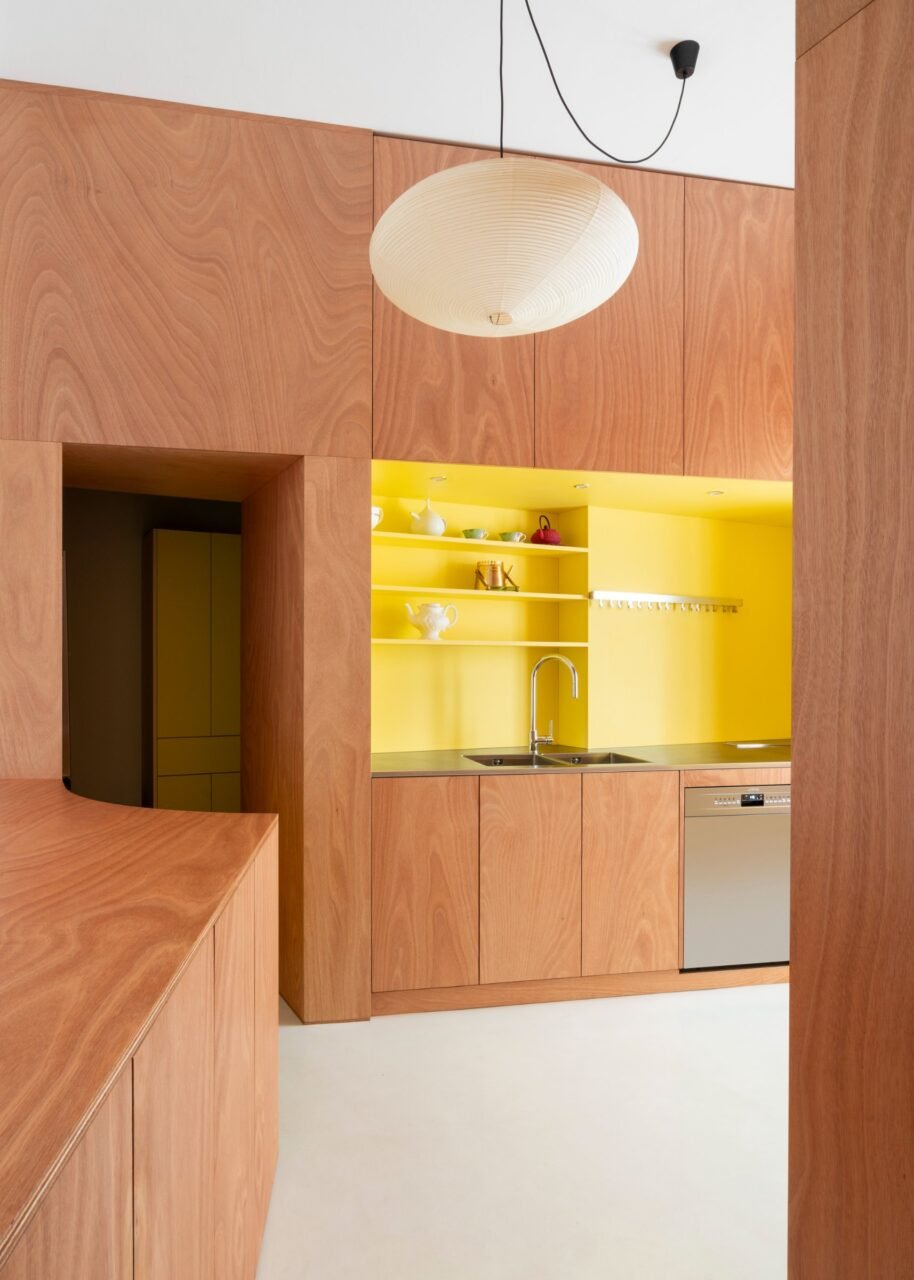
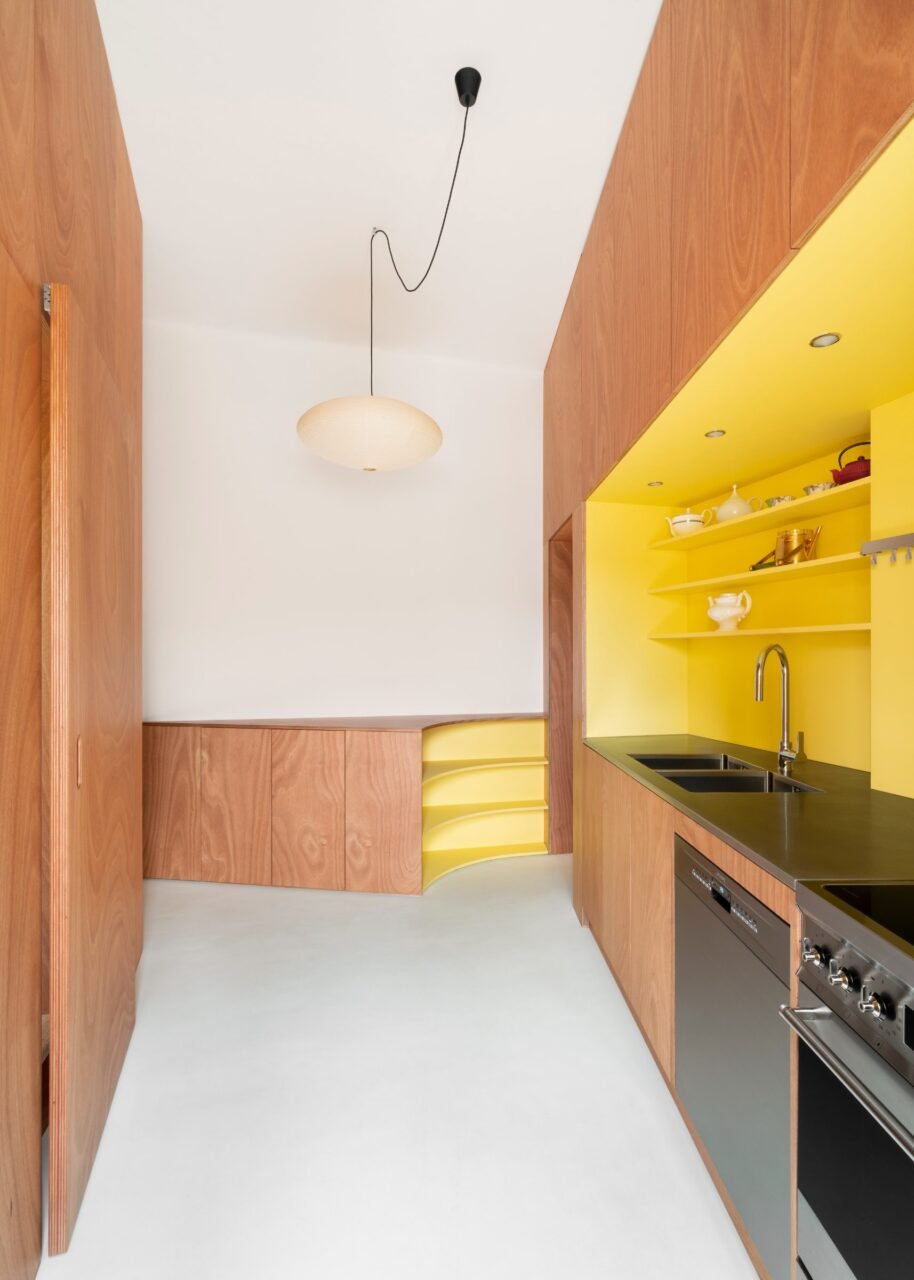
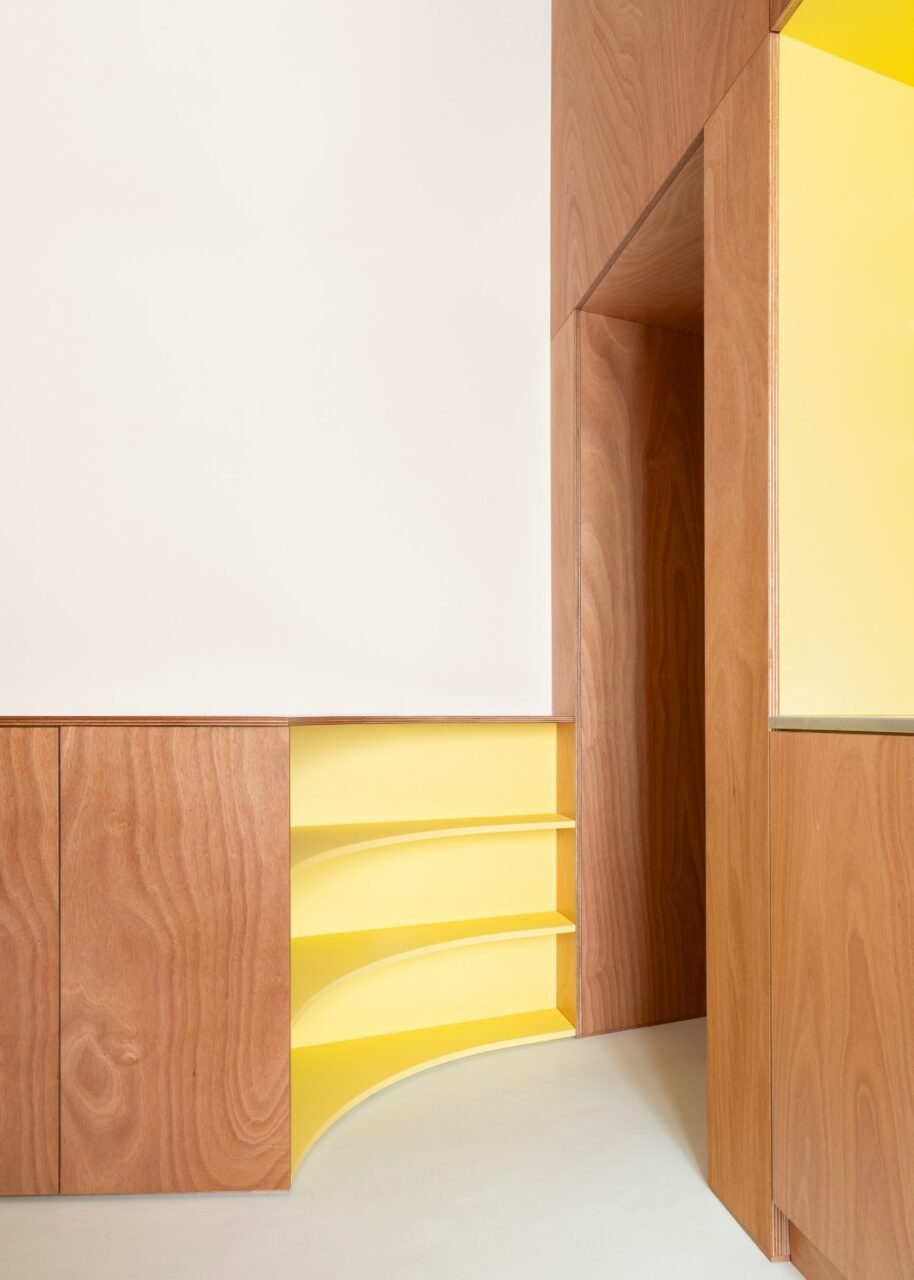
The culmination of this emerges in the kitchen where custom yellow inserts and stainless steel merge with the millwork. Their bright appearance stands in contrast to the concealed portals: the wood panel that slides to reveal an opening or the doorway tucked at the end of swooping millwork.
The design plays with geometry here, angling the kitchen counter on a diagonal in opposition to the gridded, box-like organization. The rectilinearity is further contradicted by elements of curvature, namely in the cabinetry that curves along the way to create space for people coming and going, marked by its bright yellow panels.
Then untraditional design makes an otherwise compact and rational space interesting and energized. The result is both livable and inviting while evading domestic banalism.