


We architects like to imagine ourselves a creative bunch. We take pride in our ability to see possibilities where others might not, we strive for novel solutions to complex problems, and we value originality in our work and in the work of others. But when it comes to the design of our professional practices, we for the most part tend to imitate the business strategies and structural organizational traits of leading firms.
There are many explanations for this convergence around existing typologies and strategies, which sociologists and management scholars refer to as “isomorphism.” The simple explanation is that most architects have little experience (and, for that matter, little genuine interest) in management theory, and as a result, ideas about how to organize our firms generally emerge from past experience in the industry. It’s little surprise, then, that conformity would become the rule.
But there may be more to the story. In their 1983 article “The Iron Cage Revisited,” sociologists Paul DiMaggio and Walter Powell argued that rationality and efficiency had very little to do with conformity of organizations in professional fields. Instead, DiMaggio and Powell wrote, firms come to resemble one another in an effort to be seen as legitimate by their peers, regulators, and potential clients. This observation forms a central pillar of what scholars refer to as “institutional theory,” a framework that studies how the need to be seen as legitimate can drive organizations to do things that don’t actually promote efficient, or even logical, firm operations. According to institutional theory, then, it may be more important to fit in than to be fit for purpose. And in some cases, it might lead firms to “decouple,” that is, to appear to the outside world to be one thing, while internally being—and doing—something quite different.
Does this dynamic apply to architecture practice? Do new architecture firms face pressure to conform with the structures and strategies of leading firms? Or is it better to innovate and to stand out from the pack? In an article recently published in The Journal of Architecture, I and co-authors Salvador Carmona (IE University) and Manuel Núñez-Nickel (University Carlos III Madrid) put this theory to the test, examining whether new architecture firms benefitted from conforming with the structures and strategies of industry-leading firms.
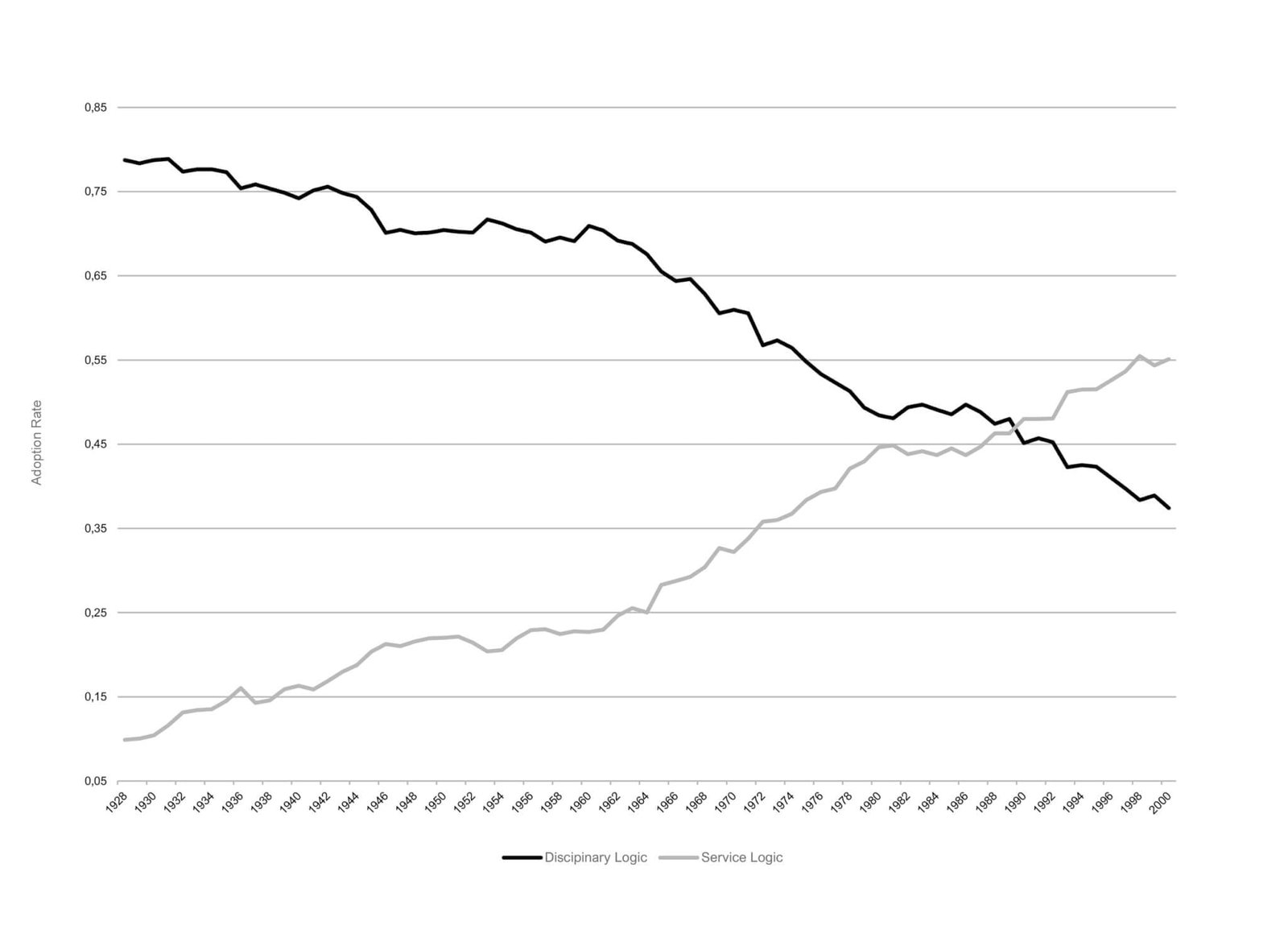
It’s a big question, and one that requires a large sample size to evaluate, and a long period of evaluation. We studied the 3,882 architecture firms present in the Chicago metropolitan area from 1928 to 2000, a period that begins just before the onset of the Great Depression, and ends just before the attacks of September 11, 2001. This period of study allowed us to see how and when firms were born, when they died, and how well they navigated a rapidly changing sociopolitical landscape.
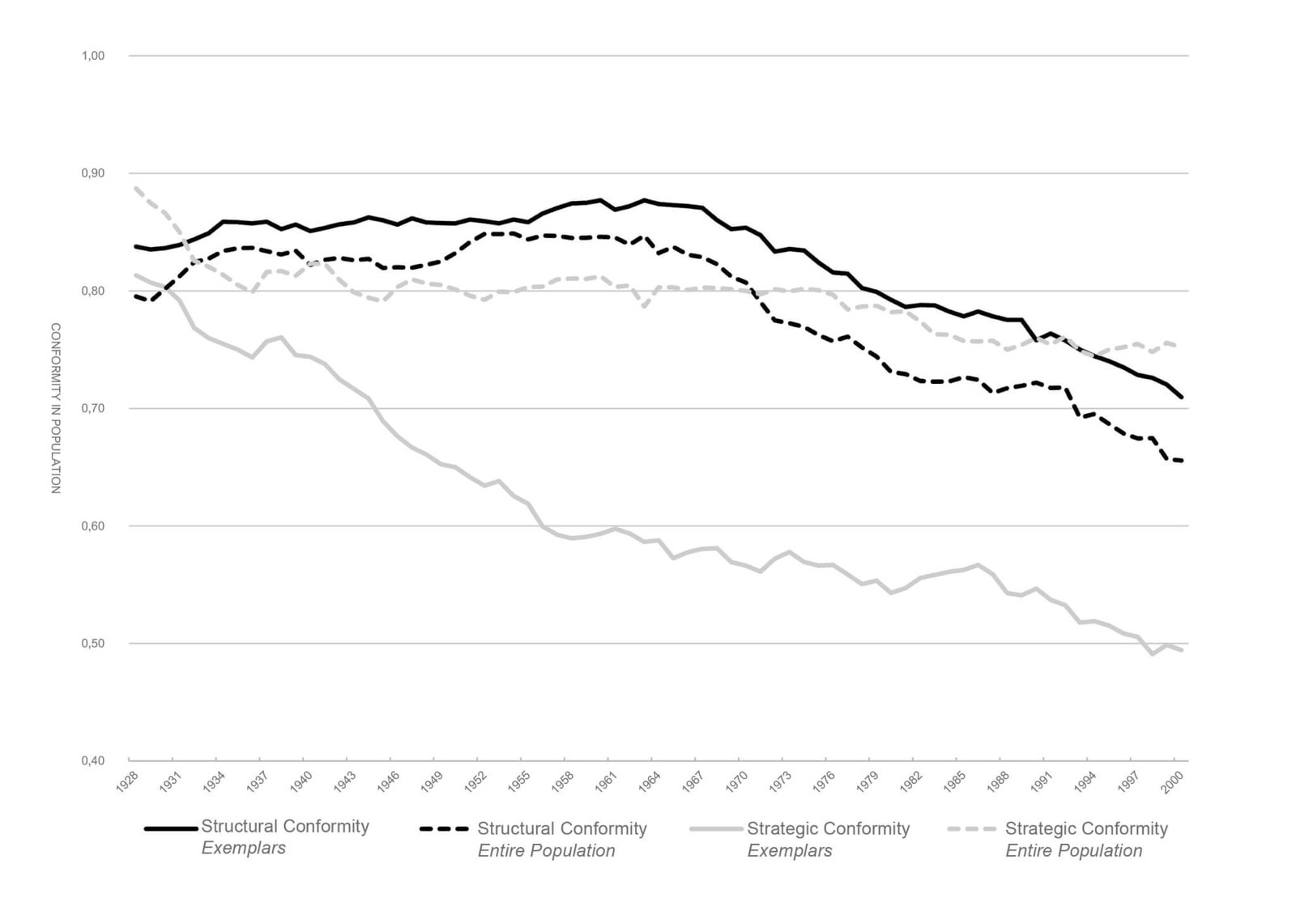
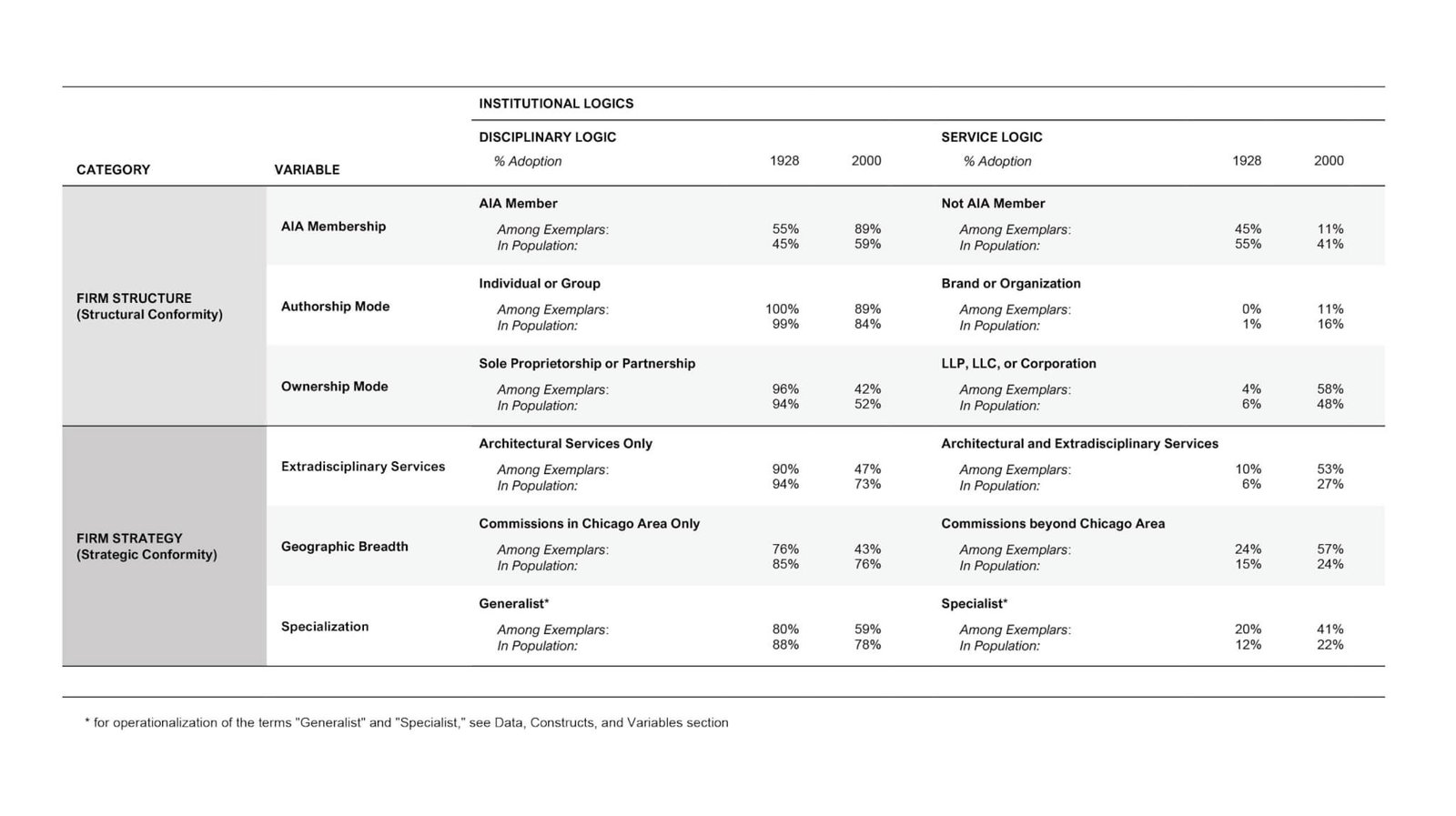
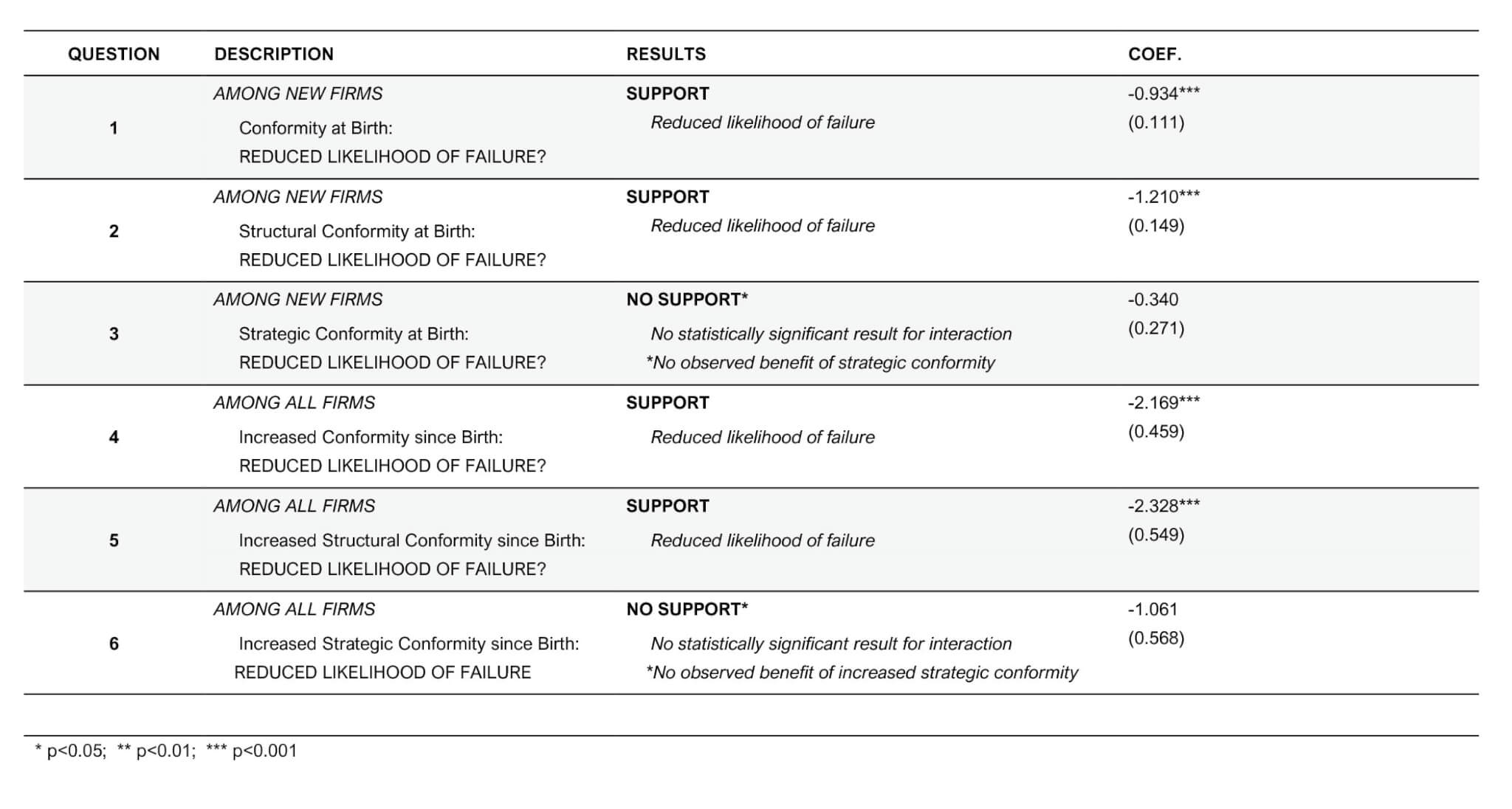
The results were somewhat surprising. As expected, we found firms that conformed with the outward-facing structures of exemplar firms faced a reduced likelihood of failure. That is, it was generally useful to imitate the outward appearances of successful firms.
But when it came to internal firm strategy, we found no discernable benefit to conforming with the business practices of leading firms. New firms were free to do more or less whatever they chose, as long as to the outside world, they appeared to match the external expectations of what an architecture firm looked like or called itself.
What about existing firms? If your firm was “born” nonconformist, is there any benefit to becoming more conformist over time? Our findings gave robust evidence to suggest again that firms benefitted from imitating the outward appearances of sector leaders, but that imitating their strategies was not helpful in promoting firm longevity.
These findings suggest that firms enjoy flexibility in determining how they run their practices, but that when it comes to outward appearances, there are some very clear benefits to playing follow the leader. The dynamic of “decoupling” that institutional theory predicts does indeed seem to be at work here: firms might benefit from living a sort of double life of appearing conformist on the outside, while innovating within.
There is, however, one major exception: conformity of any kind seems to be useless in moments of major societal upheaval. We found that architects practicing during World War II did not benefit from conformity at firm founding or over time. All bets were off. These results suggest that the more unstable the external environment becomes, the more freedom architects may have to innovate in firm structure and strategy.
To be sure, our study has limitations, and could be broadened to include other time periods, other populations, and other professions. Yet we think the results of our study are robust enough that they may add some useful information for new and existing firms as they consider how to position themselves with respect to their peers and with those firms they admire.
Beyond this study, there’s clearly work to be done in applying management concepts to the field of architecture. Our work is just a small part of this effort, but we think there’s much to gain. When architects consider the design of their firms with the same attention and creativity they dedicate to the rest of their practice, innovation in firm strategy and organization design can help firms to survive and thrive.
David Goodman is the Dean of IE School of Architecture & Design. A graduate of the Harvard Graduate School of Design and of Cornell University, he also holds a PhD in Business Studies from IE University, specializing in Strategy and Organization Theory. His current research deals with innovations in architecture practice and production during times of socioeconomic turbulence. Goodman is co-author of the book An Introduction to Architecture Theory: 1968 to the Present, and his work has also appeared in the Journal of Architectural Education, Technology|Architecture + Design, A+T, Log, in the anthology Chicago Architecture: Histories, Revisions, Alternatives, and in the book Walter Netsch: A Critical Appreciation and Sourcebook.