


Renderings of the forthcoming Tennessee Performing Arts Center (TPAC) designed by BIG and William Rawn Associates, with HASTINGS Architecture, were shared this week by the development team. OLIN is the landscape architect.
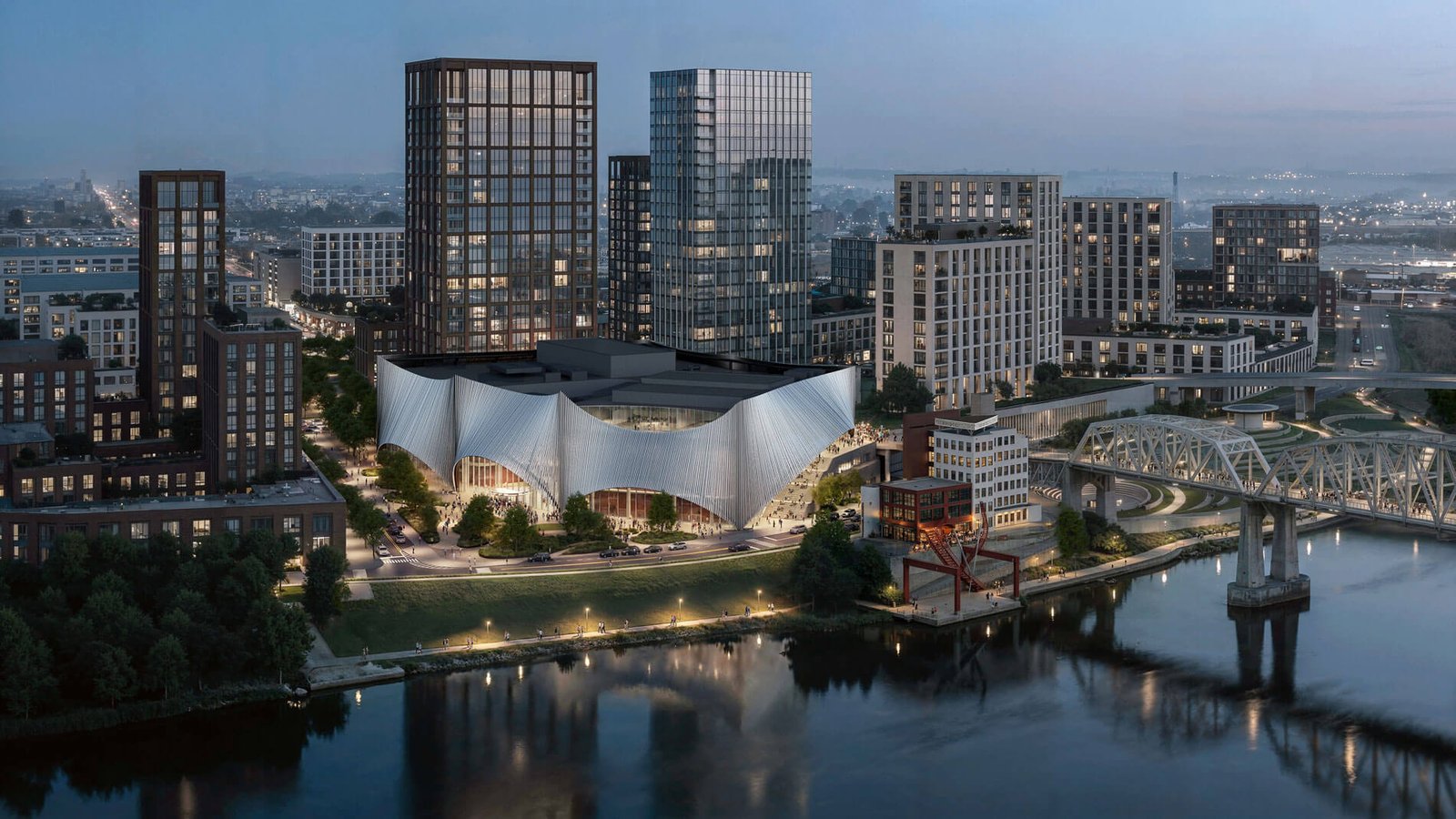
TPAC will be built across the Cumberland River from downtown Nashville on the city’s East Bank close to Nissan Stadium, where the Tennessee Titans play. The Nashville Ballet, Opera, and Repertory Theater will relocate to the new hub upon its completion.
To accommodate these institutions the future TPAC venue, according to BIG, will comprise four parts: a multifunctional Grand Broadway theater, a dance and opera hall, a black box theater, and a more “intimate” cabaret space. Rehearsal studios and classrooms will augment these facilities.
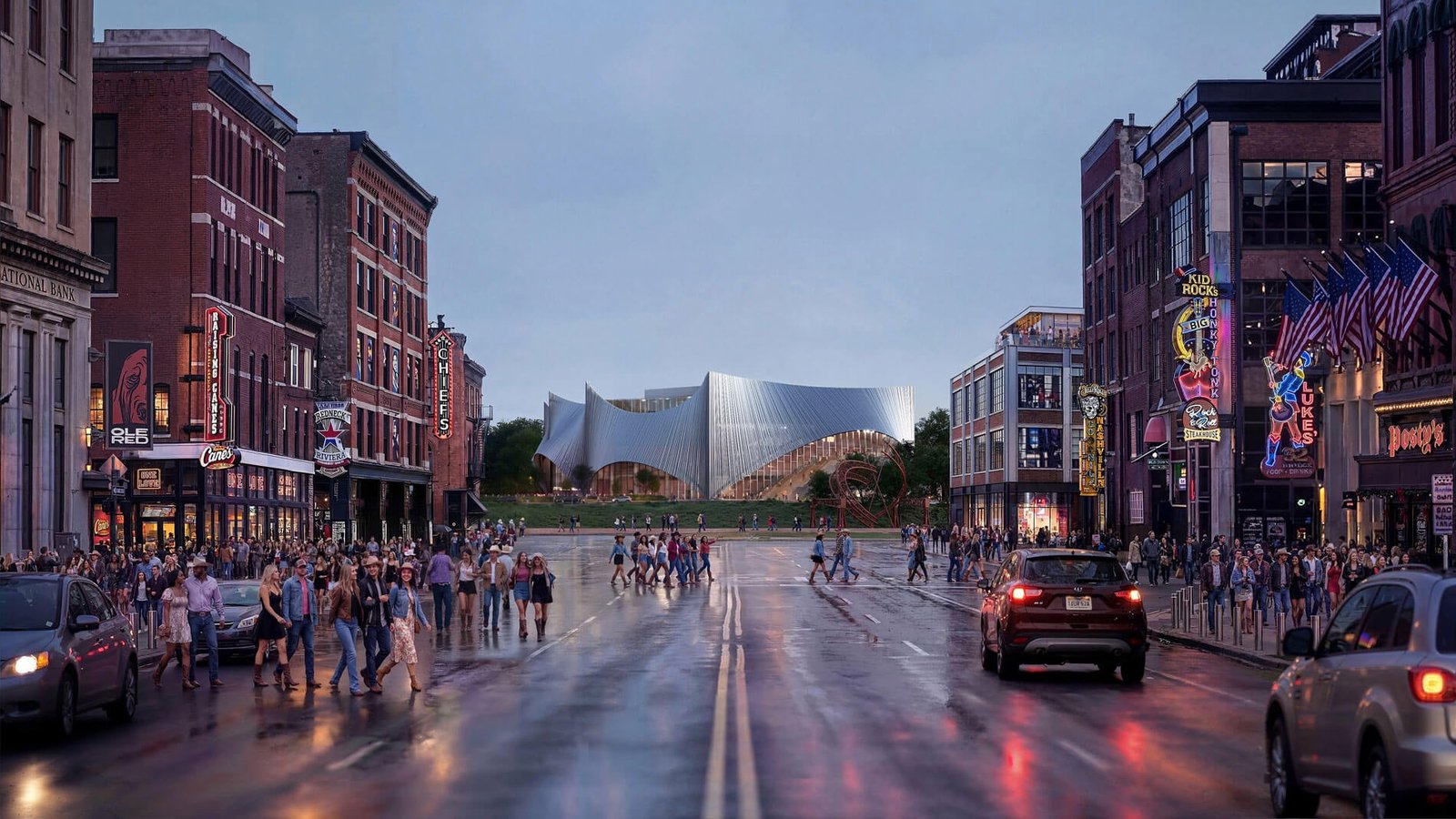
Per renderings shared by BIG, the venue will be located at the terminus of an important visual axis on Nashville’s Broadway Street, where a number of famous bars and music halls are located.
TPAC will be accessible from Broadway via the John Seigenthaler Pedestrian Bridge.
Bjarke Ingels in a statement acknowledged the site’s visual prominence; he said TPAC will bookend “Broadway as a beacon from across the river, drawing the cultural life of downtown across to the East Bank.”
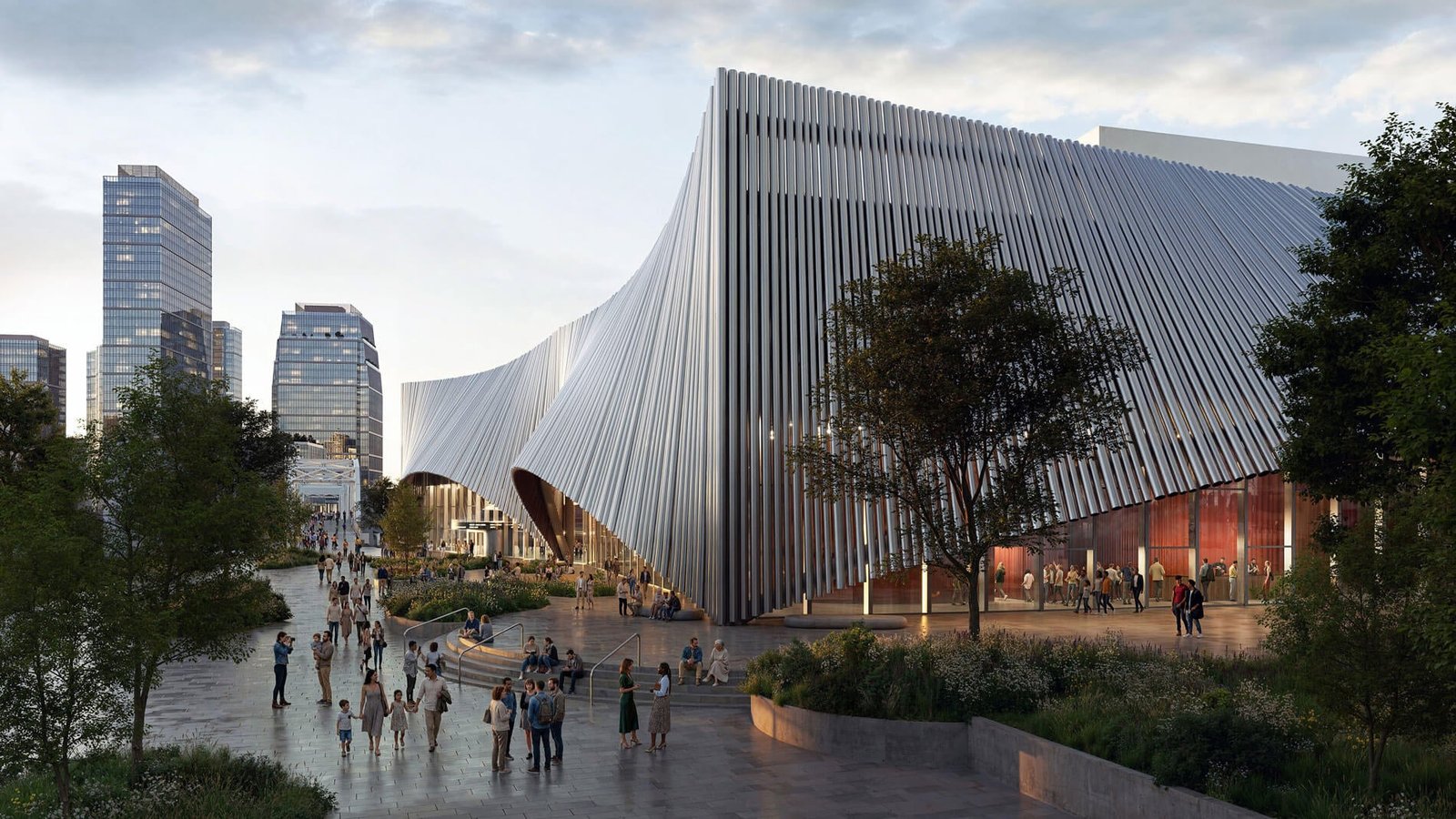
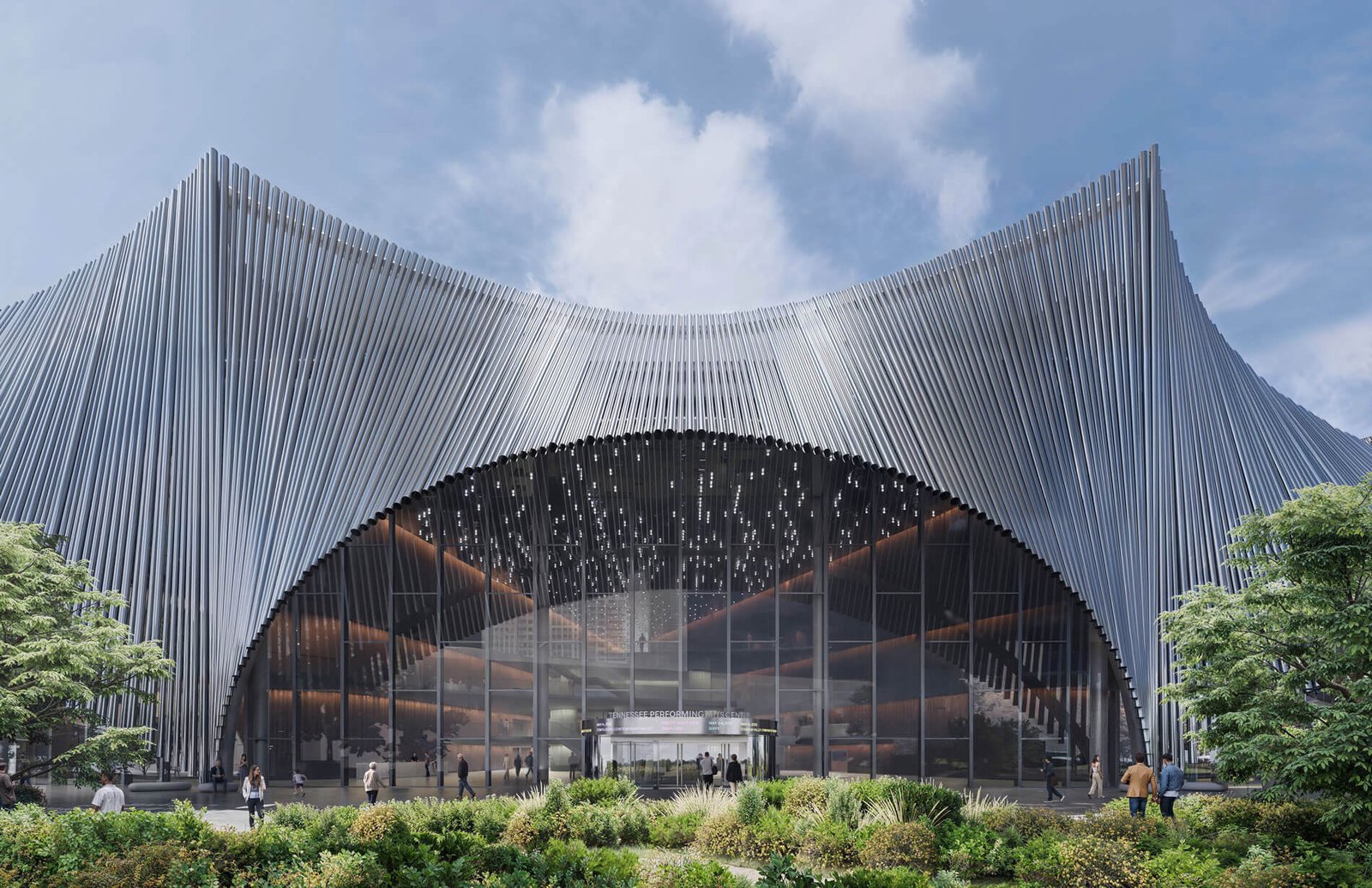
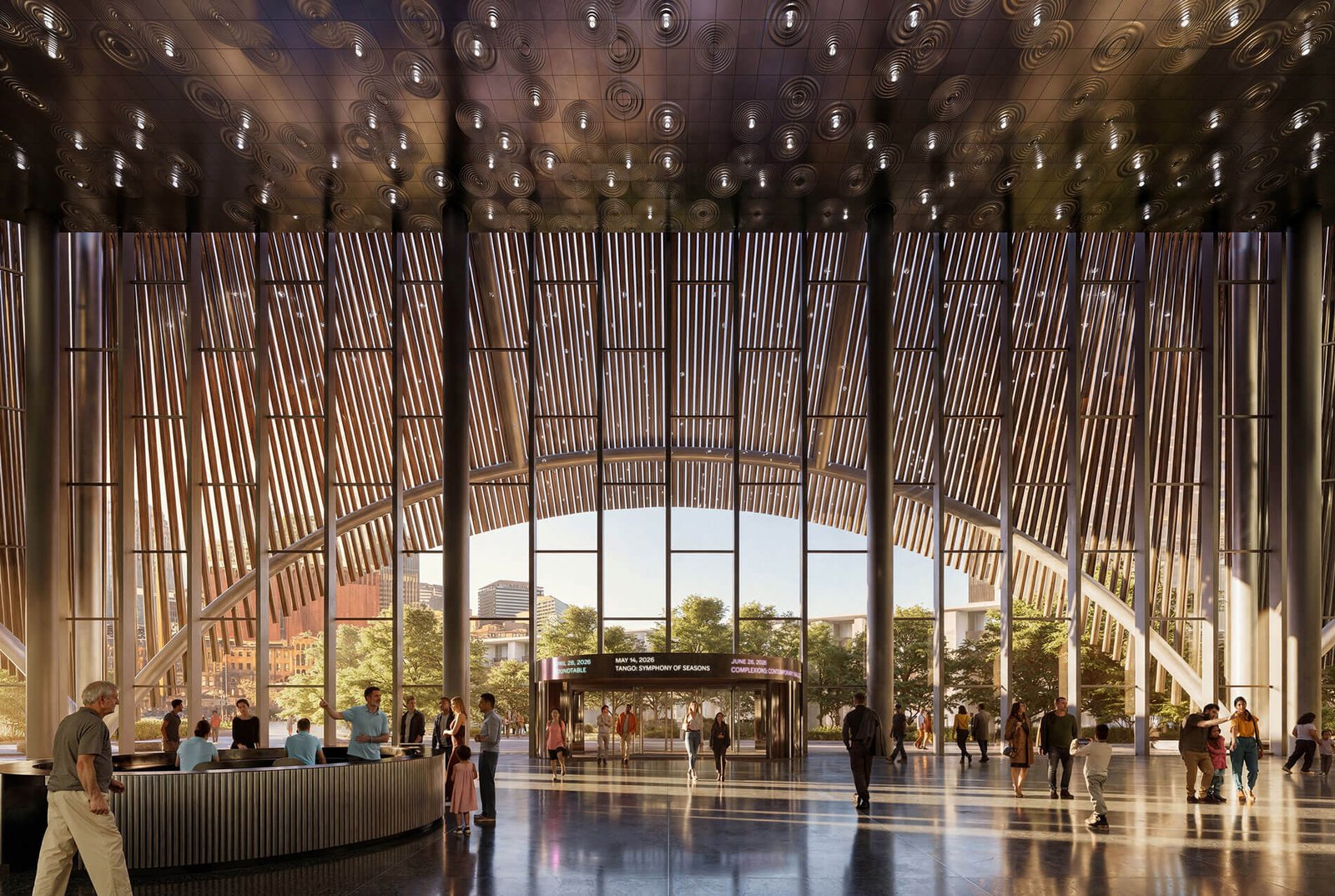
The performing art center’s facade teases its interior programming. The thin aluminum “tubes,” modeled after “organ pipes or steel chimes” that line the exterior, together, read like a fabric curtain. The structure billows outward and lifts upward at points to create entrances and make way for large spans of glazing that reveal the interiors.
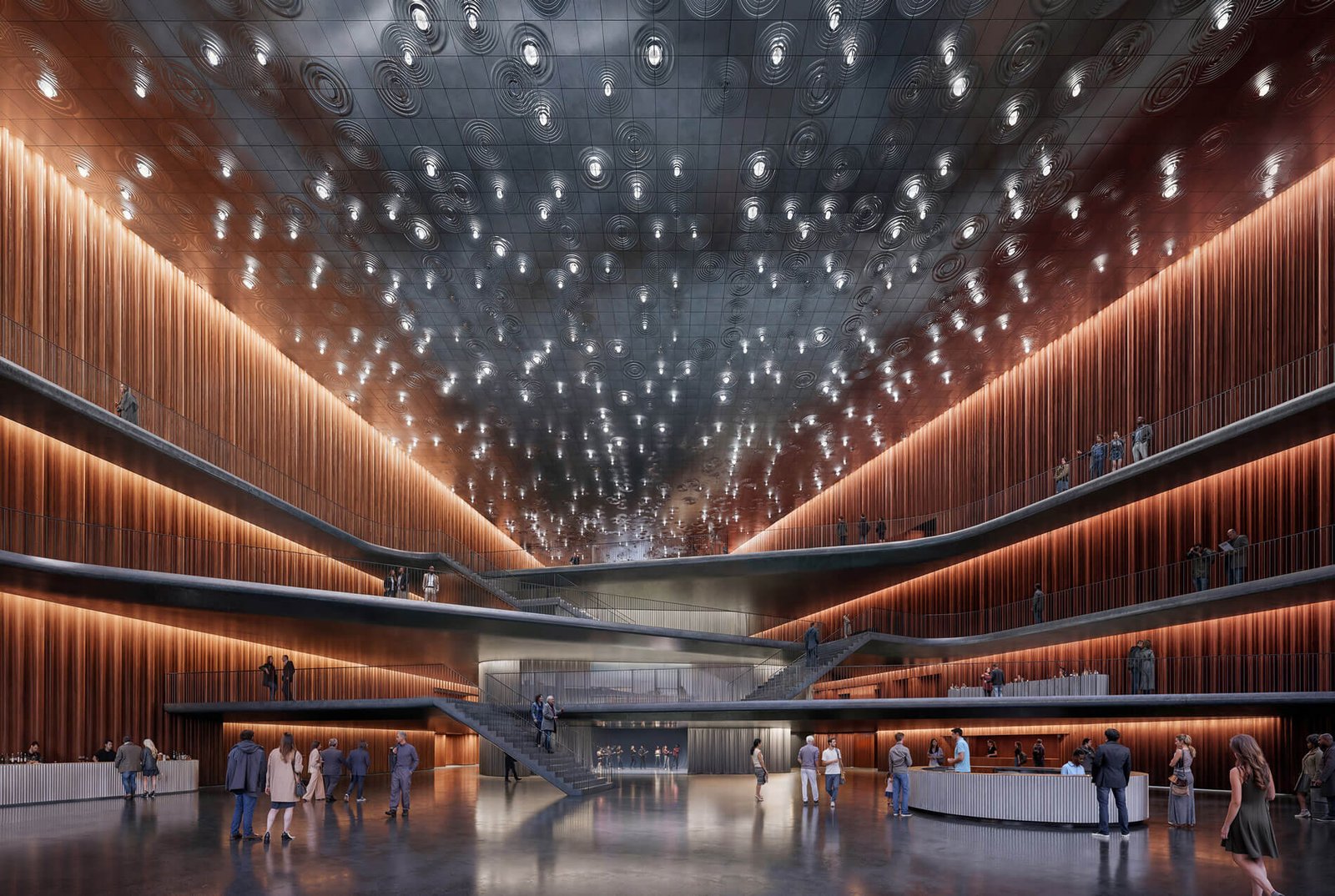
Guests will enter TPAC through a light-filled atrium. Two lobbies will connect the performance spaces, one will be at street-level, and the other will front the Seigenthaler Pedestrian Bridge. A grand staircase, central lounge, and cascading concrete slabs will abound. Here, arched windows face views of the landscaped plaza outside. OLIN will oversee the design of these plazas, which will be used for outdoor programming, gathering, and play.
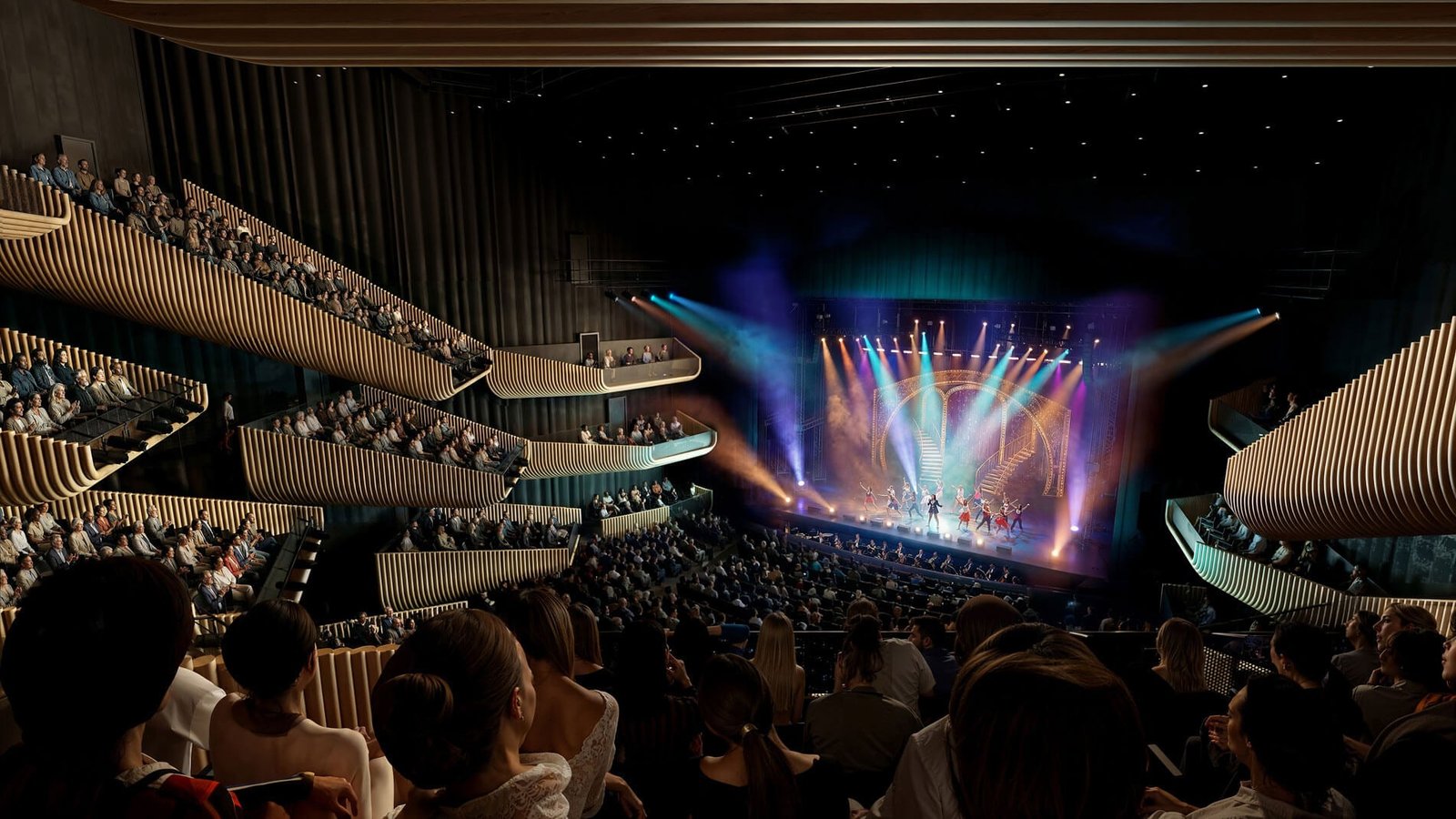
Floating, wood-clad “tray” seating will face the performance space, optimized for good sightlines. The boxes feature a fluted texture that mimics the linear application of the facade.
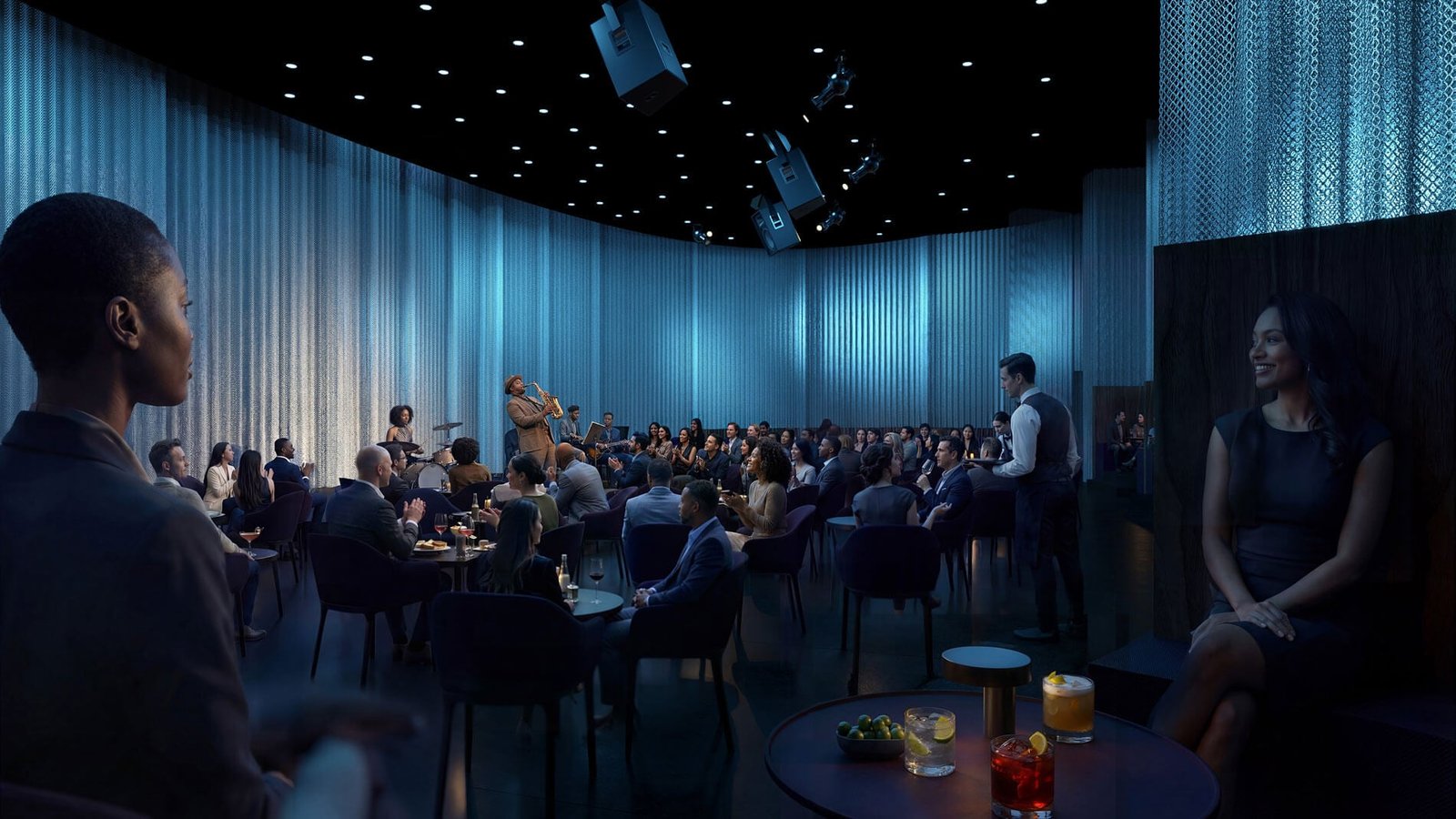
In the cabaret lounge, walls will be lined in cobalt blue with undulating wall surfaces that also pull from the facade’s rhythm. Apeiro Design will serve as the theatre planning and theatrical systems design consultant on the project.
“While typical performing arts centers have a clearly defined front and back, the site conditions of TPAC offer a unique opportunity to hide the back-of-house under the bridge, allowing the public space to surround the building on all sides,” said BIG partner Thomas Christoffersen.
“The halls are designed to accommodate a range of performances, with cascading mezzanines that connect the orchestra level to the balcony levels above. The central lobby will continuously pulse with energy, uniting patrons from different performances before and after each show,” Christoffersen continued.
The Nashville East Bank masterplan by Perkins Eastman was revealed in 2024 by city officials, which TPAC fits into. The masterplan called for the new performing arts center, a new grand park, and approximately 1,550 new homes spread across townhomes and midrises. Design and construction on myriad residential projects has already begun.
Construction on TPAC should begin in 2027, and the venue is expected to open in 2030.