

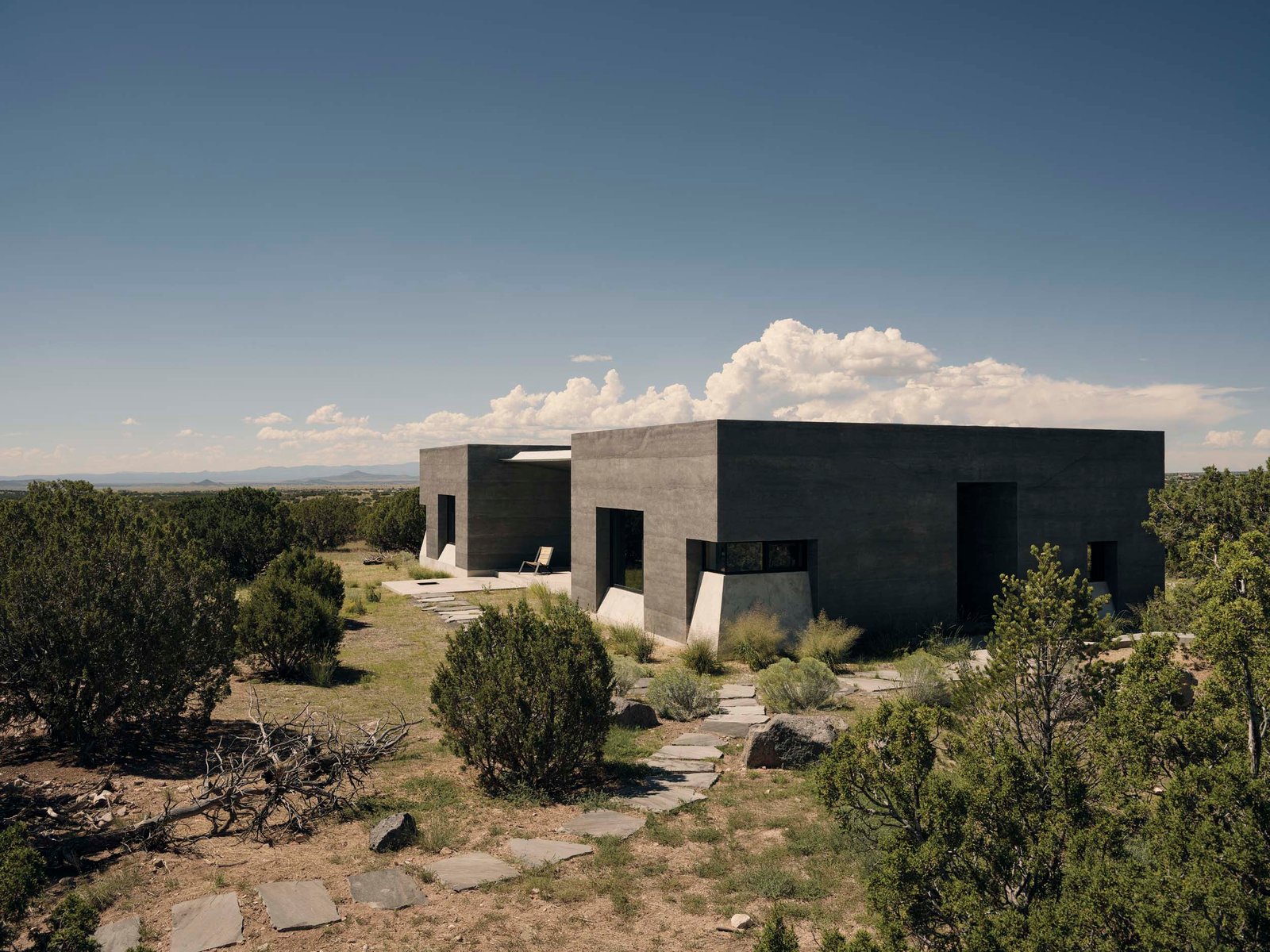
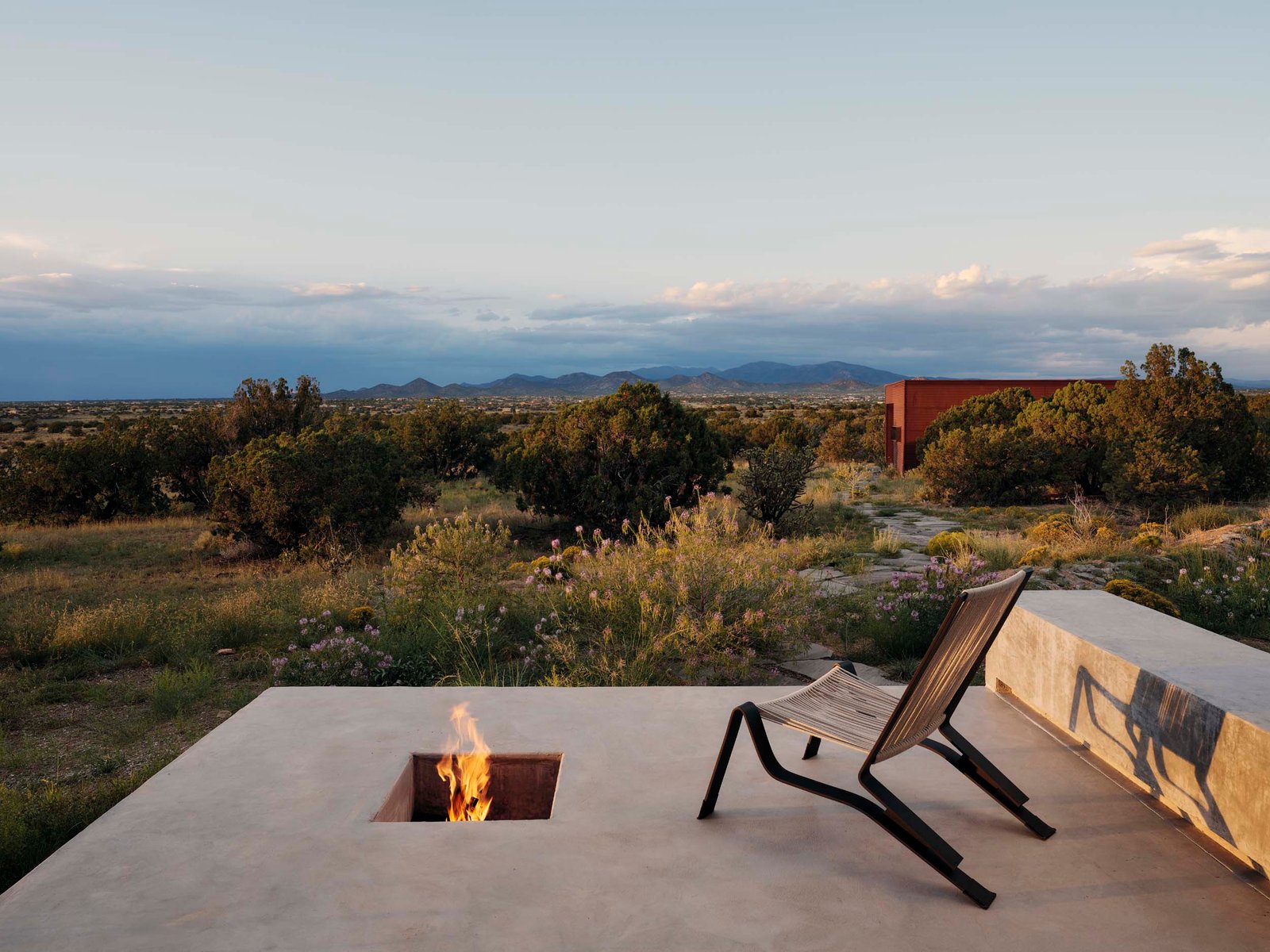
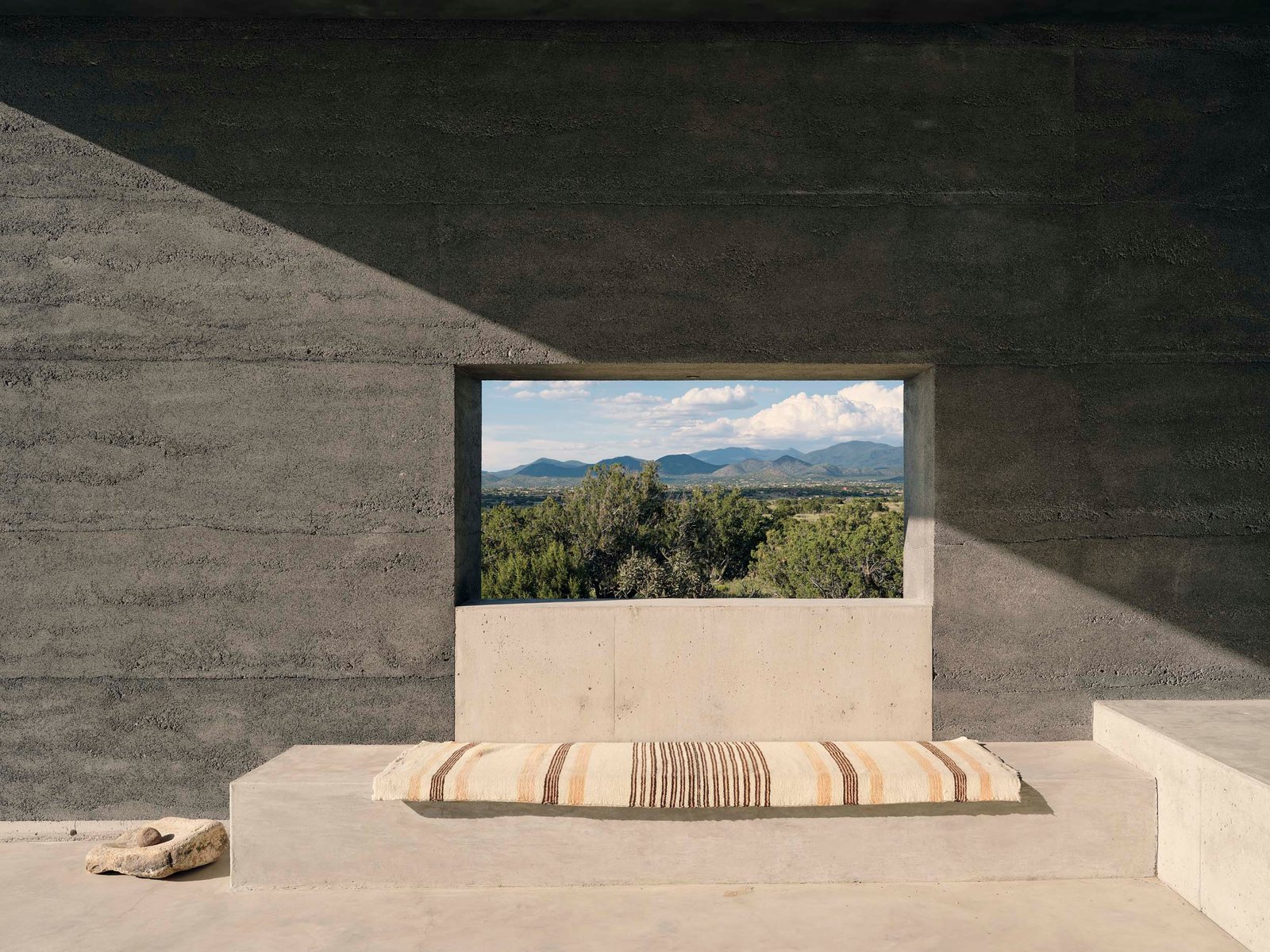
Strategically sited atop a mesa with 360-degree vistas of the northern New Mexico high desert, the Sombra de Santa Fe home, designed by DUST, is first and foremost a vessel for observation. The monolithic form is ancient yet futuristic and punctured by semi-enclosed porches, which cut away to cardinal point viewsheds of the setting’s jagged peaks and vast basins. Evocations of James Turrell’s Skyspace installations are intentional. “The darkness of these alcoves amplifies the mountain face shadows that change throughout the day,” said Jesús Edmundo Robles Jr., founding principal of DUST, the Tucson, Arizona–based practice that carried out all aspects of the project. “The house breathes with a quality of light emitting outward and filtering inward.”
The 2,100-square-foot home, which offers two bedrooms, plumbing hookups for RVs, and ample indoor/outdoor entertaining space, is a study in opening up to the elements while also shielding against them. “We needed to think about how this living environment would be used at different times of the year, all while helping to maintain a consistent connection with the landscape,” said Cade Manning Hayes, fellow founding principal at DUST. “Absorbing all the nature here has to offer, we conceived these porches as salas, traditional Mexican great rooms, where our clients could host guests but also sit on their own in the near silence of the wind and rain. In one [porch], the roof lifts, and it feels like the stars are at arm’s length, but one is still inside.”
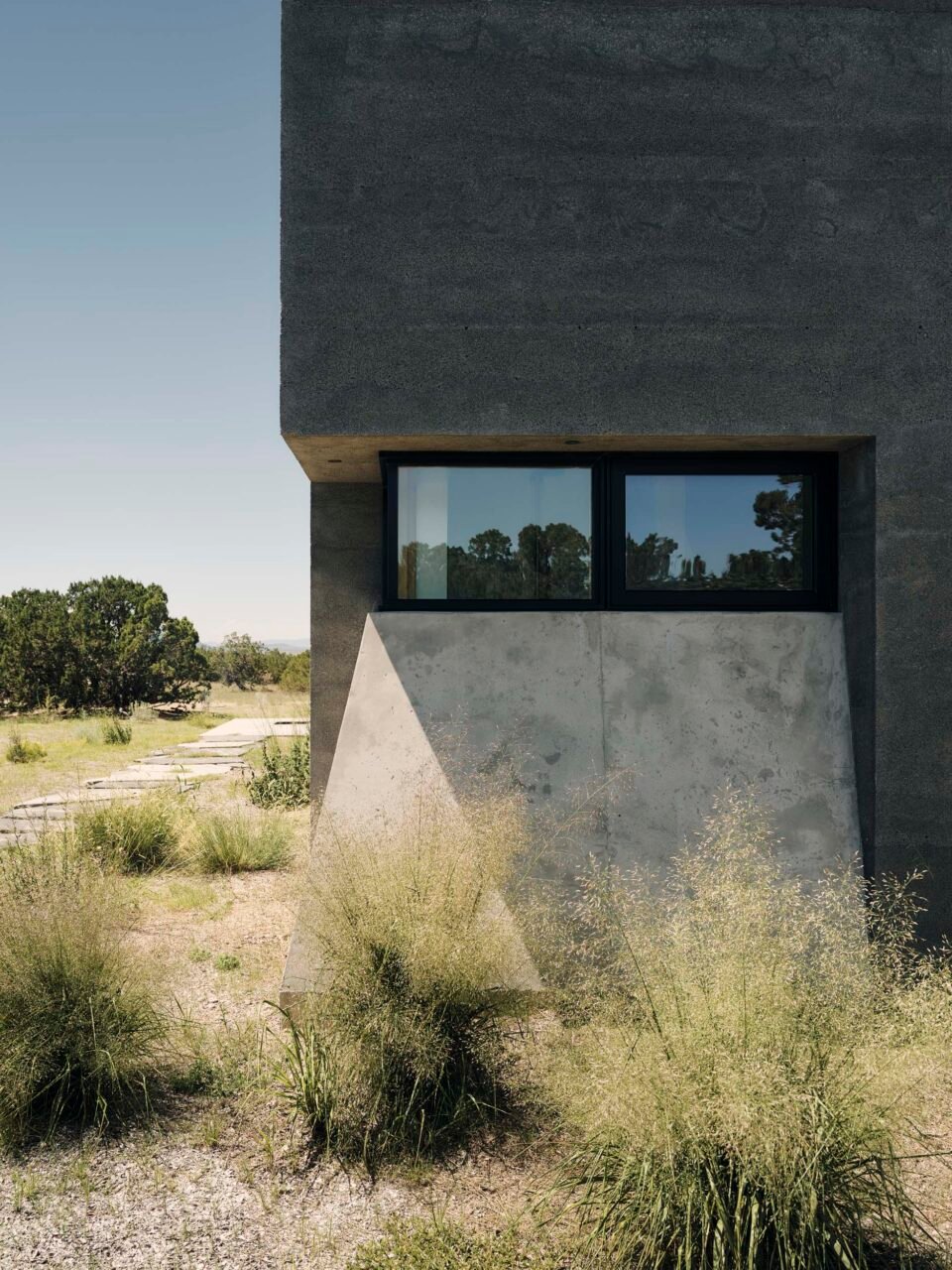
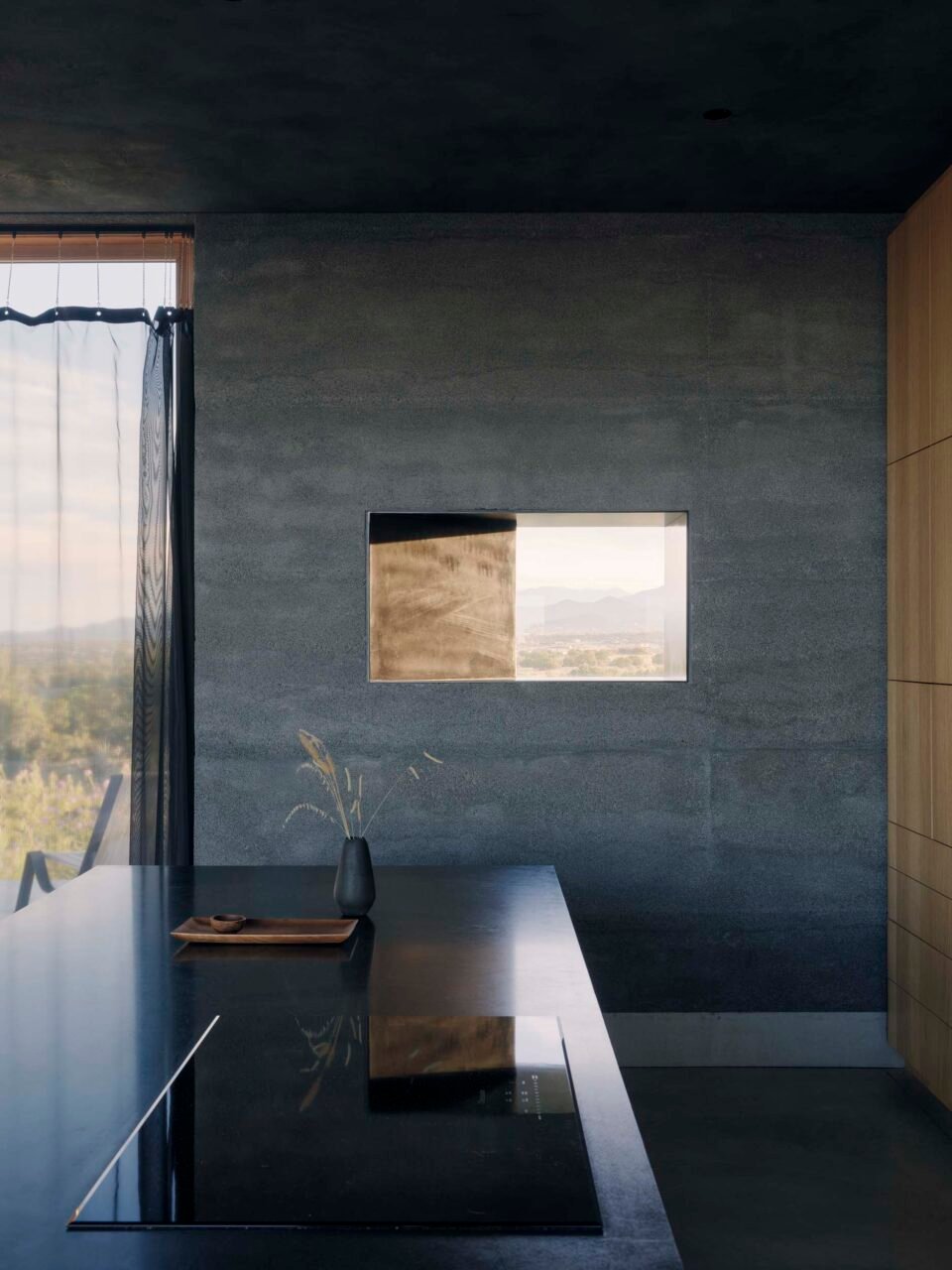
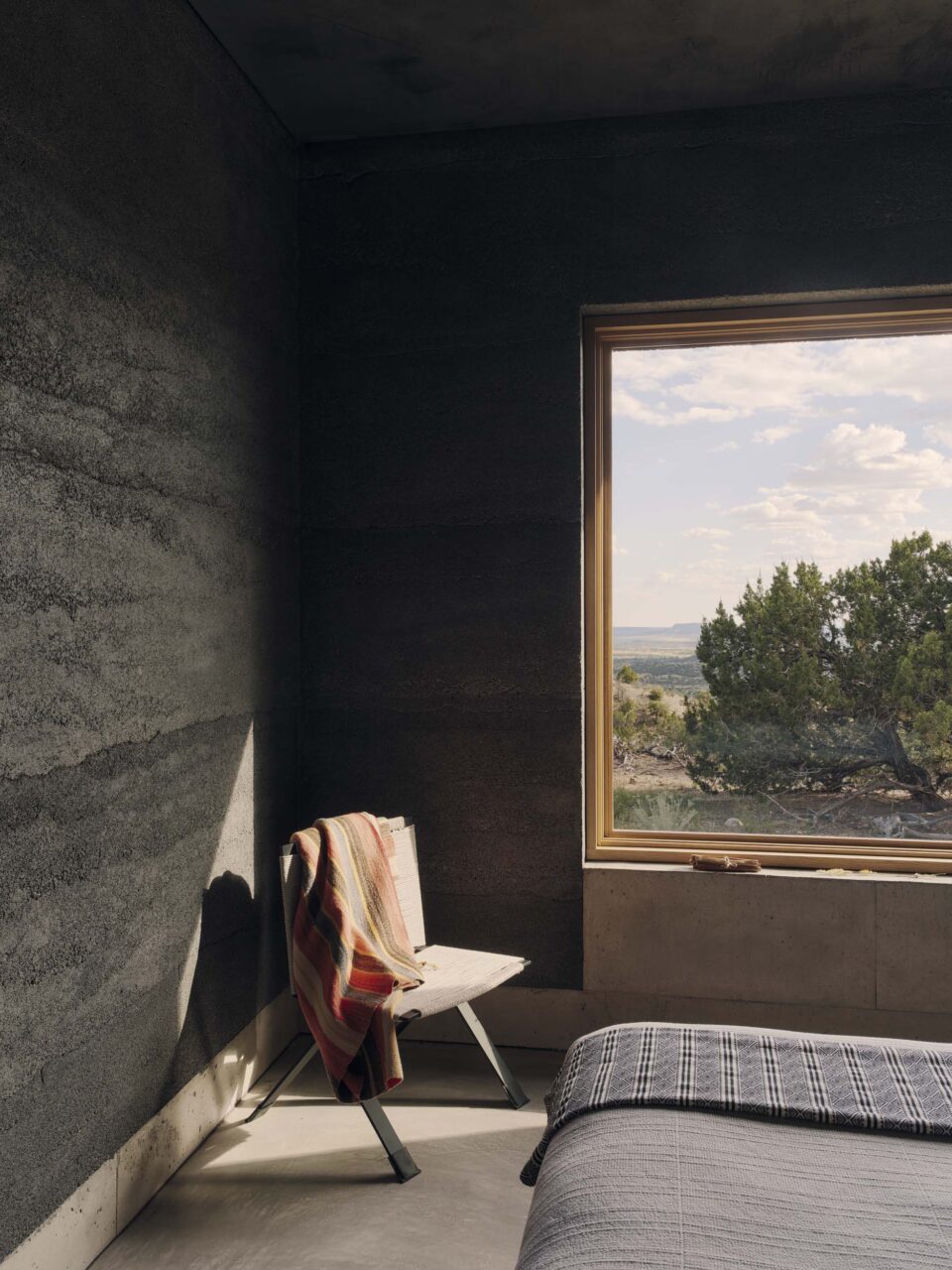
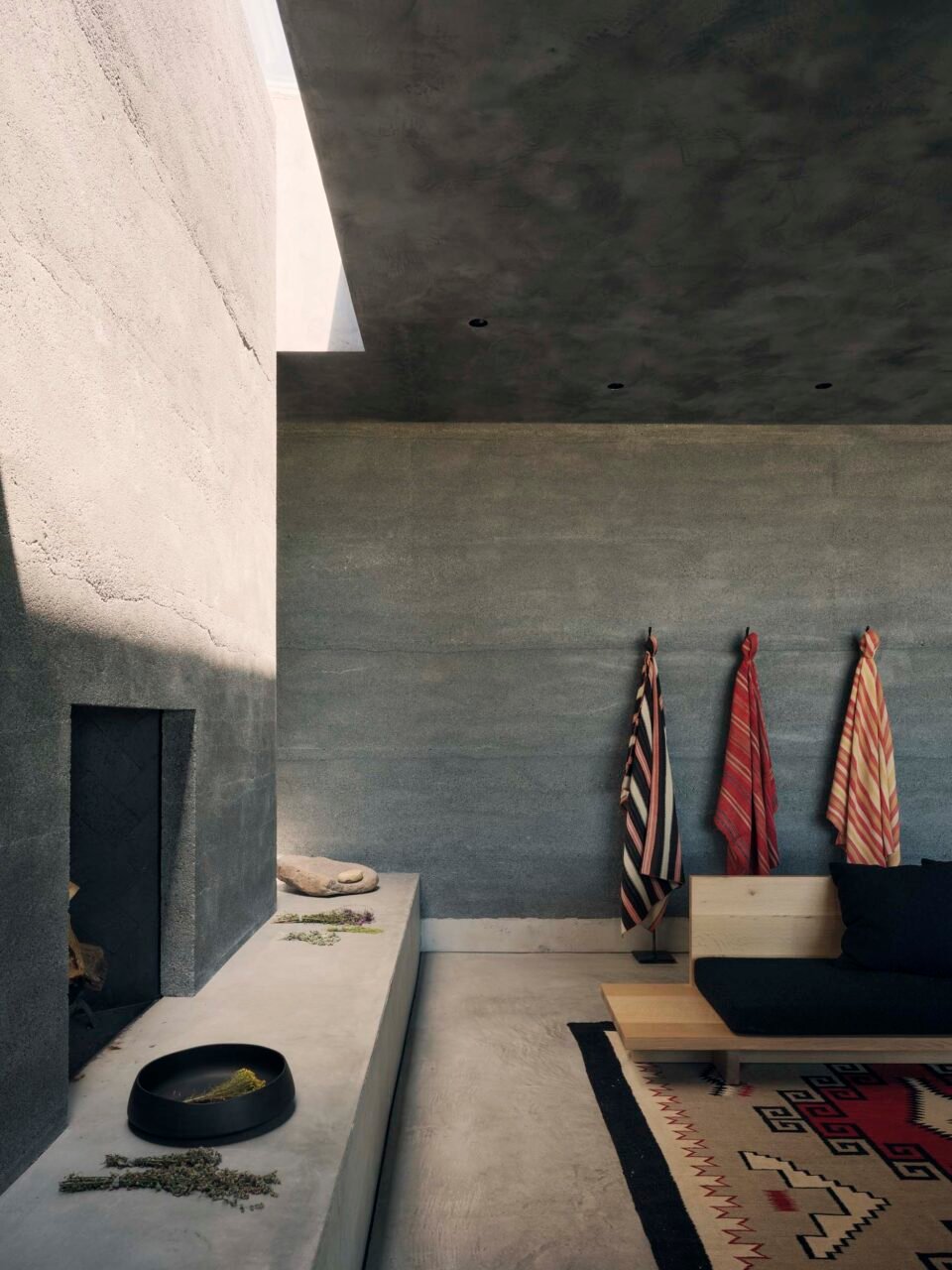
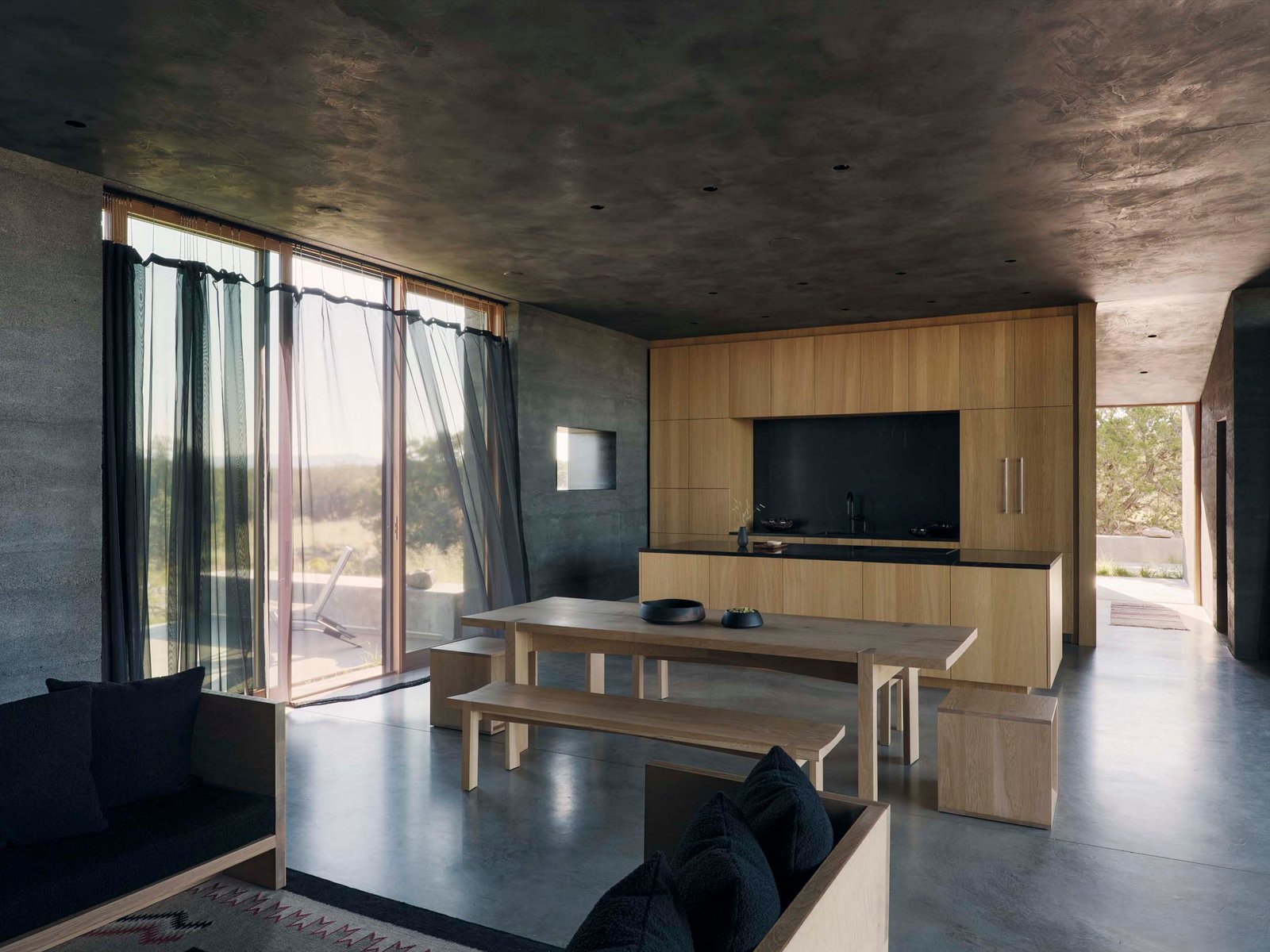
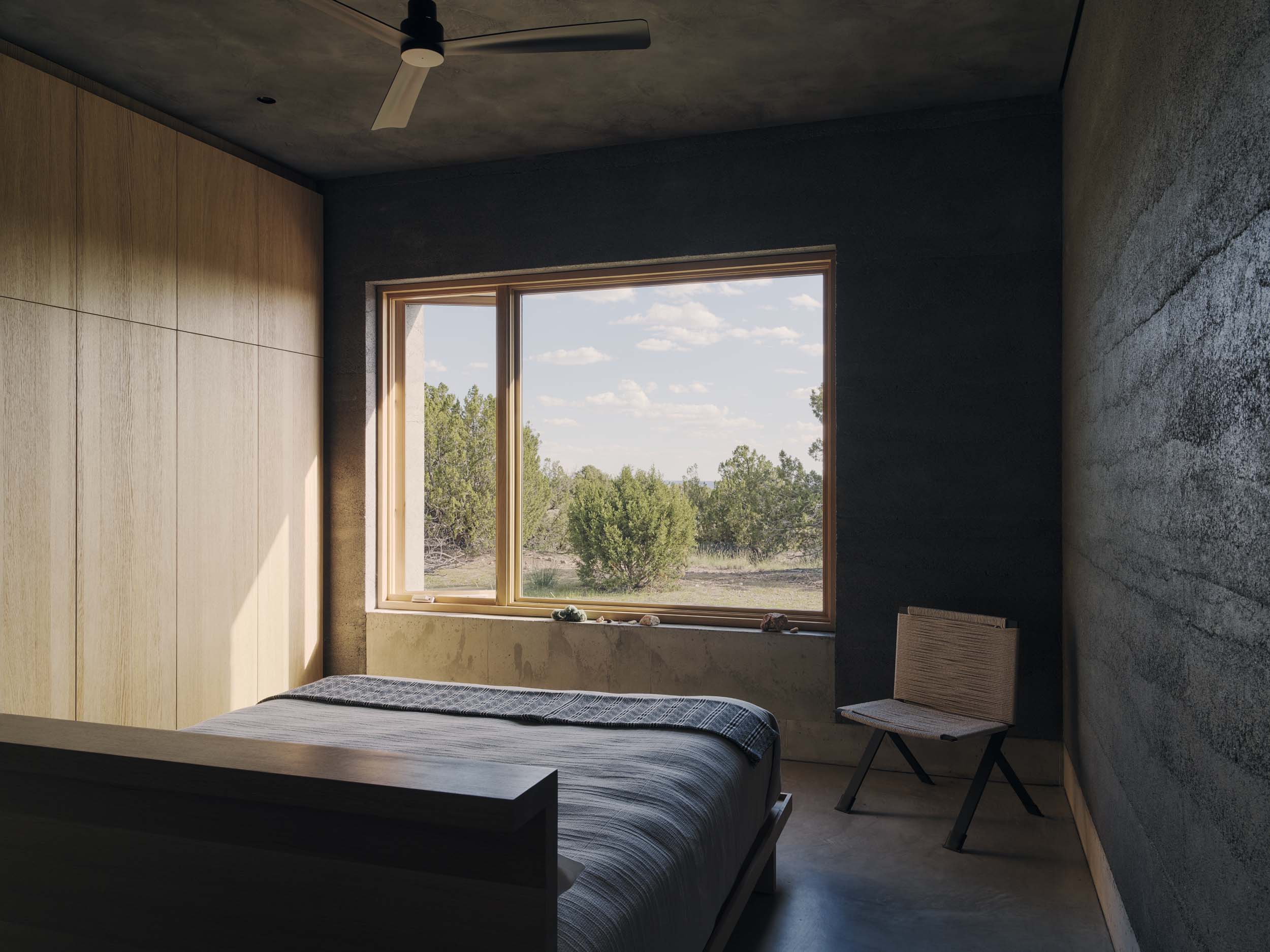
The home’s layout is essentially a sequenced facilitation, moving its inhabitants through dark, cave-like spaces before exposing them to carefully framed moments in the landscape. One enters through an obscure void before eventually uncovering these apertured verandas. This “shadow concept” is largely derived from the choice of material. Sourced in the region, black scoria (rammed lava cinder sand) is the material used for the home’s main, 2-foot-thick wall structure. Exhibiting the striated marks of the rock’s long-worn formation, the somewhat-reflective, dark coloration provides the contrast necessary to assist these encounters, contrasting the blues, greens, and reddish browns found in the landscape’s foreground and background. When natural light comes in, these surfaces glimmer with blue and gold, shifting in shade, not unlike the shadows that cast across the mountains in the distance.
“The material feeds the chameleonlike shadow quality we were after,” Robles said. “It reminds people of ancient structures found across the world and elicits the same sense of quiet reflection,” Manning Hayes added. “It performs well in terms of thermal mass. The house is volcanic geology cast as architecture.”
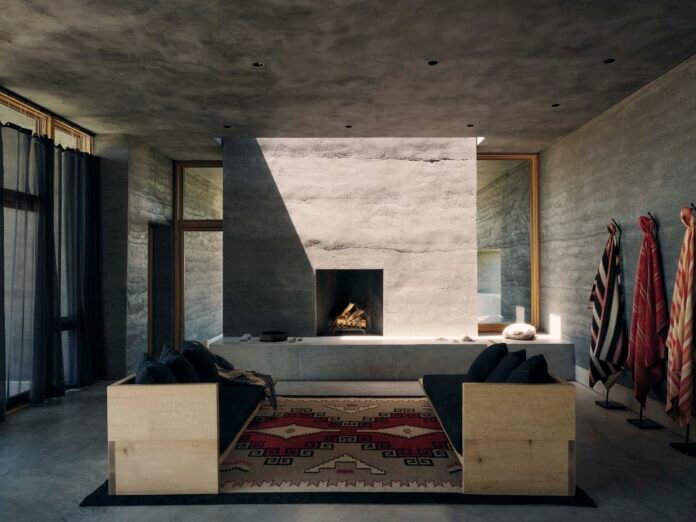
Rooting the scoria in place is concrete, used in the home’s foundation, and the striking angular stem walls that slope out below each distinctly proportioned window. To contrast this grayscale pairing, white oak carries across the interior from custom door- and window frames to cabinetry, millwork, and furnishings.
Manning Hayes and Robles work closely with Taos-based creative polymaths Maida Branch and Johnny Ortiz-Concha to stage the home. Together, they tapped Simrel Achenbach—founder of Brooklyn-based Desciencelab and an early Donald Judd furniture fabricator—to develop a series of pared-back, multifunctional designs for the space. Sparingly assembled in white oak, these sofas, beds, stools, tables, and chairs reflect the same geometric composition of the structure but also its transcendent character. With nature outside the main source of decor, the walls are mostly left bare. There are a few exceptions, such as Branch’s ceramics. Sourced from local gallery Shiprock Santa Fe, hung textile artworks add warmth to the serene interiors. These woven compositions emulate the visual complexity of the brush forest and soft grass growing right at the perimeter of Sombra de Santa Fe’s footprint.