

It’s uncommon for a high-end real estate development in Los Angeles County to be oriented toward the Metro system. In car-centric Los Angeles, it’s even less common to mention this proximity in real estate marketing materials.
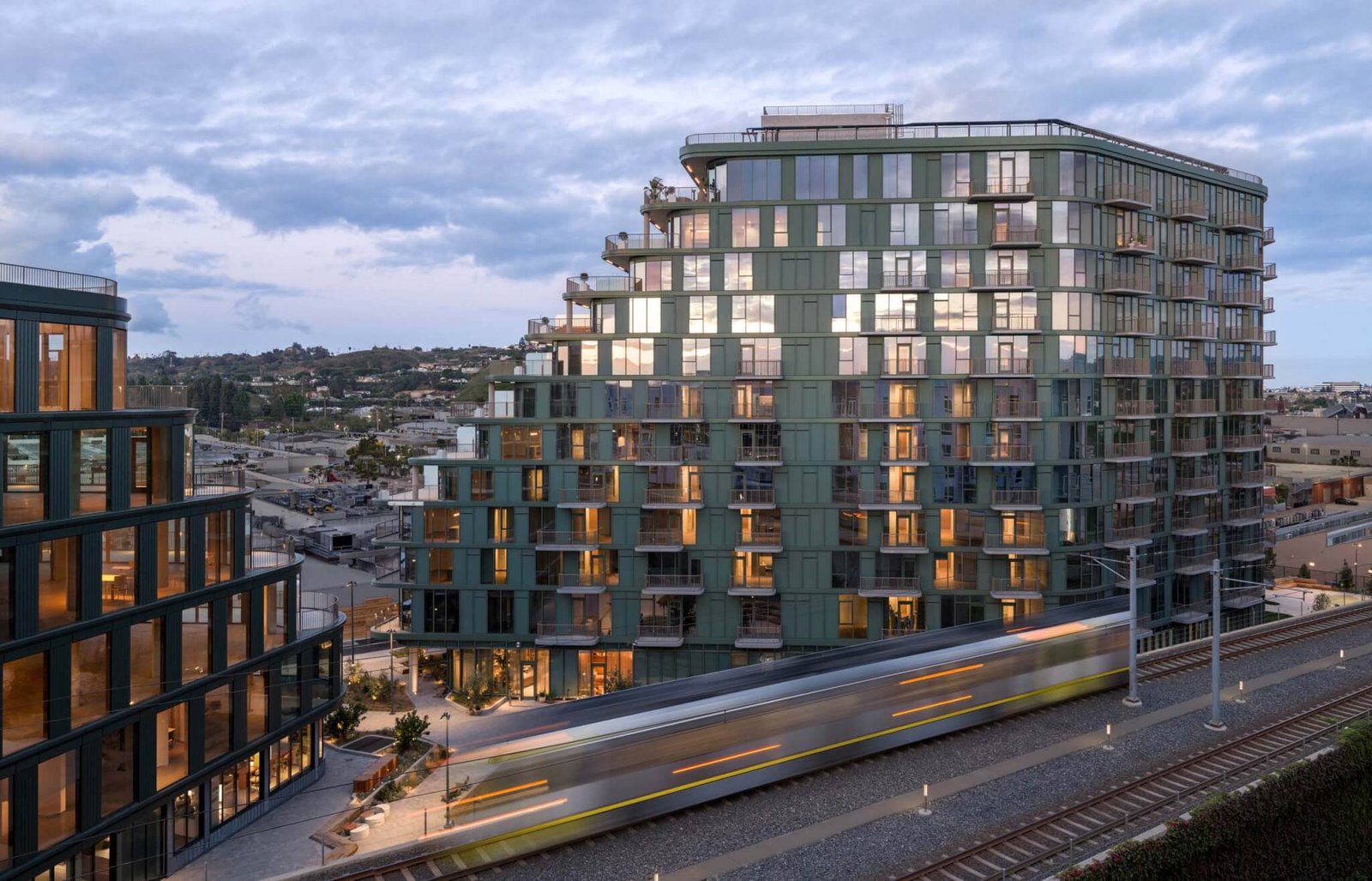
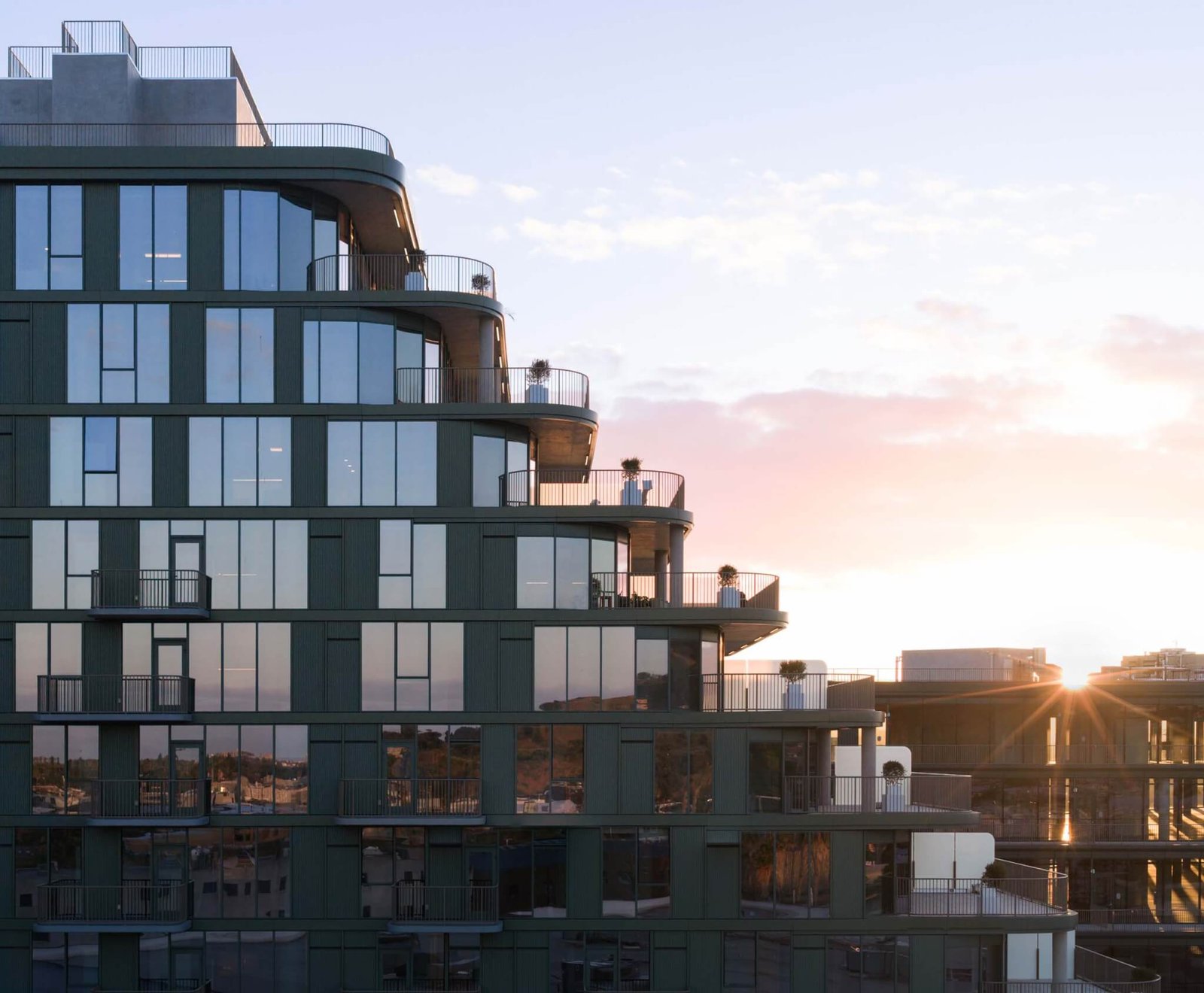
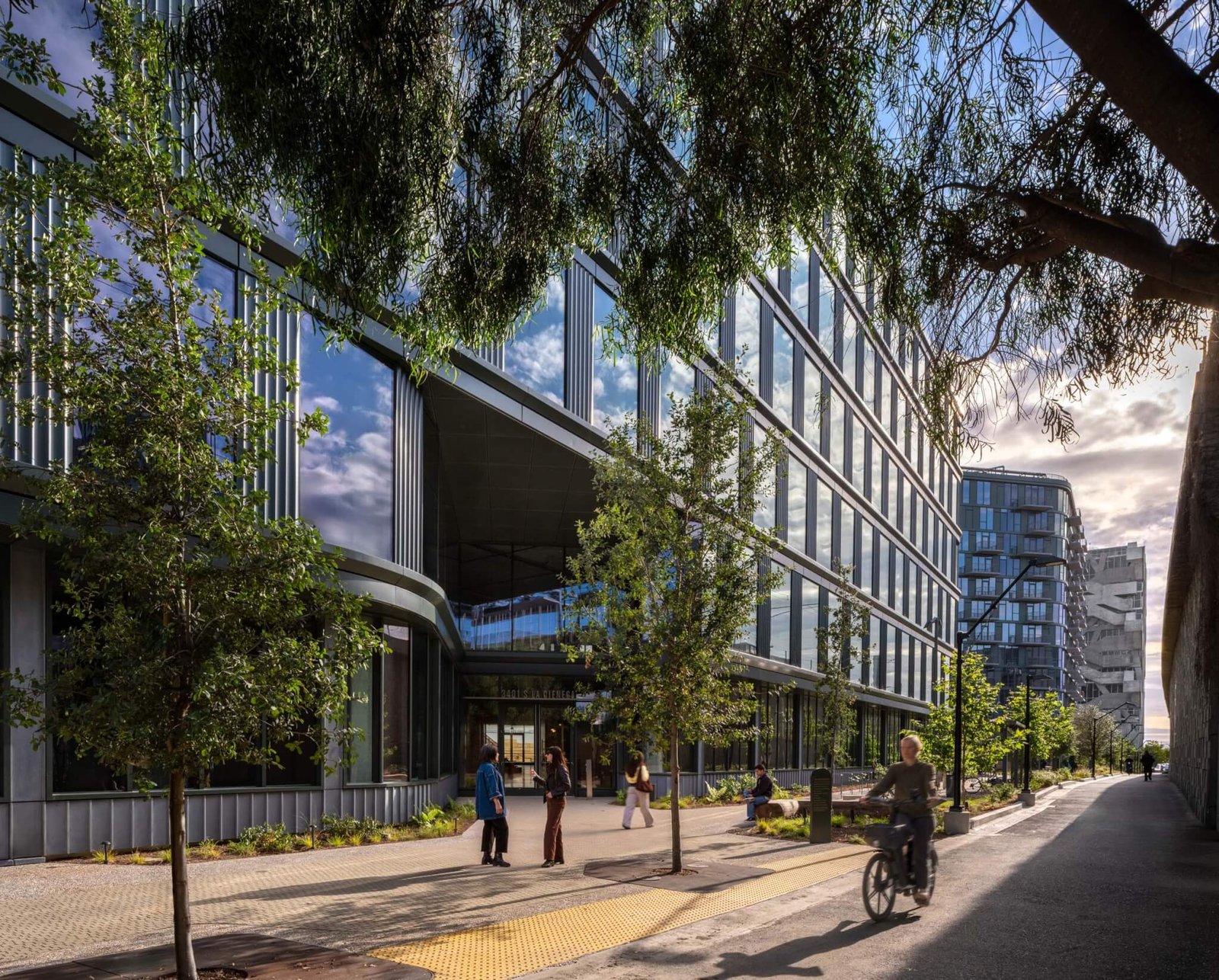
Habitat, a live/work campus developed by Lendlease, is betting on a high-density, public transit-oriented Los Angeles. Its two buildings designed by SHoP Architects and architect of record Steinberg Hart feature gray-green facades that rise up like steps against the elevated platform of the La Cienega/Jefferson Metro station in Culver City. An adjacent bus stop, one of many recently mass-produced by SOM, appears almost integrated into its design.
Habitat’s brochure boasts that Culver City is the “Techtainment Heart of Los Angeles,” alluding to both the city’s longstanding entertainment industry and the Westside’s recent status as “Silicon Beach,” an area home to more than 500 technology companies. The residential amenity space features a high-end media room that Lendlease hopes will attract members of both fields to rent in the residential half and lease in the commercial half.
“Historically, Culver City was the connection point between downtown Los Angeles and Santa Monica—two of the region’s major development centers,” said Dana Getman, a principal at SHoP. The area has a long history of innovation in multi-family housing and community design, such as Olympic Village, one of the first examples of racially integrated housing in the United States, as well as Village Green and Park La Brea. “That history made it feel like the right place to ask a bigger question: What should the next generation of distinctly Los Angeles mixed-use housing look like?”
But the vitality that the Habitat team envisions remains tenuous: though Los Angeles County currently boasts the most rail development of any city in America, it faces low ridership due to stigmatization among those who prefer traveling by car.
“The reality is that many residents will still own cars,” said Getman, “but we wanted to make alternatives attractive and practical.” The parking garage is tucked away on the south side, leaving the rest of the campus open to landscape and pedestrian activity. Residents can check out electric bikes for free for up to five hours, allowing them to cruise the bike path in the shadow of the elevated train to travel into downtown Culver City or reach the beach in about 20 minutes.
The larger issue Habitat will face, however, is a region-wide population decline and corporate relocations that have together caused chronic vacancies in several central neighborhoods. Just beyond the site are several ambitious real estate ventures with varying success: its neighbor is the (W)rapper, a hulking office tower completed by Eric Owen Moss Architects in 2023 that has maintained wholly unoccupied ever since. Just beyond is the Hayden Tract, a long string of industrial-chic buildings designed by the same firm over the last three decades that has faced similar struggles to maintain renters in recent years.
Nonetheless, the Habitat site, roughly the size of a Manhattan block, is split into two buildings in the hopes of becoming a collective hotbed of activity. “We ultimately chose not to stack residential uses on top of commercial uses,” said Ryan Burton, Senior Vice President and Development Director of Lendlease, during the press tour. “Separating the buildings gave each program its own identity, circulation system, and leasing flexibility,” he added.
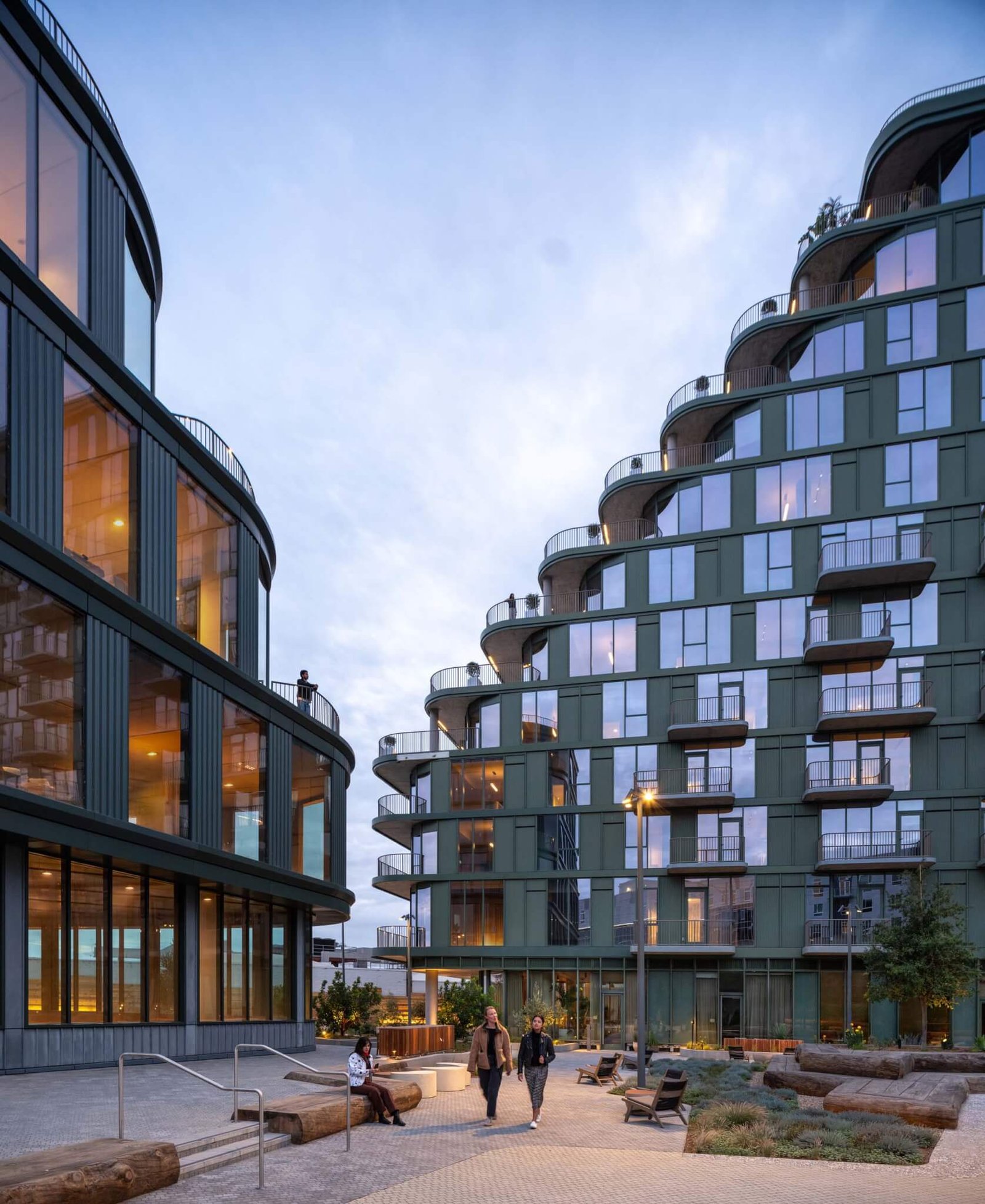
The entrance to the commercial half, containing over 253,000 square feet of creative office space across six floors, meets the Metro entrance at a diagonal in anticipation of urban foot traffic. The other building, which spreads 260 apartment units across 12 terraced floors—12 of which are affordable housing and seven of are designated as workforce housing—turns away from the Metro station just enough to act as a buffer for the swimming pool and other outdoor amenities sited on its southern edge while allowing the faint smell of cocoa from the adjacent See’s Candies to linger.
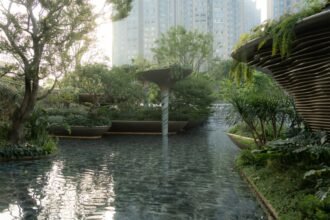
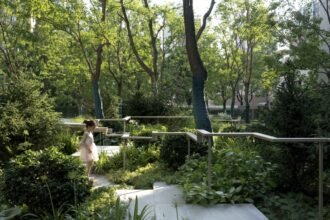
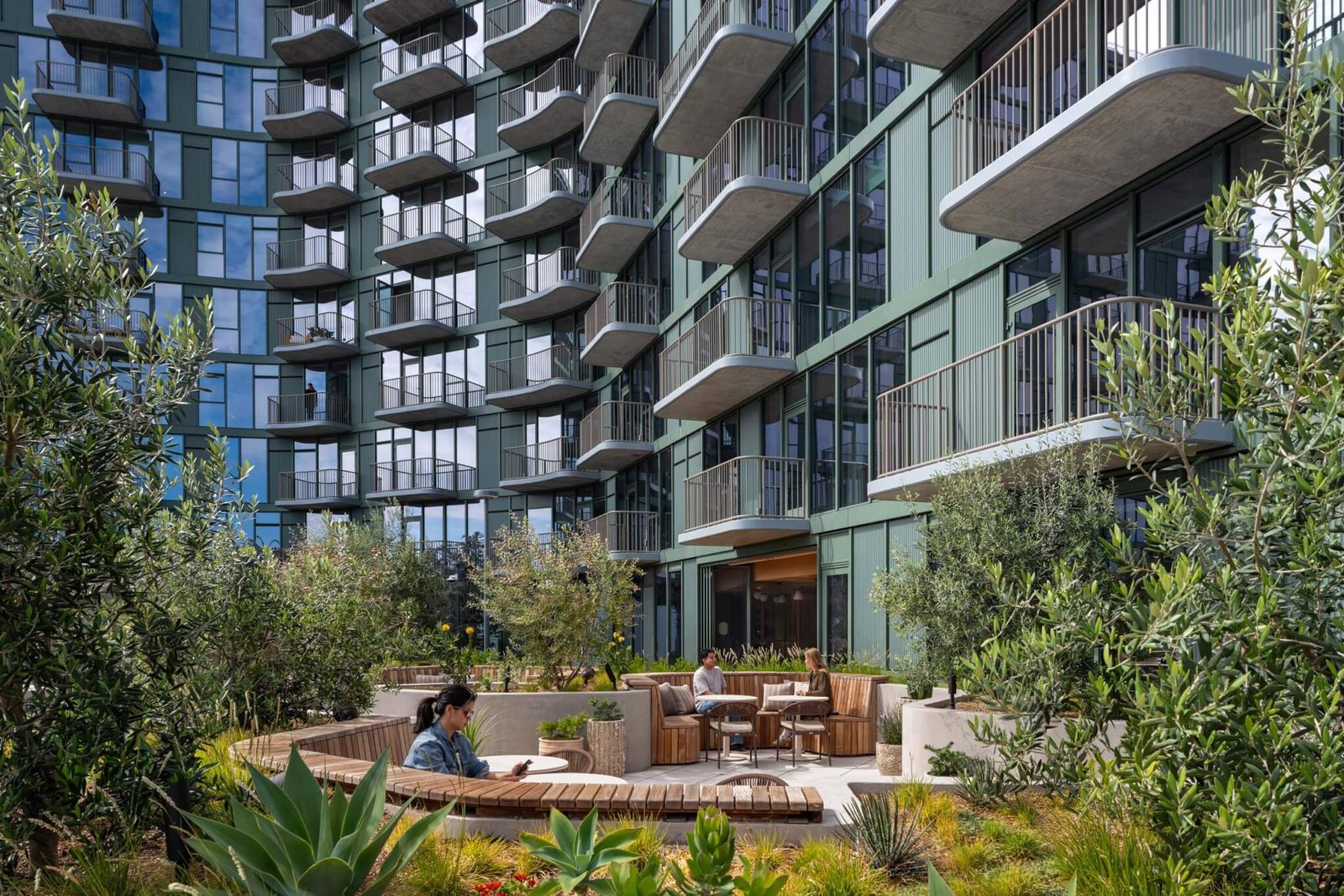
The building separation also allowed the site to maintain an opposing identity as a serene community park. The acre of landscaping on the ground floor, designed by Los Angeles–based landscape architecture firm RELM, was envisioned as a walking trail that breaks from the street grid, inspired by the famous Baldwin Hills trail visible in the middle distance to the south. “Because the site has such a limited frontage, the trail almost has to be discovered, like a surprise,” said David Christensen, the design principal of RELM. “Instead of defining movement with a formal path, we created small ‘eruptions’ of planting that guide people through the site while maintaining a sense of exploration.”
Early in the design process, the team debated whether to design the open area as a public space or a private amenity. “There is often a perception in Los Angeles that public spaces need to be heavily controlled, particularly because of concerns about homelessness and security,” Christensen added. “Ultimately, we decided to open the site up to create a place with activity and visibility rather than isolation. The landscape still provides a sense of comfort and separation, but people can move through the site naturally.”
Habitat is an undeniable improvement over the site’s former role as a single-story Public Storage facility. But it can’t perform miracles alone; to strike the right balance of urban vitality and natural serenity, several more developments will have to pop up along the Metro line with equal audacity.
Shane Reiner-Roth is a writer and lecturer on architecture and urbanism in Los Angeles.