

Developers are turning to railyards for new construction, as available land grows increasingly scarce in cities around North America. In New York City, Mayor Mamdani has jumpstarted an old idea to build a deck spanning Sunnyside Yard for housing.
Now, Toronto has a similar vision for an active railyard in its Fashion District.
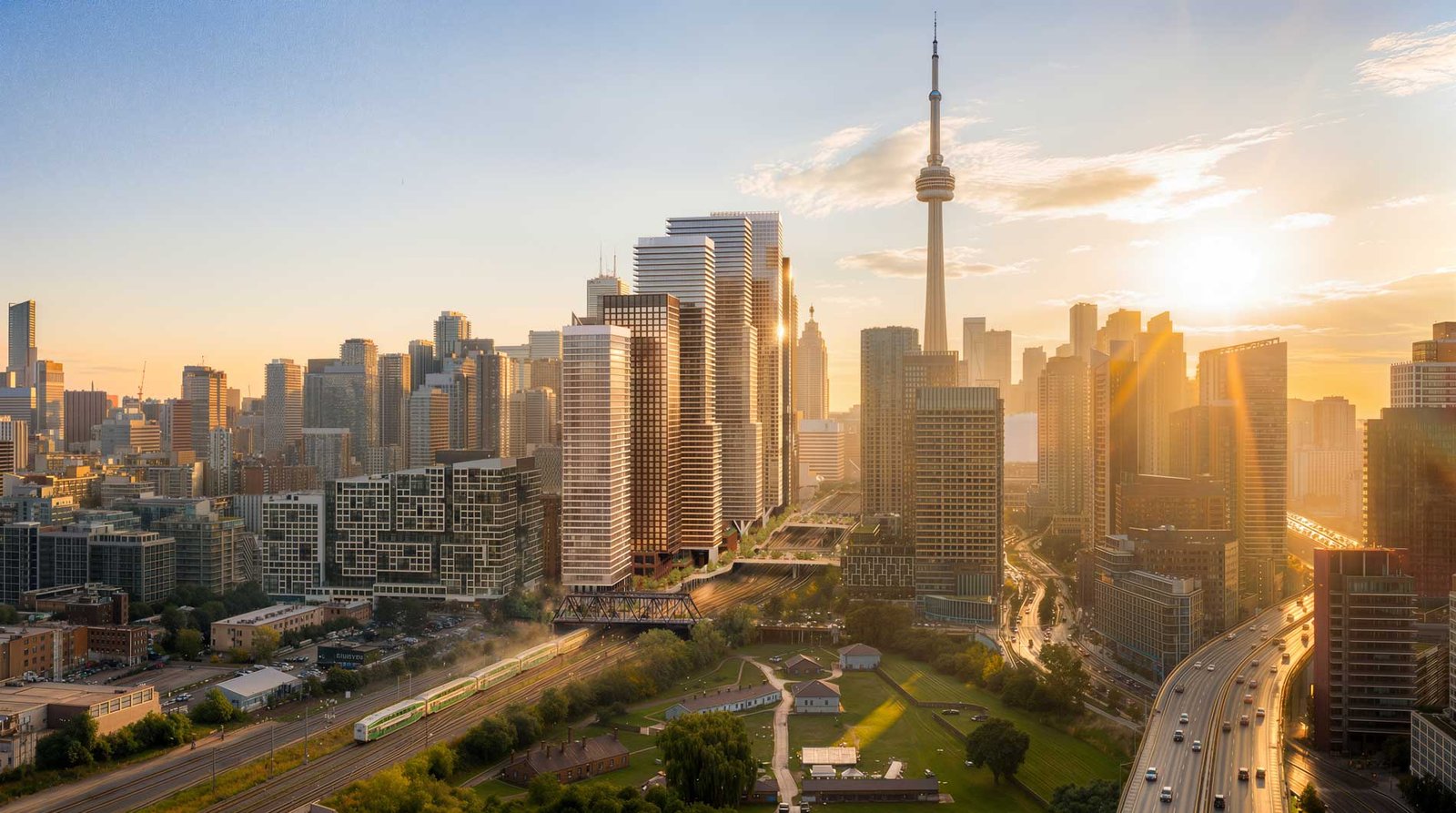
Toronto Rail Yards is a forthcoming mixed-use neighborhood designed by Henning Larsen, alongside Toronto-based firms Hines, PCL, WW+P Architects, and RJC Engineers. The project.will be built between Bathurst Street and Spadina Avenue, not far from other projects underway by BIG, Shim-Sutcliffe Architects, and others.
Michael Sørensen, Henning Larsen global market director, said in a statement the “design of Toronto Rail Yards is rooted in the neighborhood.”
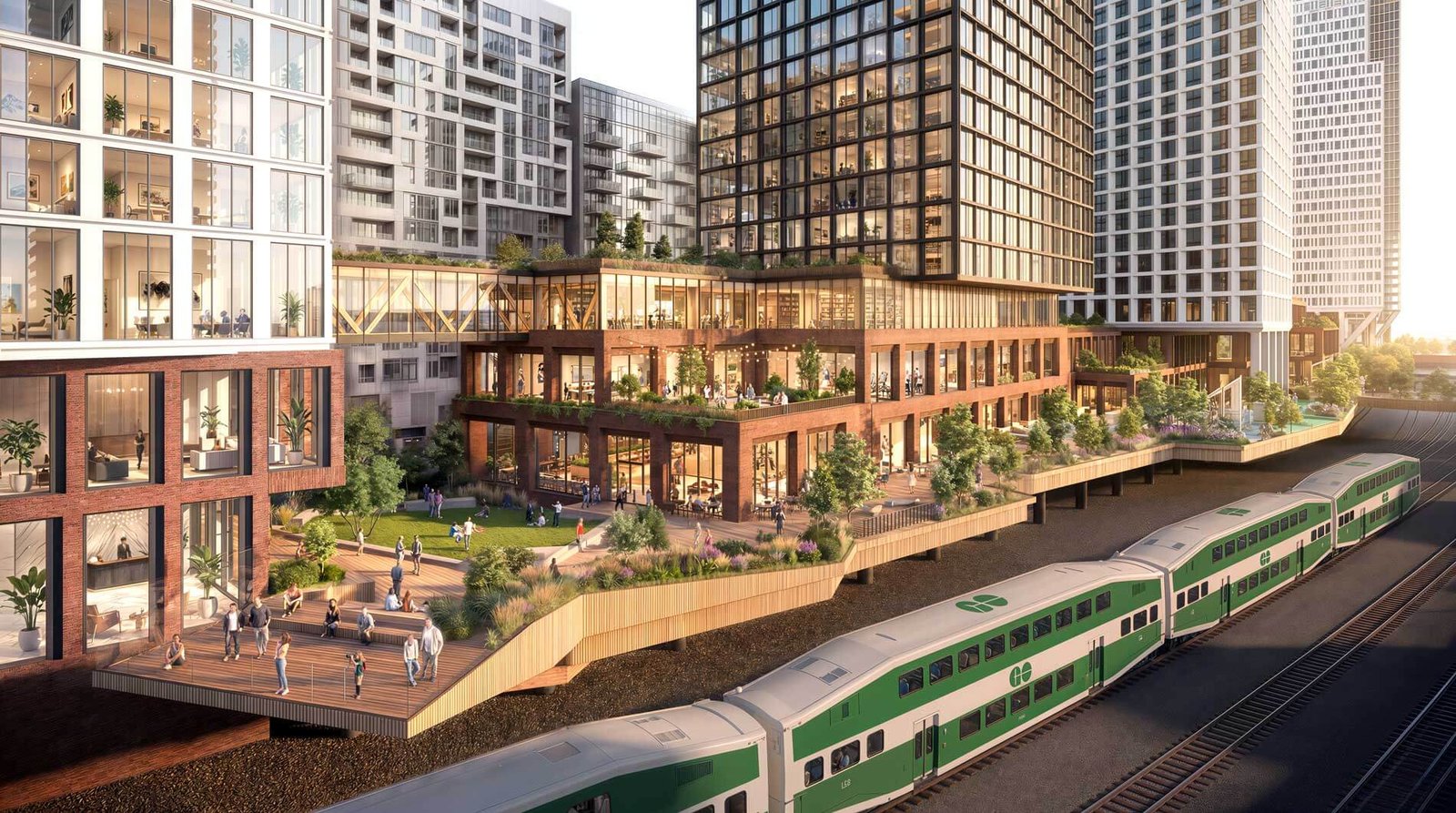
The plan is to build a 6-acre deck over the railyard. The development will have 4,000 new homes, two childcare centers, approximately 915,000-square-feet of office space, and 50,000-square-feet of retail space.
Residents of Toronto Rail Yards will have access to public transit via the future Spadina-Front GO Station, also designed by Henning Larsen, as part of the transit-oriented development project.
“The scale, materiality and microclimate of its welcoming spaces will make Toronto Rail Yards a place with a genuine sense of belonging at its core,” Sørensen said.
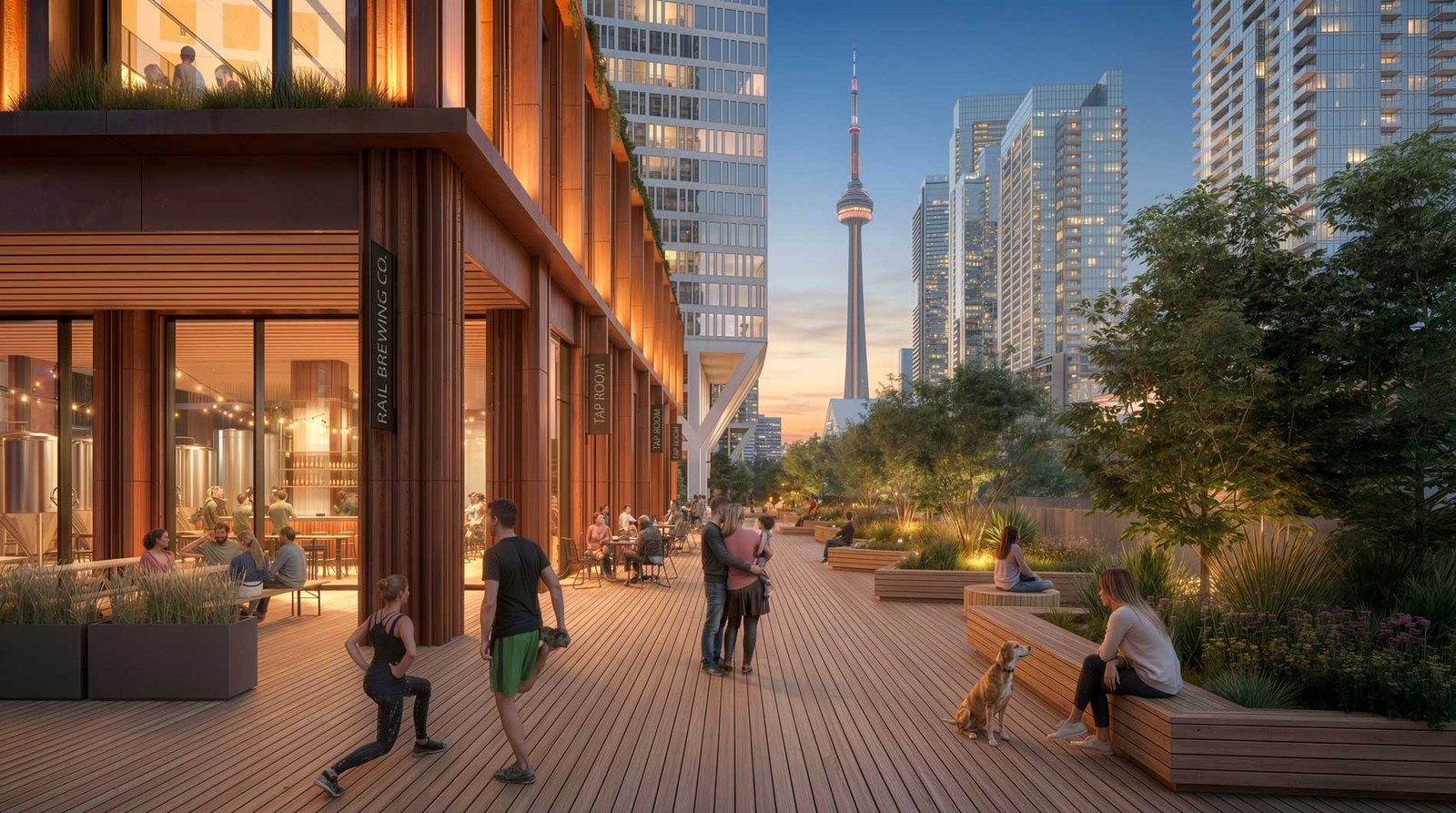
Renderings of the mixed-use neighborhood show a walkable community with views of Toronto’s CN Tower, recently renovated by Superkül and Boszko & Verity.
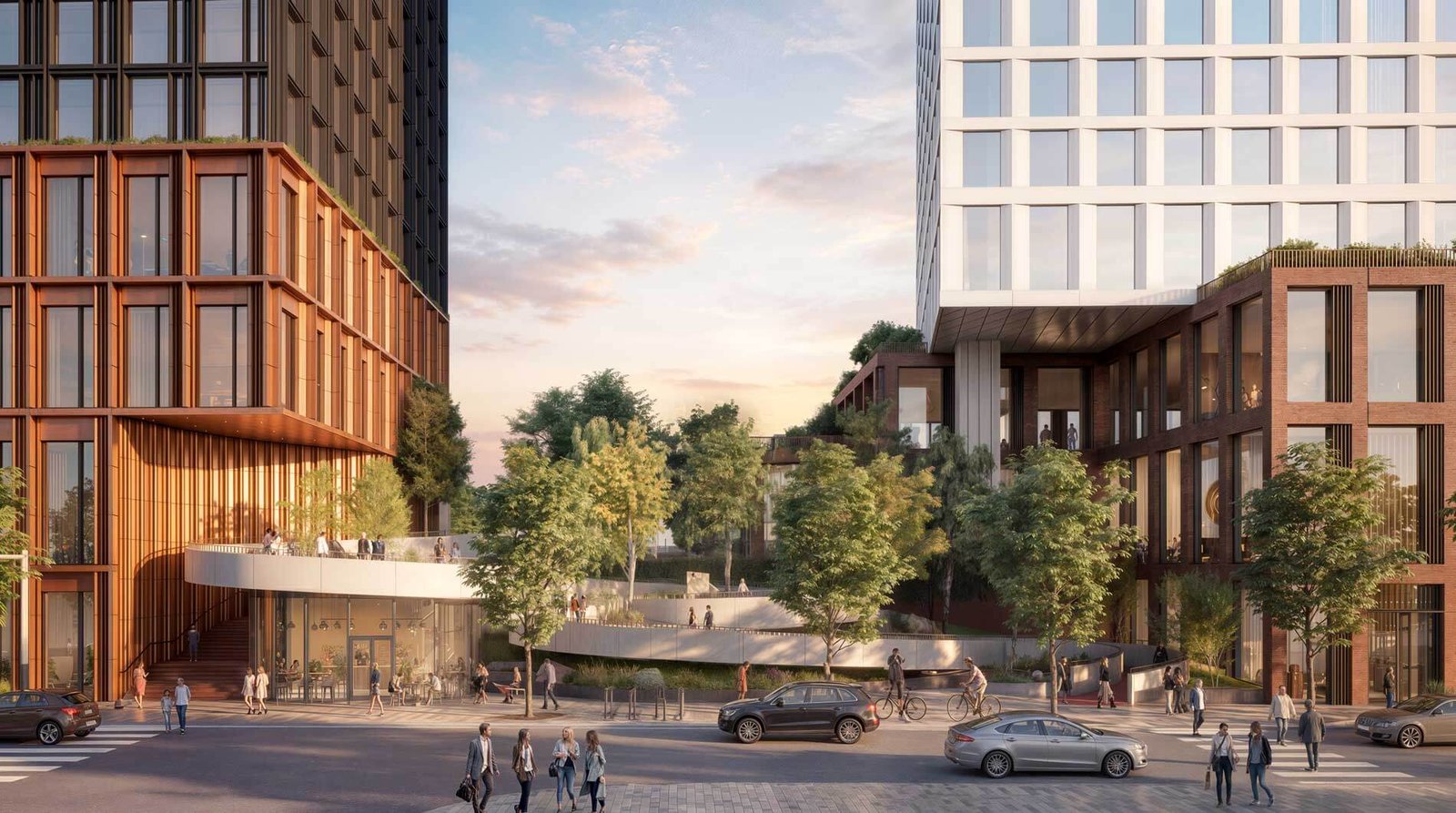
Residential and commercial buildings in Toronto Rail Yards will be expressed in a variety of materials, from brick to bronze-hued and white cladding finishes. Balconies and terraces on the buildings add to the neighborhood scale.
A sculptural stair slated to be built in between towers will connect residents from the Fashion District to a promenade overlooking the railyard.
This outdoor walkway, clad in wood, will be lined with retail space. Boxed bench seating, that doubles as planters, will line the promenade.
The project is backed by Fengate Asset Management and the LiUNA Pension Fund of Central and Eastern Canada.
Site preparation is expected to start in 2028. Construction on the deck will begin thereafter. Construction will be spread across phases to minimize impact on the surrounding area, Henning Larsen said.