
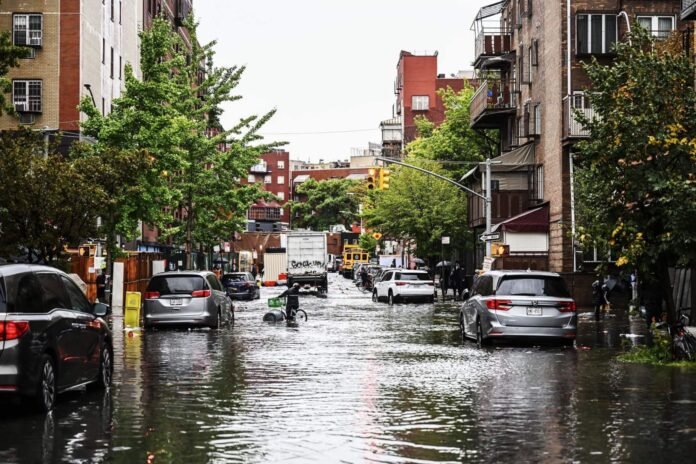

More frequent floods and more severe flooding are facts of a changing climate that have spurred new regulations and an increased focus by building owners, architects, and engineers to protect buildings and their occupants during flood events. Many flood protection strategies are at odds with the desire to create active, lively sidewalks and open, inviting building entrances and ground floors. And the accretive result of individual flood protection decisions, looked at across many buildings in a neighborhood, can have a profound impact on our shared public space.
The Design Challenge
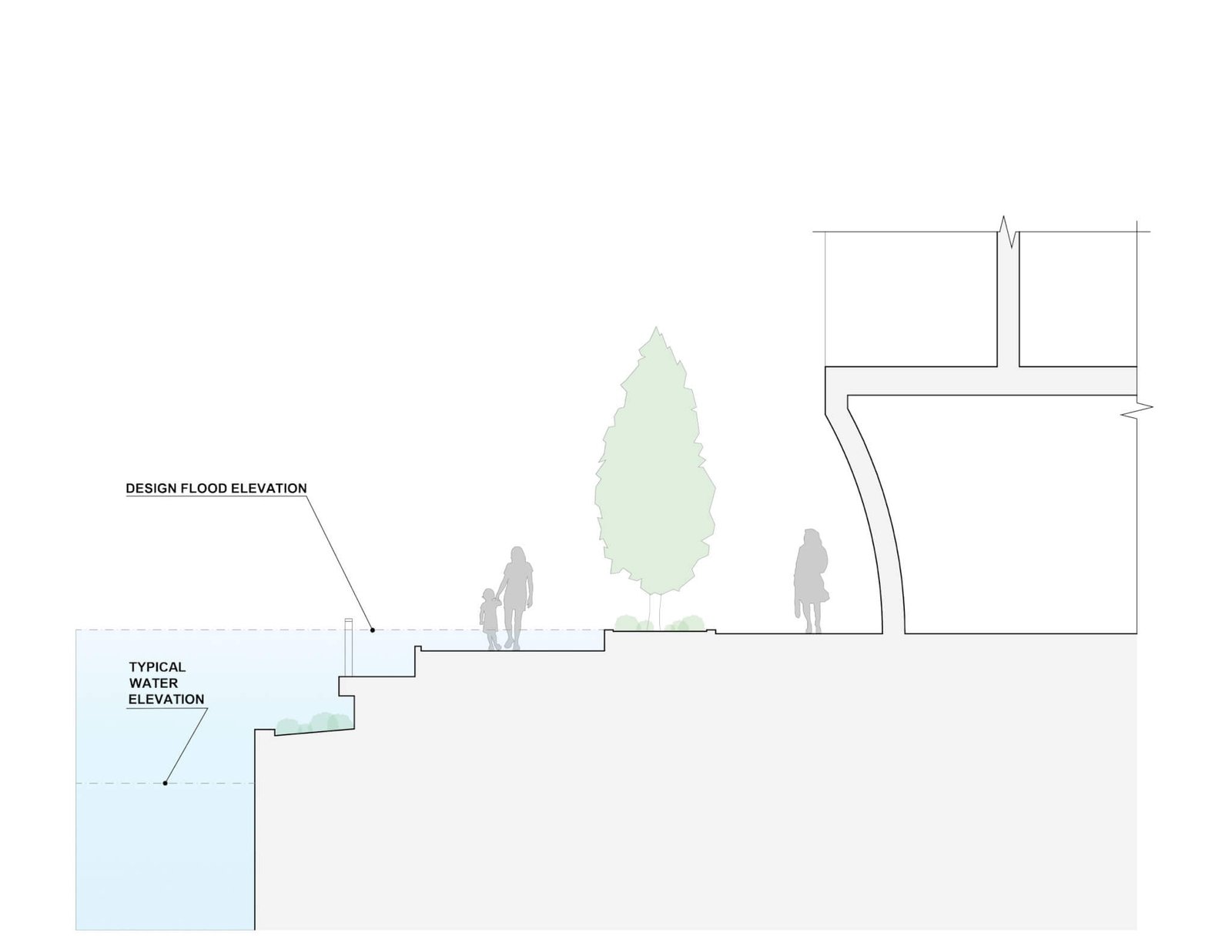
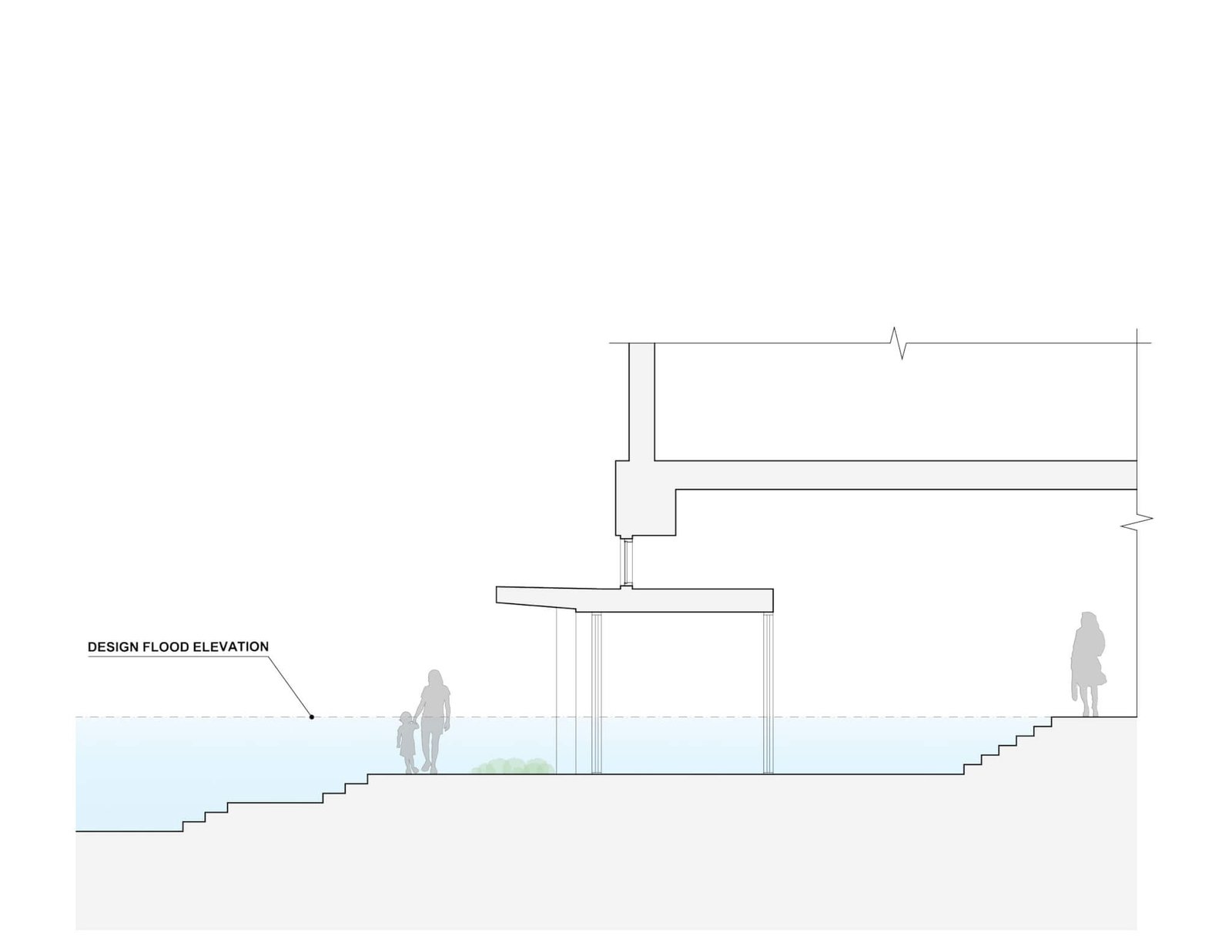
From a design-response perspective, floods fall into two categories. The first is “nuisance flooding,” which might occur several times per year during heavy storms and result in a few inches to a couple of feet of water around a building. The second is the “100-year storm,” which results in a water elevation above sea-level that is determined by FEMA. Depending on the sidewalk elevations around the building, this could mean designing flood protection systems that are anywhere from a few inches to ten feet or more in height.
For nuisance flooding, implementation of the appropriate protections is left to the building owner and its design team and typically includes simple solutions: raising the sills of retail windows on a modest curb, for example, or setting the floors of building lobbies a couple of feet above the sidewalk.
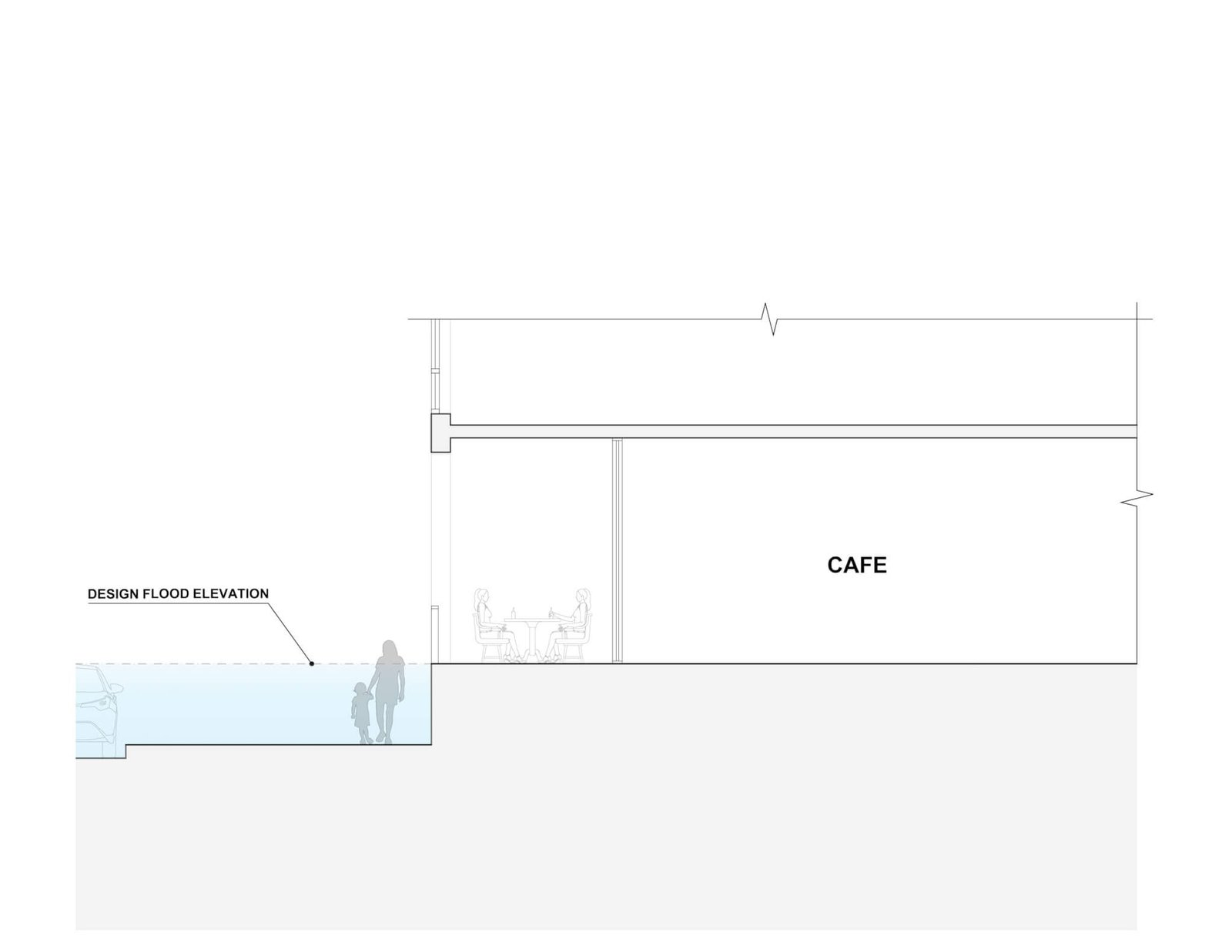
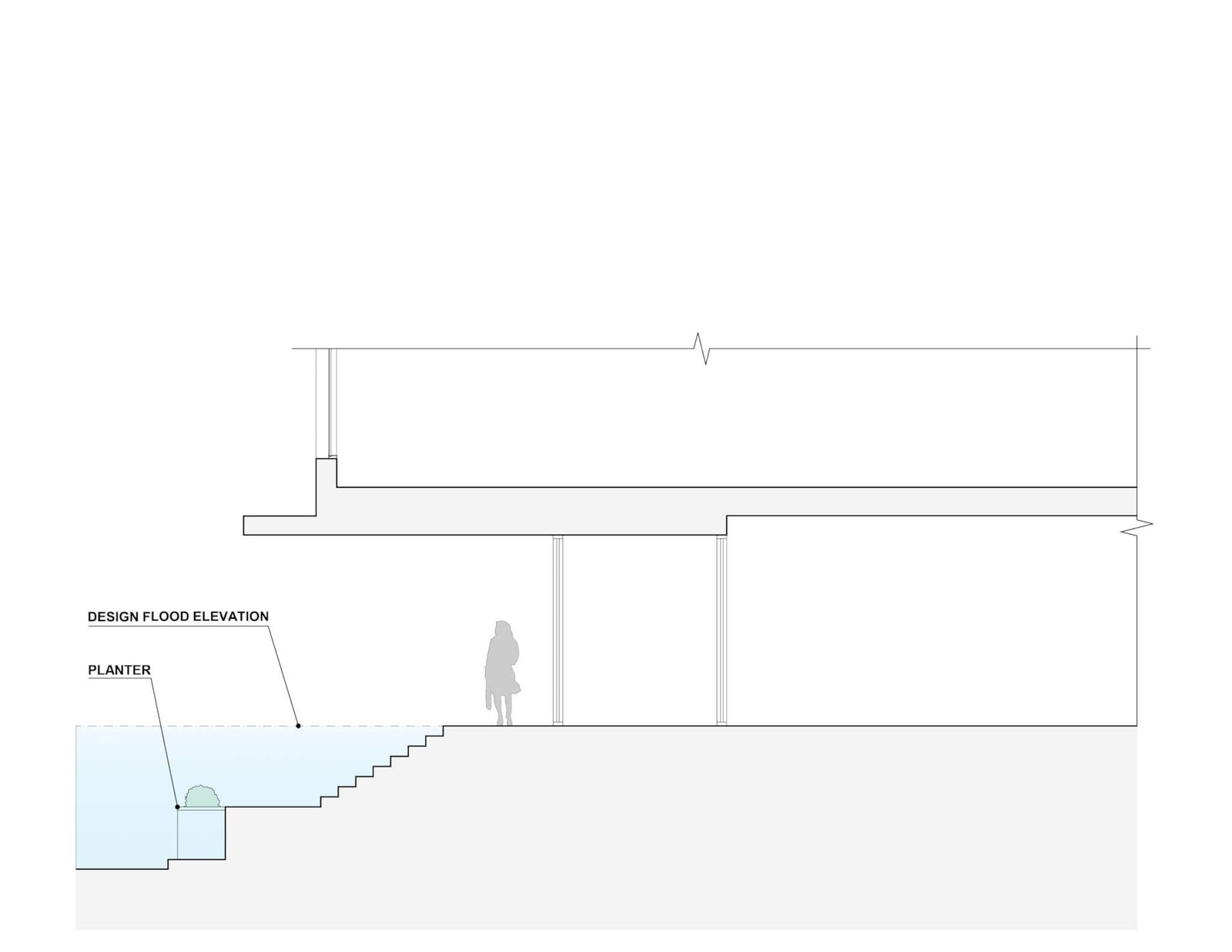
For the 100-year storm, the solutions are necessarily more robust. State and city agencies add one to five feet of freeboard on top of FEMA’s Base Flood Elevation (BFE), to arrive at a locally required Design Flood Elevation (DFE). Protection of a building to DFE is a legal requirement and subject to review by public agencies. In addition to physically protecting a building from floods, many municipal zoning regulations require certain uses (including the main lobbies of residential buildings) to have their floor elevation at or above DFE.
The challenges grow the lower the sidewalks are relative to DFE. On projects where taller flood protection is required, there is an increased likelihood that visual connections between the building and the street will be compromised, that circulation into and out of the building will become more tortured, and that the ground floor facade will become increasingly grim.
The First Big Choice
There is no one-size-fits-all “best” path to address flood protection, the specifics of each project usually dictate a hybrid solution.
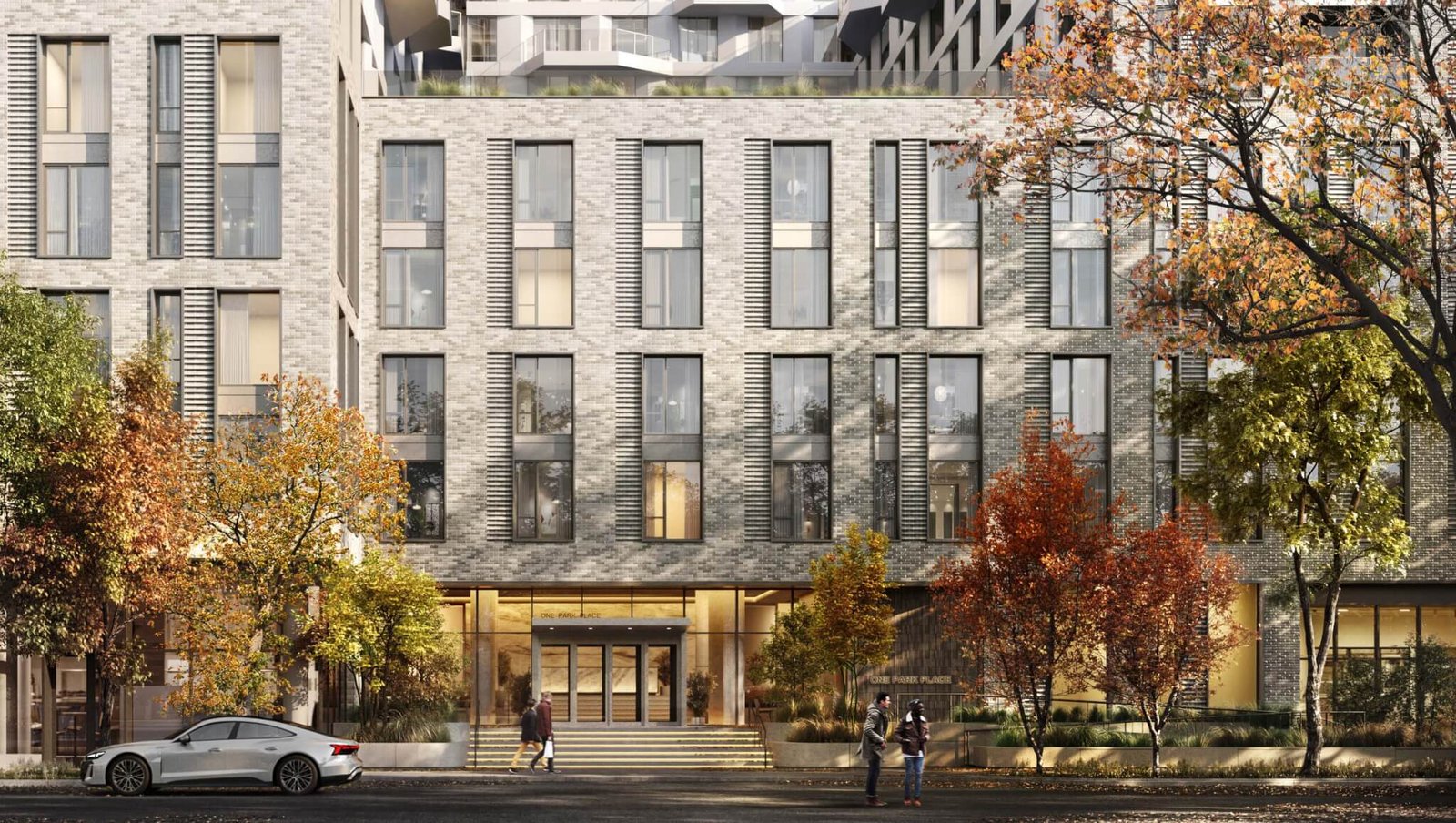
One approach is to determine whether to elevate many or all ground floor uses above DFE, and as noted above, for some uses this will be required. It’s a simple solution from a constructability perspective and relatively cost-effective, but if DFE is more than a few feet above the sidewalk, it creates several difficulties: extensive ramping will be required for ADA compliance, high interior floor slabs create an uncomfortable relationship to the street, and very high floors give the public a blank wall for its streetscape. This doesn’t mean that raised floors can’t work, but they should be designed with care.
Below are a few solutions we’ve applied to ground floors that are significantly higher than the sidewalk.
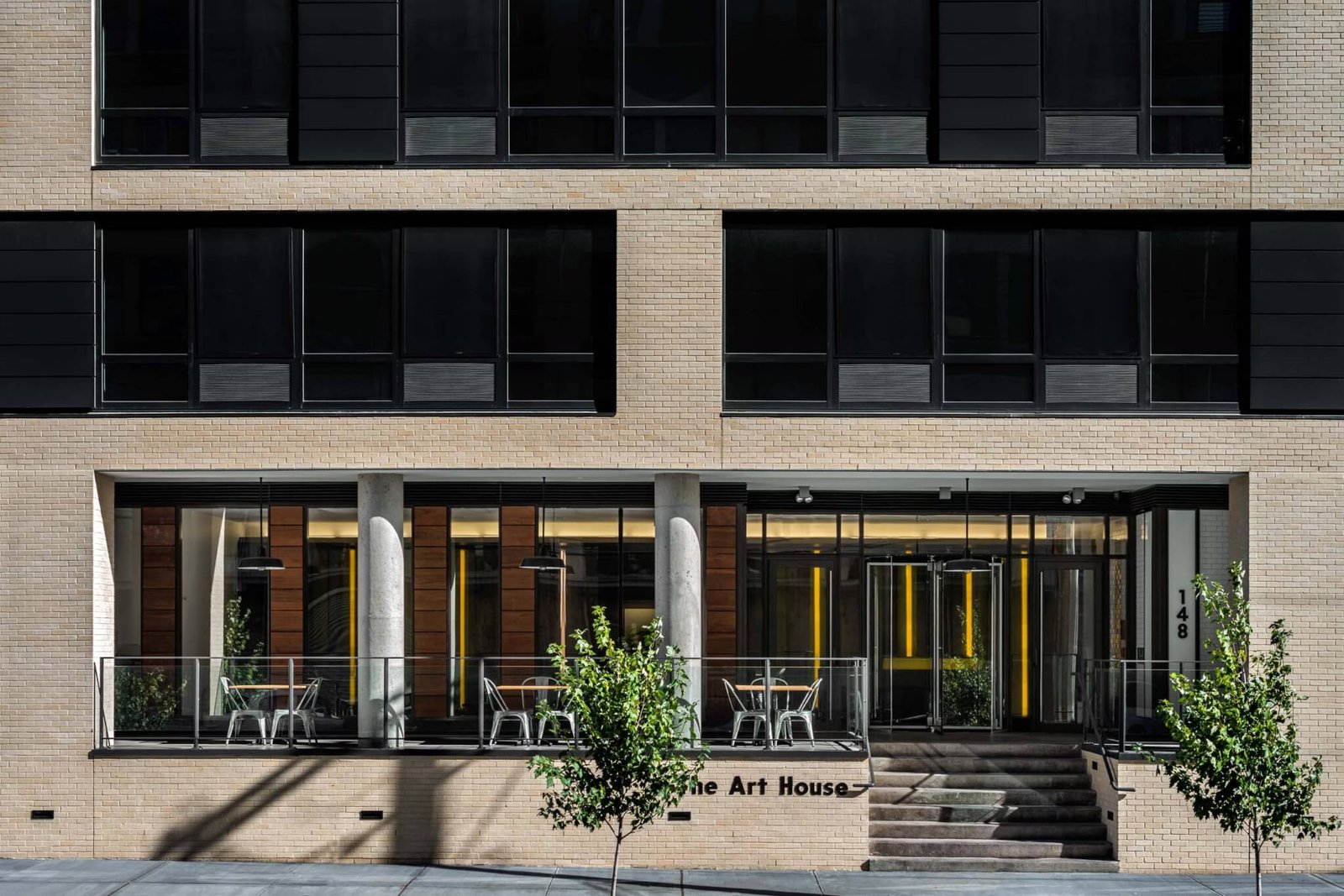
The Art House, Jersey City
Raised Loggia: The ground floor facade is pushed back from the street wall, with a public porch in front and a ramp concealed behind a consistent podium wall. A cafe tenant and outdoor seating activate the public loggia.
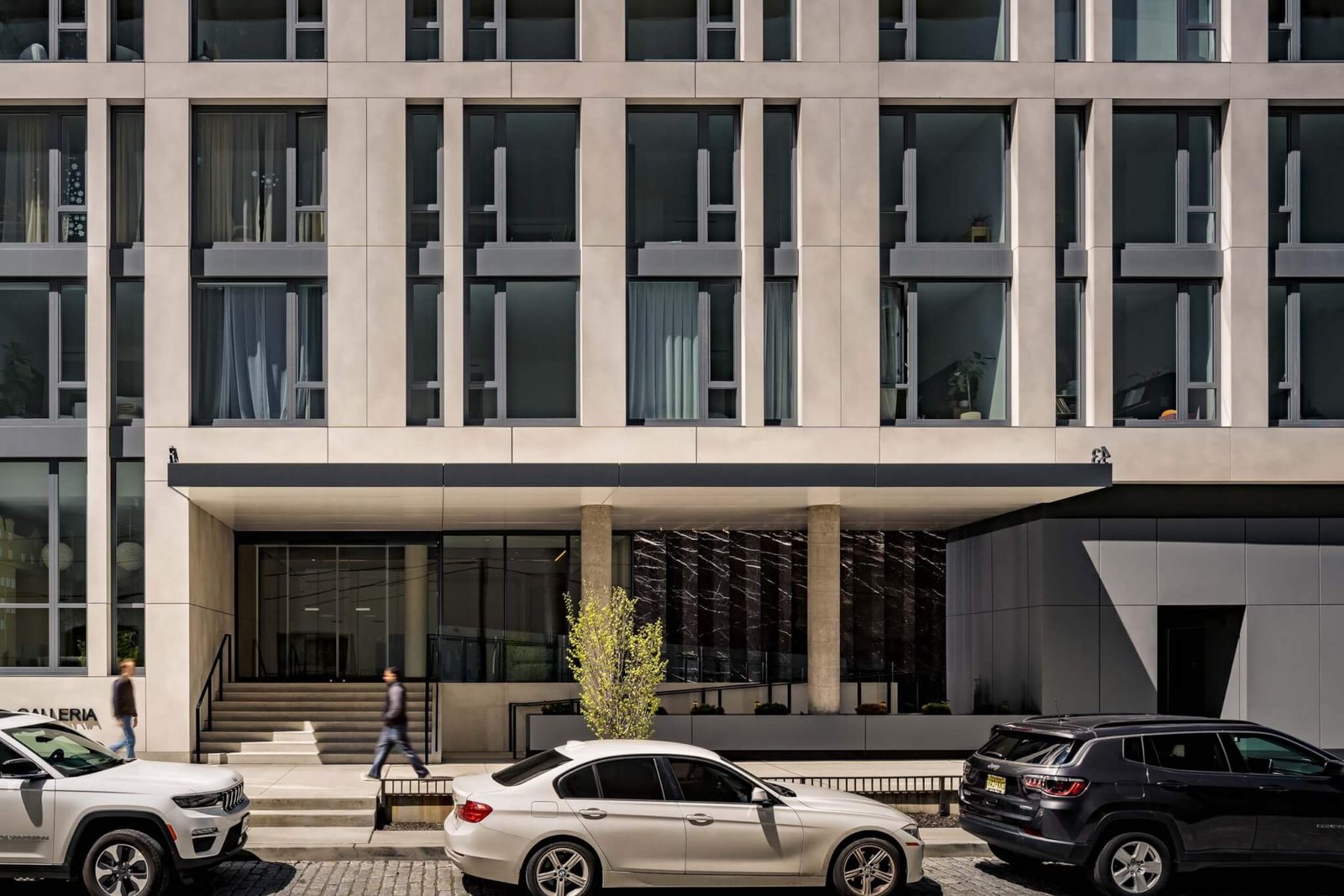
Galleria on Provost, Jersey City
Setback Entrance and Raised Sidewalk: A planting strip at the curb allowed us to elevate the sidewalk relative to the street, reducing the subsequent climb from the sidewalk to the building. The ramp is concealed behind a continuous planter.
Nevins Landing, Brooklyn
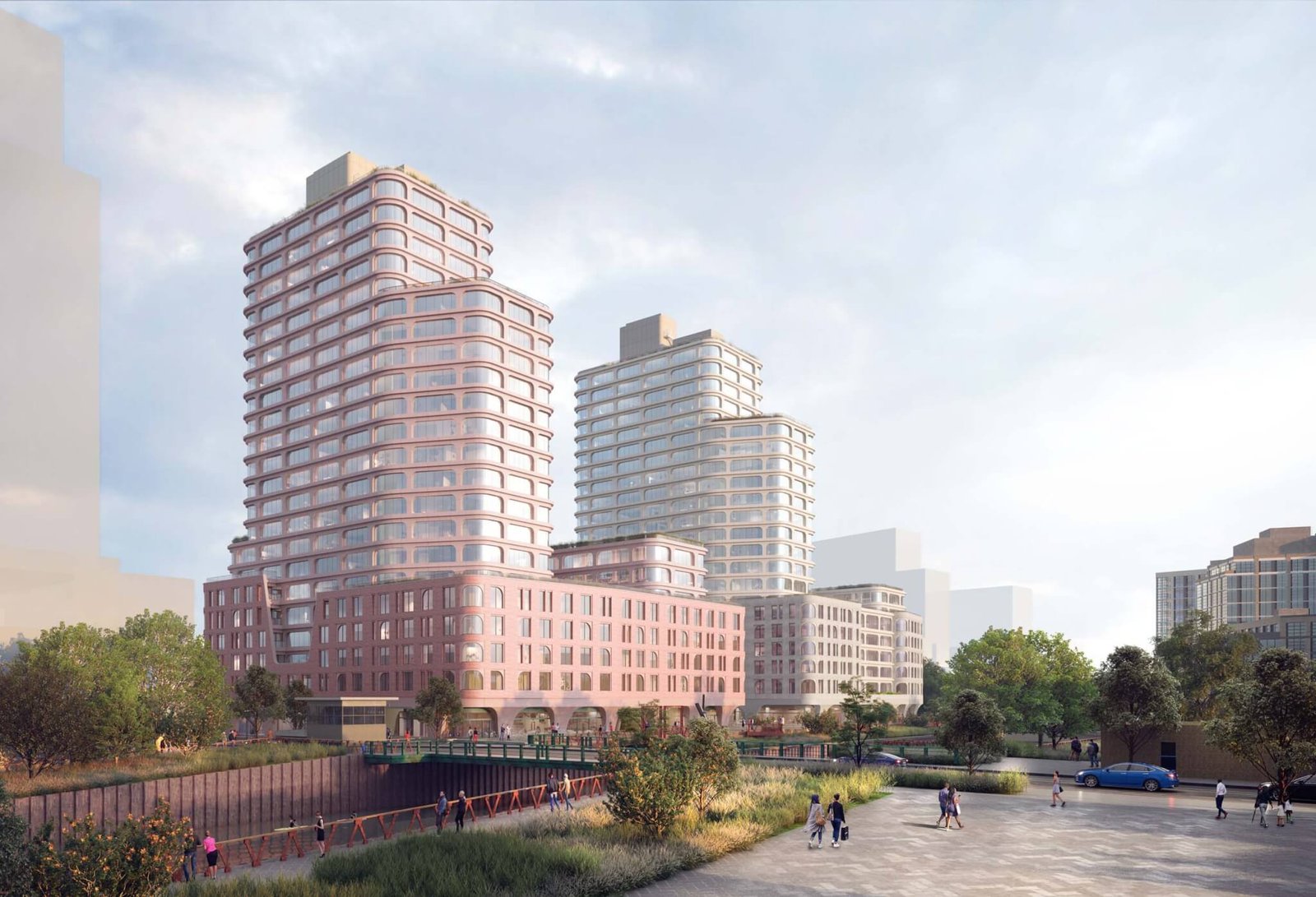
Articulated Ground Plane: Zoning mandated a large open space along the Gowanus Canal. A series of subtle shifts in the ground plane are used to soften the vertical separation between the ground floor and adjacent streets. Fogarty Finger worked with Field Operations to achieve this.
1300 Jefferson Street, Hoboken
Attenuated Entry Sequence: A portion of one street facade is pushed back to create an entrance plaza. The ramping and steps are divided between the plaza and the interior lobby, so that no one part of the sequence becomes a visual barrier.
The Other Choice
Elevating ground floor uses is seldom a complete solution, because some activities work much better directly from the sidewalk. Retail is the best example—visibility and ease of access from the street are critical to retail success and having restaurant and bar seating extend to sidewalks creates active public spaces. But there are other examples—parking and loading, mechanical, some types of storage, etc.
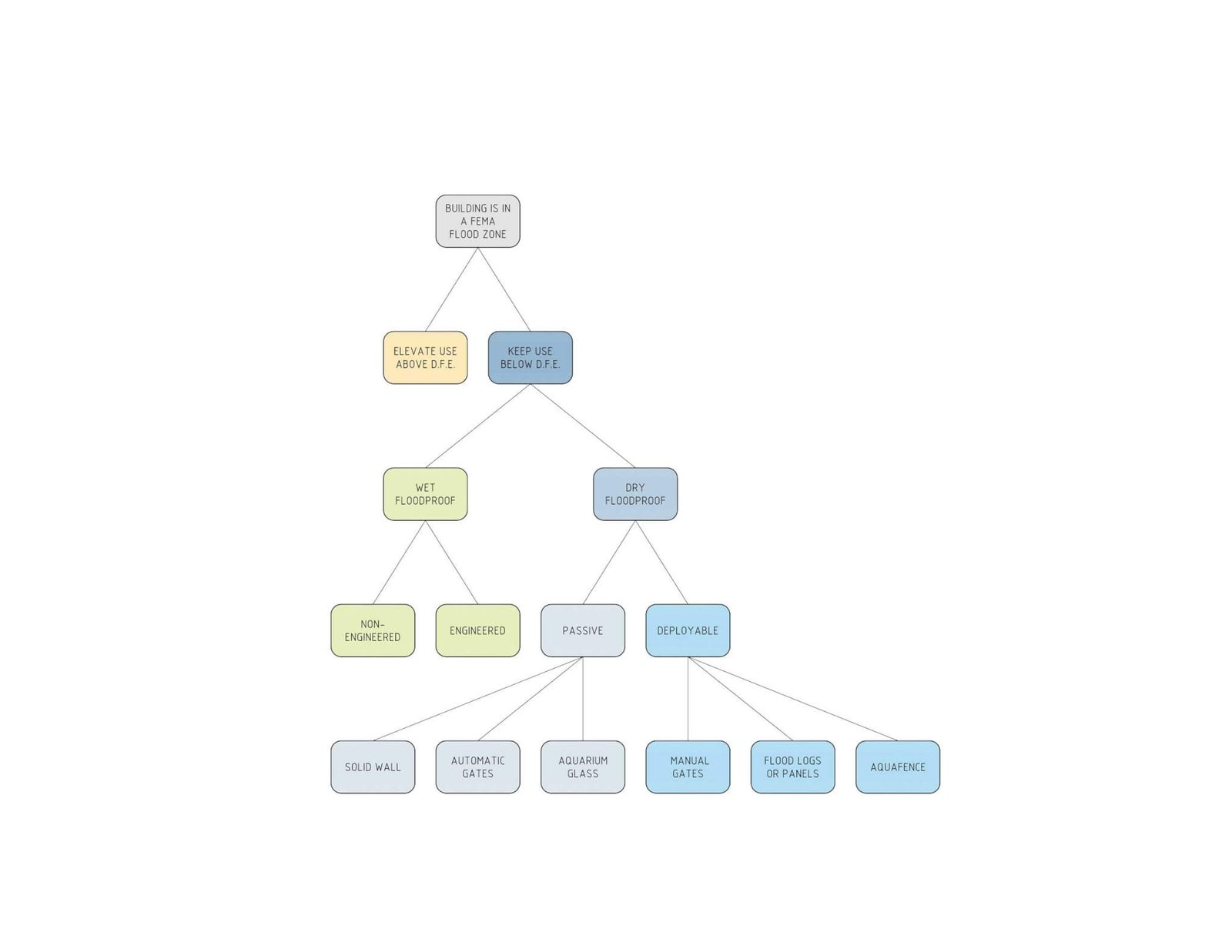
Once a slab is set below DFE, it must have a system of flood protection. A broad overview of the possibilities is shown in the chart below.
Wet Versus Dry
Wet floodproofing is just what it sounds like—openings are provided in the facade to allow the flood water to enter the building and then leave it again by gravity. It is generally less expensive than dry floodproofing and is required by some jurisdictions for certain uses (most notably parking). Commercial space is permitted to be wet-floodproofed, but retail tenants often resist it, and in any event standard wet-floodproofing is the least attractive option. Flood vents must be incorporated into the facade; the size and number of them is based on the plan area of the space(s) being wet floodproofed, and they can quickly become an eyesore.
Passive Versus Deployable
Passive floodproofing systems are those that work automatically during a flood, without human intervention. Deployable floodproofing requires trained building staff (or a professional outside party) to erect temporary barriers to the water. Deployable systems offer an excellent, low-visibility way to protect retail storefronts, but recently floodplain administrators have questioned the practicality of overly extensive deployable systems (when a hurricane is threatening a region, there might not be enough time or trained staff available for deployment). Therefore, it is increasingly common to see some combination of passive and deployable dry-floodproofing measures on projects.
The Last Step
The final set of decisions are tailored to the site, program, and budget. Solid walls are relatively cheap, but are not a viable solution for retail. Automatic or manual gates are costly, can be tricky to integrate, and may also require permanent construction in the public right-of-way.
“Aquarium glass” systems are proprietary storefront products (including glass and mullions) that are engineered and tested to resist the lateral load of floodwaters and remain watertight. The glazing assemblies become quite thick, but the most recent low-iron versions allow reasonable clarity and color rendition for retail. The biggest drawback to these systems is their eye-popping cost.
Flood logs or panels and Aquafence (a proprietary product) are the workhorses of dry-floodproofing. Receiving channels or sockets are incorporated as permanent elements of exterior building walls and/or sidewalks, ready to receive temporary panels when flood warnings are issued. The panels can then be removed as the flood waters recede. We have specified thousands of linear feet of these products over the last decade.
The vitality and livability of the public space in our flood-prone neighborhoods can be threatened by an overly functionalist approach to resiliency. Global warming is forcing a change to the way buildings interact with their surrounding streets, but that doesn’t mean we need to turn our ground floors into bunkers. Architects, in their role as stewards of the built environment, need to be informed, thoughtful, and proactive in their design and implementation of flood protection proposals.
John Zimmer is a director in the architecture studio at Fogarty Finger. A graduate of Cornell University and a practicing architect for over 30 years, he has designed various award-winning public and private sector works throughout the United States and abroad. Many recent of his projects have required flood-mitigation strategies.