
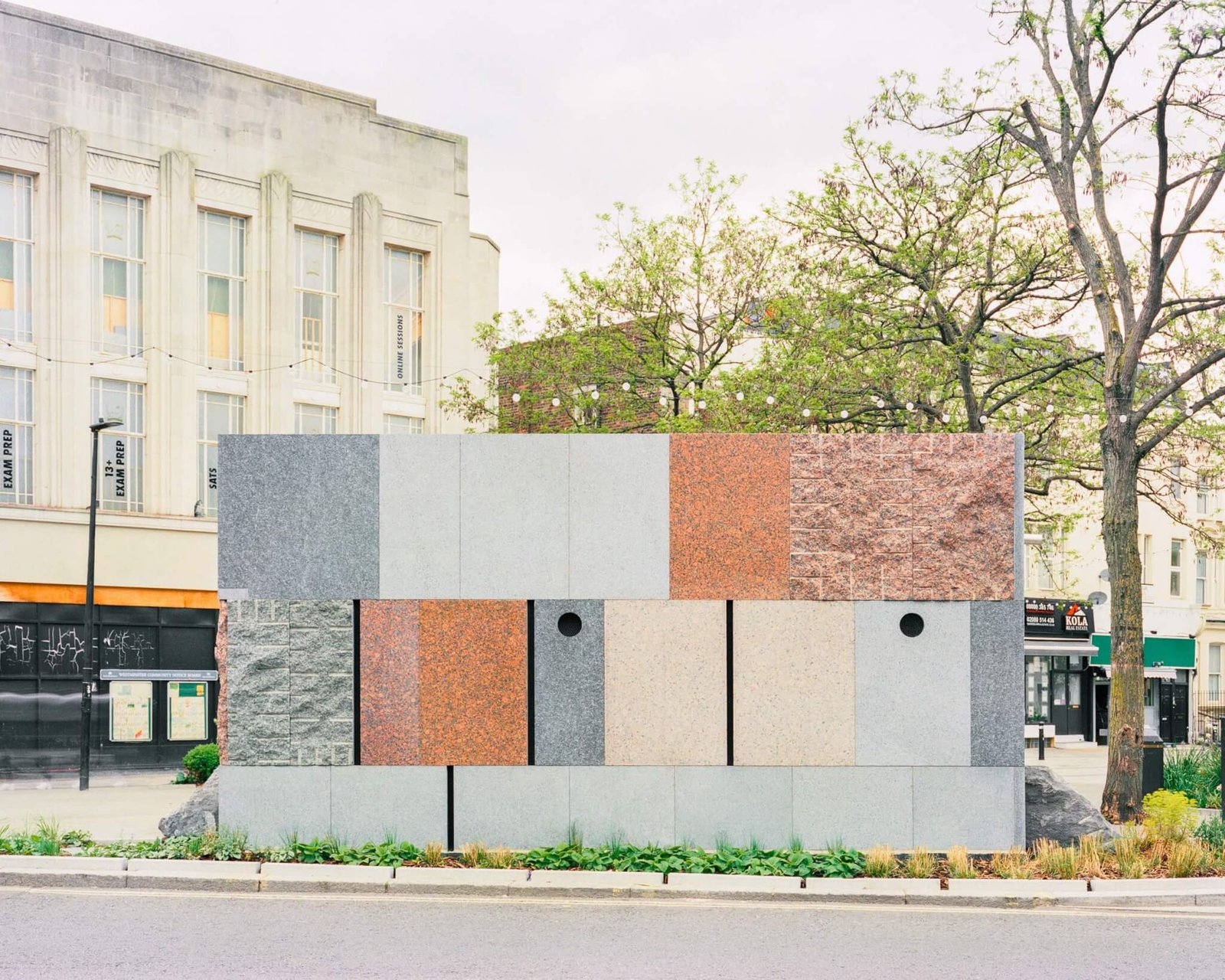

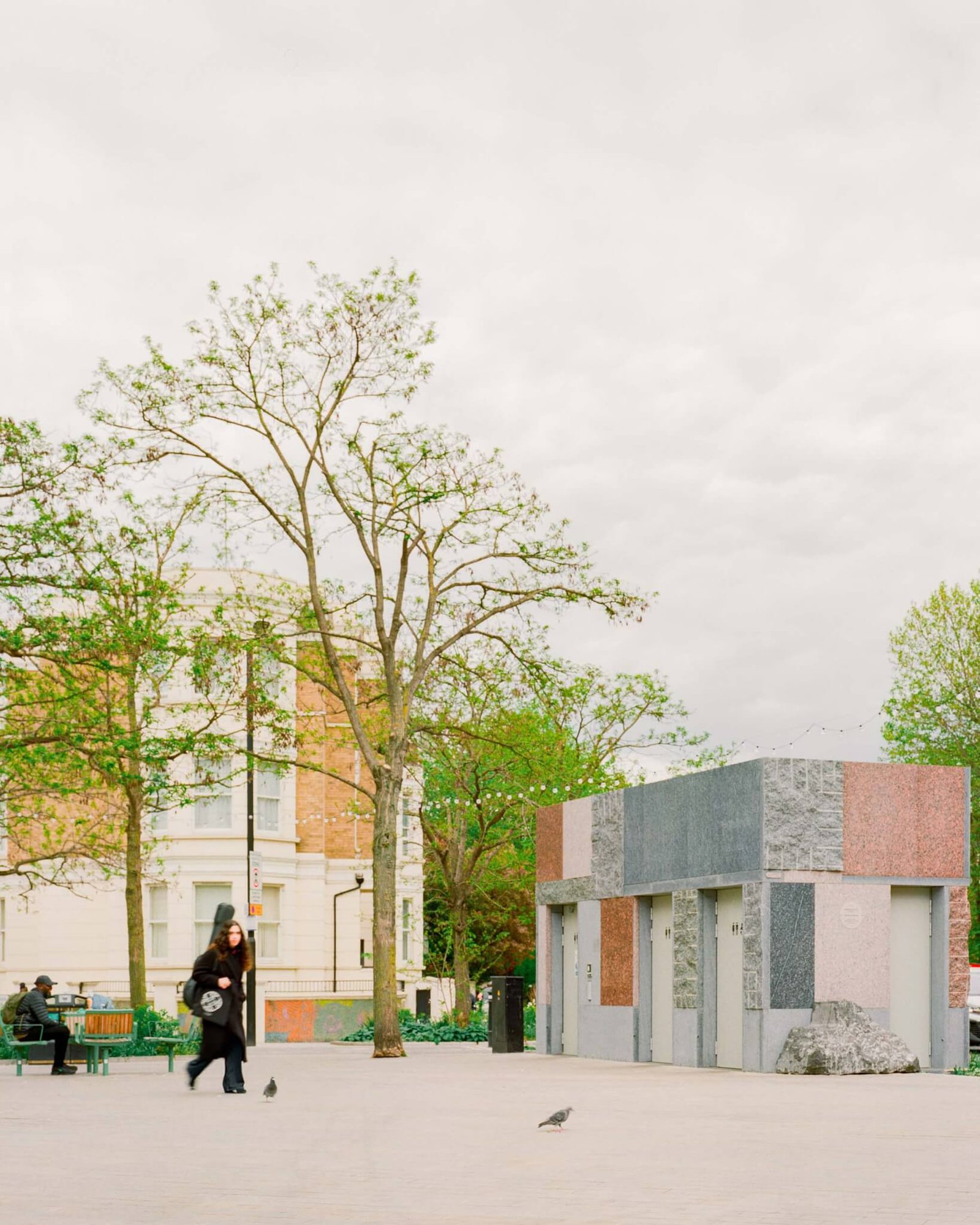
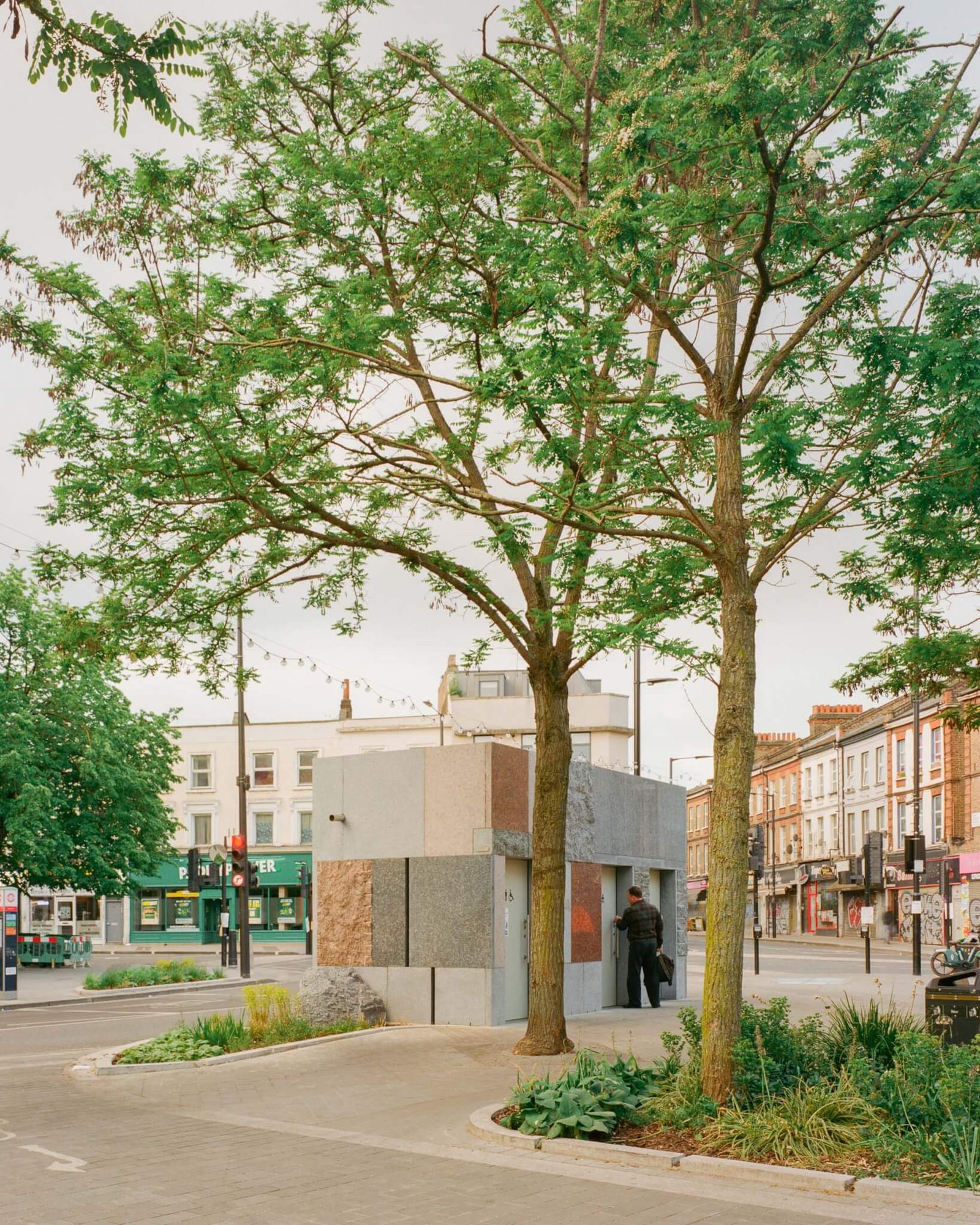
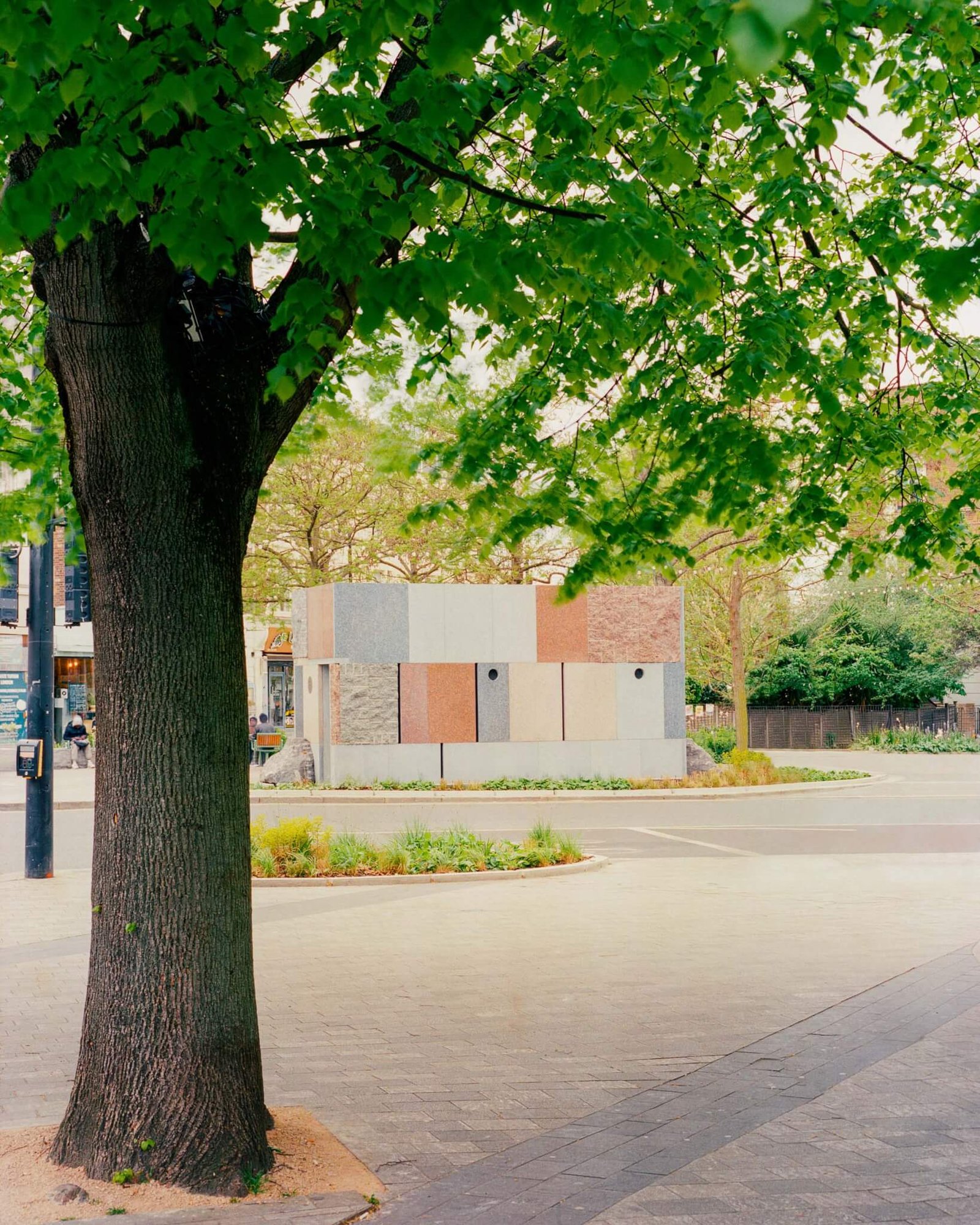
For years, a run of pink Finnish granite and Norwegian larvikite clung to a steel frame at Broadgate, in the City of London, dressing the offices of people who move money for a living. It has since come down in the world. That same stone now forms the walls of a public toilet at Maida Hill Market in North Paddington, where it encloses three loos and for the first time in its career, holds up a building rather than merely decorating one.
Studio Weave, the London firm behind the recently completed project, took cladding that once performed corporate seriousness and asked it to perform the genuinely serious task of giving a neighborhood somewhere dignified to relieve itself. The stone was barely touched on the way down the social ladder.
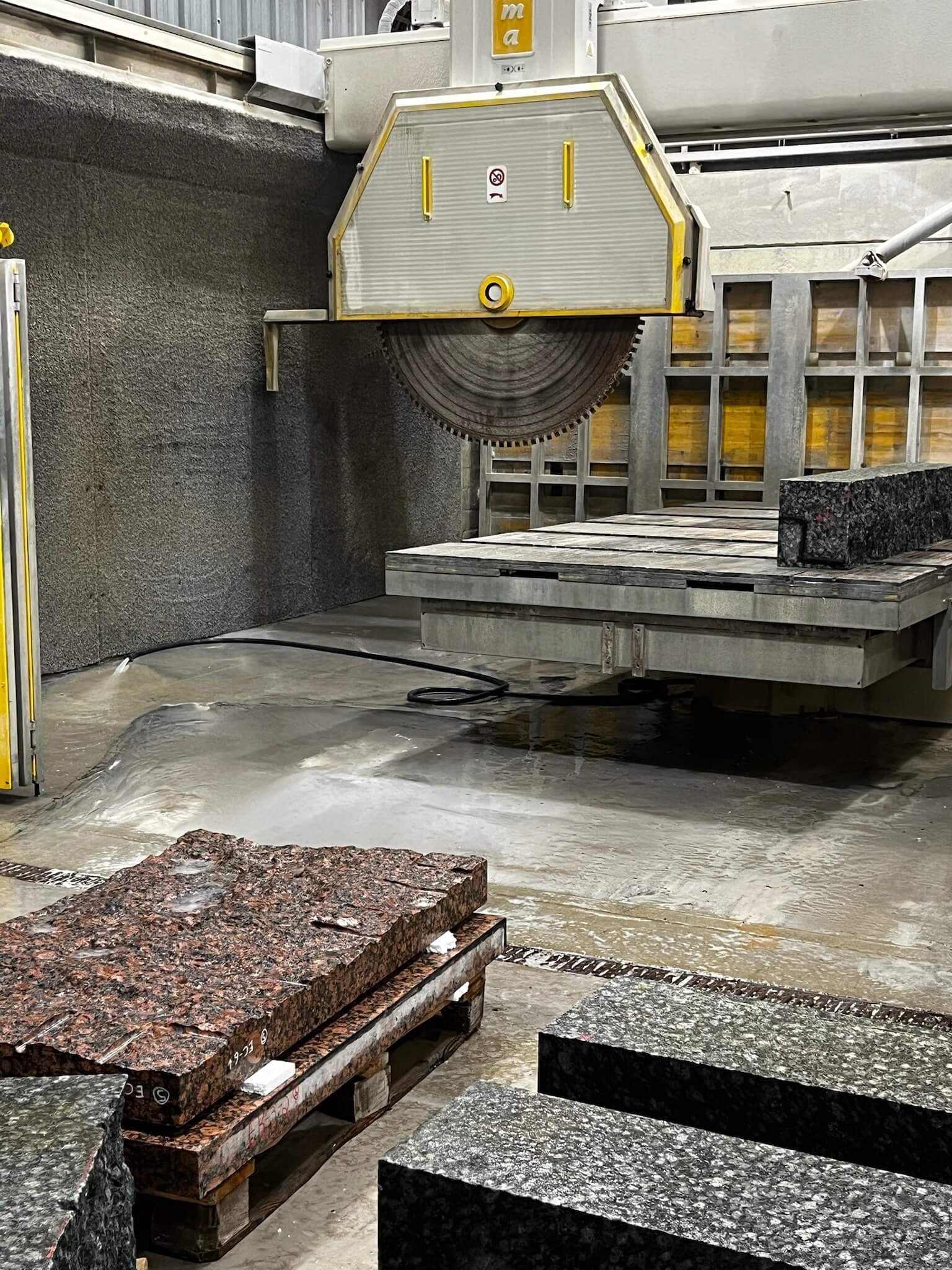
Masons kept the large slabs intact and left the cut and split faces showing, so the granite arrived at the market still wearing the marks of its own reprocessing, putting polished panels and raw edges side by side. What was a decoration on a tower is now a structure. Making the reused stone perform structurally was a complex task, developed in close collaboration with the structural engineers Webb Yates. Studio Weave calls the method “deep reuse,” the idea being that a material should carry its history with it rather than be ground down into anonymous aggregate.
Stone Masonry Company, the fabricator that recut the granite, calls it the “urban quarry”: the city as a stockpile of high-grade material already aboveground, waiting to be mined from the buildings we keep tearing down. They also built in an exit. The stone carapace stands free of the toilet unit inside it, so the plumbing can be swapped out without disturbing the walls, and the slabs are detailed to be taken apart and used a third time. The building was designed already anticipating its own afterlife.
The public toilet has been a proud thing before. The British made it a civic object at the 1851 Great Exhibition, where George Jennings installed “monkey closets” that charged a penny for a clean seat and a shoe shine and handed the euphemism we still use. Then they tucked it underground: down a flight of stairs, behind cast-iron railings, out of sight of polite society. Many of those buried Victorian loos have since been sold off and reopened as cocktail bars and basement flats.
The Maida Hill toilet comes up to street level, step-free and fully accessible, wrapped in the most conspicuous stone its designers could find. What the Victorians buried for decorum, this one puts on display, and within reach of anyone who can’t manage a staircase.
All of which would be a charming footnote if the public toilet were not a vanishing species. The British Toilet Association reckons the United Kingdom has lost around 40 percent of its public conveniences in the past decade. No British council has a statutory duty to provide a public toilet, so when budgets tighten the loo is among the first things to go. A 2019 study found one in five Britons limit how often they leave home for want of a toilet they can count on. To build a new one, and to build it well, with planting by Tom Massey and the better part of finance capital’s old wardrobe, is a small argument that the public realm still owes people something.
Westminster City Council partially funded the facility in Maida Hill, with around $1,70o,000 (£1.27 million) from the Mayor of London’s Good Growth Fund going to the surrounding landscape and public realm; the building’s total budget was not disclosed.
It is, admittedly, an absurd amount of pedigree for a place to pee. Which is precisely what makes it serious.