


In 1987, in the midst of the AIDS epidemic, Davin Wedel, then a sophomore at Tufts University, sought to promote safe sex through a condom matchbook featuring the university’s mascot, Jumbo the Elephant. As it turned out, “Wrap your trunk” was an effective messaging campaign with college students. Shortly after this success, Wedel started Global Protection Corporation, a condom manufacturing company that uses cheeky marketing to advance public health. Today, Global Protection is responsible for supplying condoms to customers such as Planned Parenthood as well as the states of Massachusetts and Rhode Island. In addition to condoms, it offers customizable novelty wrappers. For the company’s new headquarters in Lynn, Massachusetts, Studio J.Jih, with Maugel DeStefano Architects as architect of record, aptly emphasized play and performance in equal measure.
This duality informed much of the project. Located in a 45,604-square-foot former industrial creamery, the company’s office and assembly and distribution site was conceived as a series of dueling ideas occurring at the same time. Studio J.Jih founder J. Roc Jih refers to this approach as “parallel play.” The resulting design balances a series of double imperatives: workplace necessities with a language of domestic and nightclub spaces; the company’s roots in safe sex and queer activism with its penchant for humor; and a language of openings set against a series of scrims.
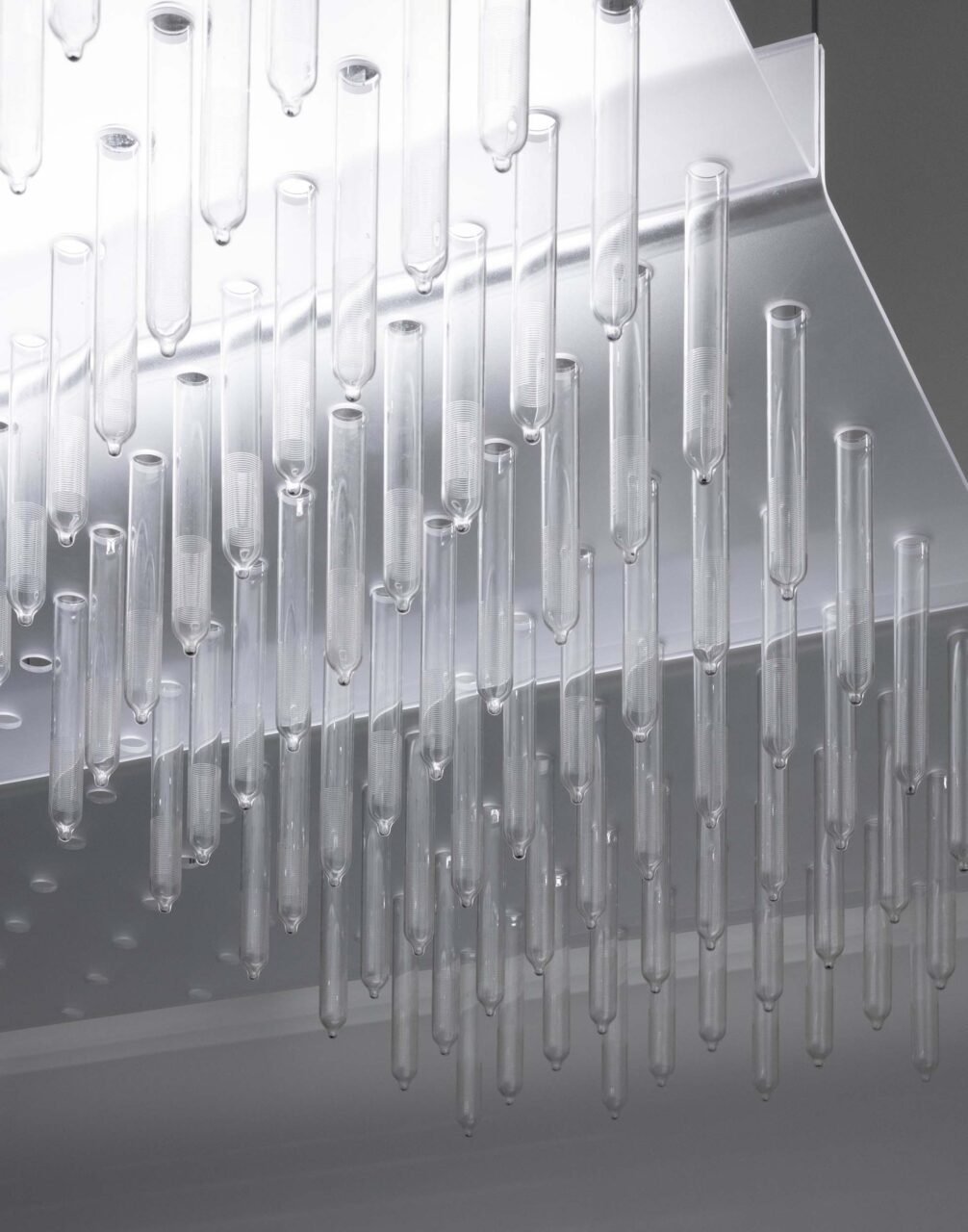
Entering the 2-story building, one is greeted with a playful sensibility—the entryway is lit by fixtures constructed of recycled glass molds that were originally used to make condoms. “They’re replaced after a certain period of time, so [Global Protection] has hundreds of these,” said Jih. The entry then leads into the warehouse, distribution room, and assembly room, all of which are housed within the first level.
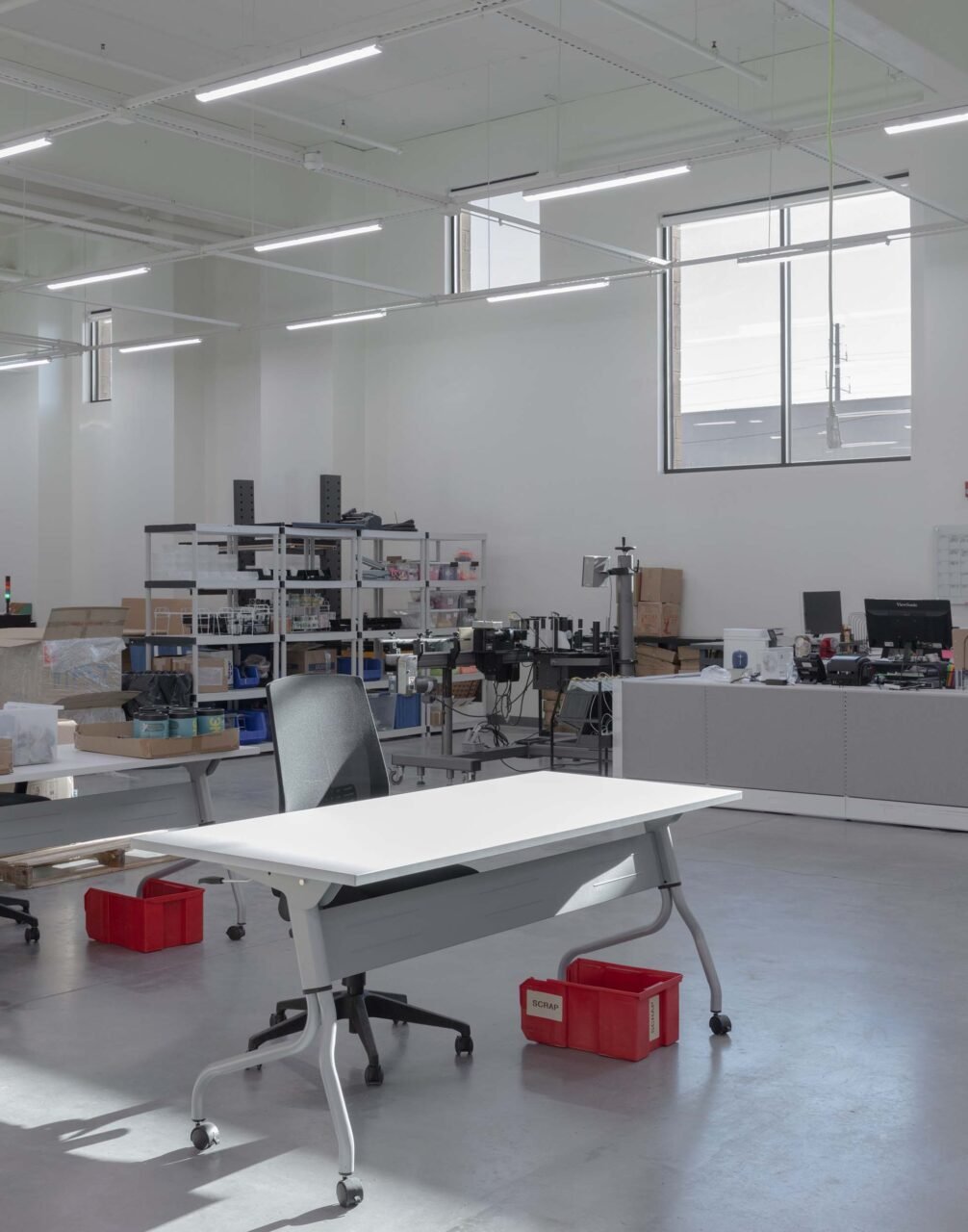
Despite the industrial programmatic needs of this level, Studio J.Jih eschews the cold, traditional feeling of the factory floor. Instead, communal rooms and views between levels help soften the divide between the first-floor factory and second-floor offices. The design also prioritizes natural light over artificial. The white-walled floor is brightened by large windows placed high up to provide security and privacy while still enabling direct sky views.
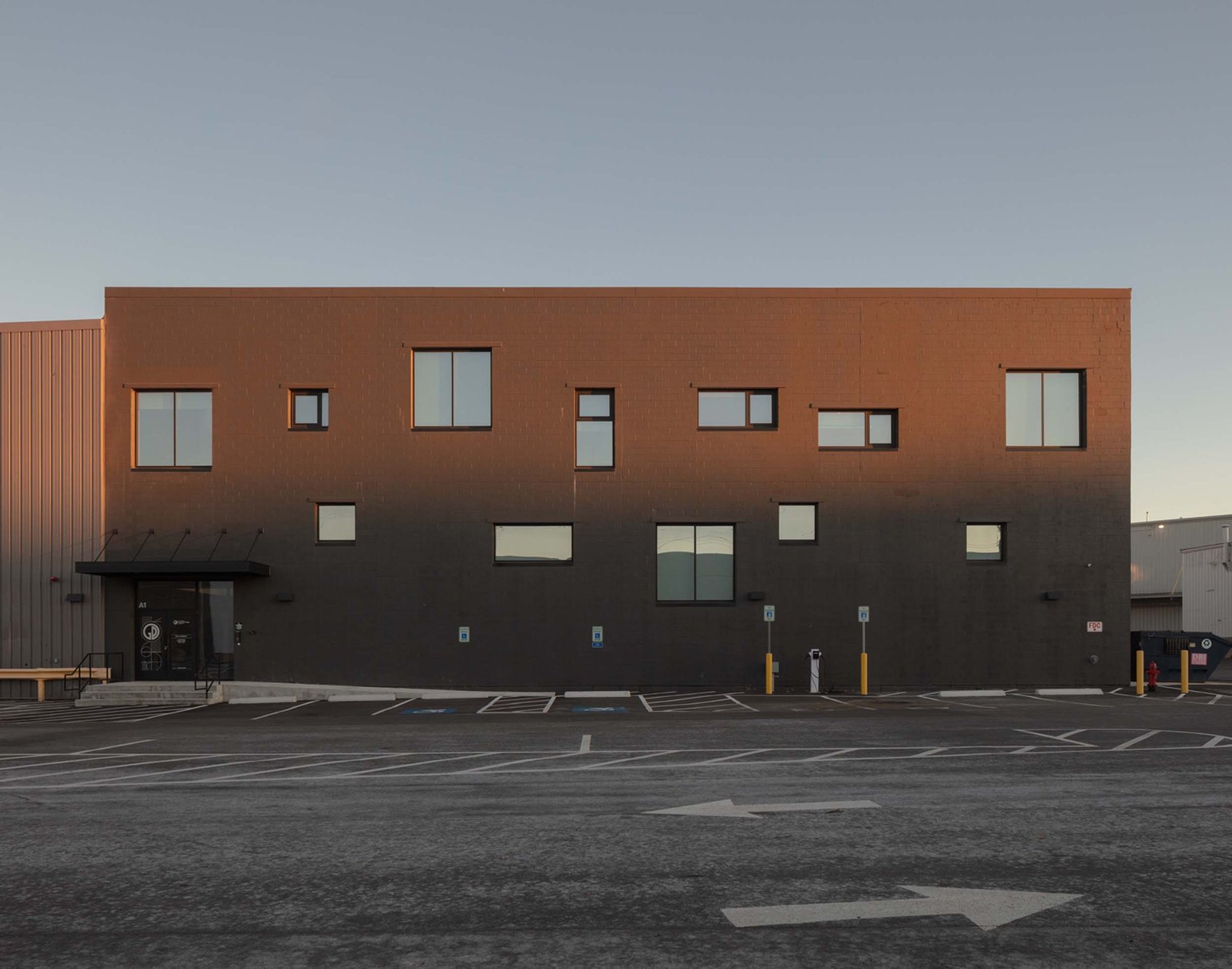
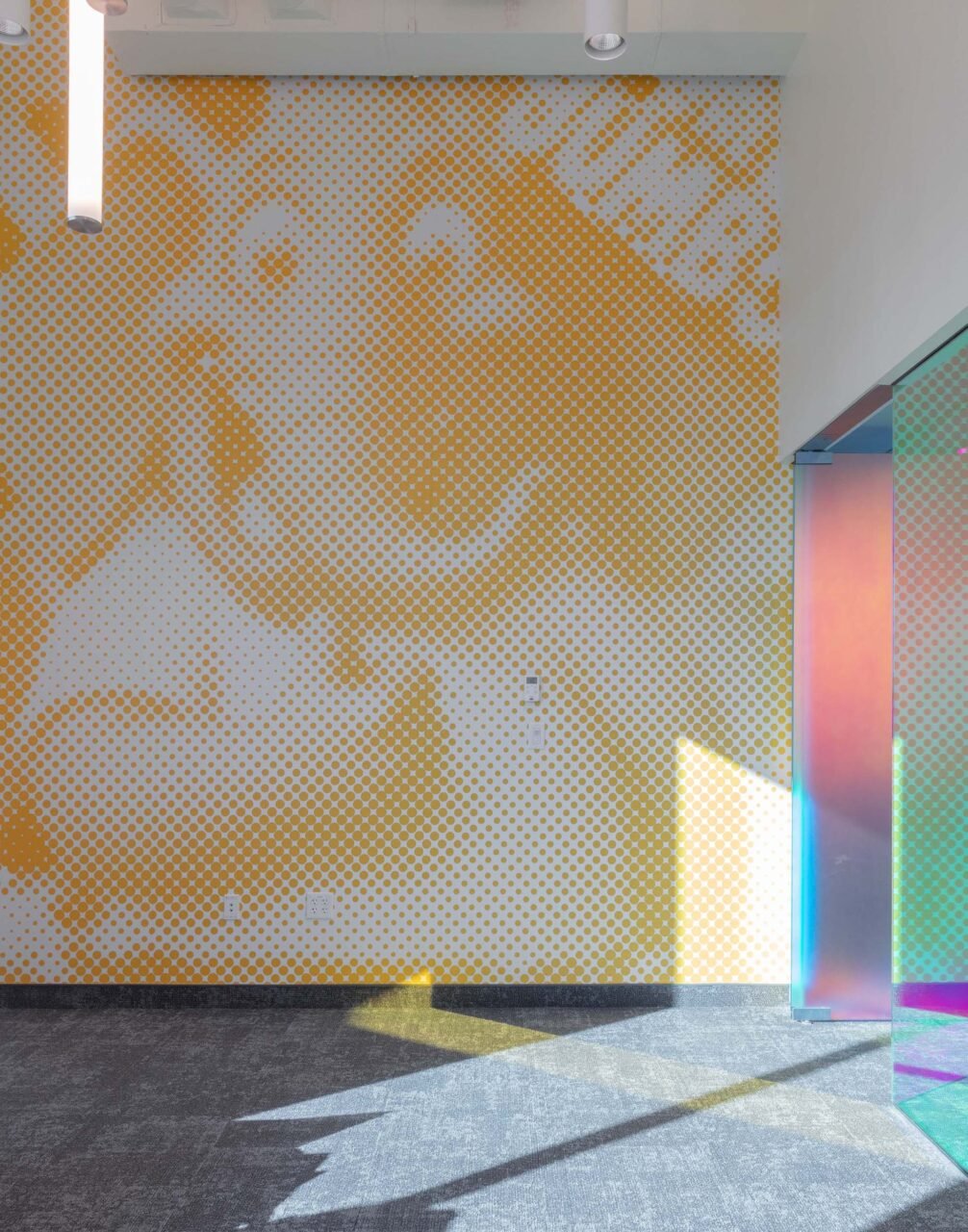
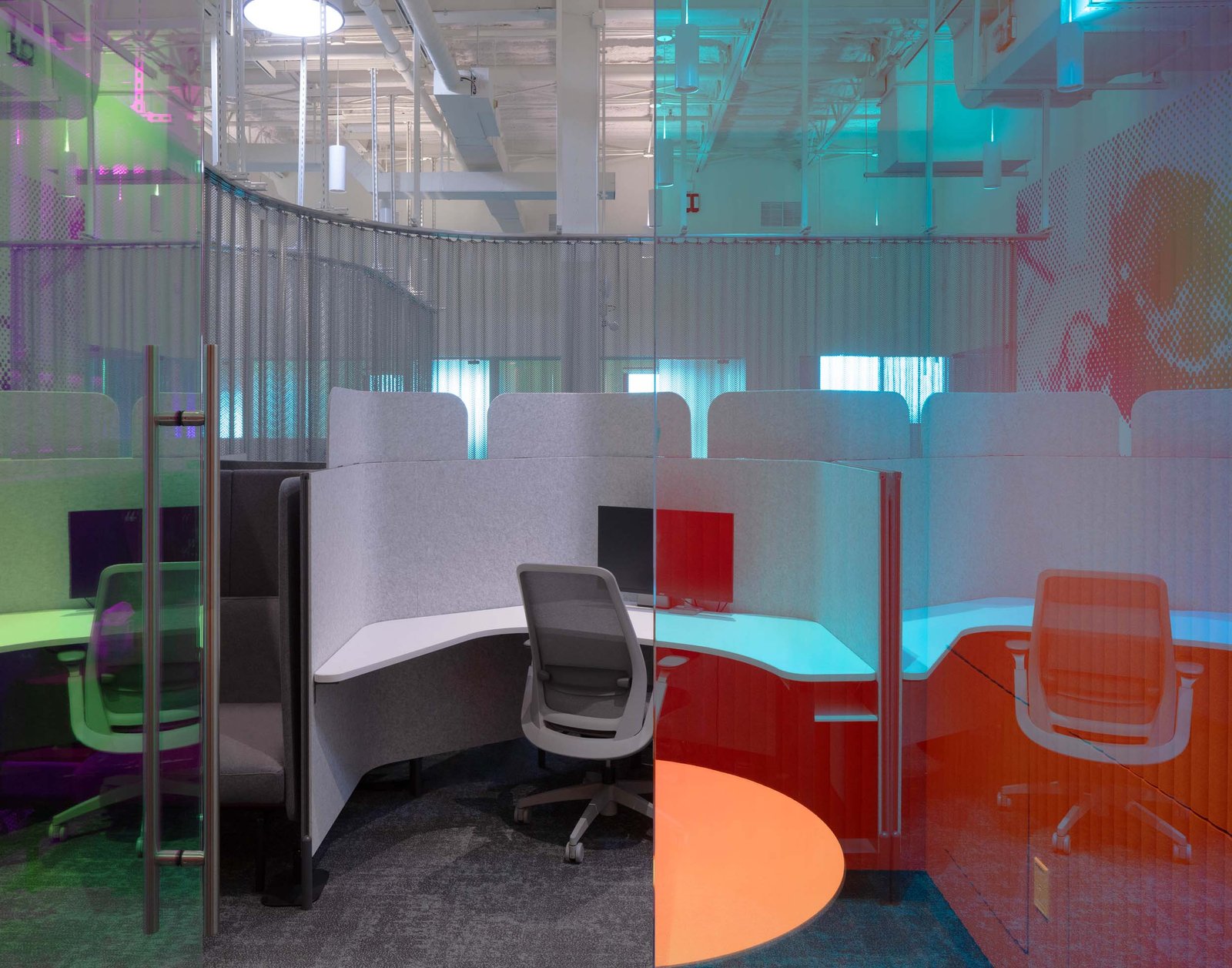
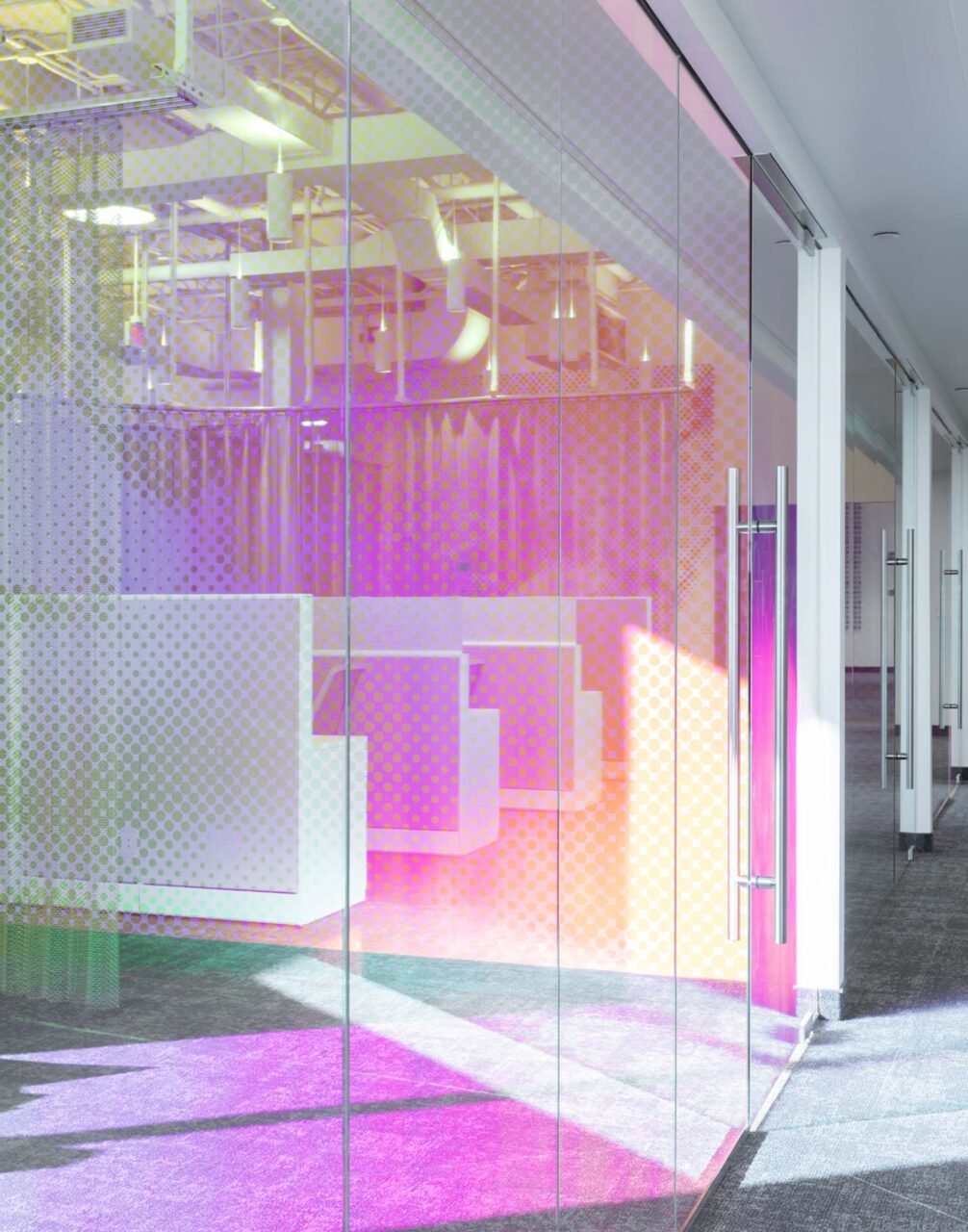
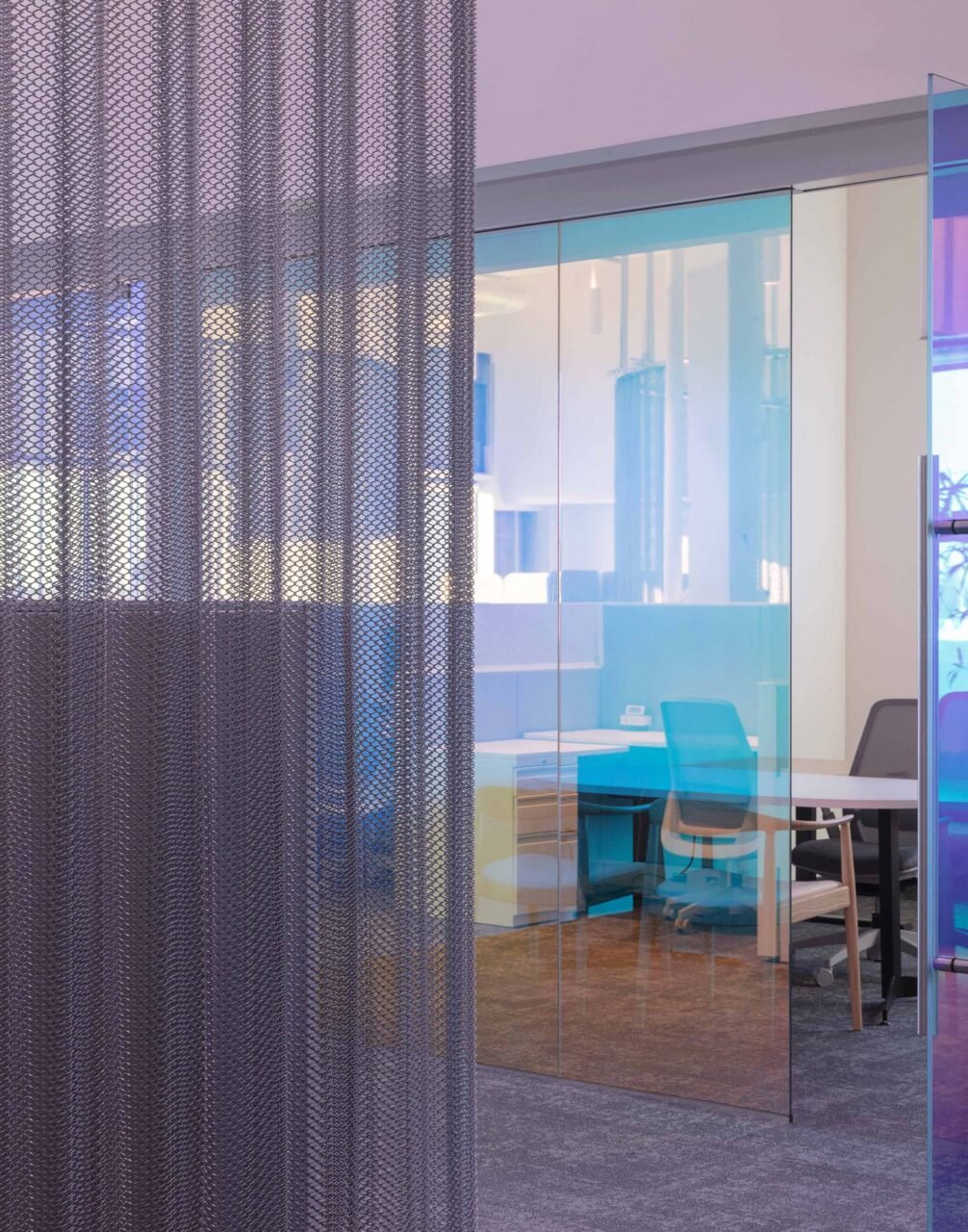
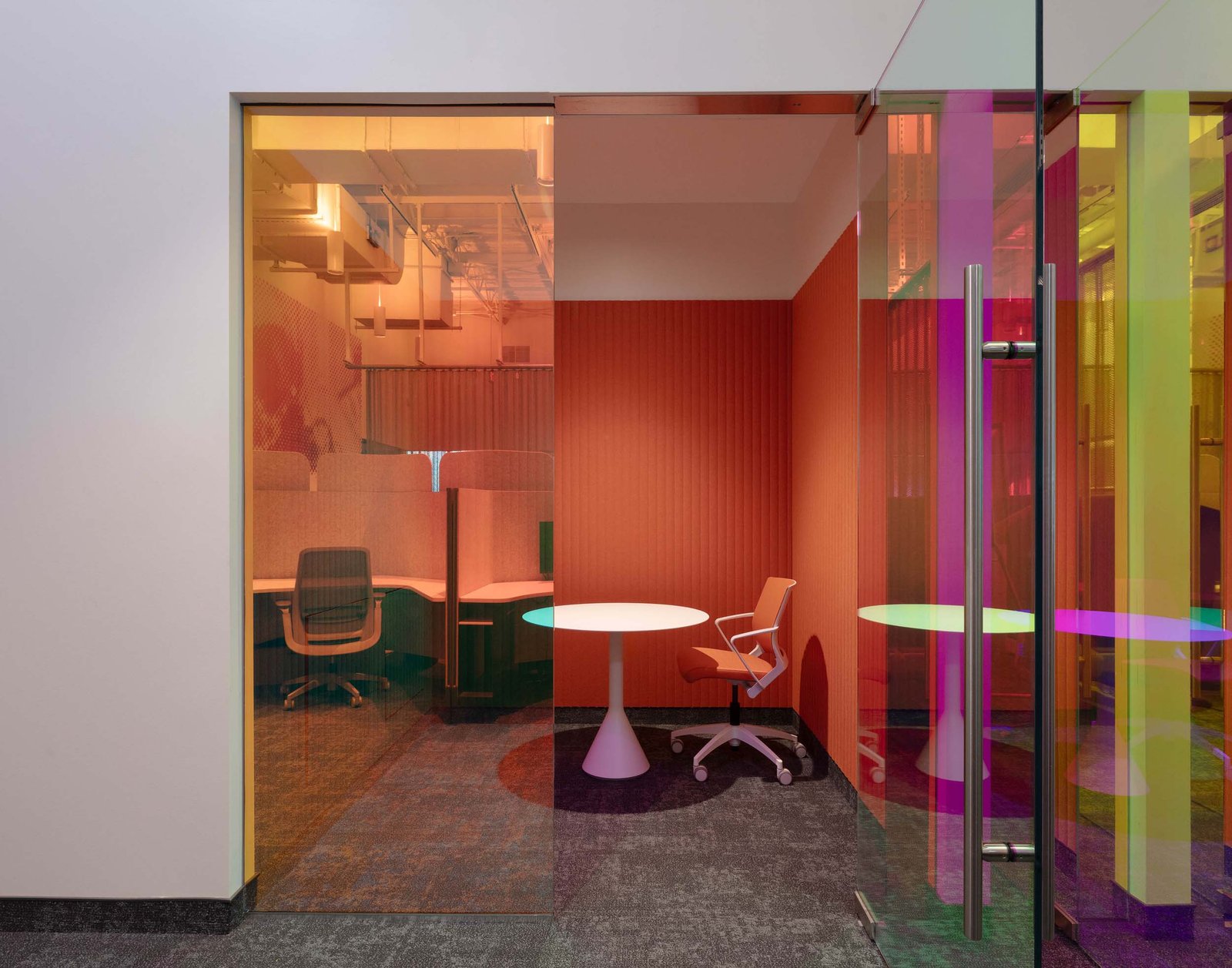
This focus continues on the second floor, where window placements are optimized to bring light into the core. Offices situated along the perimeter of the floor get their own distinct aperture—from a clerestory light to a ribbon window to a vertical aperture—creating the scattering of openings on the building’s facade. Dichroic glass partitions the offices from the rest of the space, filtering the light throughout the interior and bringing in multicolor hues. This, perhaps, is also a nod to the company’s Night Light, the first FDA-cleared glow-in-the-dark condom.
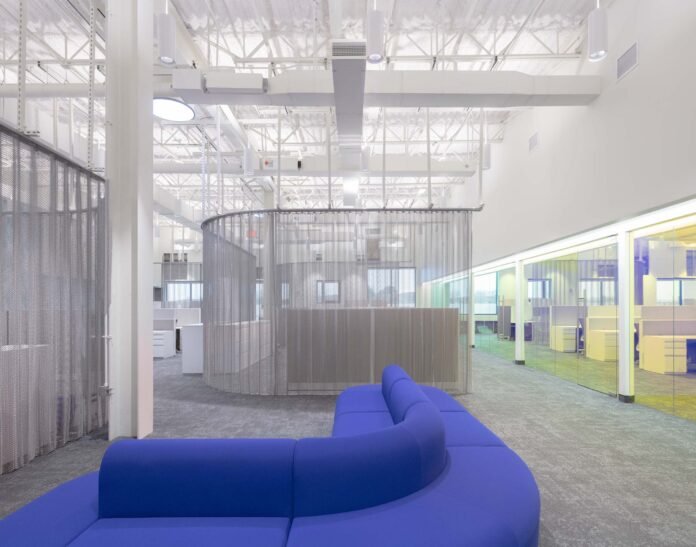
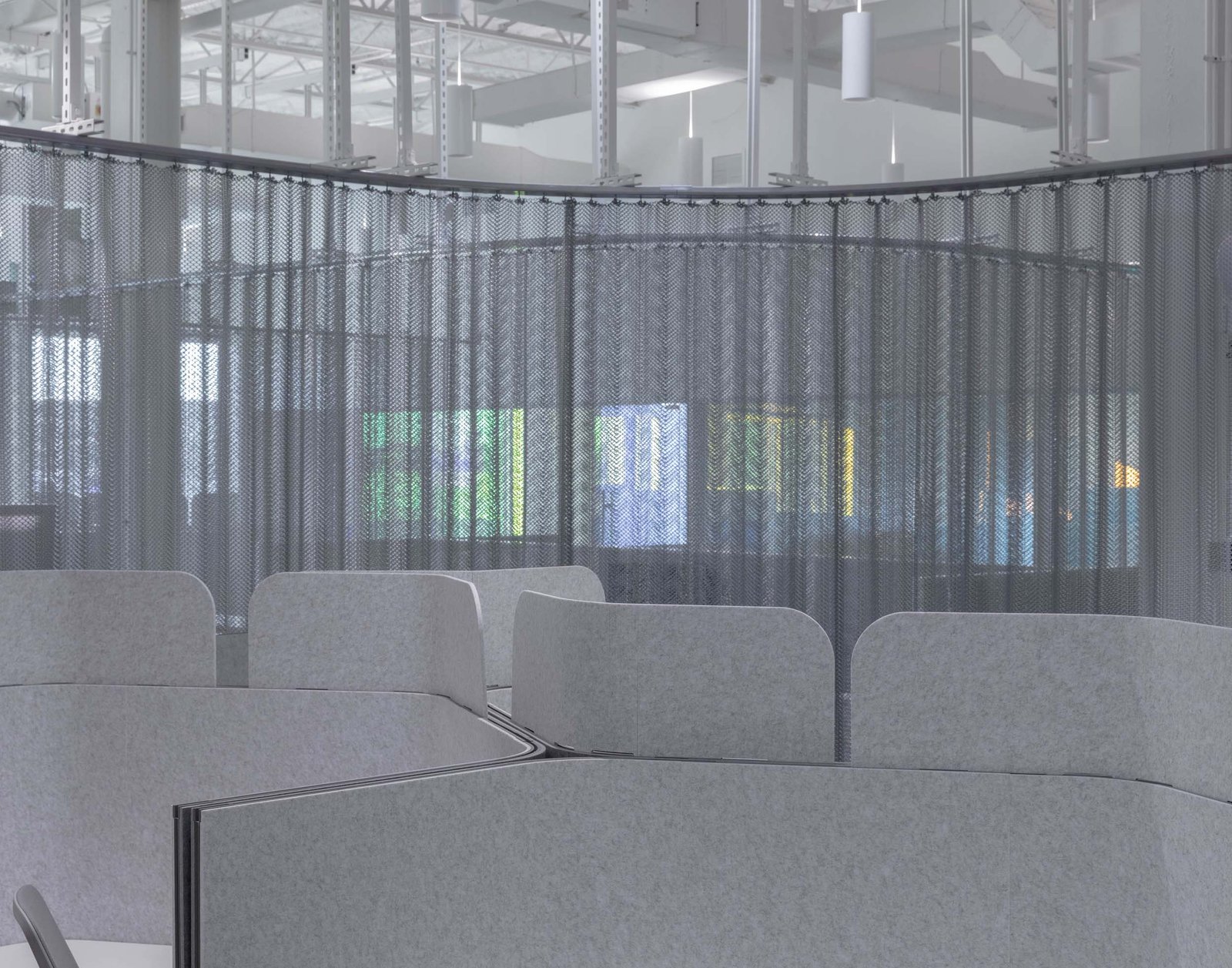
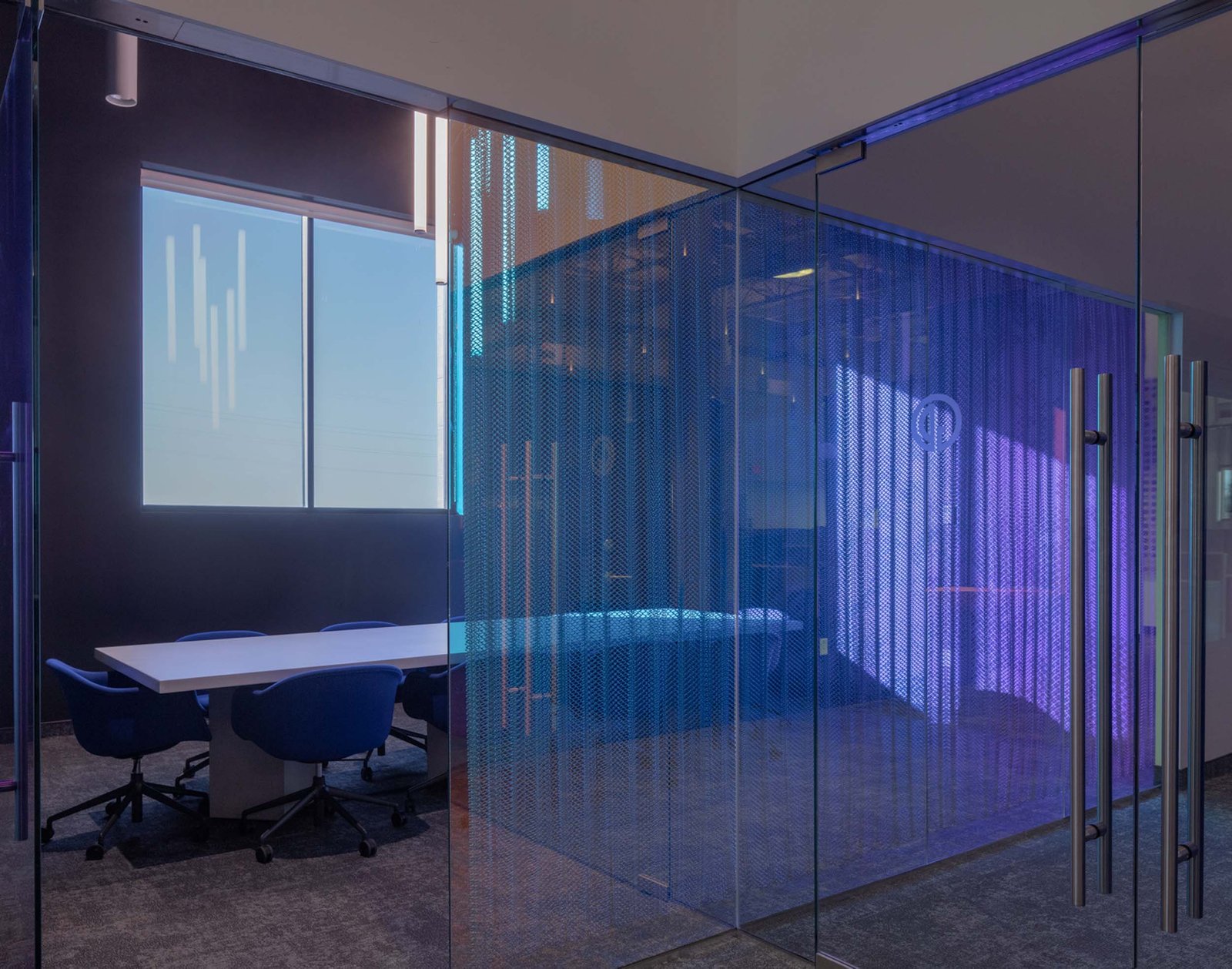
The incandescence brightens the curvy gray workstations at the center of the floor. Weaving throughout the space are a variety of types of partitions. “We use a lot of these different scrims as a flexible and adaptable response to contemporary office needs,” Jih told AN Interior. “Chain mail, acoustic curtains, sheer curtains: They’re all used to control sight, scale, sound, and privacy, and they also make a kind of oblique reference to contemporary queer club environments.” This nod falls in line with Global Protection’s own branding, which has partnered with the Tom of Finland Foundation among other artists on condoms featuring artwork and advocacy initiatives.
The scrims snake throughout the space, softening the office environment and industrial shell with texture and tactility. As the company’s spatial needs continue to evolve, the partition enables the office to shrink or grow without requiring further intervention, a move that helps architects preserve as much of the original building as possible.
But more than anything, the textile layers are on brand. They filter and add a protective layer much like the company’s own products. The partitions “are thinking about domesticity in a slightly tongue-in-cheek way,” continued Jih. “It also appeals to experimenting with materials. For instance, [Global Protection] makes this graphene condom which is the thinnest in the world, so we wanted to be a little bit irreverent with materials, too.” Chain mail, dichroic glass, and glass condom molds recycled into lighting certainly refute traditional workplace typologies.
The textural layers and openings turn the creamery into a flexible and fun office and factory, ensuring that today and tomorrow, the site will remain a perfect fit.