


Earlier this year, I joined a panel discussion hosted by AN’s editor in chief Jack Murphy and organized by Be Original Americas at the Davide Groppi showroom in New York. Titled “Illuminating Wellness,” it was a conversation about how interior lighting shapes the human experience. The topic is fundamental to our work at Studio Atomic, where we approach lighting design and architecture as integrated disciplines.
When we begin a project, we rarely begin with fixtures. Instead, we ask about the people who will use the space: Who are they? How do they wake up, move, unwind? What does comfort look like at 7:00 a.m., 1:00 p.m., or 10:00 p.m.? Our approach to the project is to create interior scenes. Through deciding where and how to add (or subtract) visual attention through the lighting selected and coordinated to be installed within the interior, we add a new shape to the space.
Inevitably, one of our main fields of operation—our canvas—is the ceiling. We often think about walls or floors, but in most cases the ceiling is our main focus. We ask: What it can hold, what it can hide, and what it quietly reveals.
During the panel conversation, I referred to “ninja lights” as my favorite type of fixture. It sounds playful, maybe even irreverent as a term, but it’s also incredibly precise.
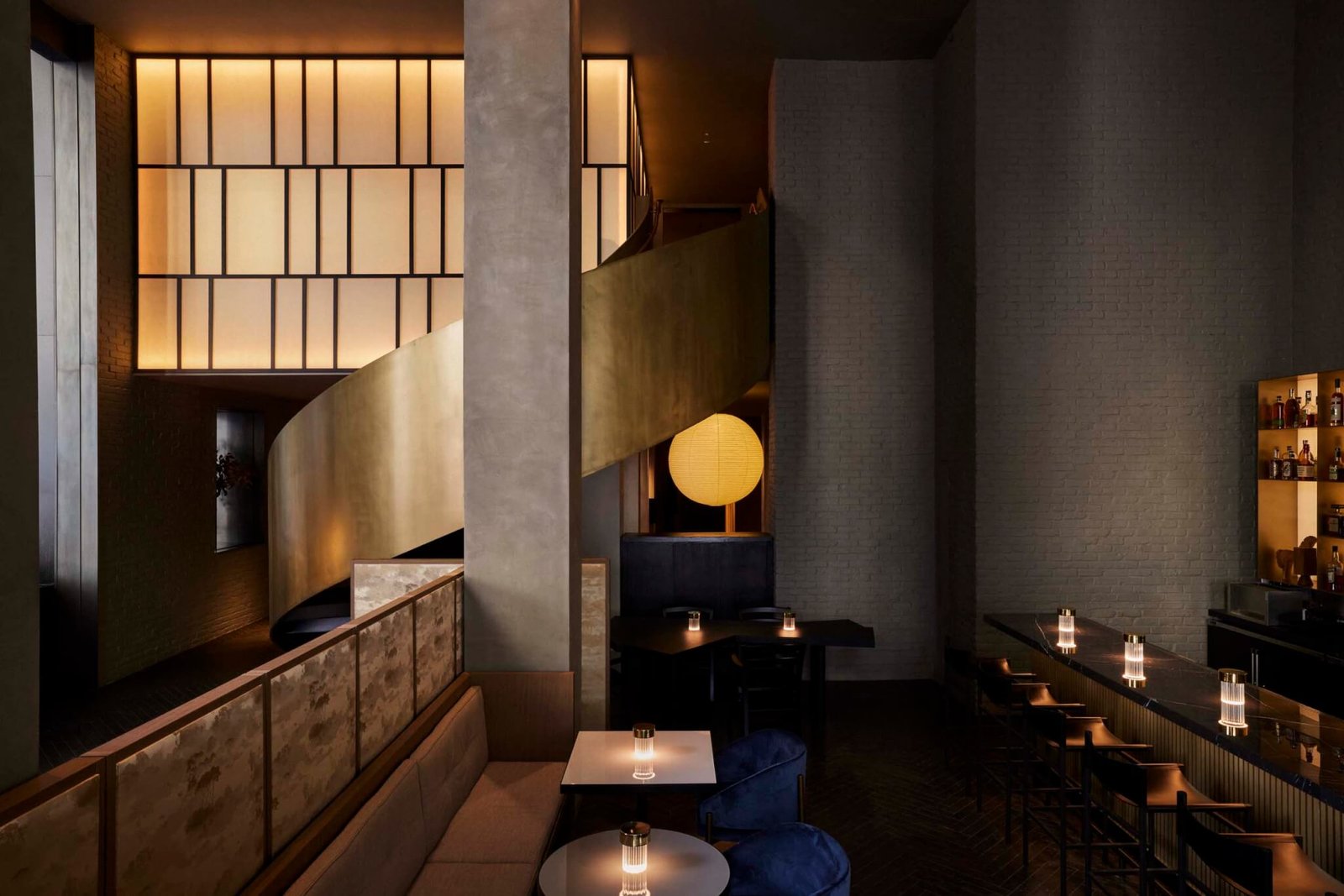
For me, ninja lights are the ones you don’t really see on the ceiling, walls, or floors. They are quiet, discreet, low glare. They don’t announce themselves; they don’t sparkle for attention—they just do their job perfectly. To my surprise, someone from the audience asked where to find “ninja lights” on Google—was it the name of a manufacturer or a product? I realized then that “ninja lights” is my own term.
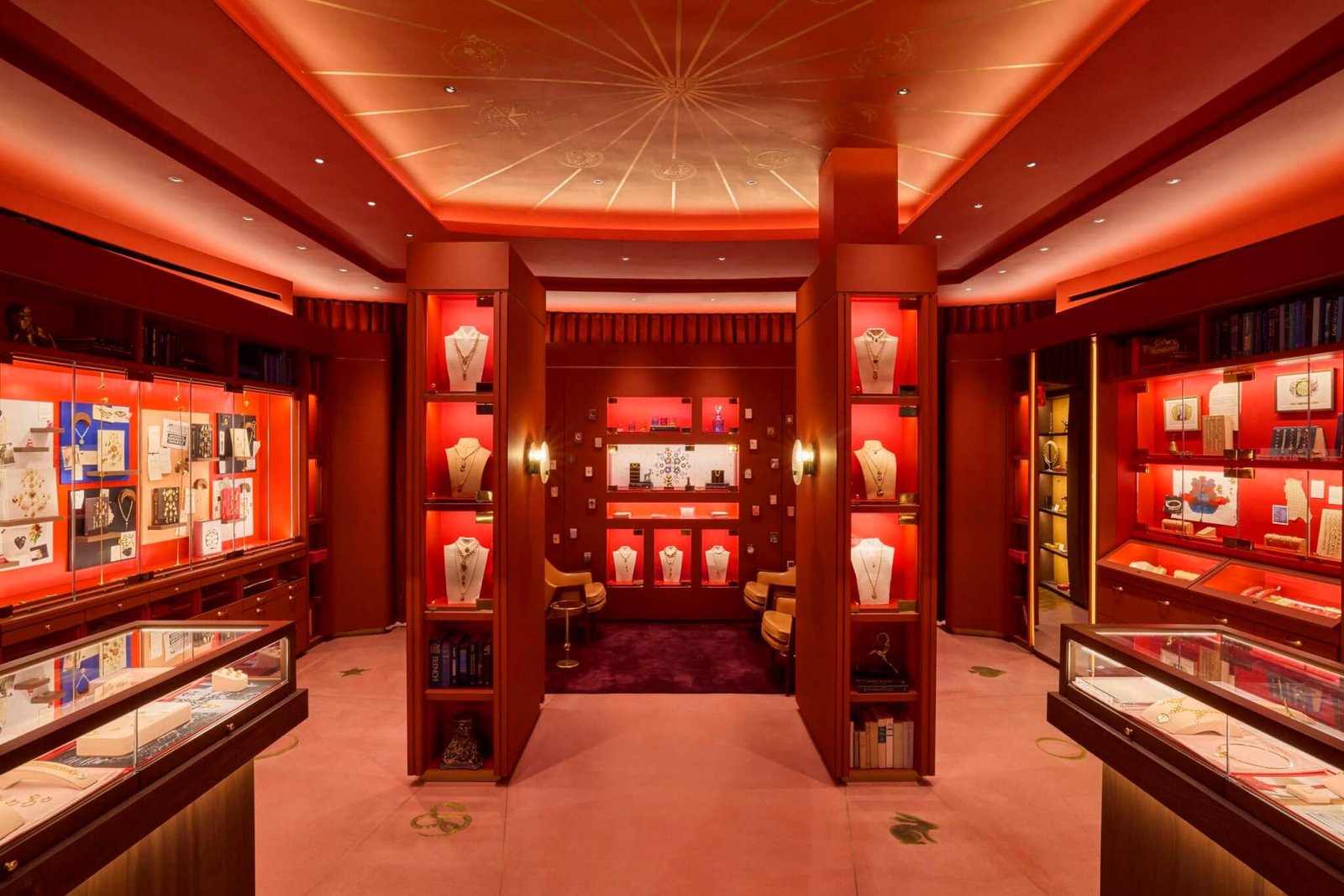
At Studio Atomic, we’re always searching for fixtures that can disappear into the materials—not just recessed ones, but ones that are truly integrated and feel almost immaterial. As an example: For a jewelry store on Madison Avenue designed by Spacesmith, we wanted to evoke a sense of wonder by creating a series of intimate rooms that give visitors the feeling of exploring a museum. The light moves vertically, washing surfaces and revealing textures, but you never quite see where it comes from. The sources are tiny, integrated into the millwork with surgical precision. You receive a glow, a gradient, a quiet presence—that kind of invisibility is never accidental.
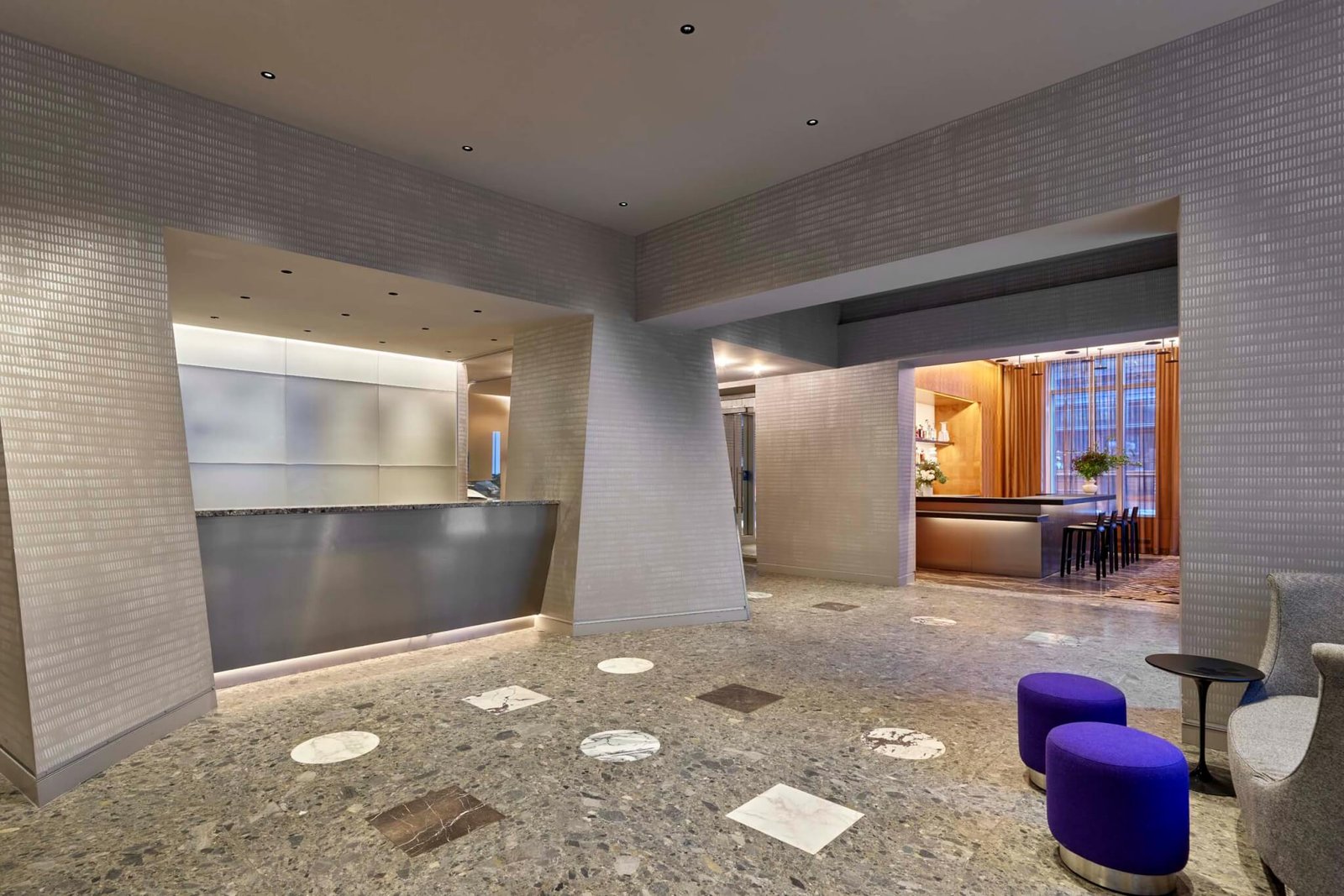
Another example is a hotel in Boston, where we hid all light projectors within large round ceiling cut-outs. Instead of having direct illumination from a downlight, the light is concealed within these pockets, which helps reduce glare and eliminates visible points of light on the ceiling.
Of course, not everything should disappear. There are moments where a decorative fixture becomes the center of gravity in a room—a pendant, a chandelier, a column of light. In the AKA Nomad with Lissoni & Partners, a sculptural lighting element holds attention and gives identity to the space. I love those moments too, but even then, the background lighting—the ambient layer—should know its place. It should support, not compete.
In a residential project we designed in Miami, a large second-floor mezzanine connects the bedrooms, almost like an interior plaza. To reinforce this location as a place of gathering, we introduced a custom 10-foot circular paper chandelier. Despite its scale, the piece feels light, almost weightless. It creates a quiet tension at the center of the mezzanine, drawing people toward it and giving the space a sense of gravity—turning a circulation zone into a point of reunion. For me, those moments are not in contradiction with “ninja lighting,” but they are its counterpart, when a luminous object earns the right to be present.
Historic Precedent
Ninja lighting also has a historic aspect. Many of the projects we admire and use as references are older. They come from an era when ceiling planes were uninterrupted and lighting was handled by lower fixtures on the floor or walls, at times also designed by the architects who were handling the interior.
A powerful example that continues to inspire my approach is the restoration of TWA Flight Center, where I, while at One Lux Studio, worked on the lighting restoration of Eero Saarinen’s original vision with architects Beyer Blinder Belle, Lubrano Ciavarra Architects, and INC Architecture & Design. What inspires me most is his approach that, in many moments, you do not see the light fixtures at all—you perceive the effect of light, but not its source. Concealed indirect illumination reveals the curved ceilings, discreet path lighting is integrated into the dropped ceiling, and focused surface-mounted fixtures accent core elements with precision. The result is lighting that supports the architecture almost invisibly, rather than competing with it. Saarinen’s work remains a profound reference for thinking about light as something integrated, quiet, and inseparable from space.
More Precision, Please
The way we frame lighting today for residential and commercial projects has changed drastically in the past 10 years. What I considered quiet lighting 10 years ago, today I find to be elements that belong to another era. It makes me wonder how lighting will continue to evolve moving forward.
One thing is clear: People are asking for more precise typologies of light for their spaces—they want their lighting to feel more personal, more intentional, and with a distinct sense of identity. I believe this shift will help us improve lighting design and slowly build a stronger lighting culture for the cities where we live. We want to create illumination that provides a balance of gradients, minimal color, and low glare, where light is felt more than it is seen.
Paola Pietrantoni is a Chilean architect and lighting designer, and co-founder of Studio Atomic in New York. Her work explores light as a medium for shaping atmosphere, perception, and the emotional experience of architecture.