

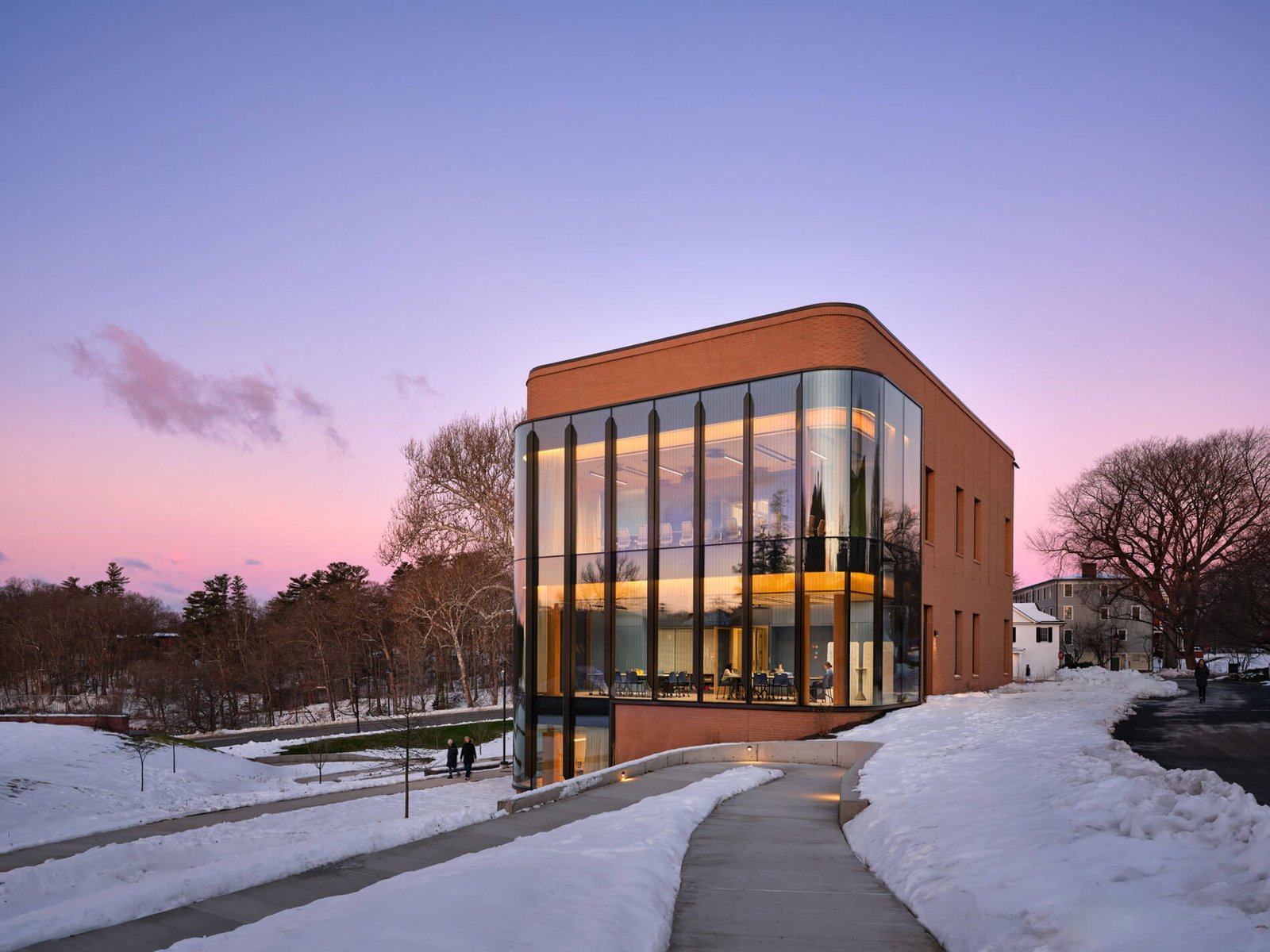
Overlooking Smith College’s Paradise Pond, on its Frederick Law Olmsted–designed campus, is a new mass timber student hub designed by TenBerke.
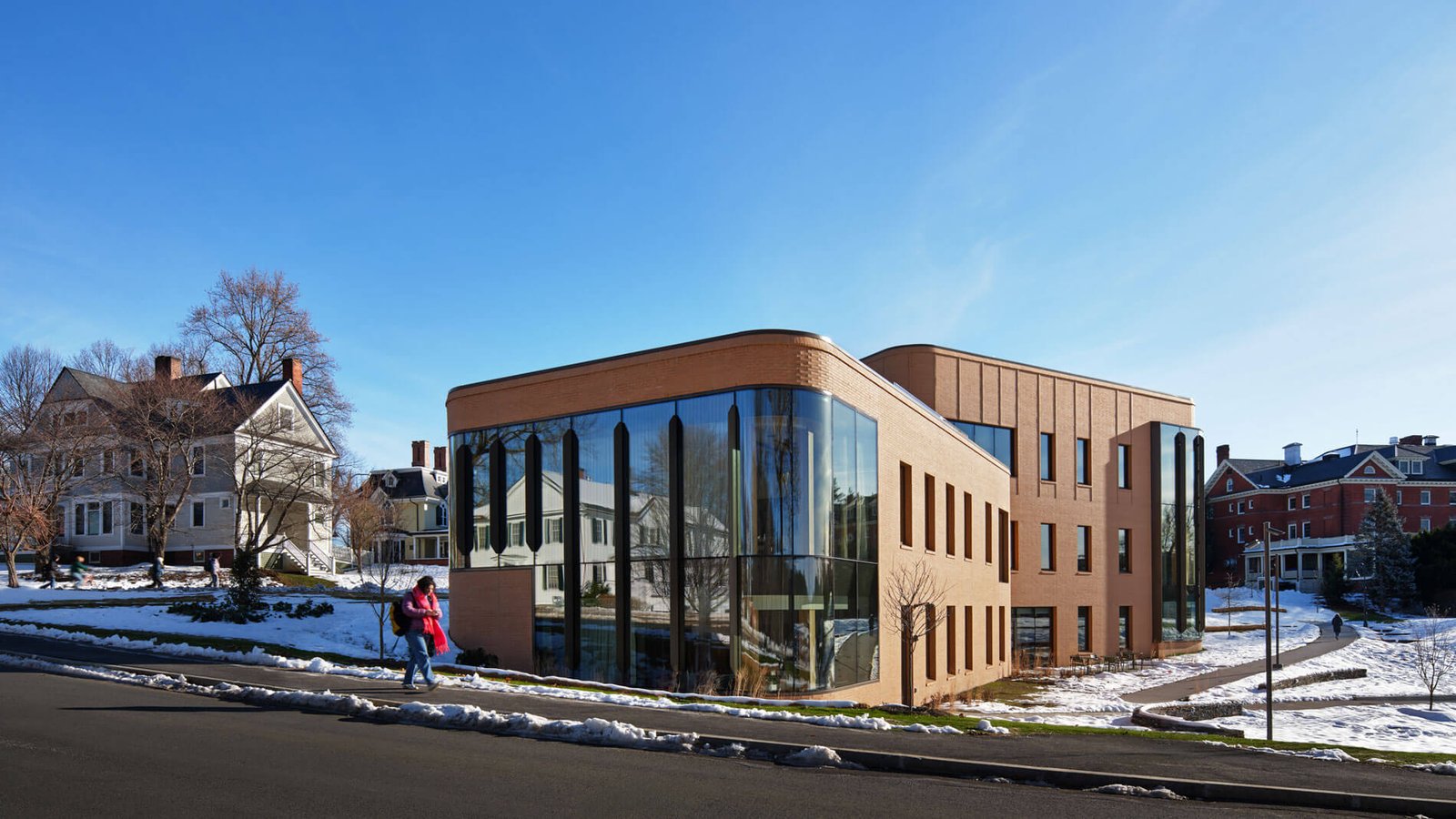
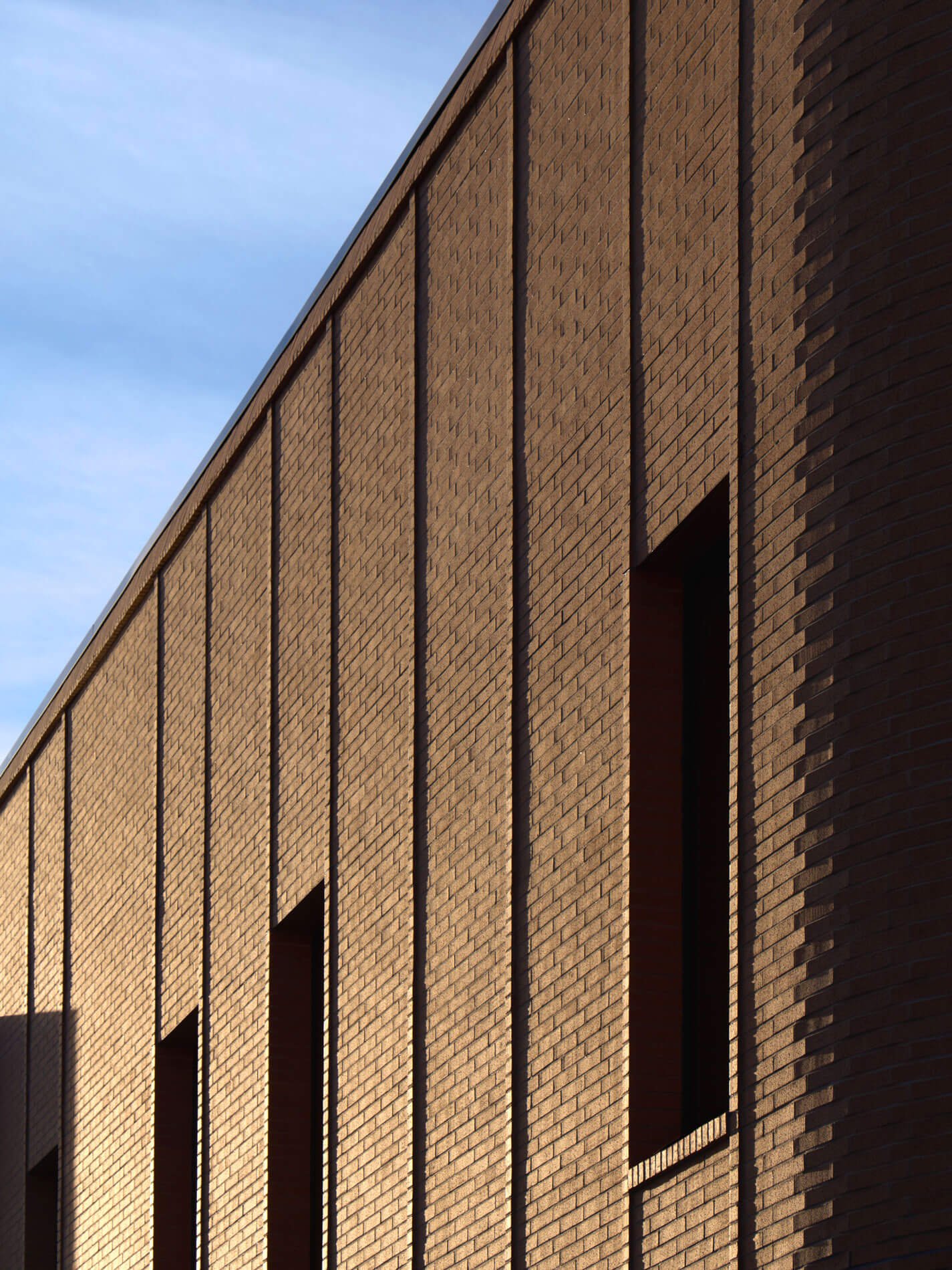
The architects responded to the stately context not by mirroring it, but with a modern, textured brick facade that hearkens to the historic milieu.
TenBerke worked in close collaboration with engineers at Thornton Tomasetti on the all-electric building in Northampton, Massachusetts.
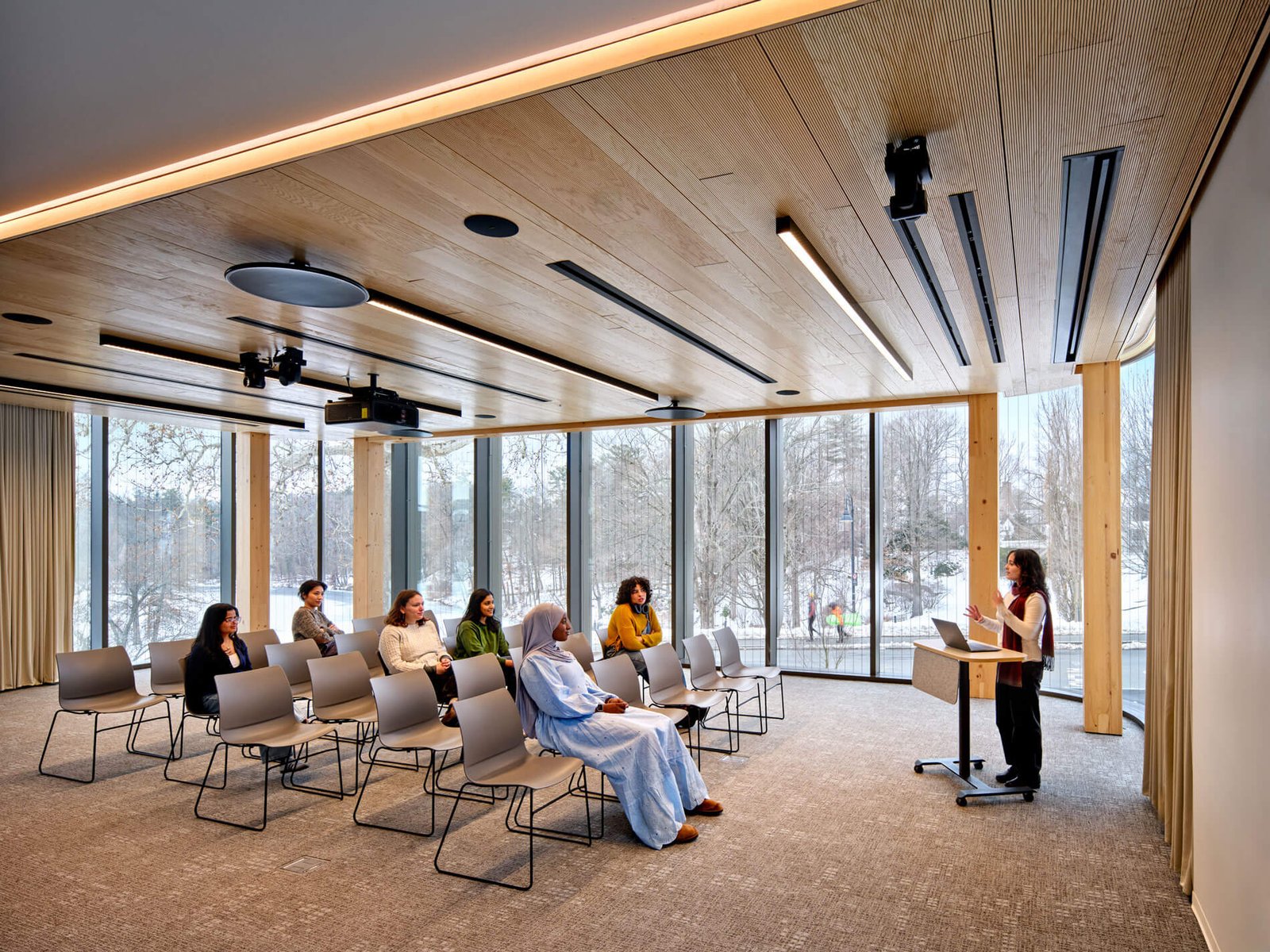
Kathleen McCartney Hall measures approximately 15,000 square feet. Job fairs, networking workshops, lectures, and other programming can take place there.
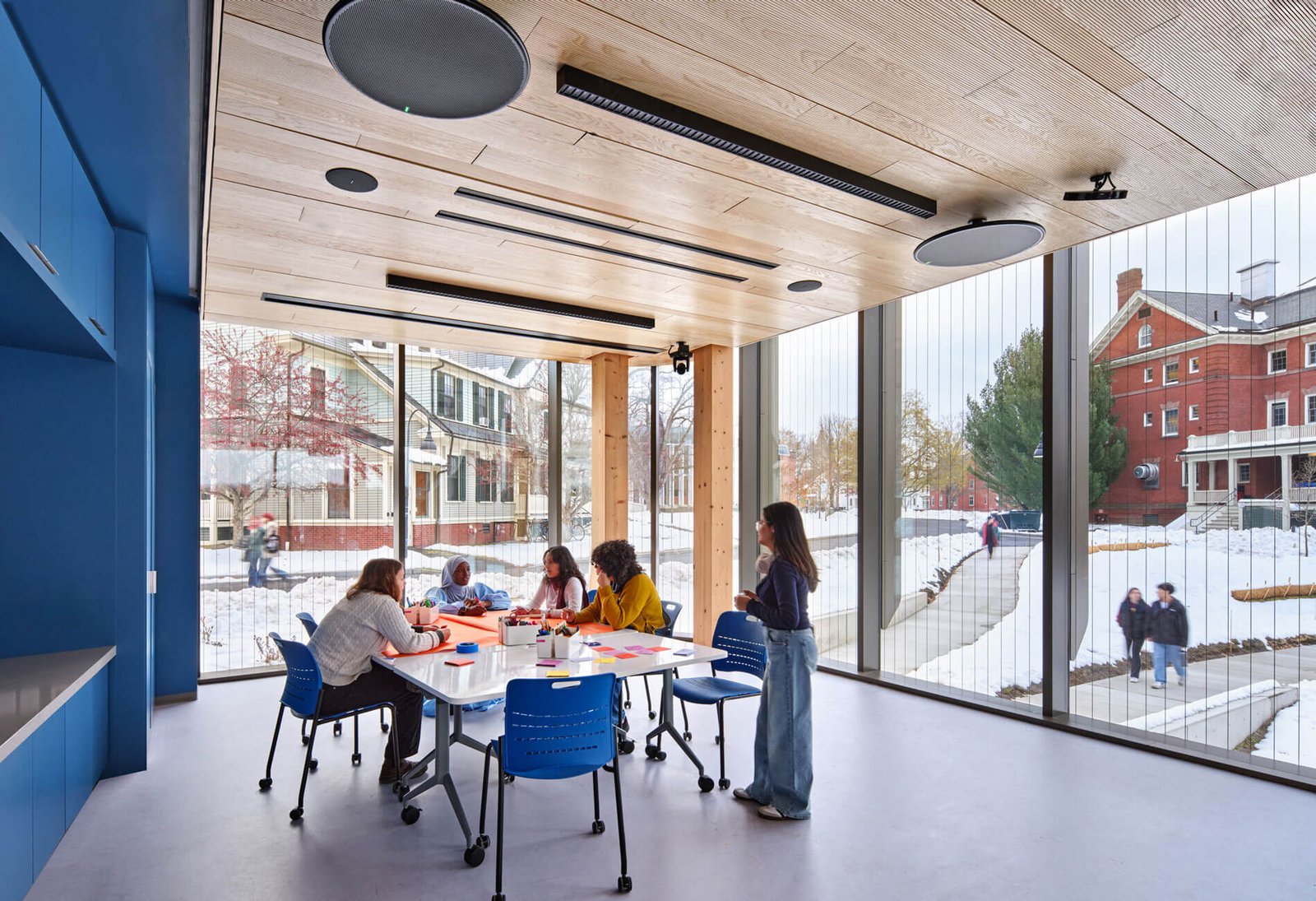
At McCartney Hall, two centers—the Lazarus Center for Career Development and the Wurtele Center for Collaborative Leadership—are “under a shared roof,” TenBerke said in a statement.
The building is composed of two distinct volumes. The volume that faces the street is slightly shorter than the volume to the rear, in order to provide visual harmony with the surrounding architecture.
“Every material, every crafted detail in the building is meant to invite students to explore and linger,” said Arthi Krishnamoorthy, TenBerke senior principal.
“The warmth of the wood, the play of light on the brick, and the carefully considered spaces create a sense of quiet comfort that encourages curiosity, reflection, and discovery,” Krishnamoorthy continued.
Corners of the building have sinuous curves. Large expanses of glass provide optimal views of Paradise Pond, and Northampton more broadly. A frit composed of thin vertical lines protects birds, without compromising views of the landscape. Vertical fins on the facade regulate daylight.
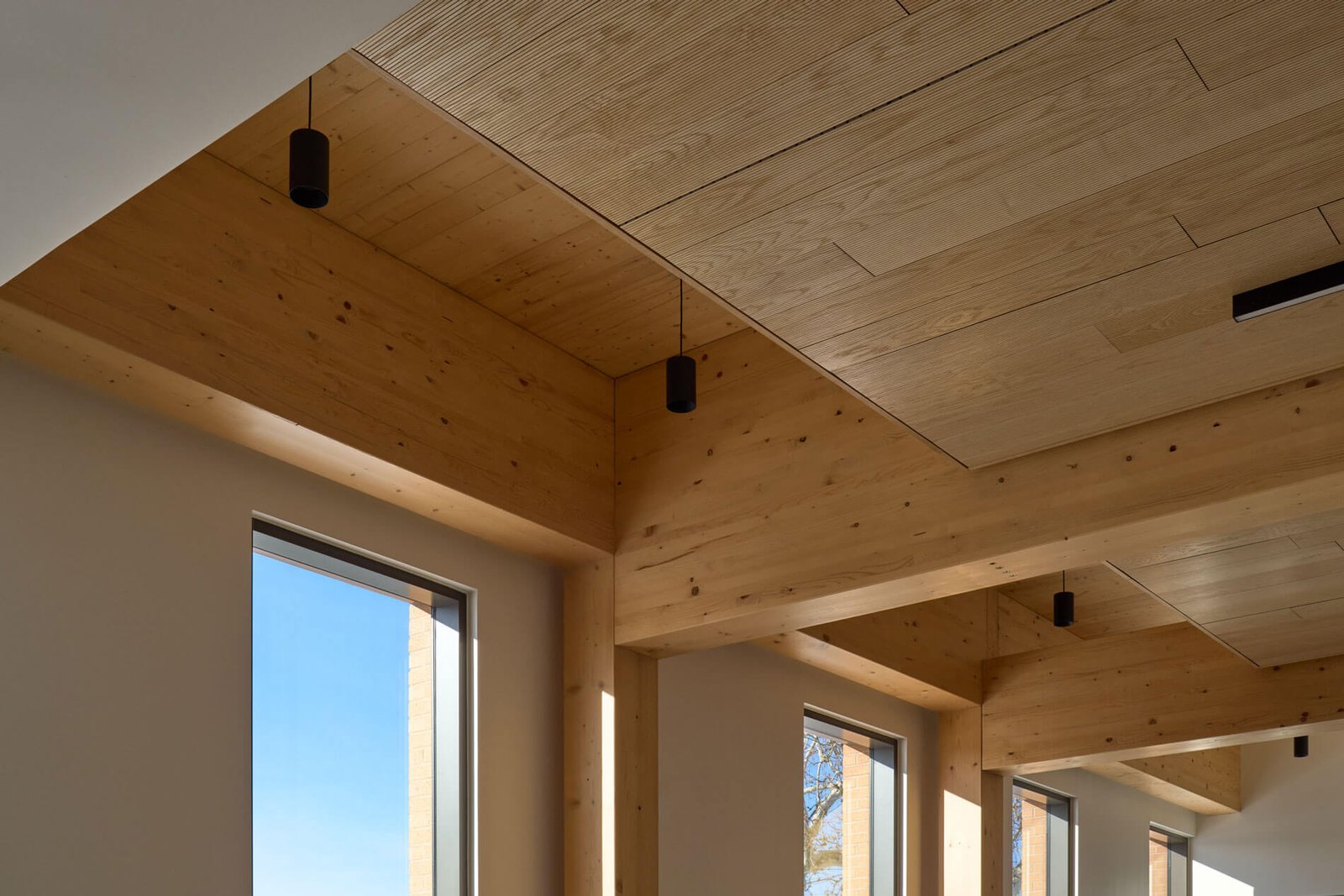
The interiors are faced for the most part in wood, much like other recent mass timber projects that leverage the material’s biophilic qualities. (Think: Anthony Timberlands Center, a new building for the Fay Jones School of Architecture and Design at the University of Arkansas designed by Grafton Architects.)
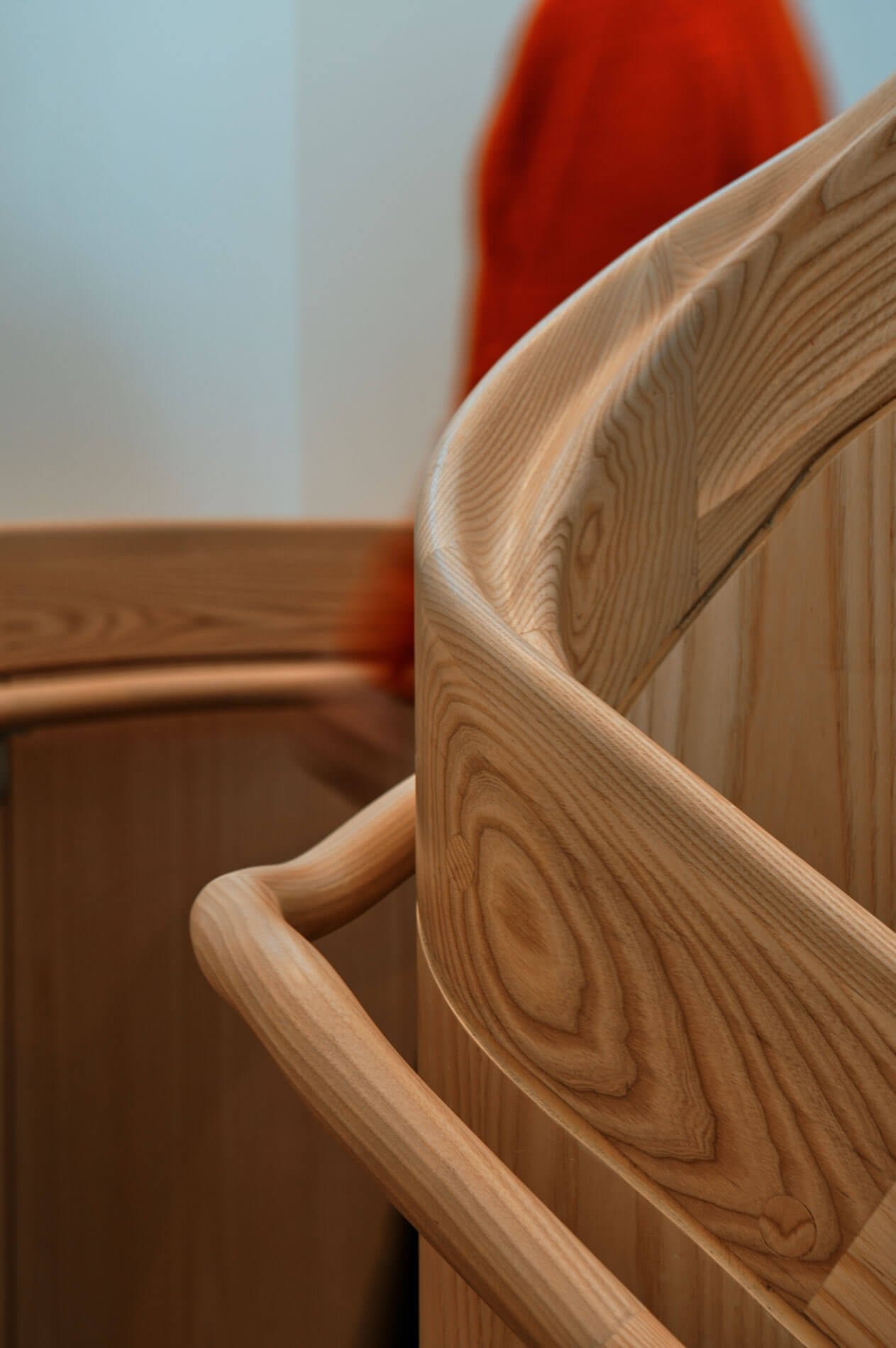
Sculptural hand railings underscore the building’s commitment to craft, down to the smallest details.
The student hub fits within Smith College’s landscape master plan by MNLA, meant to yield better connectivity from Chapin Lane to College Lane, among other objectives.
It is also integral to Smith College’s campus-wide geothermal energy project, aimed at slashing Smith’s carbon footprint.