


Toronto-based Paul Raff Studio (PRS) and Kengo Kuma & Associates (KKAA) have won a competition to design a visitor center and community space in a Canadian national park.
Banff National Park is in Alberta at the foot of Mount Rundle. It receives 4 million annual visitors and is operated by Parks Canada, Canada’s national park service.
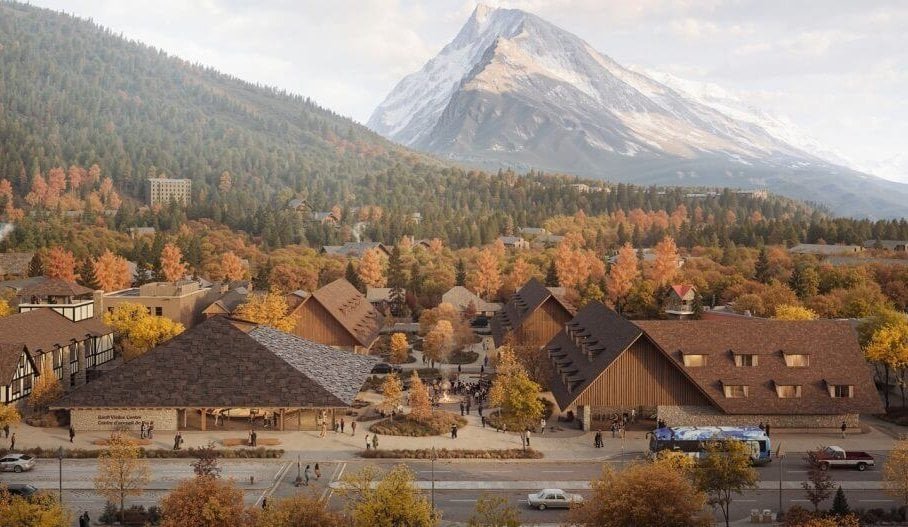
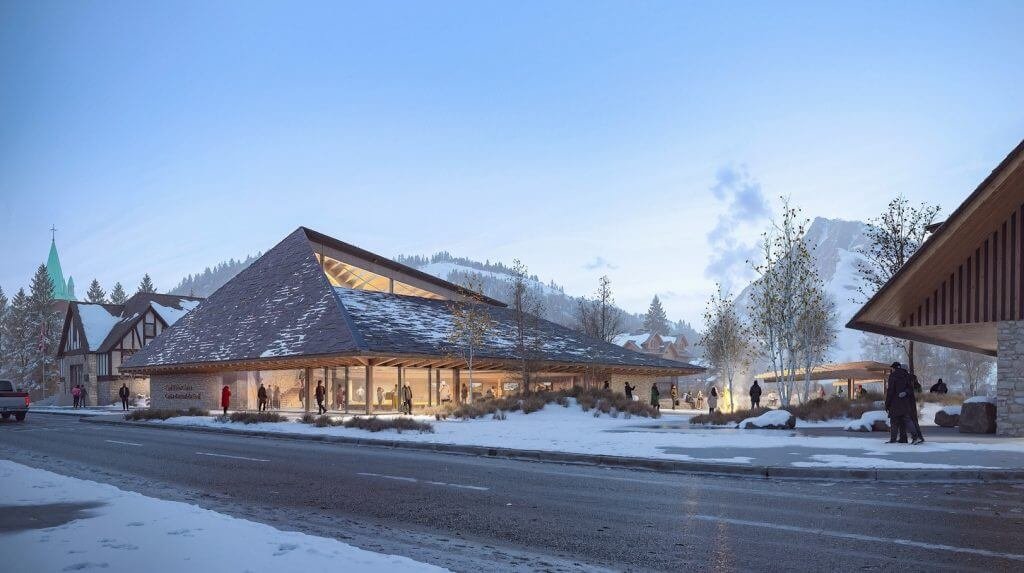
Renderings show the existing Parks Canada Visitor Information Centre in Banff, a Tudor-style building, augmented by new structures designed by PRS and KKAA. These buildings will be capped by shingled roofs and feature a rustic materiality of stone and wood.
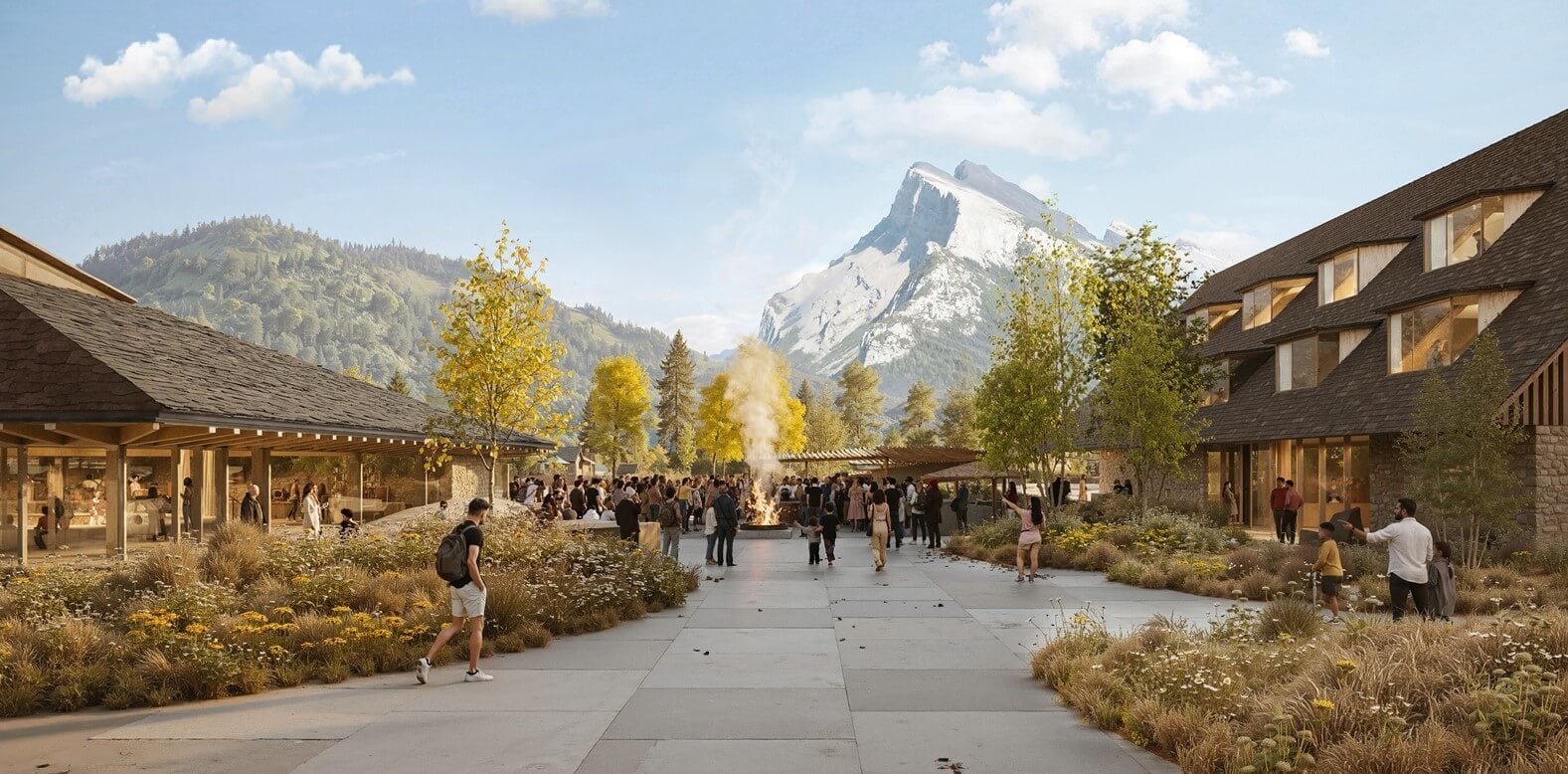
The largest of the forthcoming buildings has a pronounced hip roof. Its elevation facing a plaza will angle back to create a generous clerestory. Substantial patio space will be slotted in between the new buildings.
Visitors will enjoy tremendous views of Mount Rundle. Other structures are defined by expansive A-frame pitched roofs. A plaza in between the buildings will host community events and gatherings.
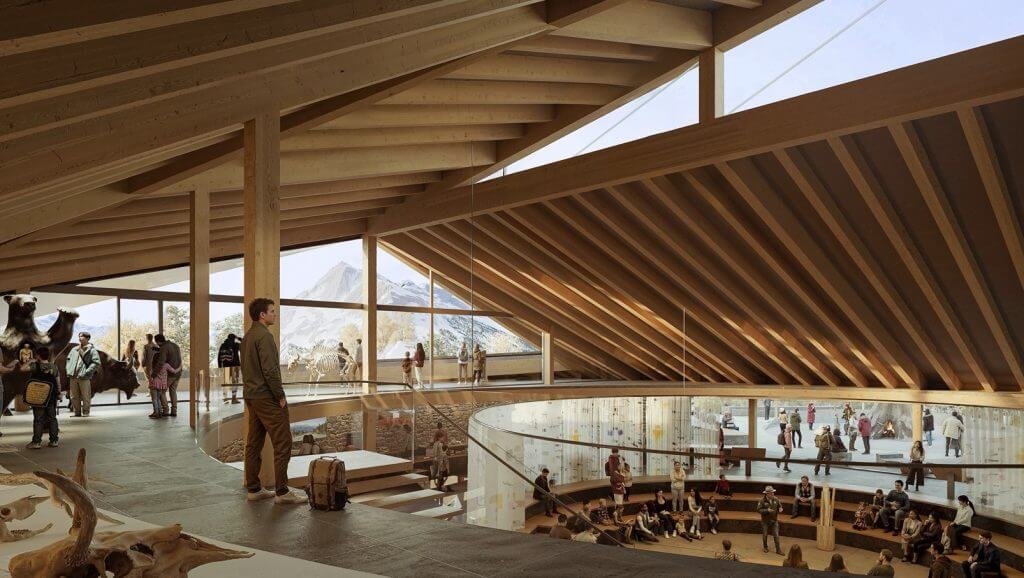
Inside, wood framing members will be left exposed. The clerestory will shed ample natural light onto a circular and sunken amphitheater.
PRS and KKAA were selected to design the center by Parks Canada and the Royal Architectural Institute of Canada (RAIC) after their conceptual proposal was shortlisted with five others. The initiative started in 2022 when Parks Canada received federal funding to compile site studies and perform outreach meetings with Indigenous communities, stakeholders, and the public more broadly. The international design competition was launched in summer 2025.
Jurors shortlisted six conceptual proposals by Stantec, Alison Brooks Architects with Kumlin Sullivan Architecture Studio, EVOQ + Ryder, KPMB Architects, Revery Architecture, and Paul Raff Studio and Kengo Kuma & Associates.
RAIC CEO Mike Brennan said the jury’s decision to select PRS and KKAA was “unanimous and confident.”
“The winning design was selected not only for its design excellence, but for its flexibility and resilience, qualities that allow it to evolve without losing its essence,” Brennan said.
Brennan continued: “The jury was satisfied that advancing this design does not compromise its original spirit but rather provides the strongest framework for thoughtful refinement over time.”
KKAA was recently named the winner of another international competition to design a new wing at the London’s National Gallery.