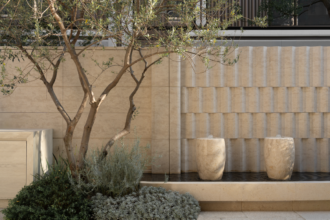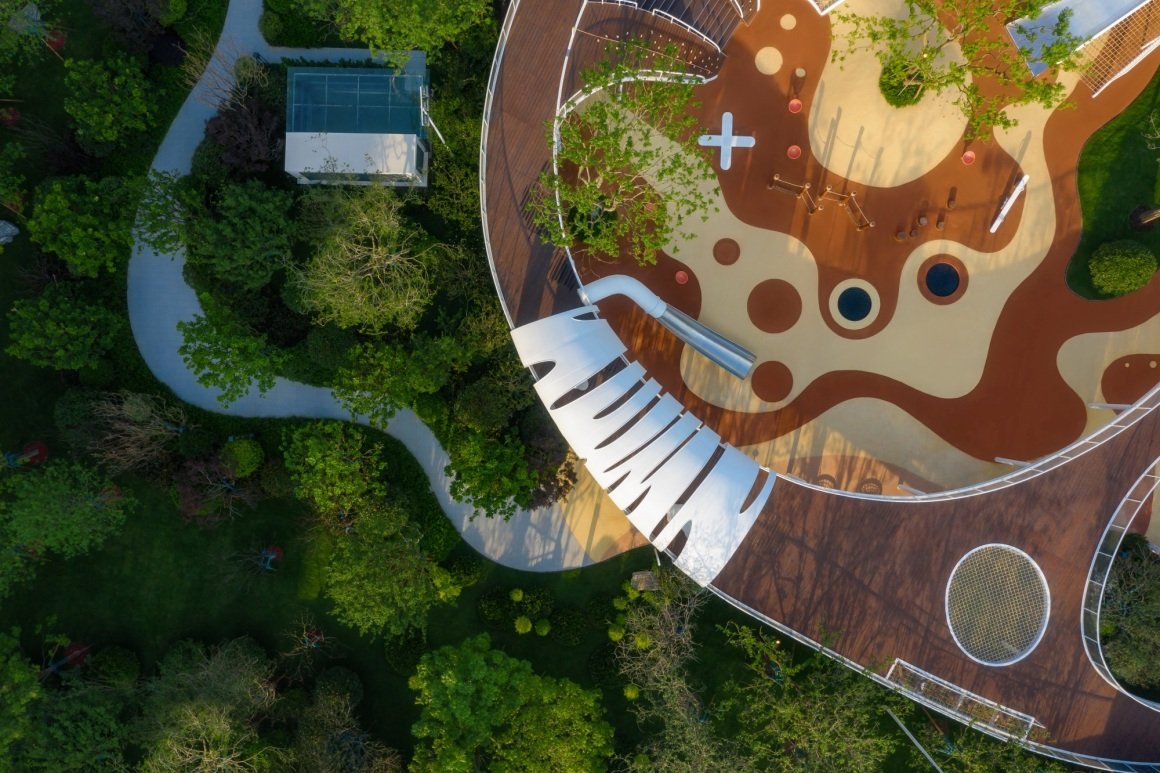


The project redefines a garden historically detached from the house as a continuous and immersive landscape. Conceived within the Noucentista tradition as a space to be contemplated rather than directly experienced. The garden was long separated from everyday domestic life by its topography and enclosing boundaries. By dissolving these barriers and introducing a gradual descent into the outdoor space, the intervention reconnects house and garden, redefining the relationship between inside and outside. What was once a garden perceived from a distance becomes a landscape experienced through movement, use, and immersion.
The project was guided by a clear intention: to profoundly transform the garden without altering the essence of the place. It was carefully designed around the existing trees and vegetation, preserving and enhancing the site’s natural structure. We approached the level difference between the porch and the garden with surgical precision. Our intention was for every exterior space to be fully experienced, transforming previously unused areas, such as the two rooftops and the garden.
Privacy was a key consideration throughout the project. The density and configuration of the surrounding urban fabric required carefully controlled visual relationships between the garden and its context. Through the strategic placement of vegetation and the orchestration of views, the intervention creates protected exterior spaces that maintain openness, light, and a strong connection to the landscape.
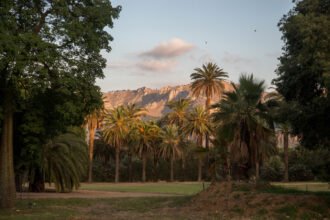
Materiality, stone, water, vegetation, wood and concrete, are articulated through clear geometries and soft transitions. In keeping with the project’s location in Barcelona, all materials are sourced within Europe following km0 principles. The project incorporates sustainable water management through a reservoir pool system and a planting strategy adapted to the Mediterranean climate and its future evolution, prioritizing species with low water demand and high ecological and landscape value. One of the project’s subtleties lies in the introduction of species that support local fauna. It reinforces the ecological continuity with the nearby Collserola natural park by the city limits, fostering biodiversity and strengthening the ecosystem.
Developed collaboratively across architecture, interior, and landscape design, the project applies Passive House principles across both interior and exterior spaces.
The project not only transforms and redesigns the space but understands the garden as an extension of domestic life. What was once a garden perceived from a distance becomes a garden experienced through movement, use, and immersion.
Credits:
Landscape Architecture_Project and Site Management: Lina Seguró Mendlewicz (@verveine_landscapearchitecture).
Architecture_Comprehensive renovation following Passivhaus criteria_.
Project and Site Management: Pilar Calderon and Marc Folch (Calderon-Folch Studio). Interior Designer: Nuria Navarro
Construction Management: Carme Grau and Vicenç Font (Font Grau Tècnics).
Constructor Company: OAK and Verveine Landcape Architecture
Photography: José Hevia.
verveine_landscapearchitecture
Artwork: @juditcanela.
Models: Maia, Marina and Ona.
Styling: @gilmondelo.
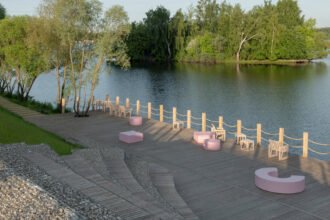
The images used in the collage are sourced from magazines and have been manipulated.