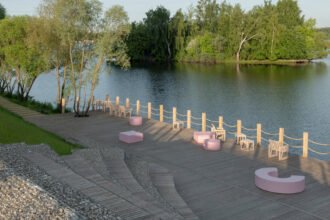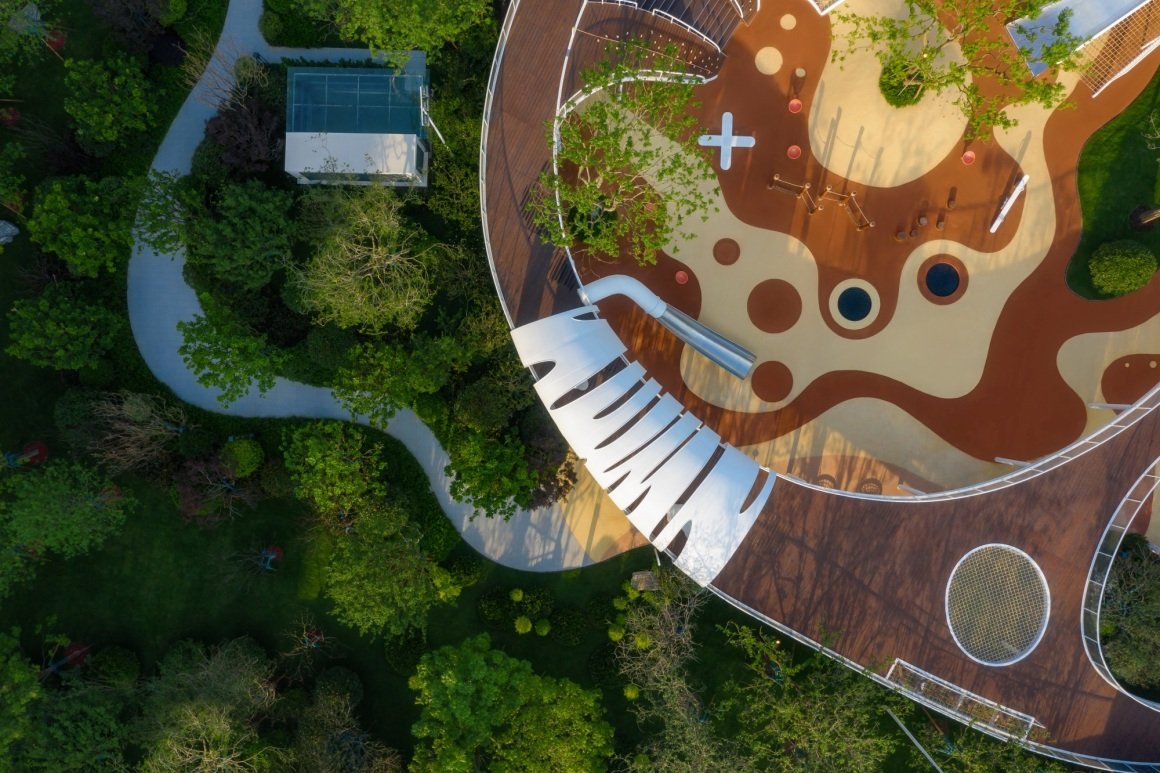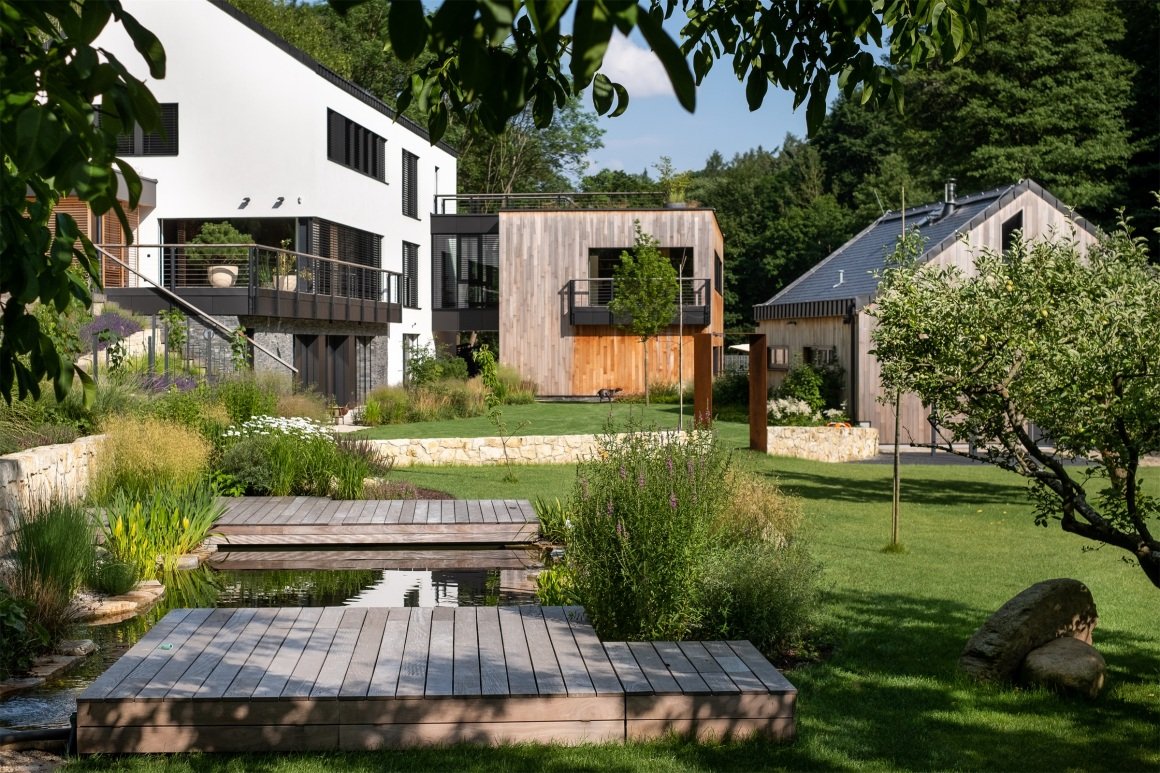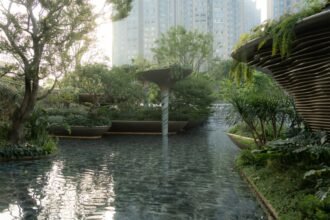


Vantage is a 19-acre life-science campus in South San Francisco designed to foster discovery and collaboration. Outdoor gathering spaces extend the workplace outdoors, including a flexible event lawn, seating decks, a combined putting green and bocce court, and shaded meeting areas. A unique layering of site details improves the functionality of these outdoor spaces, providing shade and wind protection, while reinforcing a cohesive design strategy that can be replicated in future phases.
The central quad flows between two angular workplace buildings and a third amenity building. The latter is the social heart of the campus, with food services and rentable spaces. The site’s primary gateway takes the form of a landbridge running alongside a continuous biotreatment planter. Office entrances spur off this central bridge, each made from stainless steel floor grilles in order to maintain visibility to the plantings below. These angular, terraced planters play off the bold building facade that towers above the landscape. The resulting feeling is that the building itself is in-motion, pushing through the landscape, and leaving drifts of planting in its wake.
The campus’ outdoor realm is a natural extension of the workplace. A series of social pockets are capable of hosting both daily meetings and large events. Sculptural furniture creates an outdoor meeting room, while quiet nooks provide space for focused work or a meal. The event lawn is sized for flexible use, ready to host an informal volleyball competition or accommodate a tent for a corporate event.
The ‘Green Line’ is a central, unifying spine that organizes circulation, planting, and stormwater management. It changes form and function along the way, but is always visible. Along its length it becomes a linear light, a leaning rail, and a grate with plants emerging from underneath, for instance.
Environmental performance is embedded and celebrated in the project’s design moves.Visitors walk alongside a major biotreatment planter as they enter the building, as opposed to relegating it to less visible areas. Integrating these systems into primary circulation routes and gathering spaces transforms regulatory infrastructure into experiential landscapes.
Early site planning between teams was instrumental in establishing strategies to mitigate the cooling effects of wind. The office buildings utilize longer north-south edges to block westerly winds, and are positioned to create pockets of human comfort.
The lighting-bolt shaped promenade through the central quad provides direct access between buildings and disguises an emergency vehicular accessway. Amenity spaces are attached to the paseo, and wooden platforms become perches with elevated vantage points. Stainless steel leaning rails activate edges to encourage lingering. The light poles vary in color to create ‘warm’ landscape zones alongside tan-colored materials, and ‘cool’ zones next to gray-green and silver foliage.
Vantage challenges the conventional campus model by positioning exterior spaces as primary amenities. Rather than a pleasant patch of green visible from an office window, it encourages outdoor engagement and actively offsets energy and water consumption. Vantage exemplifies the role of landscape architects in shaping resilient campuses, and advancing the public realm within private development.
Project Team / Collaborators:
Healthpeak
PMA Consultants
FLAD Architects, Architect
Fletcher Studio, Landscape Architect
Wilsey Ham, Civil Engineer
Salas O’Brien, Structural Engineer
Meyers+, Mechanical/Electrical/Plumbing Engineer
LUMA, Lighting Designer
Brookwater, Irrigation Designer
Cermak Peterka Petersen, Wind Engineering Consultants
Hathaway Dinwiddie, General Contractor
McGuire and Hester, Landscape Contractor
Colin Selig, Seating Sculptures
BŌK Modern, Windscreen Panels
37.655904582960396, -122.39002722326173