

“This is a beautiful and multifaceted project that demonstrates an interesting and deeply engaging process.”
——2026 Jury Committee“A beautiful multivalent project. Interesting, engaged process.”
——2026 Awards Jury
from ASLA Share on gooood.
Industrial Revival – From Pollution to Regeneration | P Landscape Co., Ltd.
Project statement
PROJECT STATEMENT
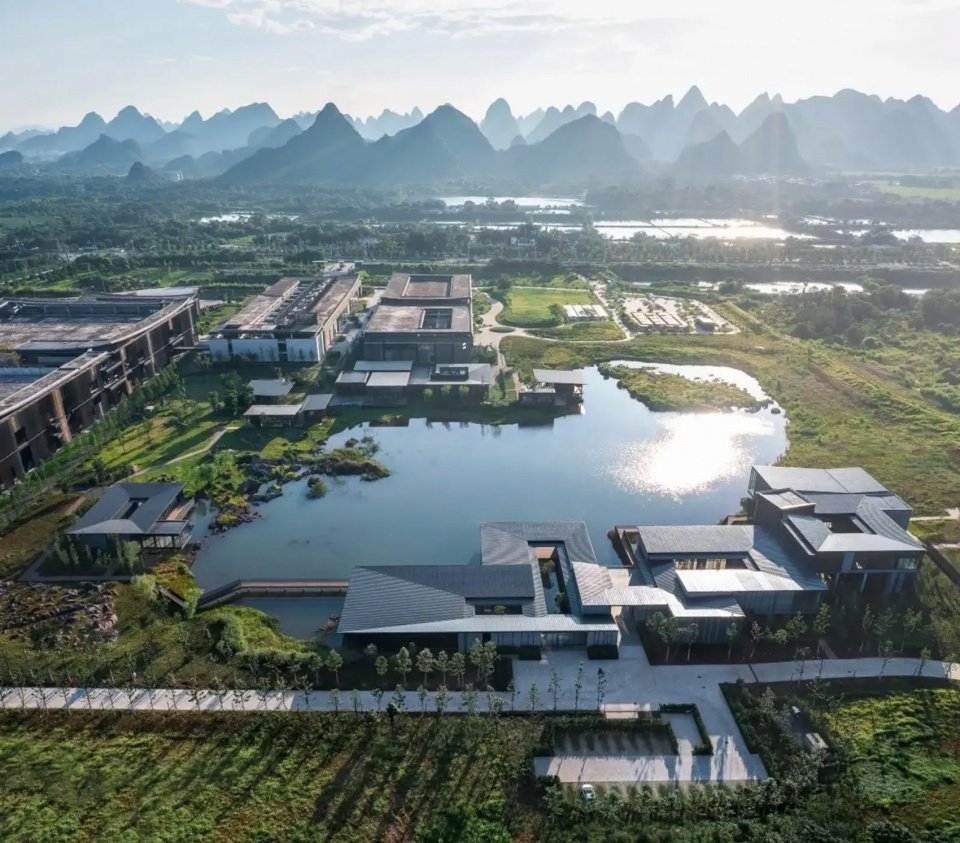
Esquel Sustainable Landscape reimagines a former brick factory into a regenerative living landscape, reclaiming 285,725 square meters of degraded industrial land, so that production, ecology and community can coexist harmoniously. Inspired by the Buddhist concept of “harmony”—an emphasis on balance between self, universe, and the essence of life—the project demonstrates a shift in the way industrial landscapes operate: no longer as isolated utilitarian areas, but as catalysts for ecological healing, cultural continuity, and environmental education.
Integral – Esquel’s Sustainable Development Garden reimagines a former brick factory as a regenerative, living landscape, reclaiming 285,725 sq.m. of degraded industrial land to harmonize production, ecology, and community. Inspired by the Buddhist concept of “Integral,” which emphasizes balance between the self, the universe, and the nature of life, the project demonstrates a shift in how industrial landscapes can function, not as isolated utilitarian zones, but as catalysts for ecological healing, cultural continuity, and environmental education.
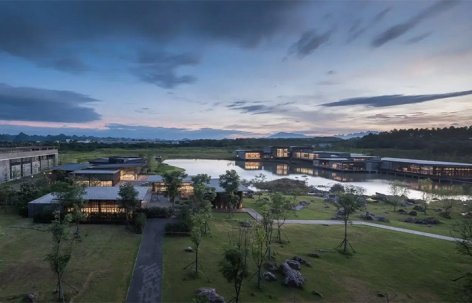
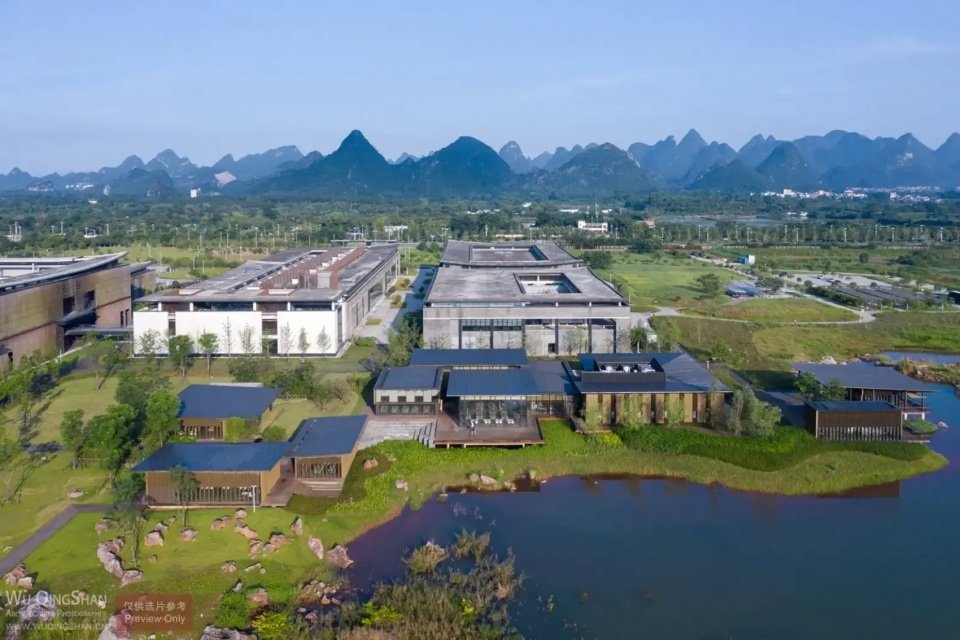
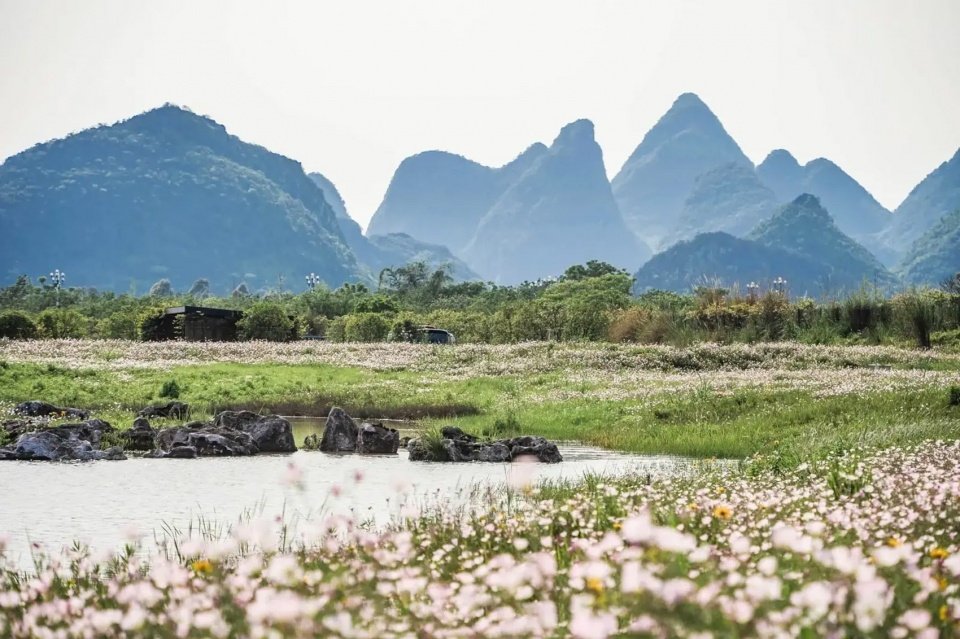
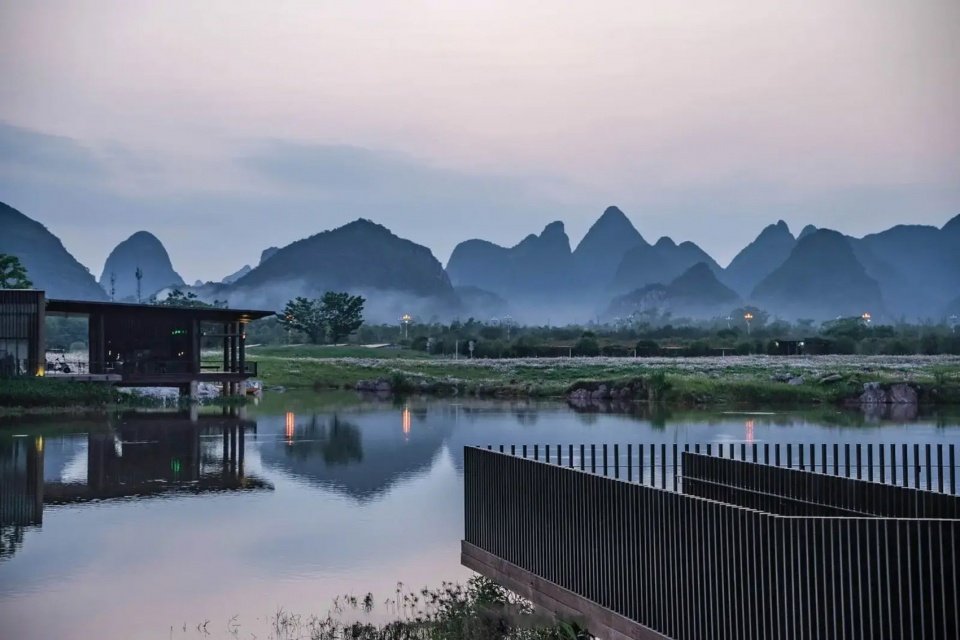
▲Guilin’s regenerated landscape | The project is located near the karst mountains of Guilin. Esquel regenerates degraded land through a landscape-led framework shaped by ecosystems. A Regenerated Landscape in Guilin | Located near Guilin’s karst mountains, Integral regenerates degraded land through a landscape-led framework shaped by ecological systems. © Ronald Lu and Partners
Project description
PROJECT NARRATIVE
Revitalization and symbiosis: regenerative models for industrial landscapes
The Esquel Sustainable Garden is located in Jiumei Bridge, Guilin, China, on a site that still operates as an active textile manufacturing park. What was once a brownfield site severely degraded by decades of brick manufacturing, soil mining and industrial runoff has been transformed through landscape-led systems. Wetlands, planting and hydrological strategies form the framework for water restoration, habitat restoration and long-term environmental management.
Ecological framework and material reuse
The project is located in a low-lying basin with inherent wetland potential. The design prioritizes the existing topography and hydrology to achieve a self-sustaining habitat system while minimizing excavation. Wetlands, plantings and water management support soil stabilization, flood mitigation, water restoration and long-term environmental resilience. More than 95% of the plant species are native to Guilin and are bred on site through collaboration with botanists, horticulture experts, factory employees and local people.
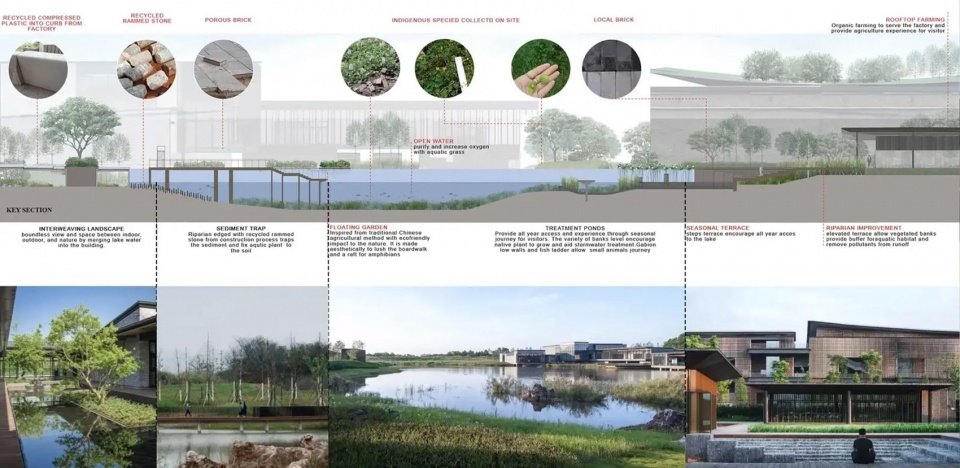
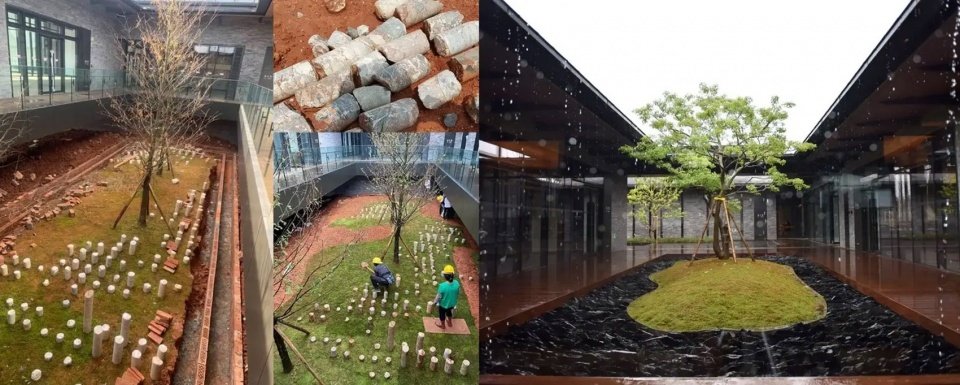
Recycled concrete from old foundations was reused for erosion control and terracing, while plastic waste from nearby factories was converted into permeable paving to improve infiltration and reduce runoff. These strategies embed circular resource use directly into the landscape while reducing construction waste.
Quantifiable environmental results
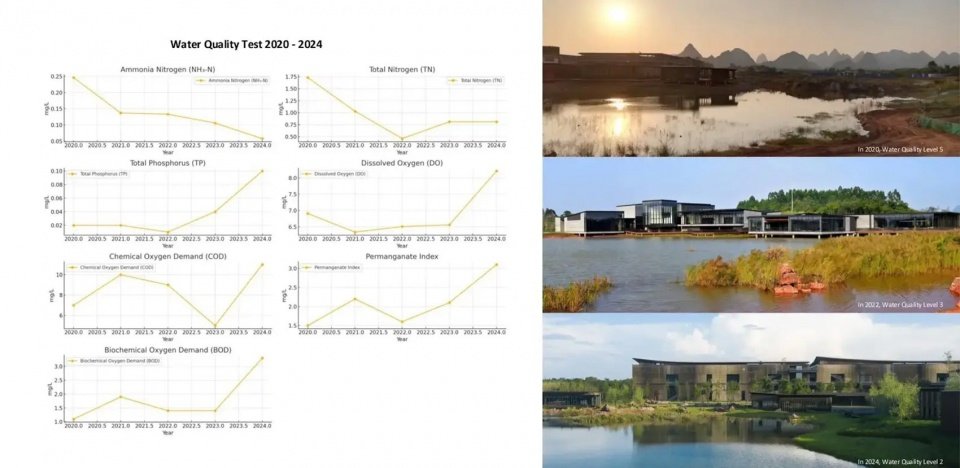
Quantifiable ecological responses were observed following wetland redevelopment and water system restoration. Post-completion monitoring from 2021 to 2024 confirmed that water quality improved from Class V to Class II, allowing aquatic habitats to be reestablished.
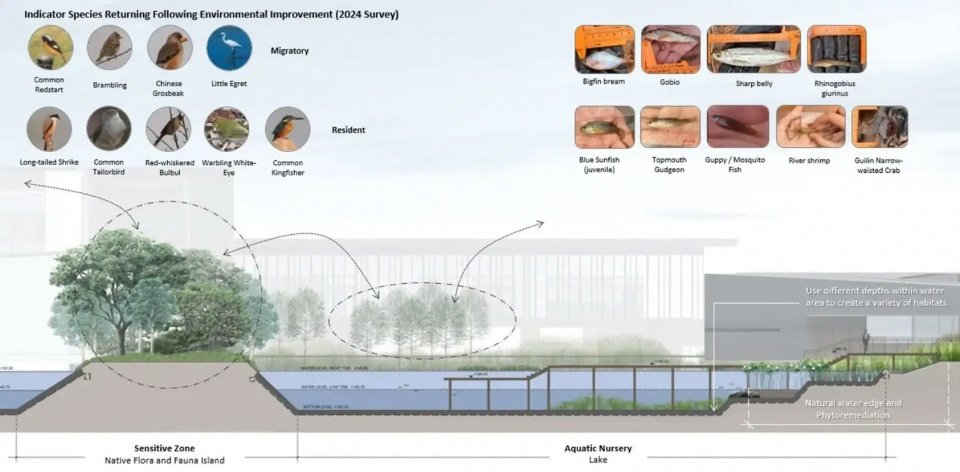
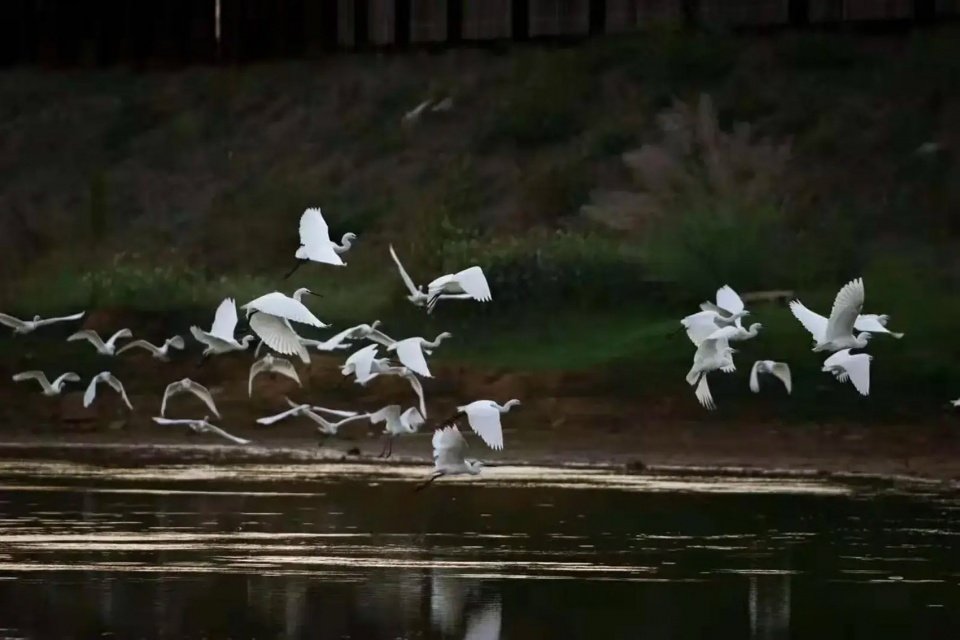
Biodiversity recovery ensues. The central wetland island is retained as a no-entry zone with no paths or structures, allowing undisturbed habitat to form. Since completion, bird species have increased from seven to 21, including native and migratory indicator species such as the common kingfisher and black-tailed grosbeak. Aquatic communities are also re-established, with the return of native freshwater fish and invertebrates, including minnows, wheatears and river shrimp, as well as amphibians. The observed changes correspond to the establishment of wetland and habitat systems.
Integration of man and nature and cultural projects
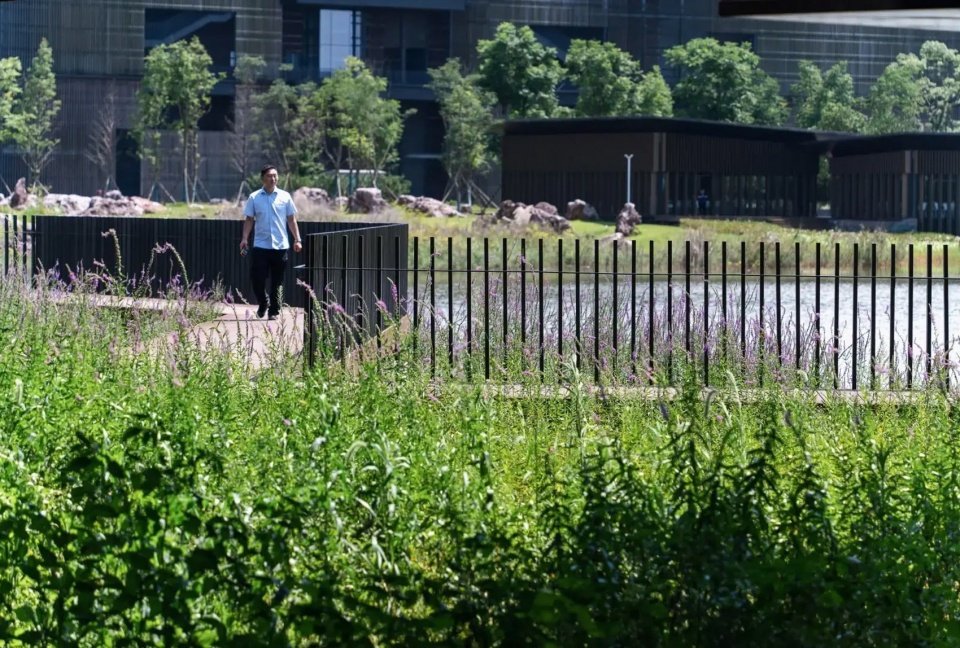
The landscape is organized as a permeable environment rather than a closed industrial area. Boardwalks, jogging paths and contemplative trails avoid sensitive habitats while allowing people to engage with the ecosystem. Rooftop gardens, community planting areas and outdoor classrooms support daily use and learning.
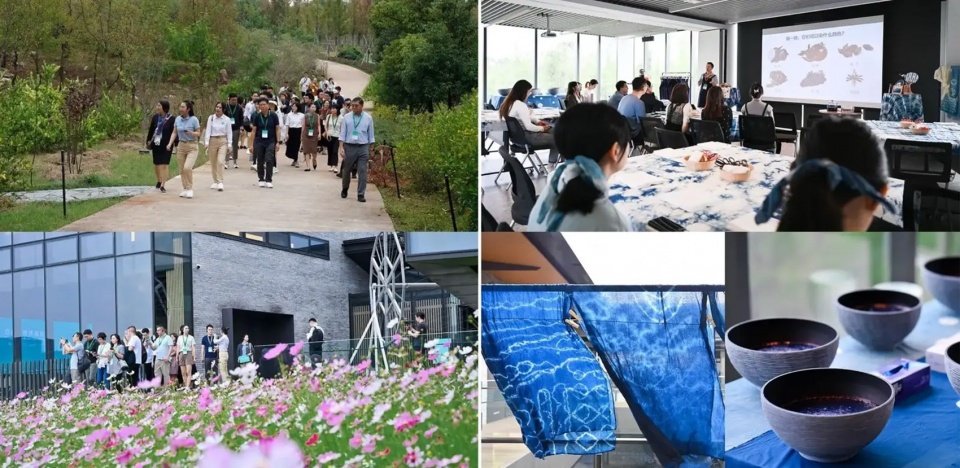
The natural dye garden introduces plant species traditionally used in textile production, linking ecological restoration with local craft knowledge and manufacturing. Factory employees and local collaborators are involved in nursery operations and planting, integrating management and care into daily use.
A living model for regenerative industry
The park was completed in 2019 and continues to evolve as a living laboratory. Hydrology, habitat protection and material reuse are coordinated into a single framework to achieve quantifiable ecological restoration while supporting ongoing production and public access. The project provides a clear reference for integrating ecological performance into productive industrial landscapes. Most importantly, it remains a story about return—the return of nature, the return of memory, and the return of symbiosis.
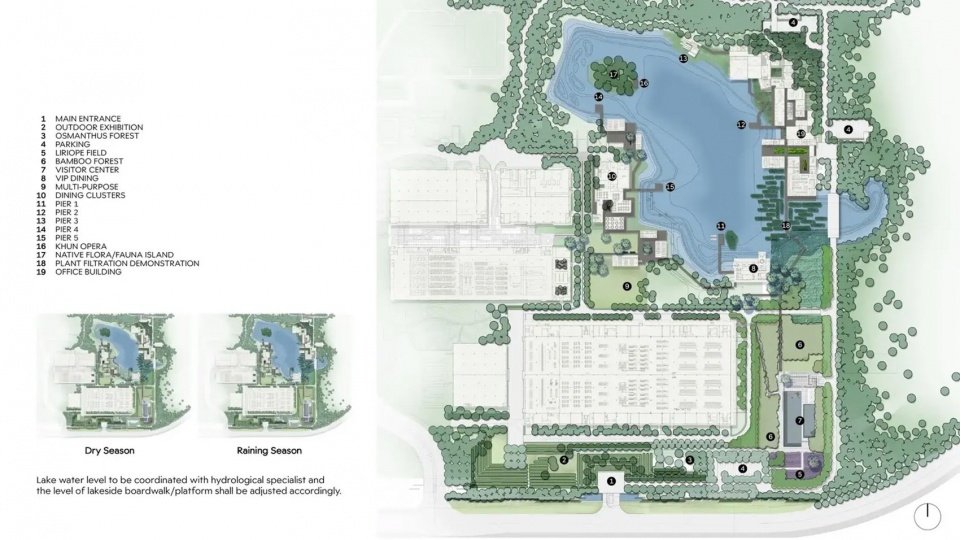
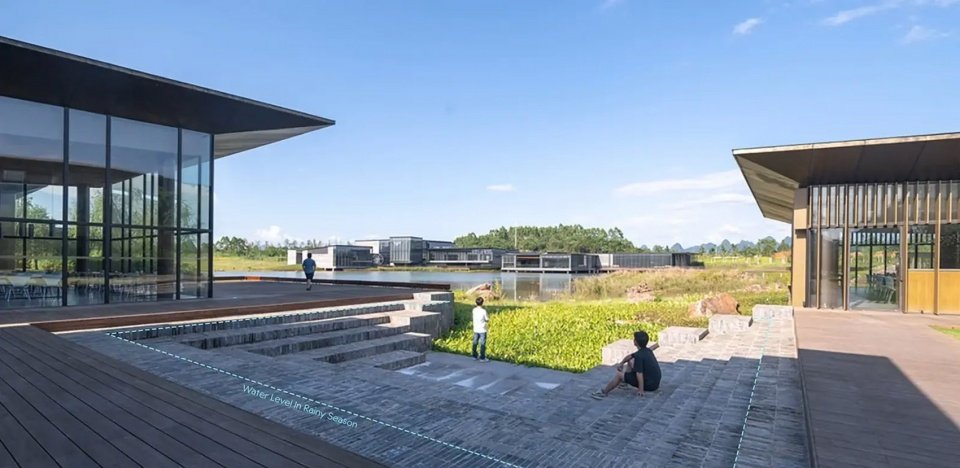
▲Master Plan and Seasonal Water Strategy | Wetland structures are coordinated with seasonal water levels within an active manufacturing campus to support flood control and ecological performance. Master Plan and Seasonal Water Strategy | Wetland structure and seasonal water levels are coordinated within an active manufacturing campus to support flood control and ecological performance. © P Landscape Co., Ltd.
▲Quantifiable water quality improvements (2021–2024) | Monitoring from 2021 to 2024 confirmed that water quality improved from Class V to Class II, thanks to reduced pollutants and increased dissolved oxygen. Measured Water Quality Improvement (2021–2024) | Monitoring between 2021-2024 confirms water quality improvement from Class V to Class II, driven by reduced pollutants and higher dissolved oxygen. © Guilin Esquel Textiles Co., Ltd./ P Landscape Co., Ltd.
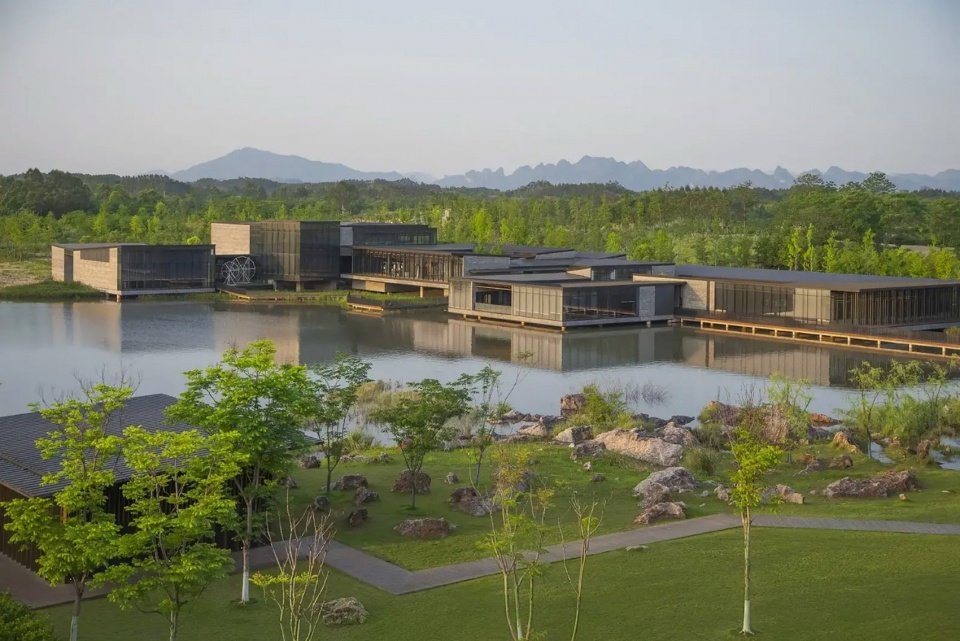
▲From degraded ground to ecological refuge | The park is now a regenerated wetland landscape that supports native vegetation and returning migratory and resident bird species. From Degraded Ground to Ecological Sanctuary | The campus is now a regenerated wetland landscape supporting native vegetation and returning migratory and resident species. © Guilin Esquel Textiles Co., Ltd./ P Landscape Co., Ltd.
▲Signs of habitat recovery | After completion, migratory birds such as the little egret have returned, marking the recovery of habitat conditions. Signs of Habitat Recovery | Following completion, migratory birds such as the Little Egret have returned, signaling restored habitat conditions. © Guilin Esquel Textiles Co., Ltd.
▲Recycling system and on-site resource recycling | Integrated recycling strategies, such as on-site material reuse, planting and rooftop agriculture, form a closed-loop landscape system. Circular Systems and On-Site Resource Cycles | Integrated circular strategies, such as on-site material reuse, planting, and rooftop farming, forming a closed-loop landscape system. © Guilin Esquel Textiles Co., Ltd./ P Landscape Co., Ltd.
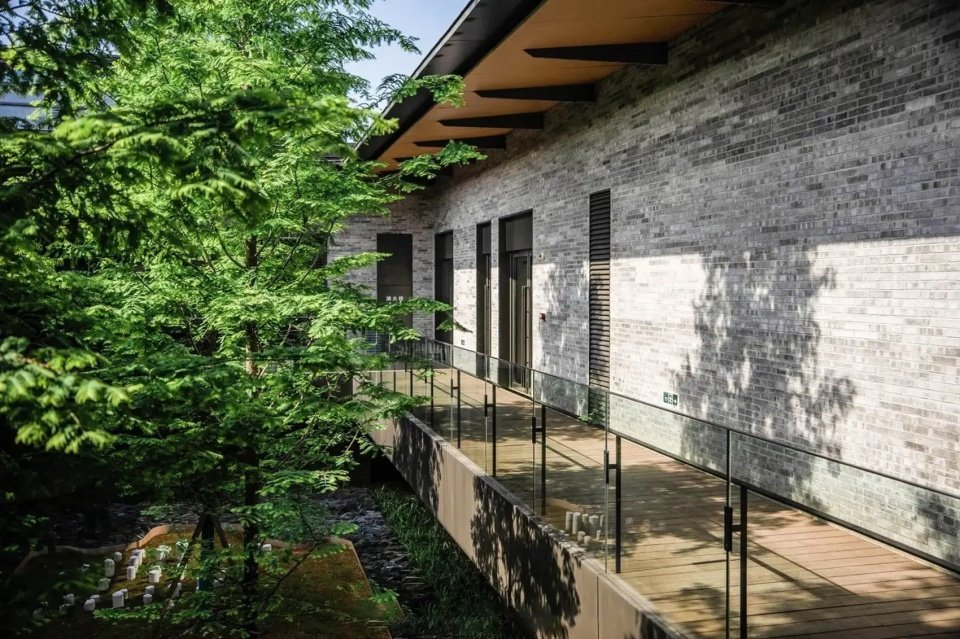
▲Movement and Thermal Comfort | Shaded walkways and breathable materials reduce heat gain while allowing natural ventilation and daylighting to improve thermal comfort. Circulation and Thermal Comfort | Shaded walkways and breathable materials reduce heat gain while allowing natural ventilation and daylight, improving thermal comfort. © Guilin Esquel Textiles Co., Ltd.
▲Movement and Thermal Comfort | Shaded walkways and breathable materials reduce heat gain while allowing natural ventilation and daylighting to improve thermal comfort. Circulation and Thermal Comfort | Shaded walkways and breathable materials reduce heat gain while allowing natural ventilation and daylight, improving thermal comfort. © Guilin Esquel Textiles Co., Ltd.
▲Topography-led design | The site is located in a natural lowland, and its wetland potential guided an ecological approach that exploited the existing topography and hydrology and minimized excavation. Topography-Led Design | Set in a natural lowland, the site’s wetland potential guided an ecological approach using existing topography and hydrology with minimal excavation. © Ronald Lu and Partners
▲Seasonal water level as public space | Stepped seating serves as both a gathering space and a subtle ruler of seasonal water levels, revealing changes while maintaining access and views. Seasonal Water Levels as Public Space | Stepped seating serves as a gathering space and a subtle gauge of seasonal water levels, revealing change while maintaining access and views. © Guilin Esquel Textiles Co., Ltd.
▲Habitat-sensitive movement routes | Plank paths, jogging trails and quiet paths are integrated into the terrain, respecting wildlife activities and encouraging users to participate attentively. Habitat-Sensitive Circulation | Boardwalks, jogging trails, and quiet paths are integrated into the terrain, respecting wildlife movement and encouraging mindful user engagement. © Ronald Lu and Partners
▲Integrated paths | The existing rocks on the site are retained, and the trails are integrated into the landscape. Integrated Pathways | Existing site rocks were preserved, with the walkway integrated into the landscape. © Guilin Esquel Textiles Co., Ltd.
▲Native meadows that support pollinators | Native plantings restore ecological identity and create biodiverse landscapes that support seasonal changes and pollinators. Pollinator Supporting Native Meadow | Native planting restores ecological identity, creating a biodiverse landscape that supports seasonal change and pollinators. © Guilin Esquel Textiles Co., Ltd.
▲Ecologically responsive native landscape | Native species reduce maintenance while conserving water and minimizing chemical inputs, and supporting the local economy through regional sourcing. Ecologically Responsive Native Landscape | Native species reduces maintenance also conserves water, and minimizes chemical input. While supporting local economies through regional sourcing. © Guilin Esquel Textiles Co., Ltd.
▲Human-Nature Integration and Cultural Project | Educational project explores natural dye plants through workshops, guided tours and lectures, supporting knowledge sharing through hands-on learning. Human–Nature Integration and Cultural Programming | Educational programs explore natural dye plants through workshops, tours, and talks, supporting knowledge sharing through hands-on learning. © Guilin Esquel Textiles Co., Ltd.
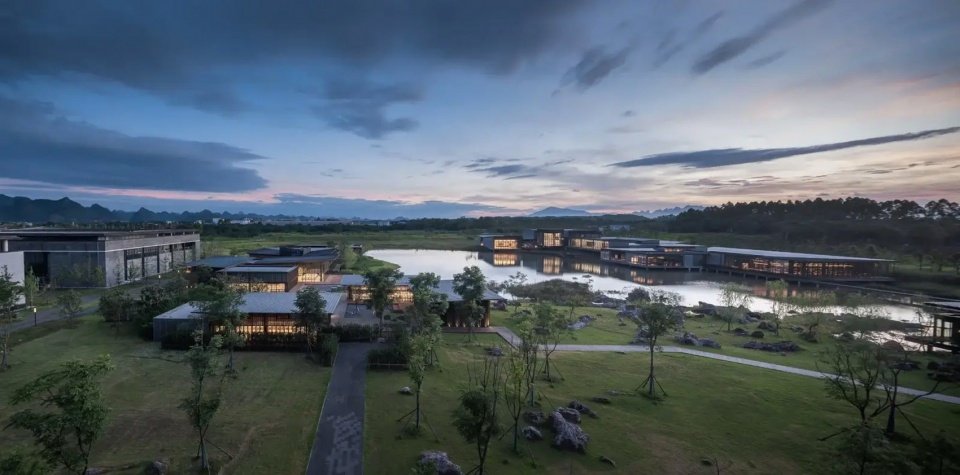
▲Nature-led Industrial Park | The regenerated campus supports ecological resilience and sustainable well-being within the site. A Nature-Led Industrial Campus | The regenerated campus supports ecological resilience and on-site sustainable wellbeing. © Guilin Esquel Textiles Co., Ltd.
PROJECT NARRATIVE
Revive and Co-Exist: A Regenerative Model for Industrial Landscapes
Integral – Esquel’s Sustainable Development Garden is located in Jiumeiqiao, Guilin, China, on a site that continues to operate as an active textile manufacturing campus. Formerly a severely eroded brownfield degraded by decades of brick manufacturing, soil extraction, and industrial runoff, the the site has been transformed through landscape-led systems. Wetland, planting, and hydrological strategies form the framework for water remediation, habitat recovery, and long-term environmental management.
Ecological Framework and Material Reuse
Situated within a low-lying basin with inherent wetland potential, the design prioritized existing topography and hydrology, minimizing excavation while enabling self-sustaining habitat systems. Wetlands, planting, and water management support soil stabilization, flood mitigation, water remediation, and long-term environmental resilience. More than 95% of plant species are native to the Guilin region propagated on site through collaboration with botanists, horticultural specialists, factory staff, and locals.
Recycled concrete from former foundations was repurposed for erosion control and terracing, while waste plastic from nearby factories was transformed into porous paving to improve infiltration and reduce runoff. These strategies embedded circular resource use directly into the landscape while reducing construction waste.
Measurable Environmental Outcomes
Following wetland reconstruction and water system recovery, measurable ecological response was observed. Post-completion monitoring between 2021 and 2024 confirmed water quality improvement from Class V to Class II, enabling the re-establishment of aquatic habitats.
Biodiversity recovery followed. A central wetland island was preserved as a no-access zone, free of paths or structures, allowing undisturbed habitat formation. Since completion, bird species increased from 7 to 21, including native and migratory indicators such as Common Kingfisher and and Chinese Grosbeak. Aquatic communities also re-established, with the return of native freshwater fish and invertebrates, including gobio, topmouth gudgeon, and river shrimp, alongside amphibians. The observed changes correspond with the establishment of wetland and habitat systems.
Human–Nature Integration and Cultural Programming
The landscape is organized as a permeable environment rather than a closed industrial zone. Boardwalks, jogging paths, and contemplative trails avoid sensitive habitats while allowing access to ecological systems. Rooftop gardens, community planting areas, and outdoor classrooms support daily use and learning.
A Natural Dye Garden introduces plant species traditionally used in textile production, linking ecological restoration with local craft knowledge and manufacturing. Factory workers and local collaborators participated in nursery operations and planting, integrating stewardship into everyday use.
A Living Model for Regenerative Industry
Completed in 2019, The campus continues to evolve as a living laboratory. Hydrology, habitat protection, and material reuse are coordinated as a single framework, enabling measurable ecological recovery while supporting ongoing production and public access. The project offers a clear reference for integrating ecological performance into productive industrial landscapes. Above all, it remains a story of return – of nature, of memory, and of coexistence.
PROJECT CREDITS
* Ronald Lu and Partners, Architect
* PuBang Design Institute, Local Landscape
* Ray Chen + Partners Architects, Architect & Interior
* Guilin Design Institute, Structural & Mechanical, Electrical and Plumping Engineer
* Professor Shengji Pei from Kunming Institute of Botany, Project Advisor
PLANT LIST
*Erythrina crista-galli
* Podocarpus macrophyllus
* Osmanthus fragrans ‘Aurantiacus’
*Cinnamomum camphora
* Magnolia denudata
* Sapium sebiferum (L.) Roxb.
* Taxodium distichum
* Bauhinia variegata
* Liquidambar formosana
*Liriodendron chinense
* Prunus cerasifera
*Phyllostachys edulis
* Magnolia liliiflora
*Albizia julibrissin
* Eriobotrya japonica
* Ficus virens
* Ginkgo biloba
* Salix babylonica
* Malus halliana
* Camellia sasanqua
* Elaeocarpus decipiens
* Metasequoia glyptostroboides
* Pterocarya stenoptera
* Citrus maxima
* Ilex rotunda
* Koelreuteria paniculata
* Lythrum salicaria
* Vallisneria natans
* Arundo donax
* Schoenoplectus tabernaemontani
* Cyperus alternifolius Linn.
* Punica granatum
*Camellia sinensis
* Euonymus japonicus
* Liriope platyphylla FT Wang & Tang
* Linum usitatissimum L.
* Ruellia simplex
* Hosta plantaginea
* Strobilanthes cusia
* Phragmites australis
*Camellia impressinervis
* Citrus microcarpa
* Morus alba L.
* Evolvulus nummularius (L.)
*Polygonum sp.
* Spiraea japonica
* Strobilanthes hamiltoniana
* Mentha piperita
* Artemisia lactiflora
* Pilea cadierei
* Hymenocallis littoralis (Jacq.) Salisb.
More:ASLA , P Landscape Co., Ltd.
Source: gooood.cn